Golden baked chicken breasts earn a permanent spot in the dinner rotation when they come out juicy instead of stringy, seasoned all the way through, and bronzed on top with just enough crust to taste like you put in more effort than you did. The trick is getting the chicken evenly thick before it goes into the oven, then pulling it the moment the center reaches temperature so the juices stay where they belong.
This version leans on a dry spice blend and a light coat of olive oil, which keeps the seasoning from clumping and helps the top turn fragrant and deeply colored in a hot oven. A little smoked paprika brings color and warmth without turning the chicken into barbecue, and the Italian seasoning gives the crust a savory finish that works with almost anything on the side.
Below, you’ll find the small details that keep baked chicken breasts moist, plus a few smart swaps if you want to change the seasoning or meal-prep it for the week.
The chicken stayed unbelievably juicy, and the spice crust turned out golden and not at all burnt even at 425. I sliced it for salads the next day and it was still tender.
Save these juicy baked chicken breasts with the golden herb crust for an easy weeknight dinner that never dries out.
The Step That Keeps Baked Chicken Breasts Juicy Instead of Stringy
The difference between a dry chicken breast and a good one usually comes down to thickness and timing, not some magical secret ingredient. When one end is thin and the other is thick, the thin part races past done while the thicker side is still catching up. Pounding the breasts to an even 3/4-inch thickness gives you the best chance at a finished piece that slices cleanly and stays moist from edge to edge.
The other mistake is waiting for the chicken to look completely opaque in the oven. By then, it’s often already overcooked. Pulling at 165°F works here because the carryover heat during the rest finishes the middle without squeezing out all the juices. That five-minute rest matters more than people think.
What Each Seasoning Is Doing in This Dish
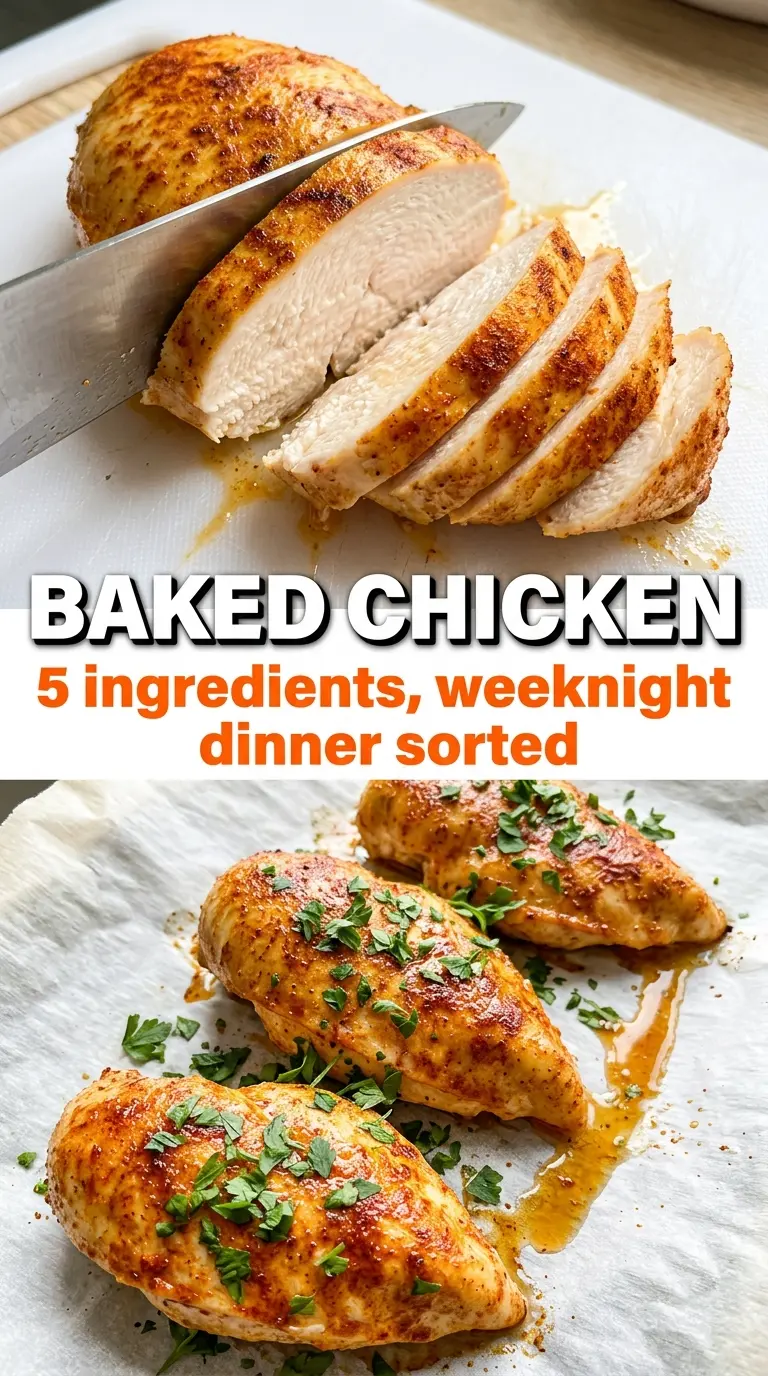
- Chicken breasts — Boneless skinless breasts are lean, which means they need even thickness and careful timing. If you start with very large pieces, slice them in half horizontally after pounding so they cook at the same pace as the rest.
- Olive oil — This helps the seasoning cling and keeps the surface from drying out before the chicken has time to cook through. Any neutral oil works, but olive oil gives the crust a better finish and a little more flavor.
- Garlic powder and onion powder — These bring savory depth without the risk of burning that fresh minced garlic would have at 425°F. If you swap in fresh garlic, it can scorch before the chicken is done.
- Smoked paprika — This is doing two jobs: color and warmth. Regular paprika works in a pinch, but you’ll lose that deeper, almost roasted edge on the crust.
- Italian seasoning — The herbs round out the spice blend and make the chicken taste finished on its own, not just salted. If yours is older and faded, the chicken will taste flatter, so use a fresh jar if you can.
- Salt and black pepper — Salt is what seasons the meat through the surface, not just on top. Cracked black pepper gives a better bite than pre-ground pepper here, especially against the soft interior.
How to Bake Them Hot Enough for Color Without Drying Them Out
Preheating and Pan Prep
Set the oven to 425°F before you start seasoning so the chicken goes into a fully hot oven. That higher heat helps the top brown before the meat has a chance to dry out. Lightly greasing the baking dish keeps the underside from sticking, but don’t drown it in oil or the chicken will sort of shallow-fry instead of roast.
Evening Out the Thickness
Pound the chicken breasts to an even 3/4-inch thickness if the pieces are uneven. The goal isn’t to flatten them into cutlets, just to remove the thick, tapered section that always lags behind. If you skip this step, the thin end will turn chalky before the thick end is safe to eat.
Seasoning the Surface
Brush both sides with olive oil first, then rub on the spice mix so it sticks in a thin layer instead of falling into the pan. You want the surface coated, not buried. If you pile on too much seasoning in one spot, the paprika can darken unevenly and taste a little bitter.
Watching for the Finish
Bake for 18 to 22 minutes, depending on the size of the breasts, and start checking early if they’re on the smaller side. The tops should look golden and the thickest part should hit 165°F. Resting for 5 minutes keeps the juices from running out the moment you slice in.
How to Change the Seasoning Without Losing the Juicy Texture
Dairy-Free and Gluten-Free as Written
This recipe already fits both needs as long as your seasoning blend is gluten-free. The texture stays exactly the same because the moisture comes from the oil, the even thickness, and the short bake time, not from any breading or dairy.
Turn It Into Lemon Herb Chicken
Add a little lemon zest to the spice mix and serve with extra lemon wedges. The zest gives you brighter aroma without changing the cooking time, and the chicken still browns well because the oil carries the herbs onto the surface.
Make It Spicier
Add a pinch of cayenne or a little crushed red pepper to the seasoning blend. That gives the crust a sharper finish without affecting moisture, but keep it light or the heat will overpower the paprika and herbs.
Meal Prep for the Week
Bake the chicken, cool it completely, and slice it before storing so it reheats more evenly. Whole breasts dry out faster in the fridge and on the plate, while slices warm quickly without giving up all their juices.
Storage and Reheating
- Refrigerator: Store in an airtight container for up to 4 days. The chicken stays tender, though the crust softens a bit.
- Freezer: Freeze for up to 2 months, wrapped well and then sealed in a freezer bag. Thaw overnight in the fridge so the surface doesn’t go rubbery from fast thawing.
- Reheating: Reheat covered in a 300°F oven with a splash of broth or water in the dish until just warmed through. High heat is the fastest way to turn baked chicken breasts dry again.
Questions I Get Asked About This Recipe
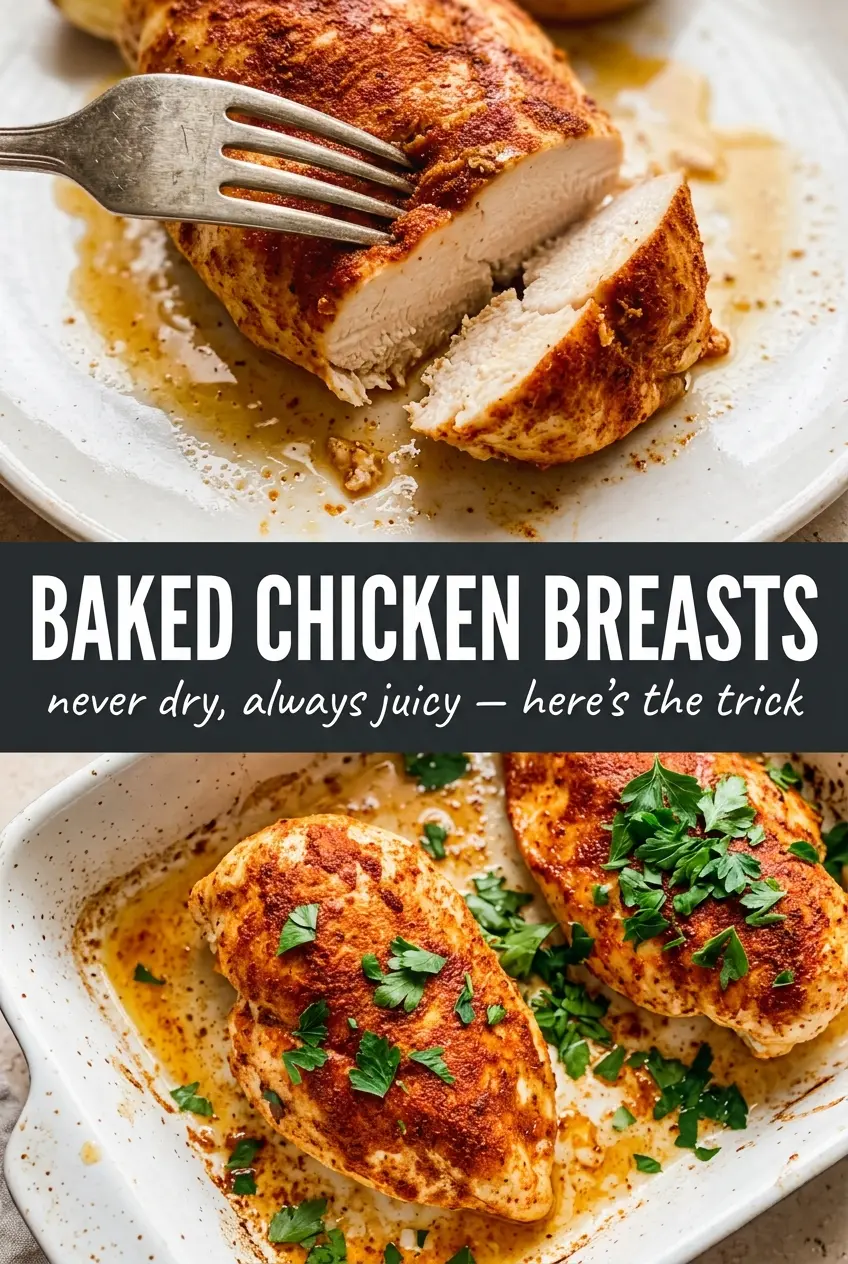
Baked Chicken Breasts
Ingredients
Equipment
Method
- Preheat the oven to 425°F and lightly grease a baking dish, so it’s ready for fast baking once the chicken is coated.
- Pound the chicken breasts to an even 3/4-inch thickness if they vary in size, for consistent doneness.
- Brush both sides of each chicken breast with olive oil to help the surface brown.
- Mix garlic powder, onion powder, smoked paprika, Italian seasoning, salt, and cracked black pepper, then rub the spice mix evenly over both sides of the chicken.
- Bake for 18-22 minutes until the internal temperature reaches 165°F and the tops are golden; do not overbake to keep the centers juicy.
- Rest the chicken for 5 minutes before slicing so juices settle and stay in the meat.
- Garnish with fresh parsley and lemon wedges to finish with fresh brightness.