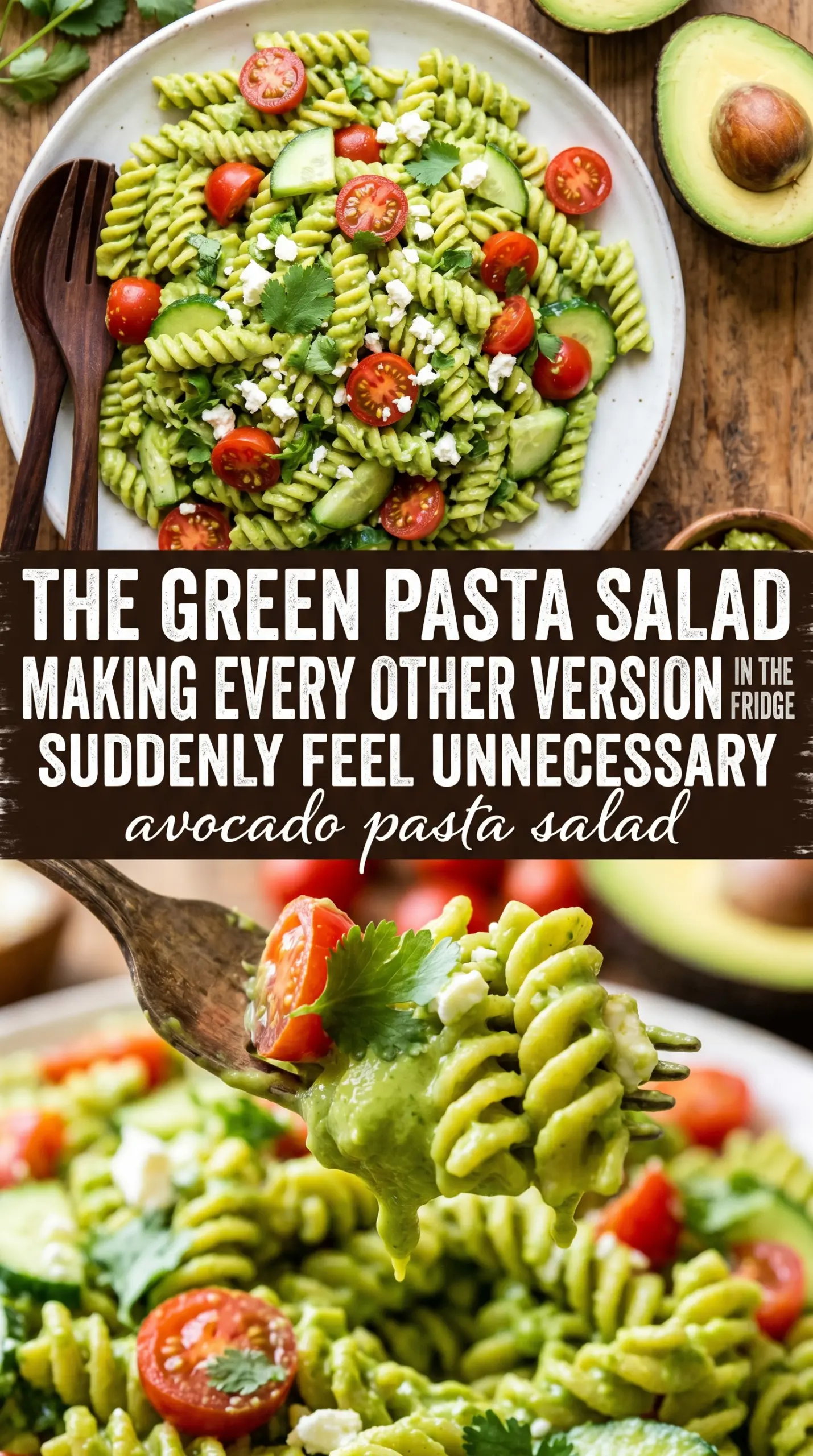
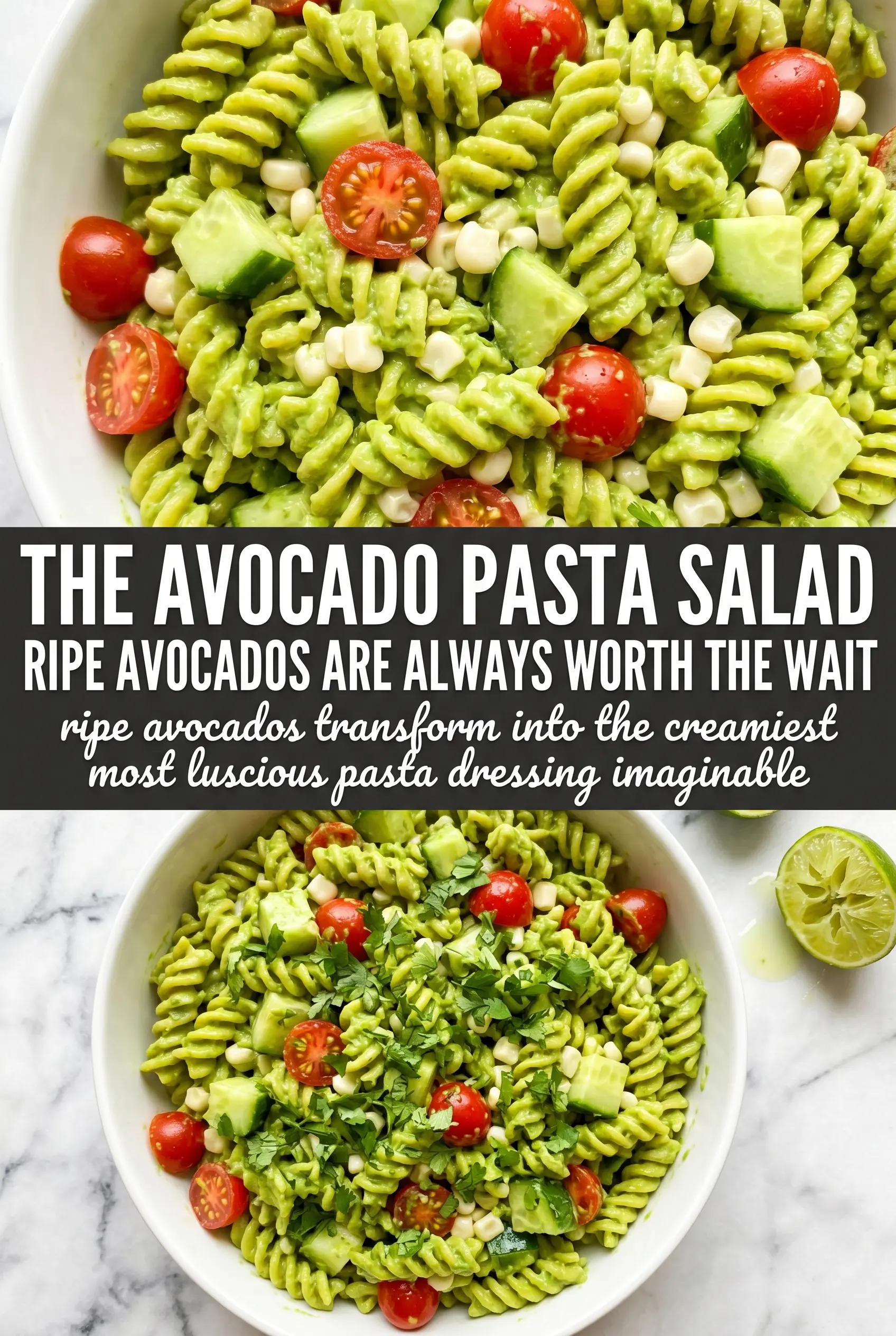
Pasta coated in creamy avocado dressing has a clean, fresh richness that lands somewhere between a classic pasta salad and guacamole in the best possible way. The avocado clings to every ridge of pasta, the lime keeps it bright, and the tomatoes and corn give each bite a little pop of sweetness and crunch. It’s the kind of side dish that disappears fast because it eats like more than a side dish.
This version works because the dressing is built to stay smooth without turning heavy. Lime juice does more than add flavor; it slows browning and keeps the avocado tasting lively. A little olive oil helps the dressing loosen enough to coat the pasta evenly, and rinsing the pasta cold keeps the whole bowl from getting soggy or dull before it ever hits the table.
Below, I’ll walk through the part that matters most: how to keep the avocado dressing creamy, how long this salad can sit before it starts losing color, and the swaps that still keep the texture right.
The avocado dressing coated the pasta evenly and stayed creamy for our lunch the next day. I was worried it would turn brown, but the lime kept it bright and the corn gave it a great sweet crunch.
Save this avocado pasta salad for the days when you want a bright, creamy side dish with lime, tomatoes, and no mayo.
The Trick to Keeping Avocado Pasta Salad Creamy Instead of Dull
The biggest mistake with avocado pasta salad is treating it like a regular mayo-based salad and making it too far ahead. Avocado changes fast once it’s exposed to air, and the texture gets flatter and the color gets less vibrant the longer it sits. The fix is to chill it just long enough for the flavors to come together, then serve it the same day.
Rinsing the pasta under cold water matters more here than in a lot of pasta dishes. You want the noodles cool before they meet the avocado so the dressing doesn’t thin out or get greasy. If the pasta is still warm, it softens the avocado too much and the whole bowl turns heavy instead of glossy and fresh.
- Ripe avocados — They need to mash into a smooth dressing without strings or hard spots. If they’re not fully ripe, the dressing won’t blend silky and you’ll end up with little chunks that don’t coat the pasta well.
- Lime juice — This is doing more than adding tang. It sharpens the avocado, slows browning, and keeps the salad tasting bright instead of flat. Bottled lime juice works in a pinch, but fresh juice gives the cleanest finish.
- Olive oil — It helps the avocado dressing loosen enough to toss through the pasta. Use a decent extra-virgin oil if you can; it adds flavor here because the dressing is so simple.
- Cherry tomatoes, corn, and red onion — These aren’t just mix-ins. They give the salad contrast so the texture doesn’t go soft all the way through. Dice the onion finely so it doesn’t dominate every bite.
What Each Ingredient Is Actually Doing in Avocado Pasta Salad
- Fresh vegetables (vibrant, crisp, quality) — Start with fresh, brightly colored vegetables. Wilted vegetables make everything taste tired.
- Acid (vinegar, lemon juice, or lime) — The acid prevents oxidation and prevents flat taste. It’s essential for brightness.
- Oil (quality matters for flavor) — Good olive oil adds freshness. Cheap oil makes the salad taste flat.
- Salt (enhances all other flavors) — Proper seasoning makes vegetables taste more like themselves. Don’t undersalt.
- Fresh herbs (tender ones added last) — Fresh herbs add complexity and brightness. Add them right before serving.
- Protein or hearty elements (if using) — These should complement without overwhelming the vegetables. Keep the salad light.
- Dressing applied just before serving — Don’t dress early or the vegetables release liquid and wilt. Timing is everything.
- Taste and adjust (check for balance) — The salad should taste bright and assertive. Add more acid or salt if needed.
How to Build the Dressing So It Clings to Every Piece of Pasta
Blend the Avocado Until It’s Fully Smooth
Blend the avocados, lime juice, olive oil, garlic, salt, and pepper until the dressing looks glossy and no green lumps remain. If the mixture seems too thick to move in the blender, stop and scrape down the sides before adding more oil; don’t add water unless you have to, because it can make the dressing taste thin. You’re looking for something that pours slowly, not a puree that holds stiff peaks.
Cool the Pasta Before You Toss
Cook the pasta just to al dente, then drain and rinse it well with cold water until it feels cool to the touch. Any warmth left in the pasta will loosen the avocado dressing and make it slide off instead of cling. Give the pasta a good shake in the colander so you’re not carrying extra water into the bowl.
Toss Gently, Then Chill Briefly
Add the dressing and toss until every piece is coated, working from the bottom of the bowl up. The salad should look evenly green with a little sheen, not pooled and wet at the bottom. Chill it for up to 1 hour so the flavors settle, but don’t leave it much longer or the avocado will start to brown and the pasta will absorb too much of the dressing.
Make It Heartier With Black Beans
A drained can of black beans turns this into a more filling lunch-style salad. They add protein and a softer, creamier bite that works with the avocado dressing, but they do make the bowl heavier, so I’d use a little extra lime to keep the flavor bright.
Dairy-Free and Vegan as Written
This recipe already fits a dairy-free and vegan table without any changes. That’s part of why it works so well: the avocado gives the same creamy feel people usually expect from mayo or sour cream, but with a fresher finish.
Swap in Gluten-Free Pasta
A good gluten-free penne or rotini works here, as long as you cook it carefully and rinse it before dressing. Gluten-free pasta can turn soft faster than wheat pasta, so pull it right at al dente and don’t let it sit in hot water once it’s done.
What to Do If You Need to Make It Ahead
For the best color, blend the dressing and cook the pasta ahead, then combine them close to serving time. If you need to prep further in advance, hold back the cilantro and add it at the end so it stays fresh and doesn’t darken the whole bowl.
Storage and Reheating
- Refrigerator: Best within 24 hours. The avocado will start to dull and soften after that, even with lime in the dressing.
- Freezer: Don’t freeze this salad. Avocado and cooked pasta both change texture in a bad way once thawed, and the dressing separates.
- Reheating: This dish is meant to be served cold. If it has been chilled solid, let it sit at room temperature for 10 to 15 minutes and toss again before serving; microwaving breaks the avocado dressing and makes the pasta mushy.
Questions I Get Asked About This Recipe
Avocado Pasta Salad
Ingredients
Equipment
Method
- Bring a pot of water to a boil and cook the penne or rotini pasta according to package directions, aiming for 10 minutes total; drain and rinse with cold water until cool to the touch (visual cue: pasta looks clean and no longer feels sticky).
- Add avocados, lime juice, olive oil, minced garlic, salt, and pepper to a stand mixer and blend until smooth and creamy (visual cue: dressing is fully green and lump-free).
- Combine the cooled pasta, cherry tomatoes, corn kernels, and diced red onion in a large bowl (visual cue: pasta is evenly mixed with visible red, yellow, and green pieces).
- Pour the avocado dressing over the pasta mixture and toss until evenly coated (visual cue: green avocado coating clings to most pieces).
- Refrigerate the pasta salad for up to 1 hour; keep it chilled to let the flavors meld (visual cue: dressing looks thicker and the salad appears more cohesive, but note avocado may brown if stored longer).
- Top with chopped cilantro right before serving (visual cue: fresh green flecks sit on top for a clean, bright finish).