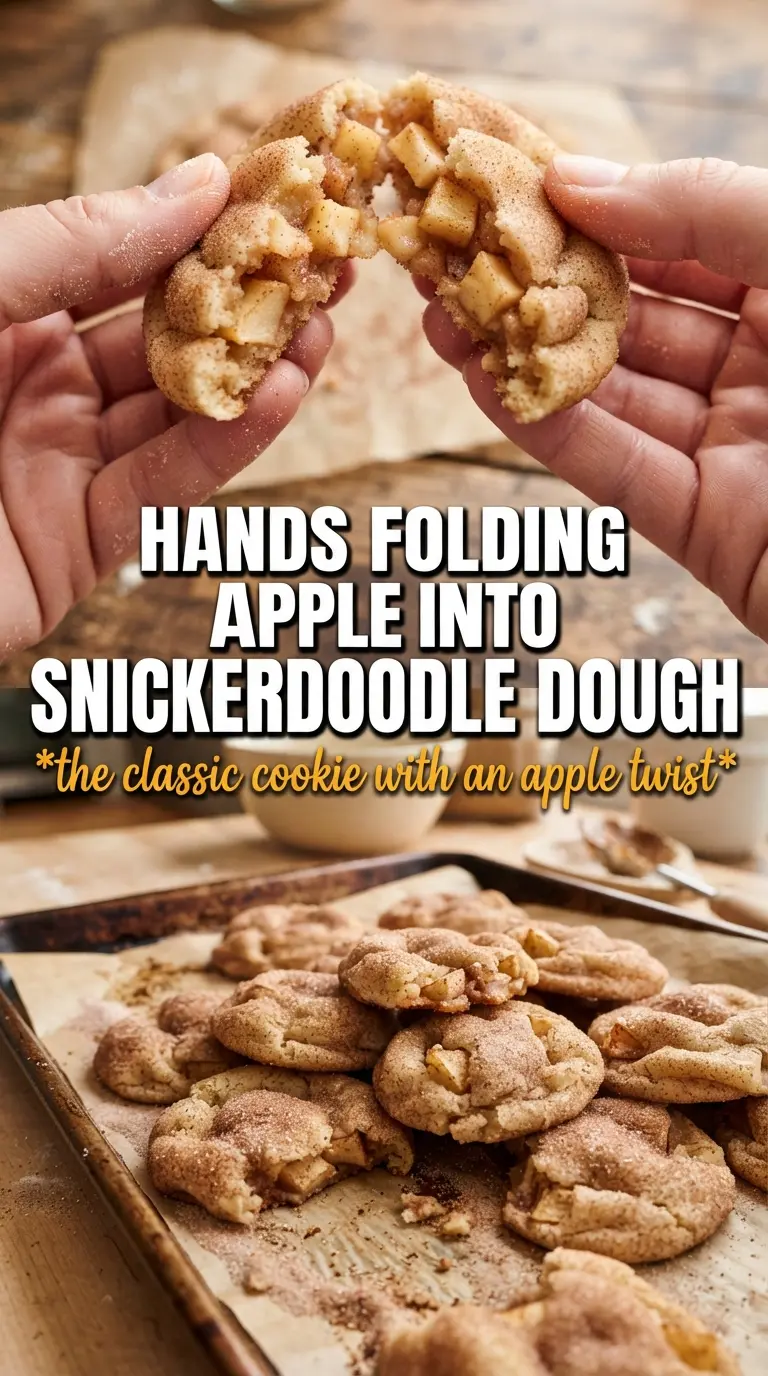
Apple snickerdoodles bake up with soft centers, crisp edges, and that crackly cinnamon-sugar coating that makes the first bite so good. The chopped dried apple pieces give each cookie a little chew and a quiet burst of fruitiness that keeps the whole batch from tasting flat or one-note. They still have the familiar snickerdoodle tang, but the apple turns them into something a little warmer and more interesting than the standard version.
The trick is using dried apple pieces instead of fresh apple. Fresh fruit brings too much moisture into a cookie like this and can leave the centers gummy before the edges set. Dried apples fold in cleanly, hold their shape, and give you apple flavor in every bite without throwing off the dough. The other detail that matters is the rolling mixture: cinnamon plus a little apple pie spice gives the outside a deeper, cozier finish without overpowering the cookie itself.
Below, I’ll walk you through the part that makes these cookies crinkle properly, plus the small adjustments that matter if you want them a little chewier, a little softer, or ready to stash for later.
The cookies stayed soft in the middle and the dried apple pieces gave them a nice little chew. I loved how the cinnamon sugar cracked on top as they cooled.
Like these apple snickerdoodles? Save them to Pinterest for the days when you want a soft, crinkly cookie with real apple flavor.
The Secret to Keeping Apple Snickerdoodles Soft Instead of Cake-Like
Snickerdoodles can drift into dry, puffy territory if the dough is overmixed or if the cookie gets baked too long. This version stays tender because the flour is stirred in only until the last streaks disappear, and the cookies come out when the centers still look slightly underdone. They finish setting on the pan, which is where the crinkles form and the texture settles into that soft, chewy middle.
Cream of tartar does more than help the cookies taste like a true snickerdoodle. It also gives the dough a gentle lift without making the texture airy and cakey. If you skip it, the cookies lose that signature tang and the exterior won’t have the same delicate crackle.
What Each Ingredient Is Actually Doing in These Cookies
- Unsalted butter — Softened butter traps air when beaten with the sugar, which gives the cookies a lighter texture. Salted butter works in a pinch, but the flavor is harder to control.
- Cream of tartar — This is the ingredient that makes the cookies taste like snickerdoodles instead of plain cinnamon cookies. It adds the slight tang and helps create that classic cracked top.
- Dried apple pieces — Finely chopped dried apples distribute evenly and add chew without dumping extra moisture into the dough. Fresh apples won’t behave the same way here.
- Apple pie spice in the coating — The small amount in the rolling sugar deepens the cinnamon flavor and makes the apple note stand out. You can swap in a pinch of allspice or extra cinnamon if that’s what you have.
- Granulated sugar — Regular sugar keeps the cookie crisp at the edges while still allowing a soft center. Brown sugar would make these thicker and moister, but it changes the snickerdoodle texture.
How to Mix the Dough So the Cookies Crinkle Correctly
Whisk the dry ingredients first
Combine the flour, cream of tartar, baking soda, cinnamon, nutmeg, and salt before anything else. That keeps the leavening and spice evenly distributed, which matters because snickerdoodle dough is mixed just enough to come together and not much more. If the dry ingredients aren’t blended well now, you’ll get uneven spice and random pockets of baking soda later.
Beat the butter and sugar until pale and fluffy
Give the butter and sugar a full beat until the mixture looks lighter in color and a little billowy. That’s the air that helps the cookies rise before they spread. If the butter is too cold, the mixture stays grainy and dense; if it’s melted, the cookies spread too fast and lose their shape.
Stop mixing as soon as the flour disappears
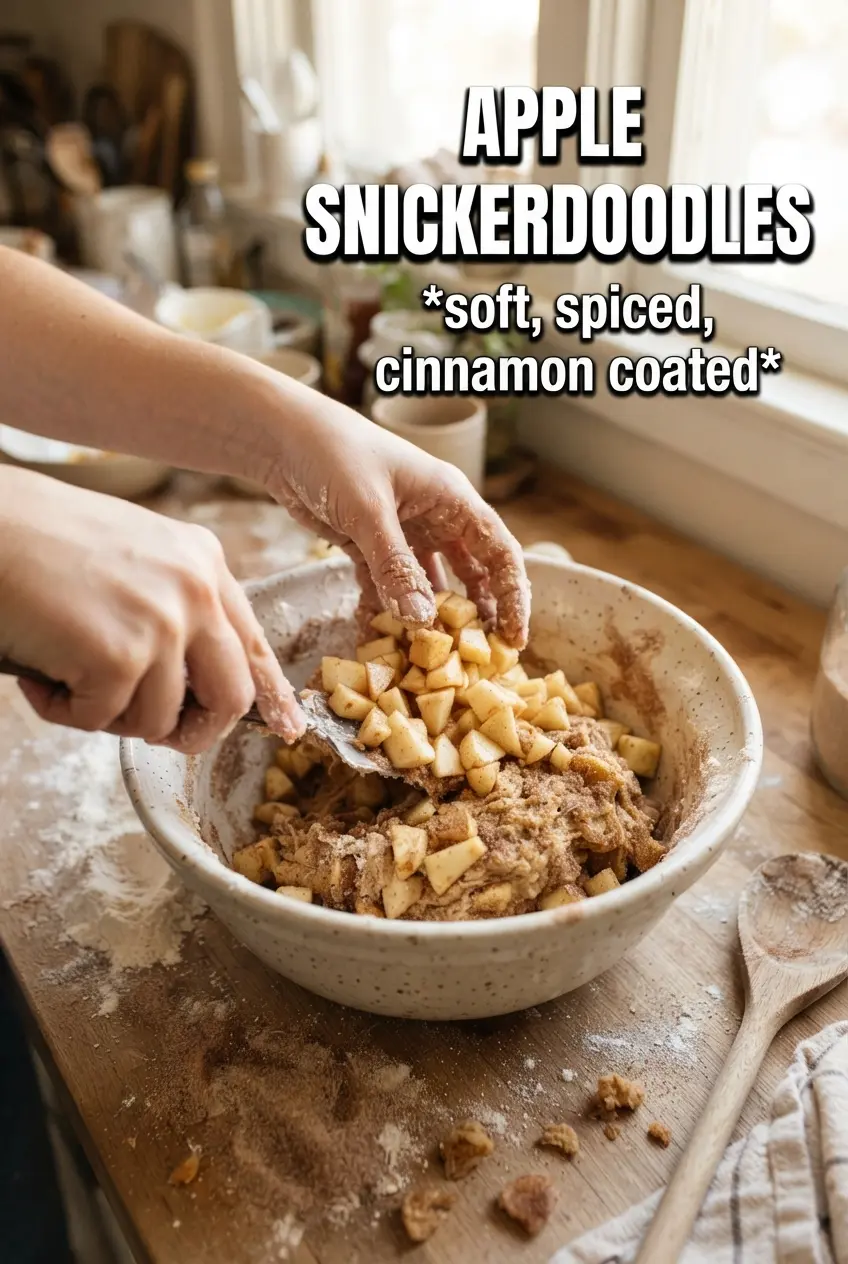
Once the flour mixture goes in, stir only until you don’t see dry streaks anymore. The dough should look thick and soft, not smooth like cake batter. Fold in the chopped dried apples at the end so they stay distributed instead of getting crushed into the dough.
Bake until the centers still look soft
Roll the dough balls in the cinnamon-sugar mixture, then bake until the edges are set and the centers look a touch underbaked. That middle softness is what keeps the cookies tender after cooling. If you wait until the tops look fully done in the oven, they’ll be overbaked by the time they cool.
Make Them Chewier
Pull the cookies from the oven on the earlier side, closer to 10 minutes, and let them finish on the pan. The centers stay softer and the edges still set up as they cool. Bake them longer if you want a more crisp cookie all the way through.
Use Fresh Apples the Right Way
Fresh apples add too much moisture unless they’re cooked down first, which turns this into a different cookie. If you want to use them, grate them finely, squeeze out the liquid, and expect a softer, less uniform texture. Dried apples are the cleaner choice for a classic snickerdoodle crumb.
Gluten-Free Version
A good 1:1 gluten-free flour blend can work here, especially one that already includes xanthan gum. The cookies may spread a little less and bake up with a slightly more delicate bite, but the cinnamon sugar coating still gives them the right finish.
Storage and Reheating
- Refrigerator: Store in an airtight container for up to 5 days. They soften a bit as they sit, but the centers stay pleasant and chewy.
- Freezer: Freeze baked cookies for up to 2 months, or freeze dough balls after rolling in cinnamon sugar. The dough balls bake best straight from frozen with 1 to 2 extra minutes in the oven.
- Reheating: Warm baked cookies for 8 to 10 seconds in the microwave or a few minutes in a low oven. Too much heat dries out the edges before the center is warm.
Answers to the Questions Worth Asking
Apple Snickerdoodles
Ingredients
Equipment
Method
- Preheat oven to 375F and line baking sheets with parchment.
- Keep baking sheets ready for cookie placement once dough is portioned.
- Whisk all-purpose flour, cream of tartar, baking soda, cinnamon, nutmeg, and salt together until evenly combined.
- Beat softened unsalted butter and granulated sugar until very light and fluffy, then beat in eggs and vanilla extract.
- Stir in the flour mixture until just combined, then fold in chopped dried apple pieces.
- Mix sugar, cinnamon, and apple pie spice in a shallow bowl for rolling.
- Scoop dough into 1-1/2 tablespoon balls, then roll each ball in the cinnamon-sugar mixture until coated.
- Place dough balls on prepared baking sheets with space between them.
- Bake for 10-12 minutes at 375F until edges are set and centers are still slightly soft, with a golden look.
- Cool cookies on the pan for 3 minutes so they finish setting.
- Let the cookies cool further on the pan until they crinkle, which becomes visible as they cool.