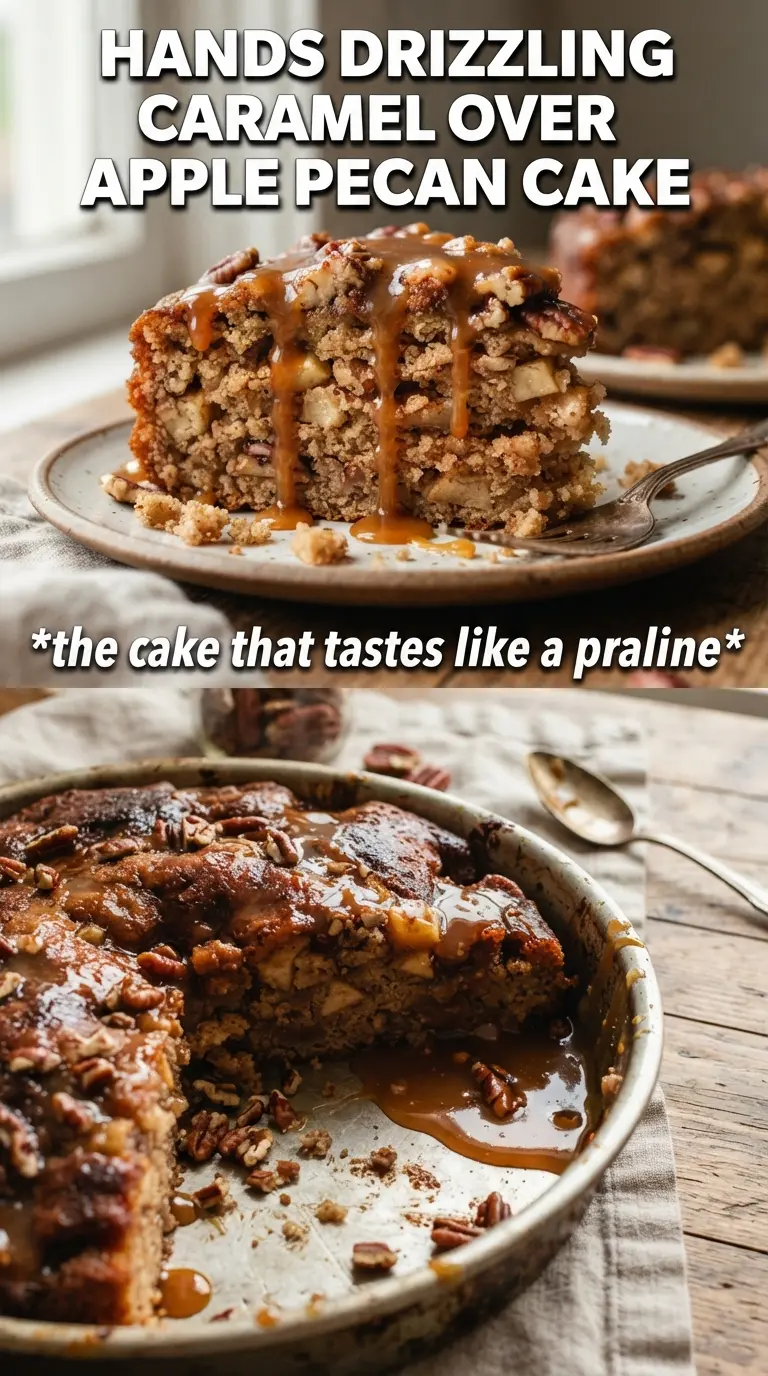
Apple pecan cake has a way of tasting like it took all afternoon, even though the batter comes together with a spoon and a bowl. The crumb stays tender from the oil, the apples bake into soft pockets instead of disappearing, and the pecans add the kind of crunch that keeps every slice interesting. Then the caramel glaze slides over the ridges of the cake and settles into a shiny finish that makes each cut look bakery-level without asking for bakery effort.
What makes this version work is the balance. Brown sugar deepens the cake without making it heavy, cinnamon stays in the background instead of turning the whole dessert into spice bread, and the apples go in at the end so they stay evenly distributed. The bundt pan matters too. That shape gives you more surface area for the glaze, which means more caramel in every bite and fewer slices that taste plain at the center.
Below, I’ve included the small timing details that keep the cake from sticking, plus the glaze trick that gives you a pourable finish instead of a stiff candy shell.
The cake released cleanly from the bundt pan and the glaze soaked into all the little ridges instead of just pooling on top. I used tart apples and the crumb stayed moist for days.
Save this apple pecan cake with caramel glaze for the kind of dessert that slices clean, stays moist, and carries that warm caramel finish all the way to the last bite.
The Part That Keeps the Cake Tender Instead of Dense
Bundt cakes like this one go wrong when the batter gets beaten like a butter cake. Oil gives you a softer crumb than butter here, but only if you stop mixing as soon as the flour disappears. Once the apples and pecans go in, the batter should look thick and heavy, not whipped.
The other trap is moisture balance. Apples release liquid as they bake, so the batter needs enough structure from flour and eggs to hold them in place. If you use extra-juicy apples, dice them small and pat them dry after peeling. That keeps the cake from collapsing into a gummy middle while the edges overbake.
- Oil — This keeps the crumb moist for days. Butter tastes great, but oil gives this style of cake the soft texture people expect after it cools.
- Brown sugar — It brings a deeper, caramel note and helps the cake stay damp instead of dry. You need both granulated and brown sugar for the right balance.
- Apples — Dice them into small, even pieces so they bake through before the cake overbakes. Large chunks sink and leave wet pockets.
- Pecans — Chop them roughly so you get texture without turning the batter into a nut-heavy crumble. Toasting them first adds flavor, but it isn’t required.
What Each Ingredient Is Actually Doing in This Cake
- All-purpose flour — The structure here is sturdy enough to hold fruit and nuts without getting bready. A cake flour swap makes it too fragile for the weight of the apples.
- Baking soda — It reacts with the brown sugar and helps the cake rise with a lighter crumb. Don’t skip it or the cake bakes up tight.
- Cinnamon — Just enough to echo the apples without overwhelming them. This cake isn’t trying to taste like spice cake.
- Vanilla — It rounds out the caramel glaze and keeps the fruit flavor from tasting flat. Use a good one if you can, since it shows up in both the cake and the glaze.
- Heavy cream — This is what turns the caramel into a pourable glaze instead of hard candy. Half-and-half works in a pinch, but the finish will be thinner and less rich.
How to Keep the Glaze Smooth and the Cake in One Piece
Mix the Batter Just Until It Comes Together
Start by whisking the dry ingredients in one bowl and the sugars, eggs, oil, and vanilla in another until the mixture looks smooth and glossy. When you add the flour, stir only until the last streaks disappear. If you keep going, the cake turns tough, and the apples can’t soften the crumb back into place.
Fold in the Apples and Pecans Gently
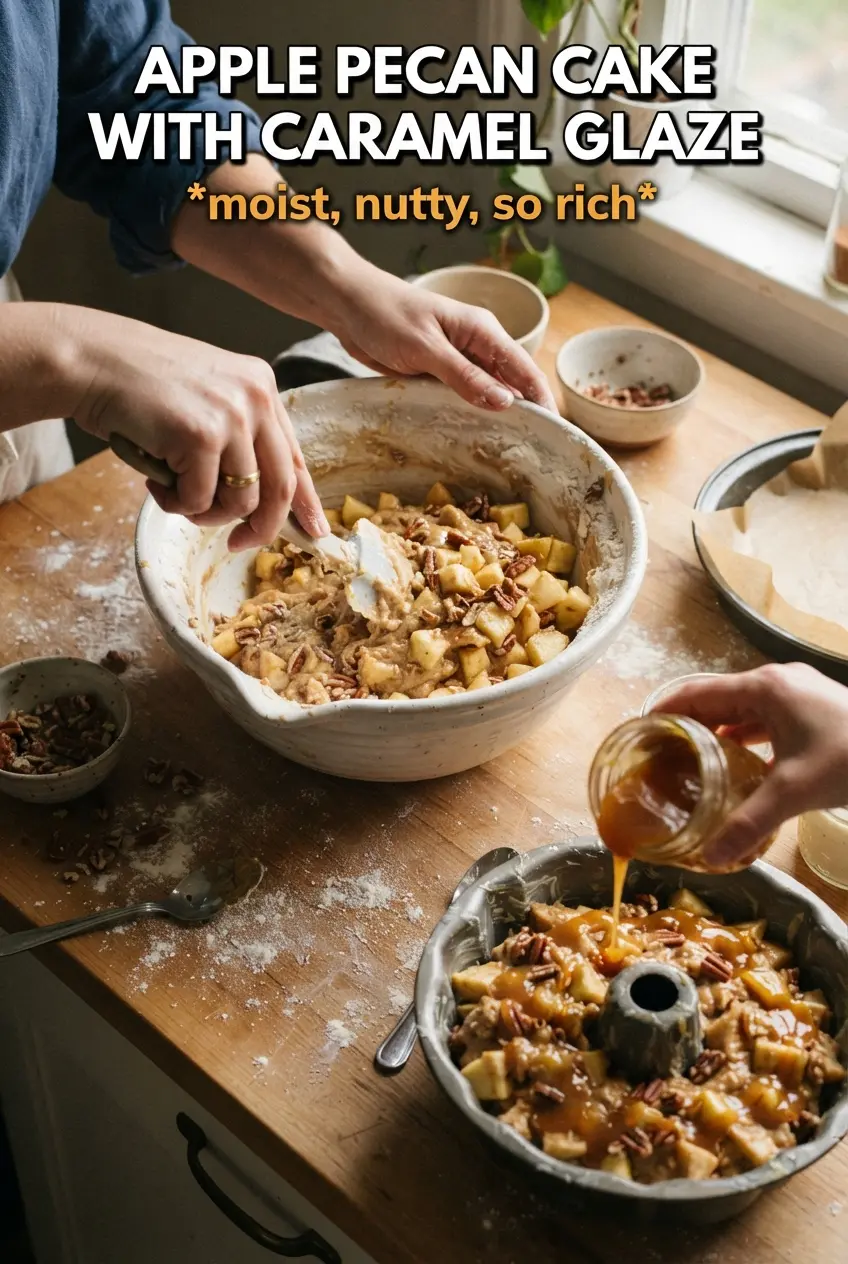
Add the diced apples and chopped pecans after the batter is mixed. Use a spatula and fold from the bottom of the bowl so the fruit doesn’t sink in one heavy layer. The batter should look chunky and thick when it goes into the pan. That is exactly what you want.
Bake Until the Center Springs Back
Grease and flour the bundt pan well, getting into every ridge, then bake at 325F until a toothpick comes out clean from the thickest part. The top should be deep golden and feel set when lightly pressed. If the cake still jiggles in the center, it needs more time. Pulling it early is the fastest way to get a gummy tunnel through the middle.
Cook the Glaze Just Long Enough to Thicken
Melt the butter and brown sugar together first, then add the cream, vanilla, and salt and let it simmer for about 2 minutes. You’re looking for a glaze that coats a spoon but still pours in a ribbon. If it boils too hard, it can turn grainy or too thick before it reaches the cake. Let the cake cool before glazing so the caramel clings to the ridges instead of running straight off.
Three Ways to Work This Cake Into Your Own Kitchen
Gluten-Free Version
Swap the all-purpose flour for a good 1:1 gluten-free baking blend that includes xanthan gum. The cake will still be tender, but don’t expect quite the same structure around the apples, so cool it fully before unmolding.
Dairy-Free Glaze
Use a plant-based butter and full-fat coconut cream in place of the butter and heavy cream. The glaze will set a little softer and carry a faint coconut note, which works well with the apples and pecans.
Walnut Swap
Walnuts can replace the pecans if that’s what you have on hand. They taste a little more bitter and earthy, which makes the caramel read less sweet and a touch more old-fashioned.
Storage and Reheating
- Refrigerator: Store covered for up to 4 days. The glaze will firm up a little, but the cake stays moist.
- Freezer: Freeze slices tightly wrapped for up to 2 months. Thaw at room temperature before serving so the crumb softens again.
- Reheating: Warm individual slices for 10 to 15 seconds in the microwave. Too much heat makes the glaze separate and the cake feel greasy.
Questions I Get Asked About This Recipe
Apple Pecan Cake With Caramel Glaze
Ingredients
Equipment
Method
- Preheat oven to 325F, then grease and flour a 10-inch bundt pan.
- Whisk all-purpose flour, baking soda, cinnamon, and salt together.
- Beat granulated sugar, brown sugar, eggs, and vegetable oil until combined, then beat in vanilla extract.
- Fold the flour mixture into the wet ingredients until just combined.
- Fold in apples and pecans until evenly distributed.
- Pour the batter into the prepared bundt pan.
- Bake for 65-75 minutes at 325F until a toothpick comes out clean.
- Cool the cake in the pan for 20 minutes, then invert onto a rack.
- Melt unsalted butter and brown sugar together over medium heat until smooth.
- Add heavy cream, vanilla extract, and salt, then simmer for 2 minutes.
- Pour the warm caramel glaze over the cooled cake.