Apple crumble pie brings the best parts of two desserts together: a flaky bottom crust, soft spiced apples, and a thick oat topping that bakes into crisp, buttery crumbles. The filling turns jammy at the edges while the center stays stacked with tender slices, so every bite gets a little contrast instead of turning muddy or heavy. It’s the kind of pie that disappears fast because it tastes familiar and a little more interesting than a standard double-crust version.
The trick is treating the apples and topping like two separate jobs. The apples need enough cornstarch to catch the juices before they run loose, and the crumble needs cold butter cut in until you’ve got uneven clumps, not sand. That uneven texture is what gives you those golden craggy bits on top instead of a flat layer that bakes up dense. A short rest after baking matters too; if you cut too soon, the filling slides.
Below, I’ll walk through the part that keeps the topping crisp, the ingredient swaps that actually work, and the timing that helps the filling set cleanly for the first slice.
The filling set up perfectly after the hour of cooling, and the oat topping stayed crisp even the next day. I used Granny Smith and Honeycrisp like you suggested, and the pie had that sweet-tart balance I was hoping for.
Save this apple crumble pie for the nights when you want a bubbling fruit filling and a thick golden oat topping in one pan.
The Secret to Keeping the Bottom Crust from Going soggy
The filling has enough moisture to soften a weak crust if you rush it. Cornstarch helps, but the real protection is how you build the pie: apples tossed evenly, filling mounded without dumping excess liquid into the shell, and a hot oven that starts setting the pastry before the juices have a chance to leak everywhere.
If your last fruit pie came out with a pale, damp bottom, the problem was usually too much juice or too little bake time. Bake this pie until the crumble is deeply golden and you can see the filling bubbling through the topping at the edges. That bubbling is your sign the cornstarch has activated and the juices are thickening, not just steaming.
- Apples — A mix of firm-tart and sweet apples gives the best texture. Granny Smith brings structure, while Honeycrisp or Fuji adds sweetness and keeps the filling from tasting flat.
- Cornstarch — This is what turns the apple juices into a glossy, sliceable filling. Flour works in a pinch, but it leaves the filling a little cloudier and heavier.
- Lemon juice — It keeps the apples bright and balances the sugar. You don’t need much, but don’t skip it or the filling can taste dull.
- Cold butter — Cold cubes are nonnegotiable for the topping. Soft butter blends too smoothly and bakes into a paste instead of crisp crumbs.
What Makes the Crumble Crisp Instead of Dense
The topping works because the dry ingredients and butter stay uneven. You want pea-size clumps mixed with smaller bits so some pieces bake into crunchy clusters while others melt into sandy edges around them. If you overwork it, the butter coats everything too evenly and the topping loses that craggy texture.
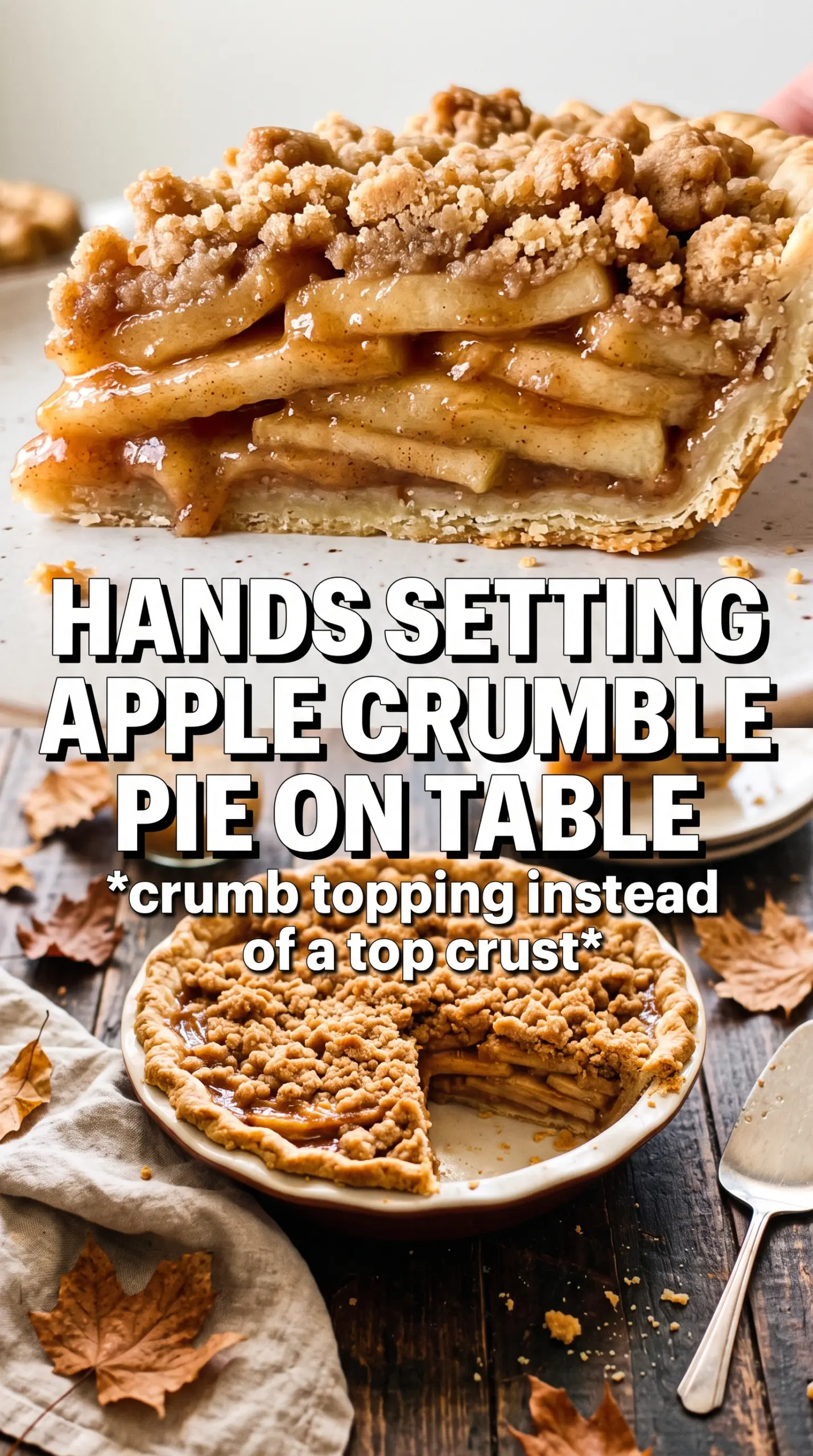
- Rolled oats — Old-fashioned oats hold their shape and give the topping its chewy-crisp bite. Quick oats break down too much and make the crumble softer.
- Brown sugar — This adds molasses depth and helps the topping brown. White sugar will sweeten it, but it won’t give the same caramel note.
- Flour — It binds the crumble just enough so it bakes into clusters. Use all-purpose flour here; anything finer can make the topping dusty.
- Cinnamon and nutmeg — Cinnamon carries the main spice, and nutmeg adds warmth in the background. The nutmeg is subtle, but it keeps the filling from tasting one-note.
Building the Pie So the Filling Sets Cleanly
Preparing the Apples
Pile the sliced apples into the shell after tossing them with the sugar, spices, cornstarch, and lemon juice. The apples should be coated all the way through, not wet and puddled in the bowl. If you see liquid collecting at the bottom before it even hits the pie dish, your apples are extra juicy; spoon most of that syrup over the fruit, not all of it, so the crust doesn’t get flooded.
Mixing the Crumble
Cut the cold butter into the oat mixture until the largest bits look like small marbles and the rest looks like rough gravel. That range of sizes gives you a topping with both crunch and melt. If the mixture turns greasy or paste-like, the butter warmed too much. Chill it for ten minutes before scattering it over the apples if that happens.
Baking Until the Filling Bubbles
Bake at 375°F until the topping is deeply golden and the filling is bubbling through the edges and small gaps in the crumble, usually 55 to 65 minutes. If the top is browning too quickly, tent it with foil after about 35 minutes and keep going. The pie is done by color and bubbling, not by the clock alone, because a pale topping usually means the apples haven’t fully softened underneath.
Cooling Before the First Slice
Let the pie cool for at least an hour before cutting. That pause gives the cornstarch time to set the juices into a sliceable filling instead of a runny one. If you cut early, the pie will still taste good, but the slices won’t hold together and the bottom crust will look underbaked even when it isn’t.
How to Adapt This Pie for Different Kitchens and Different Diets
Make it gluten-free
Use a gluten-free pie shell and swap the all-purpose flour in the crumble for a 1:1 gluten-free baking blend. The topping will still clump nicely, but it may bake a little more delicately, so watch the last 10 minutes closely.
Use all tart apples
If you like a sharper filling, use all Granny Smith apples. The pie will be less sweet and a little firmer, which works well if you want the crumble topping to carry more of the sweetness.
Make it dairy-free
Swap the butter for a solid plant-based butter that’s meant for baking. You want one that stays cold and cuts into crumbs, not a soft spread from a tub, or the topping will bake up greasy instead of crisp.
Store and reheat leftovers the right way
- Refrigerator: Keep covered for up to 4 days. The topping softens a bit, but the flavor holds well.
- Freezer: Freeze baked slices tightly wrapped for up to 2 months. Thaw in the refrigerator before reheating so the crust doesn’t go soggy from condensation.
- Reheating: Warm slices in a 325°F oven until heated through and the topping crisps back up, about 10 to 15 minutes. The microwave works, but it softens the crumble and makes the crust less appealing.
Answers to the Questions Worth Asking
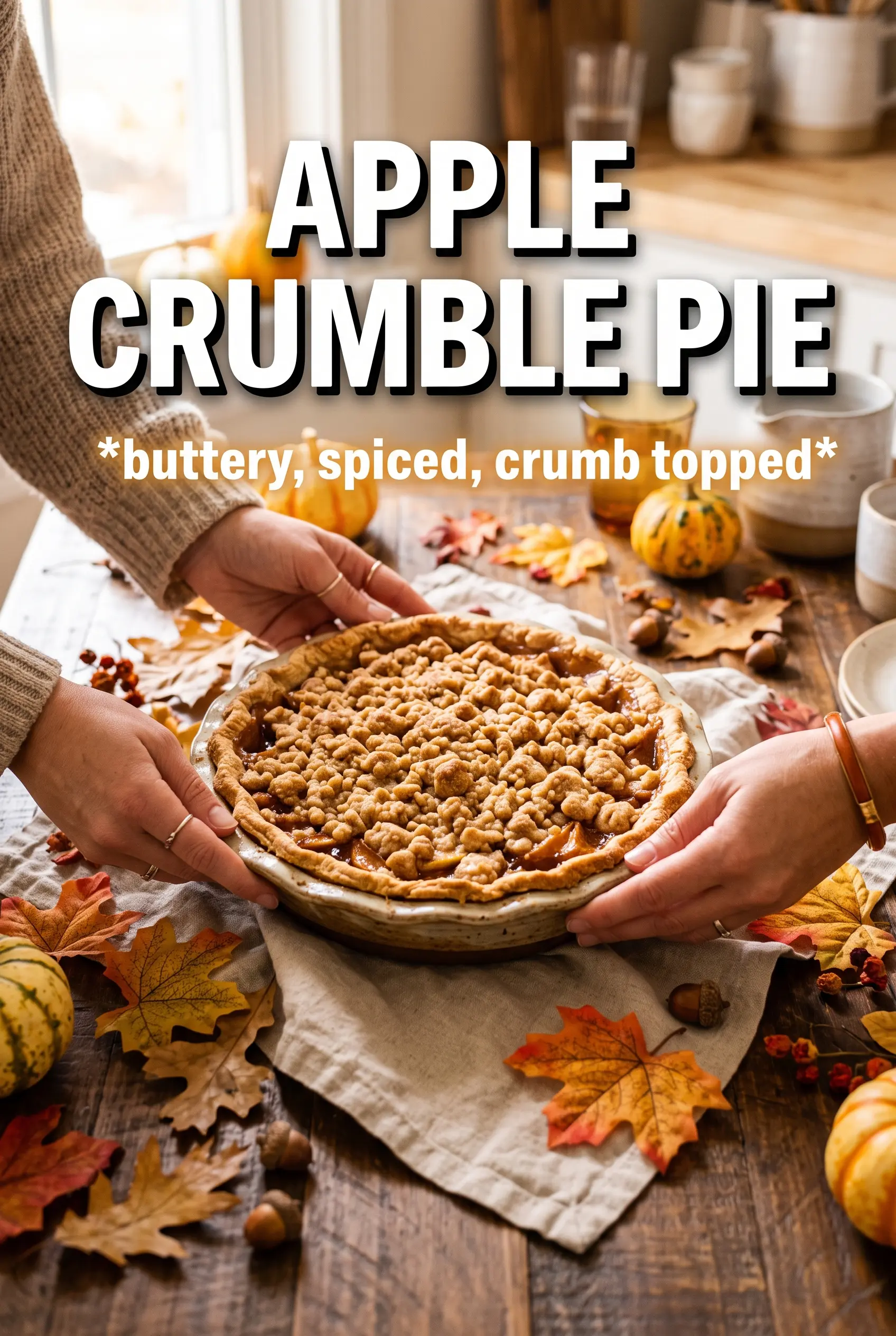
Apple Crumble Pie
Ingredients
Equipment
Method
- Preheat the oven to 375F. Fit the unbaked 9-inch pie shell into a 9-inch pie dish and crimp the edges, then place the pie dish on a sheet pan for easier handling.
- Toss the sliced apples with granulated sugar, cinnamon, nutmeg, cornstarch, and lemon juice until evenly coated. Pile the apples into the unbaked shell and mound slightly so the filling bakes up higher.
- Combine rolled oats, all-purpose flour, brown sugar, cinnamon, and salt in one mixture. Cut in the cold cubed butter until chunky clumps form.
- Scatter the oat crumble topping over the apple filling and cover generously. Bake for 55-65 minutes at 375F until the crumble is deeply golden and you see bubbling at the edges.
- Tent the pie loosely with foil after 35 minutes if the topping browns too quickly. Continue baking until the total bake time is reached and the filling bubbles through.
- Cool the pie for at least 1 hour before slicing so the filling sets. The crumble should feel firm and the apple juices should thicken rather than run.