Apple cider cookies bake up soft in the center with lightly crisp edges, a crinkled cinnamon-sugar shell, and that warm apple-cider note that keeps them from tasting like ordinary spice cookies. The reduced cider gives the dough a deeper, more concentrated flavor than you get from adding cider straight from the bottle, and it also helps the cookies stay tender without turning cakey.
The trick is simple: cook the cider down first, then let it cool completely before it goes into the dough. That step pulls out the water and leaves behind the part that tastes like apple instead of sweet juice. Brown sugar keeps the texture moist, while the cinnamon, ginger, nutmeg, and allspice bring enough spice to make the cider come through without overpowering it.
Below, I’m walking through the one step that matters most with these cookies, plus a few small adjustments that help if you want to make them ahead or change up the spices a little.
The cider flavor came through beautifully, and rolling the dough in cinnamon sugar gave the cookies the best little crunch on the outside. Mine were still soft the next day.
Save these apple cider cookies for the days when you want a soft, cinnamon-sugar cookie with real cider flavor and a tender center.
Why the Apple Cider Has to Be Reduced First
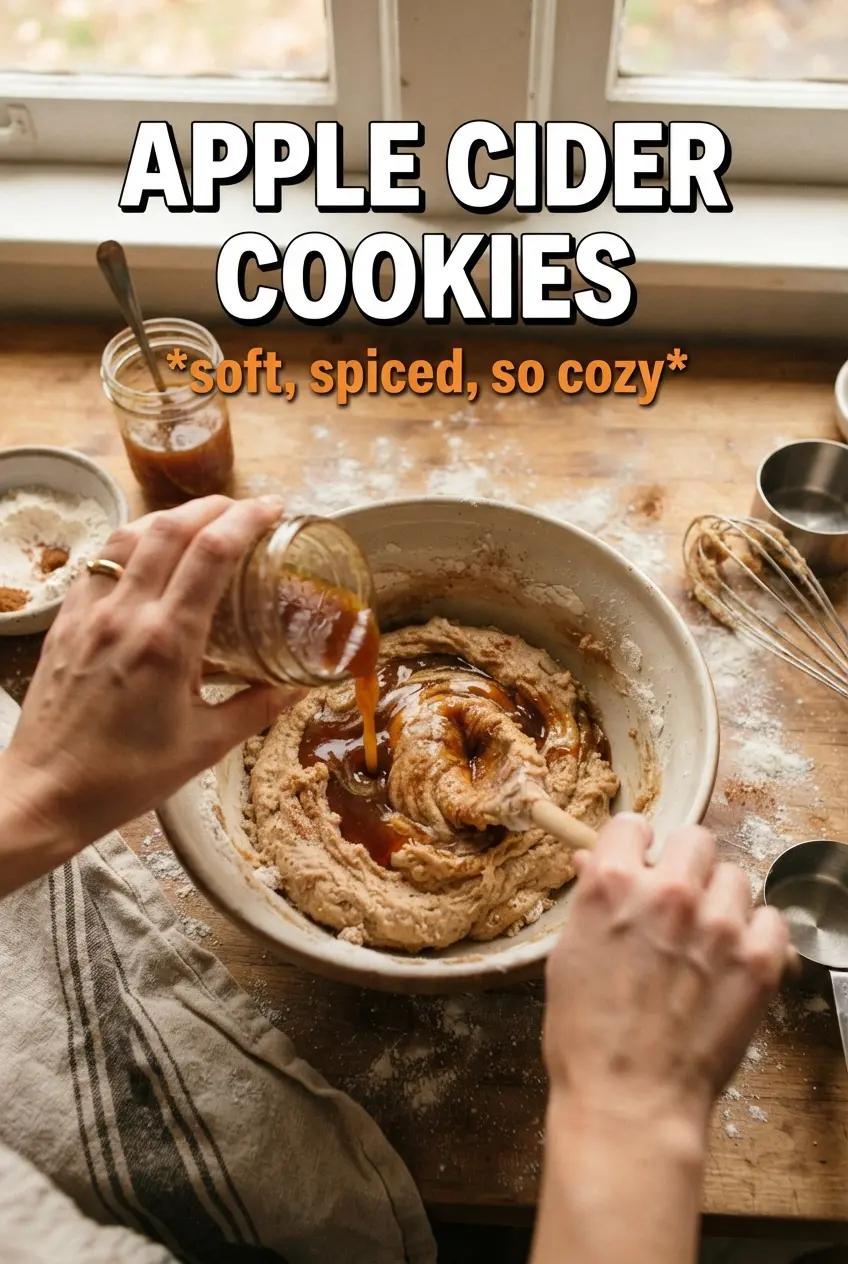
Fresh cider sounds like it should work straight from the bottle, but it waters the dough down and leaves you with cookies that bake up pale and muted. Reducing it concentrates the apple flavor and removes enough liquid to keep the texture soft instead of cakey. You’ll notice the cider thickening into a syrup that coats the spoon lightly; that’s the point where the flavor is worth folding into the dough.
The other thing that matters is cooling it completely. Warm cider melts the butter too soon, and once that happens the cookies spread more than they should. If your dough feels greasy or slack, the cider was still hot when it went in.
- Reduced cider — This is the ingredient that makes the cookies taste like apple cider instead of just cinnamon cookies. Reduce it until you have 1/4 cup, then cool it all the way before mixing.
- Brown sugar — It keeps the centers soft and adds a deeper sweetness that works with the cider. Granulated sugar alone would make the cookies flatter and less rich.
- Spices — Cinnamon, ginger, nutmeg, and allspice build a warm background without turning the cookies into gingerbread. If you only have cinnamon and nutmeg, use them, but the cookie will taste less layered.
What Each Ingredient Is Doing in These Cookies

- All-purpose flour — Gives the cookies enough structure to hold their shape after the cider is added. Don’t swap in cake flour here; it will make them too delicate and more likely to spread.
- Baking soda — Helps the cookies rise just enough and supports that soft, crackled top. If it’s old, the cookies will bake up flatter and denser.
- Butter — Softened butter whips with the sugars to trap air, which is what gives the cookies that tender bite. Melted butter won’t cream properly and usually makes the dough too loose.
- Egg — Binds the dough and helps the cookies set in the oven. One egg is enough here; an extra egg pushes the texture toward cakey.
- Cinnamon sugar coating — This gives the outside a little crunch and a sweet-spice finish. Roll each dough ball thoroughly so the coating bakes into the surface instead of falling off on the pan.
How to Keep the Dough Soft Without Losing the Shape
Reducing the Cider the Right Way
Set the cider over medium heat and let it simmer until it drops to 1/4 cup and looks syrupy. You’re not trying to caramelize it; you just want the water gone and the apple flavor concentrated. If you reduce it too aggressively, the flavor can turn sharp and thin instead of round and sweet. Cool it completely before you add it to the butter mixture.
Creaming the Butter and Sugars
Beat the softened butter with both sugars until it looks fluffy and a little lighter in color. That step gives the cookies their texture, so don’t rush it. If the butter is too cold, the mixture stays sandy; if it’s too warm, the cookies spread too much. The bowl should look smooth and whipped before you add the egg, vanilla, and cooled cider.
Mixing the Flour Just Until It Disappears
Once the dry ingredients go in, stir only until you stop seeing flour streaks. Overmixing builds toughness, and these cookies should stay tender in the middle. The dough will be soft but scoopable. If it looks sticky, chill it for 15 minutes rather than adding more flour, which dries out the final cookie.
Baking Until the Edges Set
Scoop the dough into 1 1/2-tablespoon portions, roll them in cinnamon sugar, and space them on parchment-lined sheets. Bake just until the edges are set and the tops look slightly crinkled; the centers should still look soft. They finish setting on the pan, so pulling them at the right moment matters more than waiting for a deep color. Let them sit for 5 minutes before moving them so they don’t fall apart.
How to Adapt These Apple Cider Cookies Without Losing the Texture
Gluten-Free Version
Use a 1:1 gluten-free all-purpose blend with xanthan gum. The cookies will still be soft and flavorful, but they may spread a little less and have a slightly more delicate crumb. Don’t replace the flour with almond flour alone; that changes the structure too much for this dough.
Dairy-Free Swap
Use a plant-based butter stick made for baking, not a soft tub spread. The stick-style version gives you the closest creaming texture and keeps the cookies from spreading too much. The flavor stays very close to the original, especially once the cinnamon sugar goes on.
Extra Spice, Deeper Cider Flavor
Add an extra 1/4 teaspoon cinnamon or a pinch more allspice if you want the cookies to lean warmer and bolder. For more apple flavor, brush the baked cookies lightly with a little extra reduced cider before the sugar coating sets, but use just a little or the tops can turn sticky.
Storage and Reheating
- Refrigerator: Store in an airtight container for 4 to 5 days. The cookies stay soft, though the cinnamon sugar coating softens a little after day one.
- Freezer: Freeze baked cookies for up to 2 months, or freeze portioned dough balls and bake from frozen with 1 to 2 extra minutes.
- Reheating: Warm baked cookies at room temperature or in a 300F oven for a few minutes. Don’t microwave them long enough to make the butter in the crumb melt out; that turns the centers greasy instead of soft.
Questions I Get Asked About This Recipe
Apple Cider Cookies
Ingredients
Equipment
Method
- Reduce the apple cider in a small saucepan over medium heat until syrupy, then cool completely.
- Preheat the oven to 350F and line baking sheets with parchment.
- Whisk the all-purpose flour, baking soda, cinnamon, ginger, nutmeg, allspice, and salt.
- Beat the softened unsalted butter and both sugars until light and fluffy, then add the egg, vanilla extract, and reduced apple cider.
- Stir in the flour mixture until just combined.
- Scoop the dough into 1-1/2 tablespoon balls and roll in the cinnamon sugar (3 tablespoons sugar + 1 teaspoon cinnamon).
- Place the dough balls on the prepared baking sheets.
- Bake at 350F for 10-12 minutes, until the edges are set.
- Cool on the pan for 5 minutes before transferring.