Apple butter snickerdoodles bake up soft in the middle, crinkled on top, and edged with that classic cinnamon-sugar snap that makes you reach for a second cookie before the first one’s gone. The apple butter doesn’t make these taste like pie filling; it gives the dough a deeper, cooked-apple richness that settles right into the warm spice. What you get is a cookie that feels familiar, but a little more layered and a lot more interesting.
The dough starts with the usual snickerdoodle backbone — butter, sugar, cream of tartar, and baking soda — but the apple butter changes the texture in a useful way. It adds moisture and flavor without making the cookies cakey, as long as you don’t overwork the flour or skip the chill if the dough feels soft. That short rest helps the cookies hold their shape and keeps the centers tender instead of spreading into flat discs.
Below, I’ll walk through the small details that matter here: how to keep the dough easy to scoop, how to get that crackly cinnamon-sugar exterior, and what to do if you want them a little thicker or a little more spice-forward.
The apple butter gave these cookies a soft, almost jammy center and the cinnamon-sugar crust turned out crinkly every time. I chilled the dough for 30 minutes like you said, and they baked up thick instead of spreading all over the pan.
Love the soft apple butter center and cinnamon-sugar crust on these snickerdoodles? Save this recipe for the next time you want a cookie that bakes up thick, crinkly, and warmly spiced.
The Trick to Keeping Apple Butter Snickerdoodles Thick, Not Flat
The biggest risk with apple butter in cookie dough is too much spread. Apple butter adds moisture, and if the butter-sugar base isn’t beaten properly or the dough goes into the oven warm and soft, the cookies can bake up thinner than you want. Creaming the butter and sugar until it’s pale and fluffy builds air into the dough, which gives these cookies lift before the baking soda does its work.
The other key is not treating the flour like a suggestion. Add it and stop mixing as soon as the last streaks disappear. Overmixing develops gluten and turns a soft snickerdoodle into something tougher and less tender. If the dough feels sticky enough to fight you, that 30-minute chill isn’t optional — it’s what helps the dough portion cleanly and keeps the cinnamon-sugar coating from melting into the surface instead of staying dusty and crackly.
What Each Ingredient Is Actually Doing in These Cookies
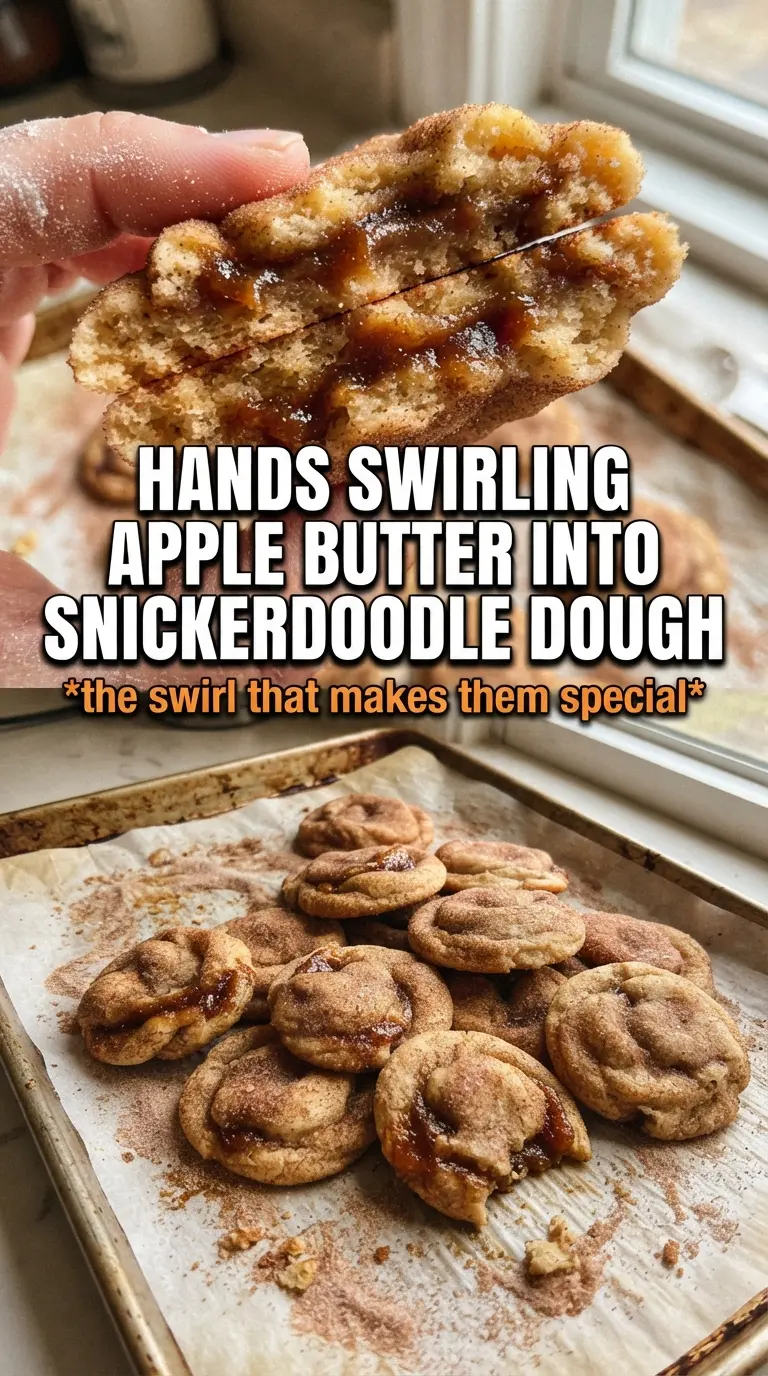
- Apple butter — This is the flavor anchor. It brings concentrated cooked apple flavor and a little extra moisture, which makes the centers soft without turning the cookies wet or cakey. Pumpkin butter won’t taste the same and usually reads heavier; unsweetened applesauce adds moisture but not nearly the same depth.
- Cream of tartar — This is what gives snickerdoodles their signature tang and that slightly chewy, tender bite. It also reacts with the baking soda for lift. If you skip it, the cookies will still bake, but they’ll taste more like spice cookies than true snickerdoodles.
- Butter — Use softened butter, not melted. Softened butter traps air when you cream it with the sugar, and that matters for thickness. If your kitchen is warm and the butter starts to look greasy, chill the dough before baking.
- Cinnamon and apple pie spice — The dough itself is lightly spiced, but the rolling mixture is where the cookie gets its aroma and crackly finish. Apple pie spice adds a little nutmeg and allspice character, which makes the apple butter taste fuller without overpowering it.
- Eggs — They bind the dough and add structure. Room-temperature eggs mix in more smoothly, which helps keep the batter from looking curdled when the apple butter goes in.
From Fluffy Dough to Crackly Edges: The Part That Matters Most
Creaming the Butter and Sugar
Beat the softened butter and granulated sugar until the mixture turns noticeably paler and looks almost whipped. That usually takes a few minutes, not a quick stir. This step builds the structure that helps the cookies rise instead of melt outward. If the butter is too cold, the mixture stays grainy; if it’s too warm, the cookies spread before they set.
Bringing in the Apple Butter
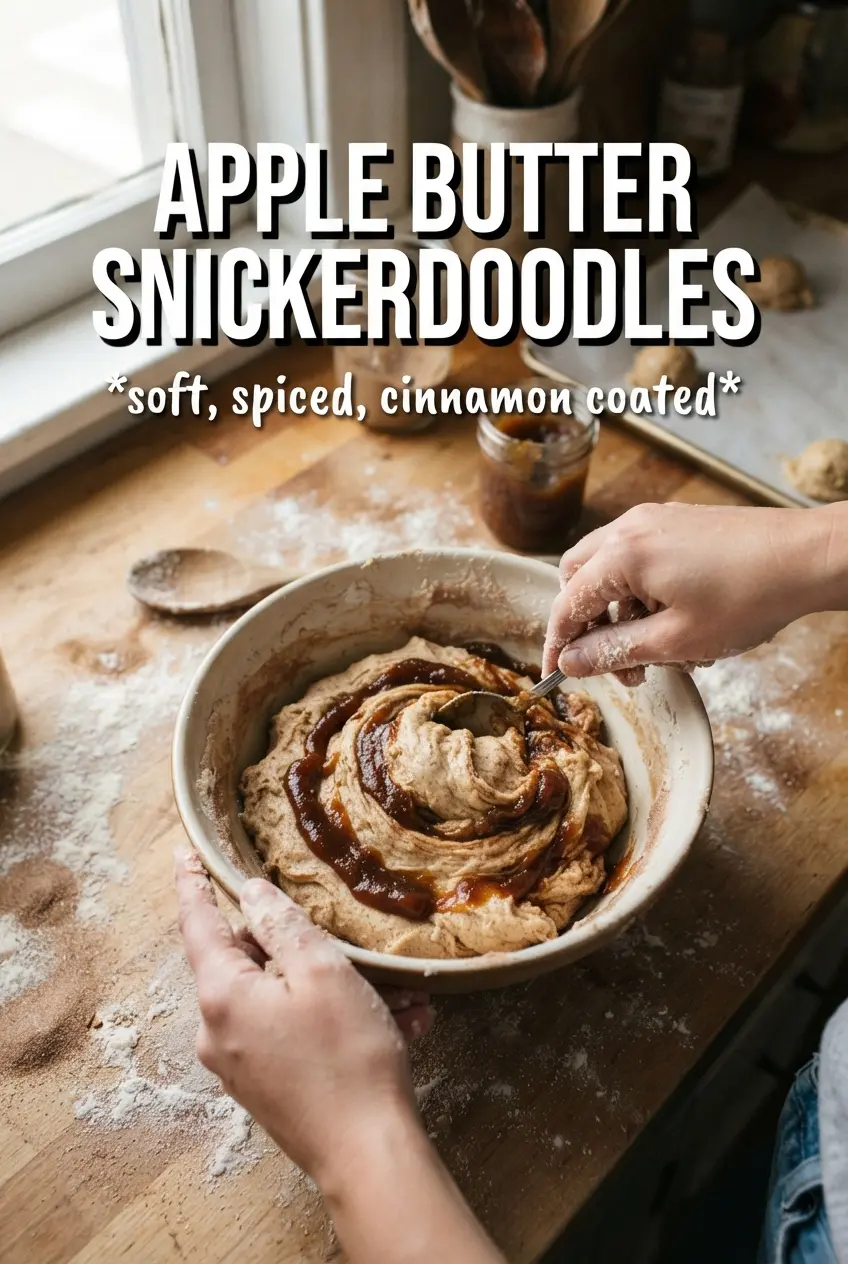
Add the eggs, apple butter, and vanilla after the butter base is fluffy. The mixture may look slightly looser at this stage, and that’s fine. The key is to mix until smooth, then stop. If it looks broken or curdled, the ingredients were too cold; keep mixing and it usually comes back together once the flour goes in.
Mixing and Chilling the Dough
Fold in the dry ingredients just until you stop seeing flour. The dough should be soft but scoopable, not sticky enough to slump. If it clings to your spoon or hands, refrigerate it for 30 minutes. That chill gives the flour time to hydrate and helps the cookies keep that thick, domed center once they hit the oven.
Rolling and Baking for the Crinkle
Roll each dough ball generously in the cinnamon-sugar mixture so the entire surface is coated. That sugar crust is what gives you the classic crackled top as the cookies bake and expand. Bake just until the edges are set and the centers still look a little underdone. Pull them too late and you lose the soft middle that makes these worth repeating.
How to Adapt These Cookies Without Losing the Snickerdoodle Texture
Gluten-Free Version
Use a good 1:1 gluten-free flour blend that includes xanthan gum. The cookies will still spread a bit more than the original, so chill the dough until it feels firm and don’t skip the parchment. The texture stays soft, though the edges will be a touch more delicate.
Dairy-Free Swap
Replace the butter with a plant-based baking stick, not a tub-style spread. Baking sticks behave more like real butter, so the cookies keep their shape and texture. The flavor is slightly less rich, but the apple butter and cinnamon still carry the cookie.
Thicker, Puffier Cookies
Chill the dough for a full hour and bake from cold. You can also make the dough balls a little larger and keep them tall instead of flattening them in your hands. The result is a softer center with more lift and less spread.
Storage and Reheating
- Refrigerator: Store in an airtight container for up to 5 days. The cinnamon-sugar coating softens a little, but the cookies stay tender.
- Freezer: These freeze well. Freeze baked cookies in a single layer, then transfer to a freezer bag, or freeze portioned dough balls and roll them in cinnamon sugar just before baking.
- Reheating: Warm baked cookies for 8 to 10 seconds in the microwave or a few minutes in a low oven. Don’t overheat them or the centers will dry out and the sugar crust will lose its texture.
Questions I Get Asked About This Recipe
Apple Butter Snickerdoodles
Ingredients
Equipment
Method
- Preheat oven to 375°F and line baking sheets with parchment.
- Whisk together all-purpose flour, cream of tartar, baking soda, cinnamon, nutmeg, and salt.
- Beat softened unsalted butter and granulated sugar until very light and fluffy, about 1–2 minutes.
- Add eggs, apple butter, and vanilla extract and beat until smooth.
- Fold in the flour mixture until just combined.
- Refrigerate dough for 30 minutes if sticky.
- Mix rolling sugar, cinnamon, and apple pie spice in a shallow bowl.
- Scoop dough into 1-1/2 tablespoon balls and roll generously in cinnamon sugar.
- Place balls on prepared baking sheets with space between them.
- Bake at 375°F for 10–12 minutes, until crinkled and the edges are just set.
- Cool cookies on the pan for 5 minutes; the centers should be soft but firm as they cool.