Mexican Chocolate Tres Leches Cake turns a classic soaking cake into something deeper, darker, and a little more grown-up. The chocolate sponge holds up under the milk mixture without turning mushy, so every slice stays plush and custardy instead of collapsing on the plate. The cinnamon on top keeps it from tasting flat, and the hint of Mexican hot chocolate or coffee gives the whole cake a warm finish that lingers after the last bite.
What makes this version work is balance. Cocoa in the batter gives the cake structure and flavor before the soak even starts, while whipped egg whites keep the crumb light enough to drink in the tres leches mixture. The soak needs to go onto a fully cooled cake, and it should be poured slowly so the milk has time to settle through the holes instead of pooling on top. Let it rest long enough in the fridge and the texture changes from “cake with sauce” to something much better: evenly soaked, clean-cut, and deeply soft.
You’ll also find a few notes below on what the hot chocolate or coffee is doing here, how to keep the whipped topping stable, and what to change if you need a caffeine-free version.
The cake soaked up the milk mixture evenly and stayed tender all the way through. I loved the cinnamon on top with the chocolate, and the coffee note made it taste richer without being too sweet.
Love the rich chocolate crumb and cinnamon finish? Save this Mexican Chocolate Tres Leches Cake for the dessert nights when you want something soaked, chilled, and deeply satisfying.
The Reason the Chocolate Sponge Still Holds Up After the Soak
A tres leches cake falls apart when the base is too dense, too dry, or too delicate for the milk it needs to absorb. This chocolate version avoids that by using whipped egg whites for lift, then a cocoa-rich batter that has enough structure to stay intact once the soak goes in. The result should be soft and spoon-tender, but not sludgy.
The other thing that matters here is cooling. If the cake is even slightly warm, the milk mixture slides toward the bottom and leaves the top patchy. A fully cooled cake pulls the liquid downward at a steady pace, which is how you get that even, creamy texture from edge to edge.
- Egg whites — These are doing the lifting. Beat them to stiff peaks and fold them in gently so you keep the air that gives the cake its light crumb.
- Cocoa powder — Use unsweetened cocoa, not hot cocoa mix. Hot cocoa brings sugar and sometimes starch, which throws off both the batter and the final flavor.
- Mexican hot chocolate or strong coffee — This is the flavor bridge between the chocolate cake and the milk soak. Coffee gives depth without reading as coffee; Mexican hot chocolate adds cinnamon and a warmer sweetness.
- Heavy cream — This is worth using as written. Lighter cream won’t whip as cleanly or hold the top as well once the cake chills.
What Each Layer Is Actually Doing Here
The cake, the soak, and the topping each have a job, and when one of them is off, the whole dessert feels unbalanced. The cake gives you a chocolate base that can absorb liquid without disintegrating. The milk mixture softens the crumb and turns it custardy. The whipped cream keeps the top from tasting heavy after all that richness.
Because this is a soaked cake, the quality of the dairy matters more than it would in a standard layer cake. Sweetened condensed milk brings sweetness and body. Evaporated milk adds richness without extra fat. Together they create the classic tres leches texture that plain milk can’t match.
- Sweetened condensed milk — Don’t swap this for regular milk and sugar unless you want a thinner, less luxurious soak. It’s the main source of sweetness and the thick texture that clings to the crumb.
- Evaporated milk — This keeps the soak from becoming cloying. If you absolutely need a substitute, use half-and-half, but the cake will taste a little less traditional.
- Powdered sugar in the whipped cream — Just enough to stabilize the topping without making it gritty. Granulated sugar can leave a faint crunch if it doesn’t fully dissolve.
- Cinnamon — Add it at the end so it sits on top like a dusting, not as a muddy layer. It should smell warm and fragrant the moment you cut into the cake.
Building the Batter and Pouring the Soak Without Ruining the Texture
Whipping the Eggs for Lift
Beat the yolks and sugar until they turn pale and thick enough to ribbon off the whisk. That tells you the sugar has started dissolving and the batter has enough air to stay light. When you fold in the dry ingredients, stop as soon as the flour disappears. Overmixing at this point tightens the crumb and makes the cake less willing to absorb the milk later.
Folding in the Whites Gently
The egg whites need to reach stiff peaks, not dry, clumpy ones. Fold them in with a light hand and a wide spatula so you don’t knock out the air you just built. If you stir aggressively, the batter deflates and the cake bakes up lower, which means fewer pockets for the soak to move through.
Knowing When the Cake Is Ready for the Milk
Bake until the top springs back when touched and a tester comes out clean from the center. Then let it cool completely in the pan. Poking holes in a warm cake can cause the structure to tear, and the soak will slide into the cracks instead of dispersing evenly. Once it’s cool, pierce the surface all over so the milk has a path to travel.
Letting the Soak Work in the Fridge
Pour the milk mixture slowly and in stages. If you dump it all in at once, the top can flood before the liquid has time to sink in. Refrigerate the cake for at least 2 hours, but longer is even better. The flavor settles and the texture firms up just enough to slice cleanly without losing that custardy center.
Three Ways to Adjust the Cake Without Losing What Makes It Special
Coffee-Forward Version
Use strong brewed coffee instead of Mexican hot chocolate in the soak. The cake gets a deeper mocha edge and the chocolate tastes more pronounced, but you lose the cinnamon-sweet warmth that makes the original taste softer and more traditional.
Dairy-Free Adaptation
Use full-fat canned coconut milk in place of the evaporated milk and a thick coconut-based condensed milk substitute for the sweetened condensed milk. The texture stays creamy, but the flavor shifts toward coconut, so it no longer tastes like a classic tres leches in the strictest sense.
Less Sweet Finish
Reduce the powdered sugar in the whipped cream or skip it entirely. The topping will be cleaner and less dessert-heavy, which works well if you’re serving the cake after a rich meal. Don’t cut the sugar in the soak too far, or the cake loses the signature tres leches softness.
Storage and Reheating
- Refrigerator: Keep covered for up to 4 days. The cake stays moist, and the flavor gets even better by day two, though the whipped topping will soften a bit.
- Freezer: Freeze the cake without the whipped cream for up to 1 month. Wrap it tightly after the soak has fully absorbed, then thaw overnight in the fridge. Add fresh whipped cream after thawing, not before.
- Reheating: Serve this cake chilled. Warming it melts the topping and turns the soak loose, which takes away the clean, custardy slice this dessert is known for.
Answers to the Questions Worth Asking
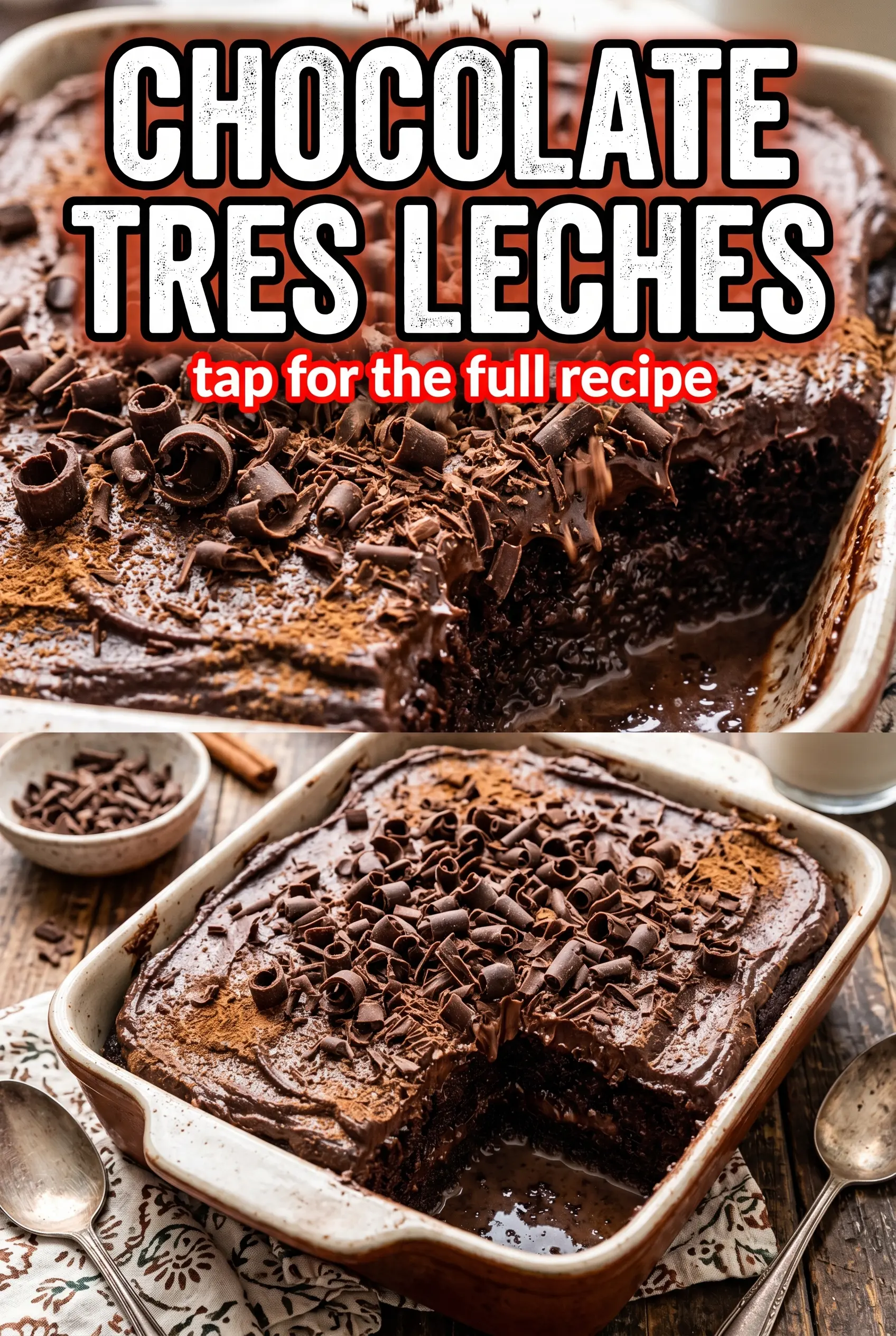
Mexican Chocolate Tres Leches Cake
Ingredients
Equipment
Method
- Whisk together the all-purpose flour, unsweetened cocoa powder, baking powder, and salt until evenly combined (no dry pockets).
- Beat the egg yolks with the granulated sugar until pale and thicker, about 2–3 minutes, with the mixture looking lighter in color.
- Add the vegetable oil, whole milk, and vanilla extract to the yolk mixture and mix just until smooth.
- Fold the flour mixture into the yolk mixture until no streaks remain, keeping the batter thick.
- Beat the egg whites until stiff peaks form, then fold them into the batter gently to keep it airy.
- Pour the batter into a 9x13 baking dish and spread into an even layer so it bakes uniformly.
- Bake at 350°F for 30 minutes, until the center springs back and a toothpick comes out with moist crumbs.
- Combine the sweetened condensed milk, evaporated milk, and Mexican hot chocolate or strong coffee in a bowl until smooth.
- Pierce the cooled cake all over with a fork or skewer so the soak can flow in, then pour the mixture evenly over the top.
- Refrigerate for at least 2 hours, until the cake looks saturated and holds its shape when sliced.
- Whip the heavy cream with the powdered sugar until stiff peaks form, so the cream stands up cleanly.
- Spread the whipped cream over the chilled cake and dust the cinnamon on top for a speckled finish.
- Serve chilled so the whipped cream stays firm and the layers slice neatly.