Bright, tender potatoes soaked in lemon, dill, and capers have a way of making a side dish feel like the main event on the table. This version stays fresh instead of heavy, with a dressing that clings to the potatoes and sharp little bursts of briny caper in every bite. It’s the kind of potato salad that gets finished first because it tastes clean, lively, and still satisfying.
The trick is in the balance: enough Dijon to help the dressing emulsify, enough lemon zest to carry the citrus flavor past the first bite, and enough cooling time for the potatoes to drink everything in. Baby potatoes hold their shape better than floury ones, which matters here because you want distinct pieces, not a mash. The herbs stay bright, the capers stay punchy, and the olive oil gives the dressing a silky finish without turning it dense.
Below you’ll find the small details that make this salad work, including the best way to cool the potatoes before dressing them and a few smart swaps if you need to work around what’s in the fridge.
The potatoes held their shape after chilling, and the lemon-dill dressing soaked in instead of pooling at the bottom. The capers gave it just enough bite that I didn’t need anything else on the plate.
Save this lemon & herb potato salad for the side dish that stays bright, tangy, and full of dill after chilling.
The Reason This Potato Salad Stays Bright Instead of Heavy
Most potato salads go dull because the dressing gets absorbed unevenly or the potatoes break down before they’ve cooled enough to hold their shape. Here, the potatoes are dressed while still slightly warm, which helps them take on the lemon and mustard without turning mushy. Then the chilled rest finishes the job, giving you a salad that tastes seasoned all the way through instead of only on the surface.
The other thing that matters is the cut. Baby potatoes, halved, give you enough surface area for the dressing to cling without sacrificing texture. If you use larger potatoes, cut them into even chunks and stop cooking as soon as a knife slides in with no resistance. Overcooked potatoes are the fastest way to get a salad that feels soft and cloudy instead of crisp around the edges.
What the Lemon, Dijon, and Capers Are Each Doing Here

- Baby potatoes — Waxy potatoes are the right choice because they hold their shape after boiling and chilling. Russets break down too easily and turn the salad starchy. If baby potatoes aren’t available, use Yukon Golds cut into even 1 1/2-inch pieces.
- Lemon juice and zest — The juice brings the tang, but the zest is what makes the lemon taste fresh instead of sharp and thin. Use both, and zest the lemons before juicing them. That small order matters when you’re trying to get as much citrus aroma into the bowl as possible.
- Dijon mustard — Dijon helps the dressing emulsify, so the oil and lemon juice coat the potatoes instead of slipping off. It also adds a gentle bite that bridges the capers and herbs. Don’t skip it unless you’re swapping in another emulsifier like a little mayonnaise, which will make the salad creamier and heavier.
- Capers — These bring salt and briny pop, which keeps the salad from tasting flat. Drain them well so their liquid doesn’t water down the dressing. If you want a milder version, rinse them quickly before adding them.
- Fresh dill and parsley — Fresh herbs matter here. Dried herbs won’t give the same clean, grassy finish. Dill leads, parsley rounds things out, and both should go in at the end so they stay bright after chilling.
How to Coat the Potatoes Without Making Them Greasy
Boiling Until Just Tender
Start the potatoes in cold salted water and bring them up to a simmer so they cook evenly from the outside in. You want tender centers and intact edges, not pieces that collapse when you drain them. The best test is a fork or knife that slips in with little resistance, then pulls out cleanly. Drain them well and let the steam escape for a few minutes so the dressing doesn’t slide off a wet surface.
Whisking the Dressing Until It Looks Unified
Combine the olive oil, lemon juice, zest, Dijon, salt, and pepper in a bowl and whisk until it looks slightly thick and glossy. If it separates right away, keep whisking a little longer; Dijon needs agitation to help the mixture hold together. Taste it before it hits the potatoes. It should lean a touch bolder than you think you want, because the potatoes will mellow it as they chill.
Tossing While the Potatoes Are Warm
Add the capers, dill, and parsley, then pour the dressing over the potatoes and toss gently until every piece is coated. Warm potatoes absorb flavor better than cold ones, but they still need to be handled carefully so they don’t tear. If the bowl feels crowded, use a wide one and fold rather than stir aggressively. The salad should look glossy, not oily, and you should still see distinct pieces of potato.
Chilling for the Final Flavor
Cover and refrigerate for at least 2 hours. That rest is where the salad turns from dressed potatoes into something cohesive, because the lemon, mustard, and herbs settle into the flesh. If you serve it too soon, the seasoning tastes sharp on the outside and bland in the middle. Right before serving, give it one more gentle toss and add a pinch of salt if the chill dulled the flavors.
Three Smart Ways to Adapt the Salad
Make it dairy-free, naturally
This salad is already dairy-free, which makes it easy to serve alongside grilled fish, chicken, or a mezze spread without extra changes. The olive oil and mustard give it enough body that you don’t miss any creamy element.
Turn down the brine
If you want a softer, less salty finish, rinse the capers quickly under cold water and pat them dry before adding them. You’ll lose a little of the punch, but the lemon and herbs come forward more clearly.
Add more body for a picnic version
Stir in chopped celery or thinly sliced radishes for extra crunch that holds up in the fridge. If you want a more substantial salad, add chopped hard-boiled eggs or flaked tuna after the potatoes have chilled; both turn it into a full lunch without changing the lemon-caper backbone.
Swap the herbs based on what you have
If dill isn’t available, use more parsley plus a little chopped chives or tarragon. Dill gives the most natural match for lemon and capers, but this salad still works as long as you keep the herbs fresh and don’t replace them with dried seasoning.
Storage and Reheating
- Refrigerator: Store covered for up to 3 days. The potatoes will absorb more of the dressing over time, so the flavor gets deeper, but the herbs will soften.
- Freezer: I don’t recommend freezing this salad. Potatoes change texture after thawing and turn grainy or watery.
- Reheating: Serve this salad cold or at cool room temperature. If it’s been in the fridge, let it sit out for 15 to 20 minutes and toss once before serving. Heating it will dull the lemon and make the herbs lose their freshness.
Questions I Get Asked About This Recipe
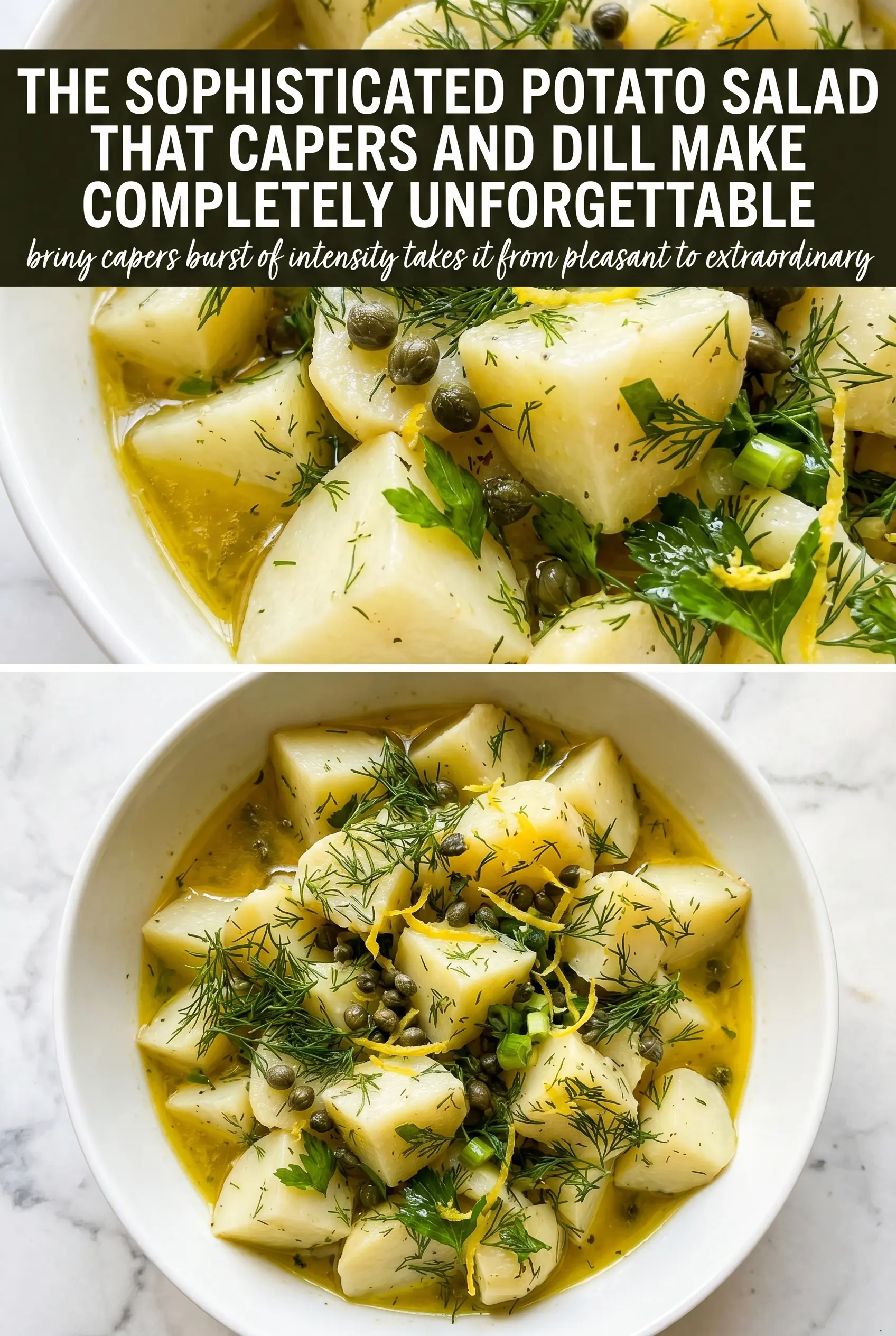
Lemon & Herb Potato Salad with Dill and Capers
Ingredients
Equipment
Method
- Bring a large pot of water to a boil, then add the halved baby potatoes and cook until tender, about 10-15 minutes at boiling heat. (Visual cue: a knife should slide in easily.)
- Drain the potatoes and spread them out to cool until no longer steaming. (Visual cue: they look matte and room temperature.)
- Whisk olive oil, lemon juice, lemon zest, Dijon mustard, salt, and pepper until smooth and glossy. (Visual cue: the dressing thickens slightly and looks uniform.)
- Combine the cooled potatoes with capers, fresh dill, and fresh parsley in a serving bowl. (Visual cue: green herbs and capers are evenly dotted through the potatoes.)
- Pour the lemon dressing over the potato mixture and toss well until every piece is coated. (Visual cue: the potatoes look evenly shiny and lightly speckled.)
- Refrigerate for 2 hours before serving to let the flavors meld. (Visual cue: the salad firms up slightly and looks more cohesive.)