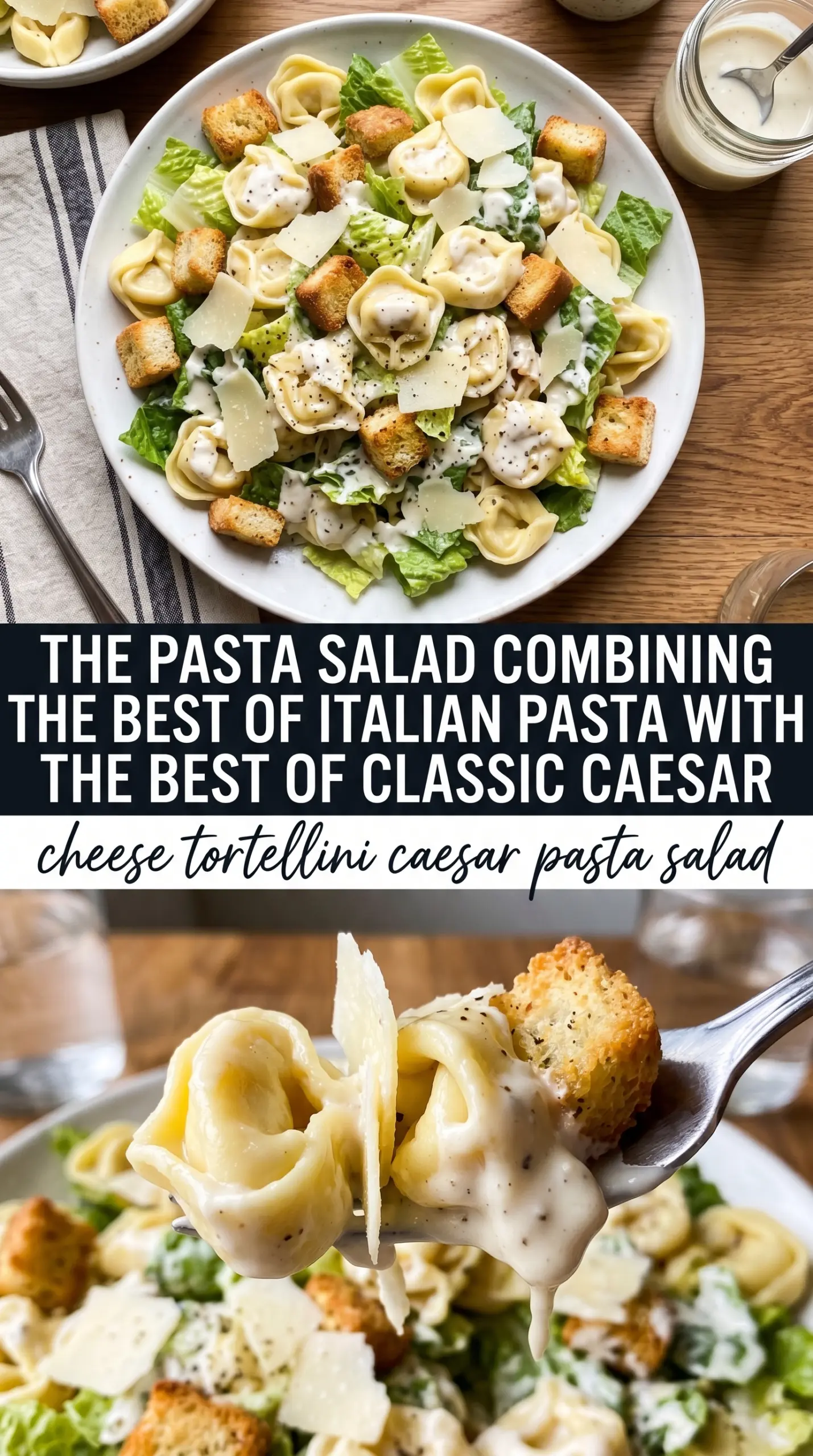
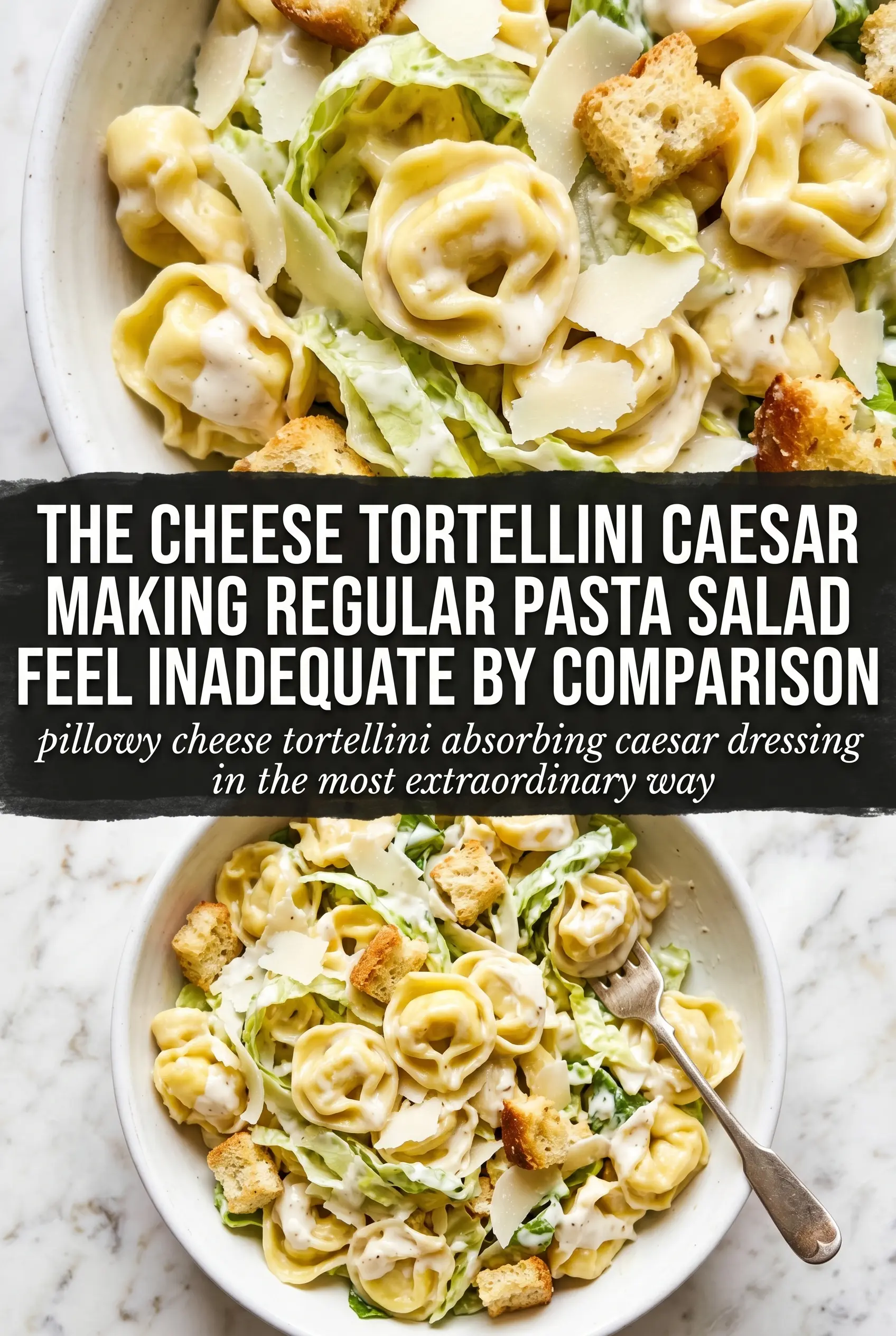
Cheese tortellini gives Caesar salad the kind of heft that turns it from a side dish into the bowl people hover over all afternoon. The pasta stays tender and cheesy, the romaine brings the crunch, and the creamy dressing clings to every curve instead of sliding to the bottom of the bowl. It eats like something a little more polished than the usual pasta salad, but it still comes together fast enough for a weeknight or a potluck.
The trick is keeping the tortellini chilled after cooking and waiting to add the croutons until the very end. Warm pasta softens romaine and turns Caesar dressing thin and greasy, which is how you end up with a salad that looks tired before it hits the table. A squeeze of lemon wakes up the dressing and keeps the Parmesan from tasting flat once everything chills.
Below, I’ll show you the small timing details that keep the lettuce crisp, plus a few smart swaps if you want to make this ahead or adjust it for what’s in your fridge.
The tortellini stayed tender after chilling, and the dressing coated everything without making the romaine soggy. I added the croutons at the table and they stayed crunchy the whole time.
Cheese tortellini Caesar pasta salad is the one to bookmark for potlucks, because it eats like a meal and still feels crisp.
The Part That Keeps Caesar Pasta Salad Crisp Instead of Heavy
Most pasta salads go soft because everything gets tossed together while the noodles are still warm. That heat works against you here. It melts the dressing, wilts the romaine, and pulls the whole bowl toward a heavy, slick texture instead of a fresh one.
Rinsing the tortellini under cold water is not about washing away flavor. It stops the cooking fast and cools the pasta so the dressing stays creamy instead of loosening into a thin coating. Let the salad rest in the fridge for at least an hour, but keep the croutons out until serving time. They’re there for texture, and once they sit in dressing, they go soft fast.
- Cheese tortellini — This is the anchor. Fresh or refrigerated tortellini gives you the best texture, but frozen works too if you cook it just until tender and cool it immediately. Overcooked tortellini gets mushy after chilling.
- Caesar dressing — Use a dressing you actually like straight from the bottle or homemade. Since it’s the main flavor here, a weak dressing makes the whole salad taste flat. If yours is thick, loosen it with the lemon juice rather than adding extra dressing.
- Romaine lettuce — Romaine holds up better than softer greens once the salad chills. Chop it into bite-size pieces so it coats evenly and doesn’t clump at the bottom of the bowl.
- Parmesan — Grated Parmesan melts into the dressing a little and seasons the pasta from the inside. Save some for the top so the salad still looks fresh when it hits the table.
- Croutons — These belong on top only. If you add them early, they absorb dressing and lose the crunchy contrast that makes the salad worth eating.
What Each Ingredient Is Actually Doing in Cheese Tortellini Caesar Pasta Salad
- Fresh vegetables (vibrant, crisp, quality) — Start with fresh, brightly colored vegetables. Wilted vegetables make everything taste tired.
- Acid (vinegar, lemon juice, or lime) — The acid prevents oxidation and prevents flat taste. It’s essential for brightness.
- Oil (quality matters for flavor) — Good olive oil adds freshness. Cheap oil makes the salad taste flat.
- Salt (enhances all other flavors) — Proper seasoning makes vegetables taste more like themselves. Don’t undersalt.
- Fresh herbs (tender ones added last) — Fresh herbs add complexity and brightness. Add them right before serving.
- Protein or hearty elements (if using) — These should complement without overwhelming the vegetables. Keep the salad light.
- Dressing applied just before serving — Don’t dress early or the vegetables release liquid and wilt. Timing is everything.
- Taste and adjust (check for balance) — The salad should taste bright and assertive. Add more acid or salt if needed.
How to Keep the Tortellini from Turning the Salad Limp
Cooking and Cooling the Pasta
Cook the tortellini just to package directions, then drain it and rinse it under cold water right away. You want the pasta cool to the touch before it meets the lettuce. If it’s even a little warm, the romaine softens and the dressing turns loose. Drain it well too, because excess water at the bottom of the bowl waters down the Caesar flavor.
Building the Bowl
Combine the tortellini, romaine, tomatoes, and half the Parmesan in a large bowl before adding the dressing. That lets the dressing spread more evenly instead of pooling on the bottom. Toss with the lemon juice and Caesar dressing until everything is coated, then taste before salting. Caesar dressing and Parmesan already bring plenty of salt, so the seasoning usually needs only a small adjustment.
Chilling and Finishing
Cover the bowl and chill it for at least an hour. That rest gives the flavors time to settle and helps the dressing cling instead of sitting on top. Right before serving, add the remaining Parmesan and the croutons. If you add them sooner, the croutons lose their crunch and the top of the salad looks soggy by the time people sit down.
Make It Chicken Caesar Pasta Salad
Add chopped grilled or rotisserie chicken and you’ve got a fuller meal with the same Caesar backbone. The chicken picks up the dressing nicely, but it also makes the salad a little denser, so I’d keep the romaine generous and add the croutons just before serving.
Dairy-Free Version
Use a dairy-free tortellini if you can find one and swap in a dairy-free Caesar-style dressing plus a Parmesan alternative. You’ll lose some of the classic salty richness, so lean on lemon juice and black pepper to keep the salad bright.
Gluten-Free Swap
Use gluten-free tortellini and gluten-free croutons, and check the dressing label because some Caesar dressings use wheat-based thickeners. The texture will be a touch softer than the original, so chill it fully before serving to help it set up.
Swap the Tomatoes for Another Crunchy Element
If cherry tomatoes aren’t your thing, try diced cucumber or thinly sliced radish. Both keep the salad fresh and crisp, but cucumber brings more moisture and radish adds a peppery bite, so choose based on the texture you want at the table.
Storage and Reheating
- Refrigerator: Keep leftovers covered for up to 2 days. The romaine softens and the croutons lose their crunch, so the texture is best on day one.
- Freezer: Don’t freeze this salad. The lettuce turns watery and the dressing breaks once it thaws.
- Reheating: This salad isn’t meant to be reheated. If the dressing thickens in the fridge, let the bowl sit at room temperature for 10 to 15 minutes and toss in a spoonful of dressing or a squeeze of lemon to loosen it.
Questions I Get Asked About This Recipe
Cheese Tortellini Caesar Pasta Salad
Ingredients
Equipment
Method
- Cook cheese tortellini according to package directions until tender. Drain and rinse with cold water so the pasta doesn’t stick.
- Combine tortellini, romaine lettuce, cherry tomatoes, and half of the Parmesan in a large bowl. Fold gently to distribute everything evenly.
- Add Caesar dressing and lemon juice, then toss to coat thoroughly. Make sure the lettuce is lightly covered in creamy dressing.
- Season with salt and pepper to taste. Refrigerate for at least 1 hour so the flavors meld and the salad firms up.
- Top with the remaining Parmesan and croutons just before serving. Serve cold for the best creamy texture with crunch.