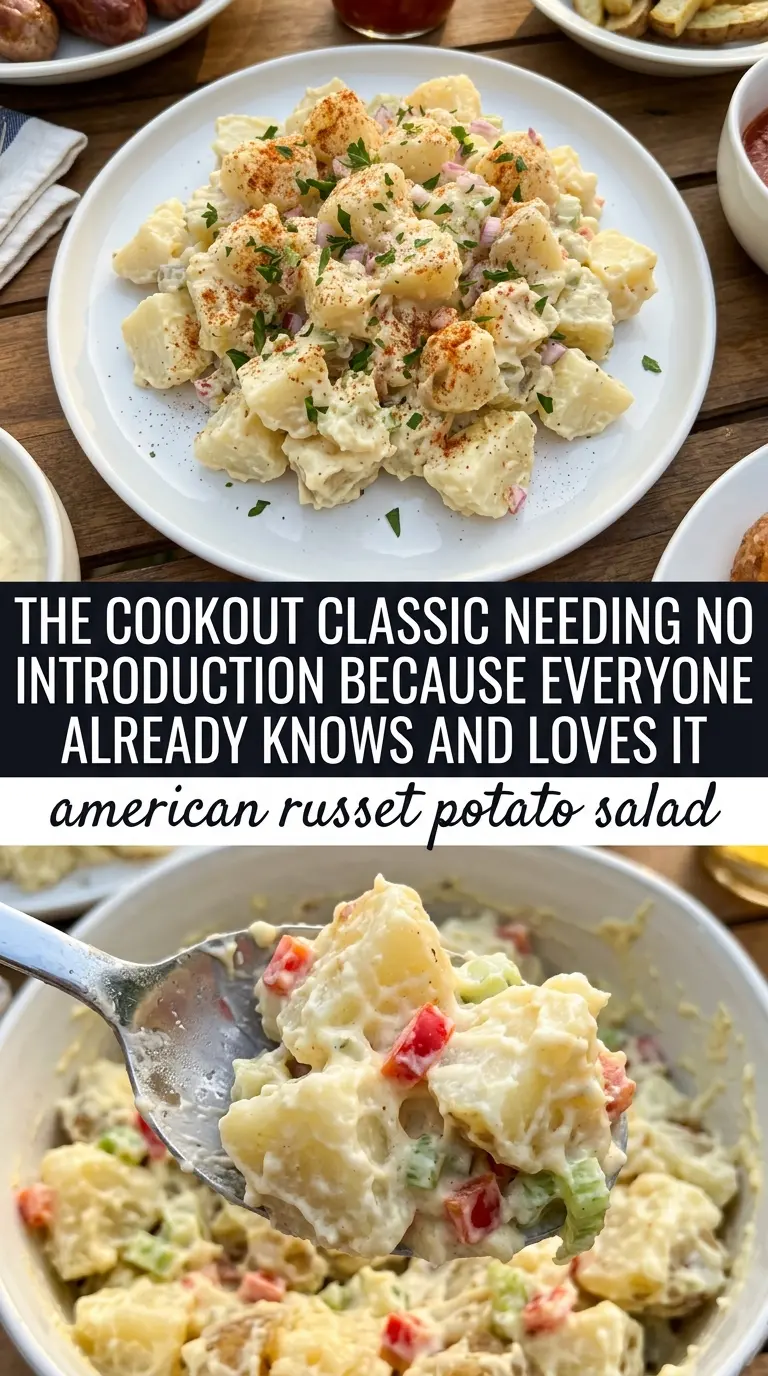
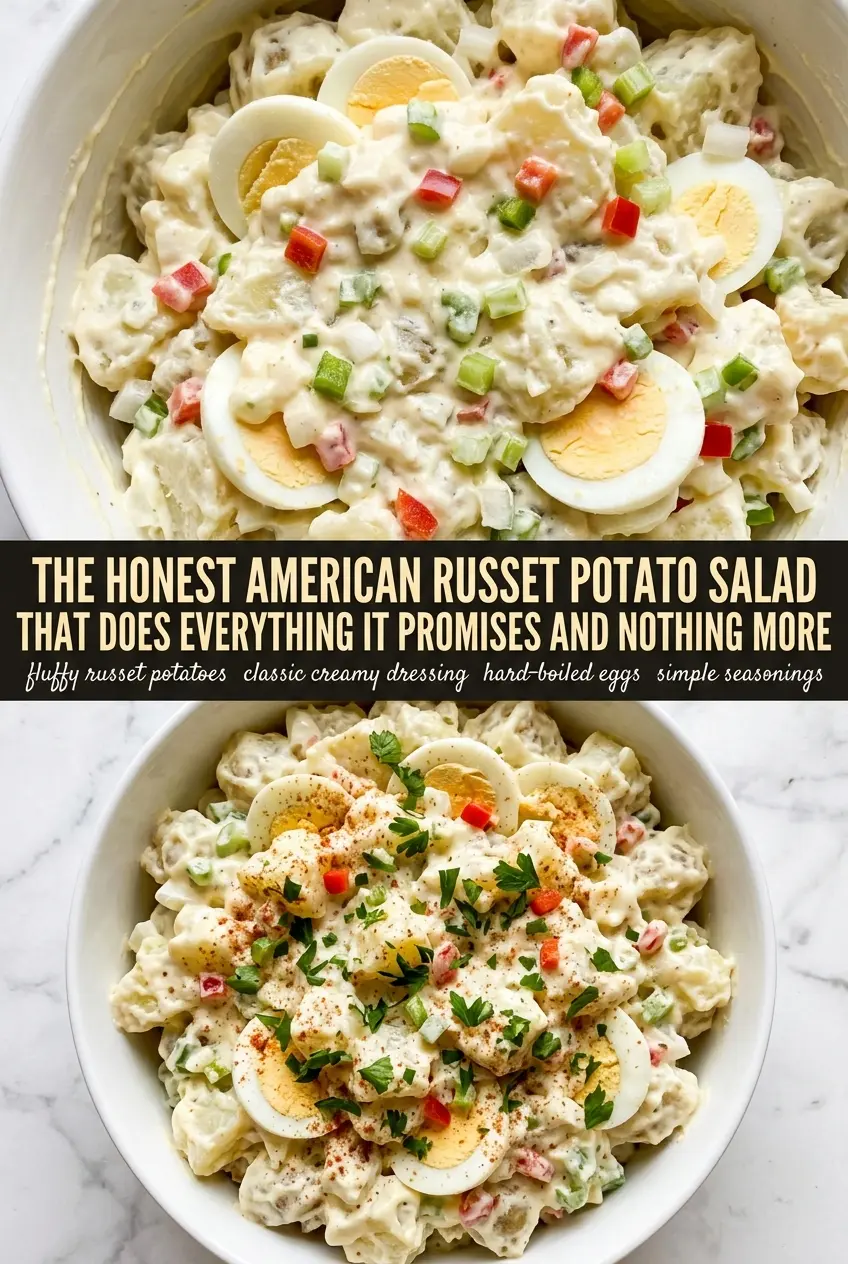
American russet potato salad earns its place on the table because the potatoes turn tender without falling apart, then soak up just enough creamy dressing to taste seasoned all the way through. The texture is what makes it memorable: soft chunks of potato, little pops of egg, crunch from celery, and that familiar tang from mustard and relish.
Russet potatoes behave differently than waxy potatoes here. They break down a little on the edges, which gives the salad that classic, slightly fluffy body instead of neat cubes sitting in mayonnaise. The trick is cooling the potatoes completely before mixing, then folding everything together gently so the salad stays substantial instead of turning pasty.
Below, I’ll walk through the small details that matter most: how to keep the potatoes from getting waterlogged, why the dressing tastes better after a chill, and what to change if you want a more old-school deli-style salad or a lighter version.
The potatoes held their shape just enough, and after two hours in the fridge the dressing tasted balanced instead of heavy. My husband kept sneaking bites straight from the bowl.
Creamy russet potato salad with eggs, relish, and mustard is the kind of classic side dish worth bookmarking for picnics and Sunday suppers.
The Reason Russet Potatoes Make This Salad Better Than Waxy Ones
Russets sound like a small detail, but they change the whole bowl. Their starchier texture softens at the edges after boiling, which helps the dressing cling instead of sliding off each piece. That gives you the old-fashioned potato salad texture people expect from a deli counter or family picnic spread.
The main thing to watch is overcooking. If the potatoes cook past tender, they start to turn mushy when you fold in the dressing. Drain them as soon as a knife slips in cleanly, then let the steam escape before chilling, or the extra moisture will thin the salad later.
- Russet potatoes — These are the backbone of the dish. Waxy potatoes stay firmer, but they don’t give you the same creamy, slightly fluffy texture that makes this salad feel traditional.
- Mayonnaise — Use a mayo you actually like eating on its own, because it’s the main flavor here. A lighter mayo works, but the salad will taste less rich and less round.
- Sweet pickle relish — This brings sweetness, vinegar, and crunch in one move. If you swap it for chopped dill pickles, the salad gets sharper and less classic.
- Yellow mustard and vinegar — These keep the dressing from tasting flat. The vinegar wakes up the mayo, and the mustard gives the salad that familiar picnic-table bite.
What Each Ingredient Is Actually Doing in American Russet Potato Salad
- Fresh vegetables (vibrant, crisp, quality) — Start with fresh, brightly colored vegetables. Wilted vegetables make everything taste tired.
- Acid (vinegar, lemon juice, or lime) — The acid prevents oxidation and prevents flat taste. It’s essential for brightness.
- Oil (quality matters for flavor) — Good olive oil adds freshness. Cheap oil makes the salad taste flat.
- Salt (enhances all other flavors) — Proper seasoning makes vegetables taste more like themselves. Don’t undersalt.
- Fresh herbs (tender ones added last) — Fresh herbs add complexity and brightness. Add them right before serving.
- Protein or hearty elements (if using) — These should complement without overwhelming the vegetables. Keep the salad light.
- Dressing applied just before serving — Don’t dress early or the vegetables release liquid and wilt. Timing is everything.
- Taste and adjust (check for balance) — The salad should taste bright and assertive. Add more acid or salt if needed.
Getting the Dressing to Coat Every Bite Without Turning Gluey
Boiling the Potatoes Until Just Tender
Start the potatoes in cold water so they heat evenly, then simmer them until a knife slips through with almost no resistance. If the water is boiling hard, the outside of the cubes can break down before the centers are done. Drain them well and spread them out for a few minutes so the surface steam disappears before you chill them.
Mixing the Dressing Separately
Stir the mayonnaise, mustard, vinegar, sugar, salt, and pepper in a bowl before it touches the potatoes. That keeps the seasoning even and lets you taste the balance first. If the dressing tastes a little sharp at this stage, that’s fine; it settles after the potatoes and eggs go in and chill.
Folding, Not Mashing
Add the dressing over the potato mixture and fold gently with a spatula. The goal is to coat the pieces, not stir them until they collapse. If the bowl looks a little loose at first, don’t chase it with extra stirring; the salad thickens as it chills for two hours.
Deli-Style Tang
Add an extra teaspoon of vinegar and a little more mustard if you want a sharper, more deli-counter style salad. It cuts through the mayo and gives the whole bowl a brighter bite, but the flavor will be less mellow.
Dairy-Free Version
This recipe is already dairy-free if your mayonnaise is dairy-free, which most are. Check the label if you’re serving someone with an allergy, and keep the rest of the ingredients the same for the classic texture.
Lighter Potato Salad
Swap half the mayonnaise for plain Greek yogurt if you want a lighter finish. The salad will taste a little tangier and less rich, and it won’t hold quite as long in the fridge, but it still chills into a creamy side dish.
Make-Ahead for a Crowd
Make the salad a day ahead if you can. Potato salad tastes better after the dressing has time to settle in, and the chill firms up the texture. Hold back a spoonful of relish or a little paprika until serving so the top looks fresh.
Storage and Reheating
- Refrigerator: Store covered for up to 4 days. The potatoes soften a bit more each day, but the flavor stays good.
- Freezer: Don’t freeze this salad. Mayonnaise separates and the potatoes turn grainy after thawing.
- Reheating: Serve it cold or barely cool. Potato salad isn’t a reheated dish, and warming it will loosen the dressing and change the texture.
Answers to the Questions Worth Asking
American Russet Potato Salad
Ingredients
Equipment
Method
- Boil peeled and cubed russet potatoes in a Dutch oven until tender, about 15–20 minutes after the water reaches a boil, and add salt as needed during cooking. Drain and cool completely so the salad stays creamy and not watery.
- Chill the cooked potatoes until fully cooled, about 10–15 minutes at room temperature, then set aside while you mix the rest. This prevents the dressing from thinning when combined.
- In a large bowl, combine cooled potatoes with chopped hard-boiled eggs, diced celery, finely diced onion, and sweet pickle relish. Mix just until everything is evenly distributed.
- In a bowl, mix mayonnaise, yellow mustard, white vinegar, sugar, salt, and black pepper until smooth and well combined. Taste and adjust salt and pepper if needed.
- Pour the dressing over the potato mixture and fold gently so the potato cubes hold their shape. Stir minimally to keep a classic, chunky texture.
- Refrigerate at 40°F / 4°C for at least 2 hours, up to overnight, to let flavors blend. The salad will thicken slightly as it chills.
- Before serving, garnish with paprika for a traditional look. Spoon into a serving bowl and serve cold.