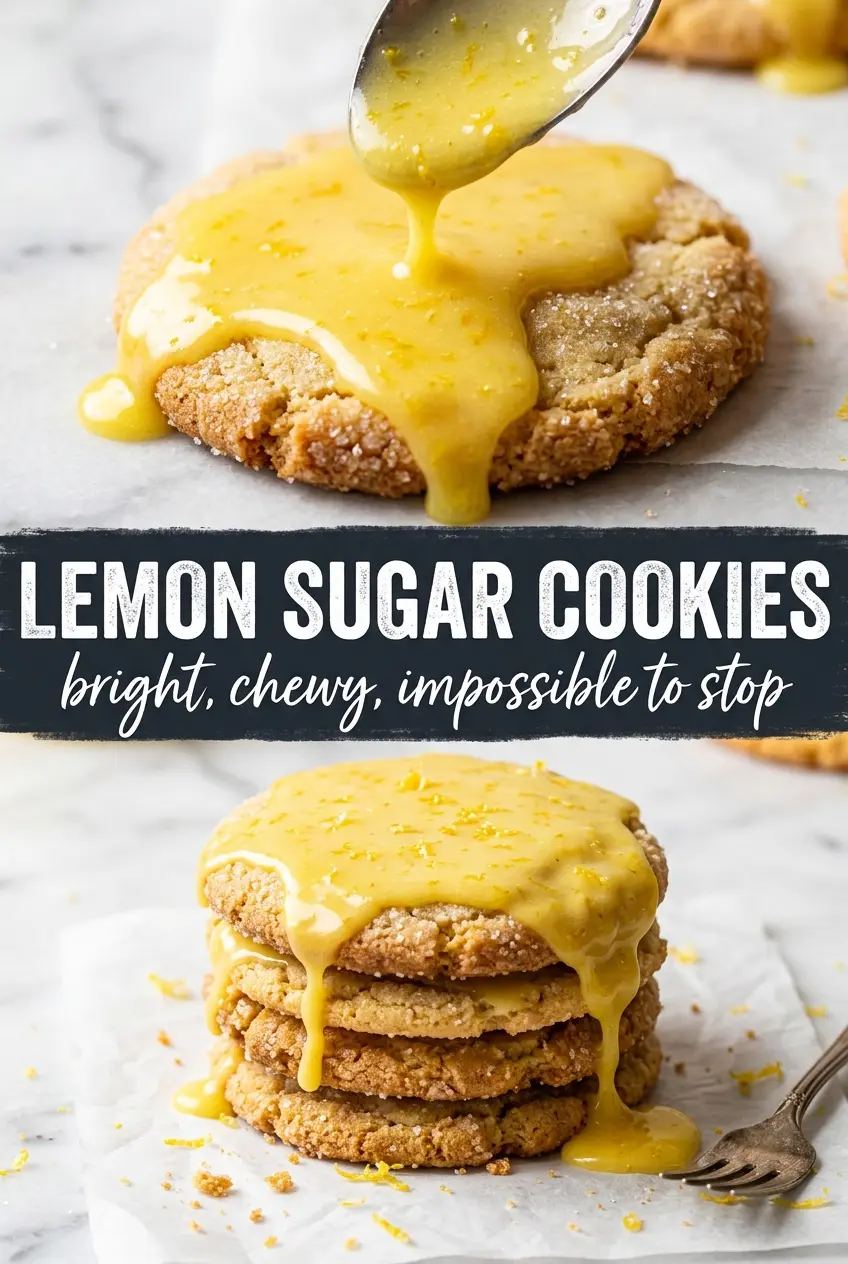
Soft lemon sugar cookies live on the line between tender and chewy, with crisp sugary edges and a bright glaze that wakes up every bite. The crackled tops give them that old-fashioned sugar cookie look, but the lemon keeps them from tasting flat or overly sweet.
What makes this version work is the balance of fresh lemon juice and zest against a straightforward sugar cookie base. The zest carries the strongest lemon flavor, while the juice goes into both the dough and the glaze for clean brightness. Chilling the dough for just 30 minutes keeps the cookies from spreading too fast, which is how you get those thick, pillowy centers instead of thin rounds.
Below, you’ll find the small details that matter: how to keep the dough easy to roll, why the cookies should come out before the centers look fully done, and the best way to glaze them so the finish stays glossy instead of soaking in.
The cookies stayed thick and soft, and the lemon glaze set up with that shiny finish instead of disappearing into the tops. I chilled the dough exactly 30 minutes and they baked up with the prettiest crackled sugar shells.
Pin these lemon sugar cookies for the crackled tops, soft centers, and bright lemon glaze that sets beautifully.
The Secret to Thick Lemon Cookies Is Stopping the Bake Early
Most sugar cookies that spread too much are overmixed, overbaked, or both. These stay plush because the dough gets a short chill and the cookies come out when the edges are just set and the centers still look underdone. That carryover heat finishes the middle without drying out the crumb.
The sugar coating matters too. It gives the cookies that sparkling, crackled top and helps the outside bake into a thin shell while the inside stays soft. If your cookies are coming out flat, the first thing to check is the dough temperature; warm butter will win every time and send the cookies into a puddle.
What Each Ingredient Is Actually Doing in These Cookies

- Butter — Softened butter whips air into the dough, which is what gives these cookies their light, tender center. Use real butter here; margarine won’t give the same texture or flavor.
- Fresh lemon zest — This is the strongest lemon flavor in the recipe. Don’t skip it, and zest the lemons before juicing them so you’re not fighting a slippery, squeezed fruit.
- Fresh lemon juice — The juice brightens the dough and loosens the glaze. Bottled juice tastes sharper and flatter, so use fresh if you can.
- All-purpose flour — The amount is what keeps the cookies thick enough to hold their shape. If you pack the flour hard into the cup, the dough can turn dry, so spoon and level it.
- Powdered sugar for the glaze — This creates a smooth drizzle that sets on the cookies instead of running off. Add the lemon juice slowly so you can control the thickness.
Mixing, Chilling, and Baking the Dough Without Losing the Soft Center
Whipping the Butter and Sugar
Beat the butter and granulated sugar until the mixture turns pale and fluffy. That step is doing more than mixing; it’s building the texture, so don’t rush it. Once the eggs, lemon juice, lemon zest, and vanilla go in, the mixture may look a little loose, but it should come together once the dry ingredients are added. If the butter was too cold, the batter will stay clumpy and won’t trap enough air.
Bringing the Dough Together
Add the flour, baking soda, baking powder, and salt just until a dough forms. Stop as soon as you stop seeing dry flour, because overmixing is what makes sugar cookies tough instead of tender. The dough should be soft but scoopable, not sticky enough to smear on your hands. If it feels too loose to roll, the thirty-minute chill is doing the work you need.
Rolling in Sugar and Baking to the Right Point
Shape the dough into 1.5-inch balls, roll them in granulated sugar, and space them well apart on parchment-lined sheets. Bake at 375°F until the edges are set and the centers still look slightly underdone, because the cookies keep cooking on the pan after they leave the oven. If you wait until the centers look finished in the oven, they’ll cool into dry cookies. Let them cool completely before glazing or the glaze will slide right off.
Whisking the Glaze and Finishing the Cookies
Stir together the powdered sugar, lemon juice, and lemon zest until smooth and spoonable. You want a glaze that drips in ribbons, not one that’s so thin it disappears into the cookie. Drizzle it over the cooled cookies and let it set for about 15 minutes. If the glaze gets too thick while you work, a few drops of lemon juice will loosen it back up.
Three Ways to Make These Lemon Sugar Cookies Work for Your Kitchen
Dairy-Free Version
Swap the butter for a high-quality plant-based baking stick, not a soft tub spread. You’ll lose a little of the classic butter flavor, but the cookies will still bake up soft and thick if the substitute is firm enough to cream properly.
Extra Lemon Punch
Add another teaspoon of zest to the dough and keep the glaze on the thicker side so the lemon reads brighter on the palate. More juice sounds tempting, but too much will soften the dough and make the cookies spread more.
Make-Ahead Dough
The dough can be chilled overnight if you want to bake later. Let it sit at room temperature just long enough to scoop easily, because ice-cold dough can crack when you roll it and bake unevenly in the center.
Storage and Reheating
- Refrigerator: Store baked cookies in an airtight container for up to 5 days. The glaze may soften a little, but the cookies stay tender.
- Freezer: Freeze the unbaked dough balls, sugar coating and all, for up to 2 months. Bake from frozen and add 1 to 2 minutes to the bake time.
- Reheating: These don’t need real reheating, but if you want them warm, give a cookie 5 to 8 seconds in the microwave. Longer than that and the glaze can melt and the center turns gummy.
Answers to the Questions Worth Asking
Lemon Sugar Cookies
Ingredients
Equipment
Method
- Beat the butter and granulated sugar until very fluffy. Mix until the mixture looks light and airy.
- Add the eggs, fresh lemon juice, lemon zest, and vanilla extract, then beat until combined. Scrape the bowl as needed so no streaks remain.
- Stir in the all-purpose flour, baking soda, baking powder, and salt until a dough forms. Mix just until you no longer see dry flour.
- Refrigerate the dough for 30 minutes until firm. It should hold its shape when you scoop it.
- Roll the dough into 1.5-inch balls. Roll each ball in extra sugar for rolling.
- Place the dough balls on parchment-lined sheet pans. Space them apart so they have room to spread.
- Bake at 375°F for 10-12 minutes. Bake until the edges are just set but the centers still look underdone.
- Cool the cookies completely after baking. Let them reach room temperature before glazing.
- Whisk together the powdered sugar, fresh lemon juice, and lemon zest until smooth. The glaze should be pourable with no lumps.
- Drizzle the lemon glaze over the cooled cookies. Let the glaze fall into cracks and drizzle artfully over each one.
- Let the glaze set for 15 minutes before serving. The top should look glossy but not wet.