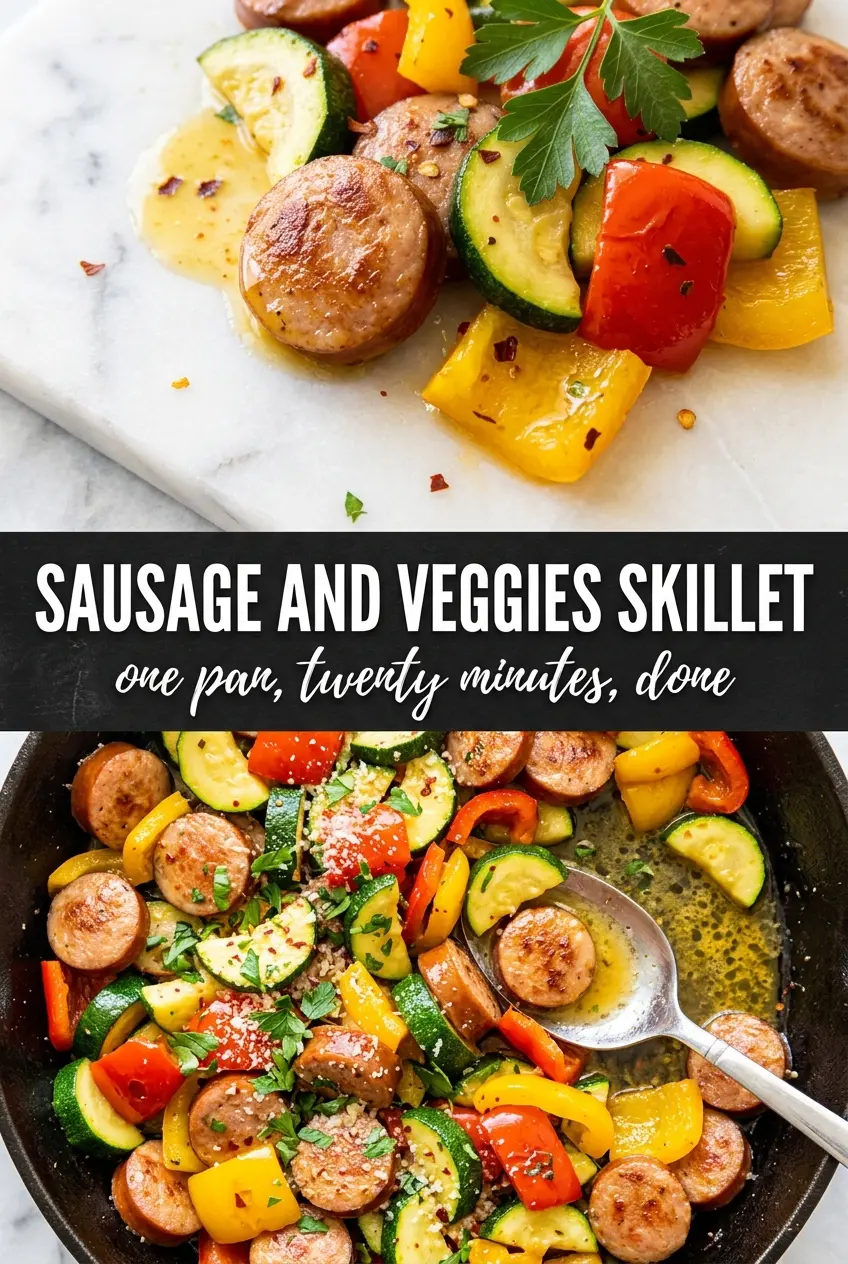
Caramelized sausage, blistered peppers, and tender zucchini hit the pan at just the right heat in this skillet dinner, and the payoff is all about contrast: crisp-edged sausage, sweet onions, and vegetables that stay bright instead of turning soggy. It’s the kind of meal that tastes like you put in a lot more work than you did, which is exactly why it earns a spot in the weeknight rotation.
The trick is not crowding the pan. Smoked sausage already brings a lot of flavor, so the vegetables just need high heat, a little oil, and enough space to brown instead of steam. I also like adding the garlic near the end so it perfumes the pan without burning, and the lemon at the table wakes everything up at the finish.
Below, I’ll walk through the one detail that keeps the vegetables from softening too early, plus a few smart swaps if you want to change up the sausage or make this skillet fit what’s in your fridge.
The sausage got those crispy browned edges I was hoping for, and the zucchini stayed tender instead of turning mushy. I squeezed the lemon over the top like you suggested and it pulled everything together.
Like this sausage and veggies skillet? Save it for a fast one-pan dinner with caramelized sausage and blistered vegetables.
The Trick to Keeping the Vegetables Charred Instead of Watery
The biggest mistake in a sausage and veggies skillet is turning it into a covered, crowded sauté. Once the vegetables start steaming, they lose their edges and the whole pan tastes flat. High heat is your friend here, but only if the pan has room to breathe.
Cook the sausage first and pull it out after it browns. That leaves flavorful fat and browned bits behind, which help the peppers and onion pick up color fast. Add the zucchini later, after the sturdier vegetables have had a chance to blister, because zucchini gives up moisture quickly and can soften before the pan gets a chance to caramelize.
What Each Ingredient Is Actually Doing in This Skillet

- Smoked sausage or kielbasa — This is the anchor of the dish. It brings salt, fat, and that deep browned flavor that makes the vegetables taste cooked with intention instead of just tossed in a pan. Any good smoked sausage works; if you use a milder one, the paprika matters even more.
- Bell peppers and red onion — These are the backbone of the skillet because they stand up to high heat and turn sweet at the edges. Red, green, and yellow peppers give you color and a mix of flavors, but what matters most is slicing them into similar sizes so they cook at the same pace.
- Zucchini — Zucchini softens quickly, so it goes in after the peppers and onion have started to char. If you add it too early, it collapses and releases water before the pan has enough heat to brown anything.
- Garlic — Garlic needs a short stay in the pan. It perfumes the oil and rounds out the skillet, but if it goes in too early it burns and turns bitter fast.
- Smoked paprika and Italian seasoning — These seasonings bridge the sausage and vegetables without hiding either one. Smoked paprika deepens the smoky note from the sausage, while Italian seasoning gives the whole pan a little herb lift. If you only have plain paprika, the dish still works, but it loses some of that subtle campfire warmth.
- Lemon wedges and parsley — These finish the dish instead of decorating it. Lemon cuts through the richness, and parsley keeps the skillet tasting fresh, especially if you’re serving it straight from a heavy cast iron pan.
Building the Sear Before the Vegetables Go In
Brown the sausage in one layer
Set the sausage slices down in a hot skillet and leave them alone until the bottom side turns deeply golden. If you move them too soon, they won’t form that crisp edge that gives the whole dish its best flavor. You’re looking for browning, not just heating through, so let the pan do the work.
Use the browned bits from the pan
When the sausage comes out, don’t wipe out the skillet. Those browned bits at the bottom are concentrated flavor, and the vegetables will pick them up as they cook. If the pan looks dry, add the oil before the peppers go in so nothing scorches.
Char the peppers before adding zucchini
The peppers and onion need a few minutes on higher heat before the zucchini joins them. This gives them time to blister at the edges and soften just enough to taste sweet. If the pan starts to look crowded, don’t add extra vegetables all at once; cook in batches or the whole skillet will steam.
Finish fast once the zucchini goes in
Zucchini only needs a short cook to become tender. Add the garlic at the same time so it blooms in the oil without burning, then season and return the sausage to warm through. Once everything is hot, stop cooking and serve right away so the vegetables keep their texture.
Three Ways to Work This Skillet Into What You’ve Got
Make it dairy-free and gluten-free without changing the method
This recipe is naturally both dairy-free and gluten-free as long as your sausage is labeled accordingly. That’s the one ingredient to check closely, because some brands use fillers or spices that aren’t gluten-free. The cooking method stays the same, and the final skillet still tastes full and savory.
Swap in chicken sausage for a lighter finish
Chicken sausage works well if you want something a little leaner, but it browns a bit faster and can dry out if you overcook it. Keep the heat steady, pull it as soon as it’s browned, and bring it back only at the end. You’ll get a lighter skillet with the same one-pan ease.
Add potatoes when you want a heartier dinner
Small diced potatoes can turn this into a bigger meal, but they need a head start. Par-cook them first or roast them separately, then fold them in near the end so the sausage and vegetables don’t overcook while the potatoes catch up. Without that extra step, the peppers and zucchini will be done long before the potatoes are.
Use whatever peppers are in the fridge
The color mix is flexible. If you only have one or two colors, the skillet still works, though the flavor will lean a little more toward sweet or grassy depending on what you use. The important part is slicing them into even strips so they blister at the same pace.
Storage and Reheating
- Refrigerator: Store leftovers in an airtight container for up to 4 days. The vegetables soften a little, but the flavor stays strong.
- Freezer: It freezes, but the zucchini will lose some texture after thawing. If you plan to freeze it, slightly undercook the vegetables first and cool the skillet completely before packing it up.
- Reheating: Reheat in a skillet over medium heat until hot, which helps the sausage and vegetables regain a little color. The microwave works in a pinch, but it softens the vegetables and mutes the browned edges.
Questions I Get Asked About This Recipe
Sausage and Veggies Skillet
Ingredients
Equipment
Method
- Heat the olive oil in a large cast iron skillet over medium-high heat. Add the sausage rounds in a single layer and cook undisturbed for 3-4 minutes until deeply golden on one side.
- Flip the sausage rounds and cook another 2 minutes until browned. Remove and set aside.
- Add the bell peppers and onion to the same skillet and cook over high heat for 4-5 minutes until blistered and charred at the edges.
- Add the zucchini and garlic to the skillet and cook for 3-4 minutes until just tender.
- Season with smoked paprika, Italian seasoning, salt, and pepper, then return the sausage to the pan. Toss everything together for 1-2 minutes until heated through.
- Garnish with fresh parsley and serve with lemon wedges for brightness.