Garlic Parmesan chicken skewers come off the grill with crisp, caramelized edges, juicy centers, and just enough cheese to form a salty crust without turning heavy. The best bites have a little char from the grates, a bright hit of lemon, and that buttery finish that clings to the chicken instead of sliding off the skewer.
What makes this version work is the balance in the marinade. Olive oil carries the garlic and herbs, lemon juice wakes everything up, and a small amount of freshly grated Parmesan adds body without making the chicken sticky before it hits the grill. Thirty minutes is enough time for the surface to pick up flavor without the acid tightening the meat too much.
Below, I’ll show you how to keep the garlic from burning, how to get the cheese to stick in the right way, and what to do if you want to bake these instead of grilling them.
The chicken stayed juicy and the Parmesan got these golden little crusty bits on the grill. I was worried the garlic would burn, but it mellowed into the butter at the end and tasted perfect.
Like this recipe? Save these garlic Parmesan chicken skewers for your next grilling night when you want charred edges, juicy chicken, and a buttery Parmesan finish.
The Marinade That Sticks Without Turning the Chicken Mushy
The trap with chicken skewers is loading the marinade with too much acid or too much cheese. Lemon juice gives these skewers brightness, but it stays in check so the chicken doesn’t turn soft or chalky after the rest. Parmesan goes in twice for a reason: a little in the marinade seasons the meat, and the rest gets added after grilling, when the heat can turn it into a salty finish instead of a burned coating.
The other thing that matters is how the chicken is cut. Keep the cubes close to 1.5 inches so they cook through at the same pace, and don’t pack them so tightly on the skewer that the centers steam. You want open space for the grill heat to move around the meat and for the edges to pick up color.
What Each Ingredient Is Doing In These Skewers
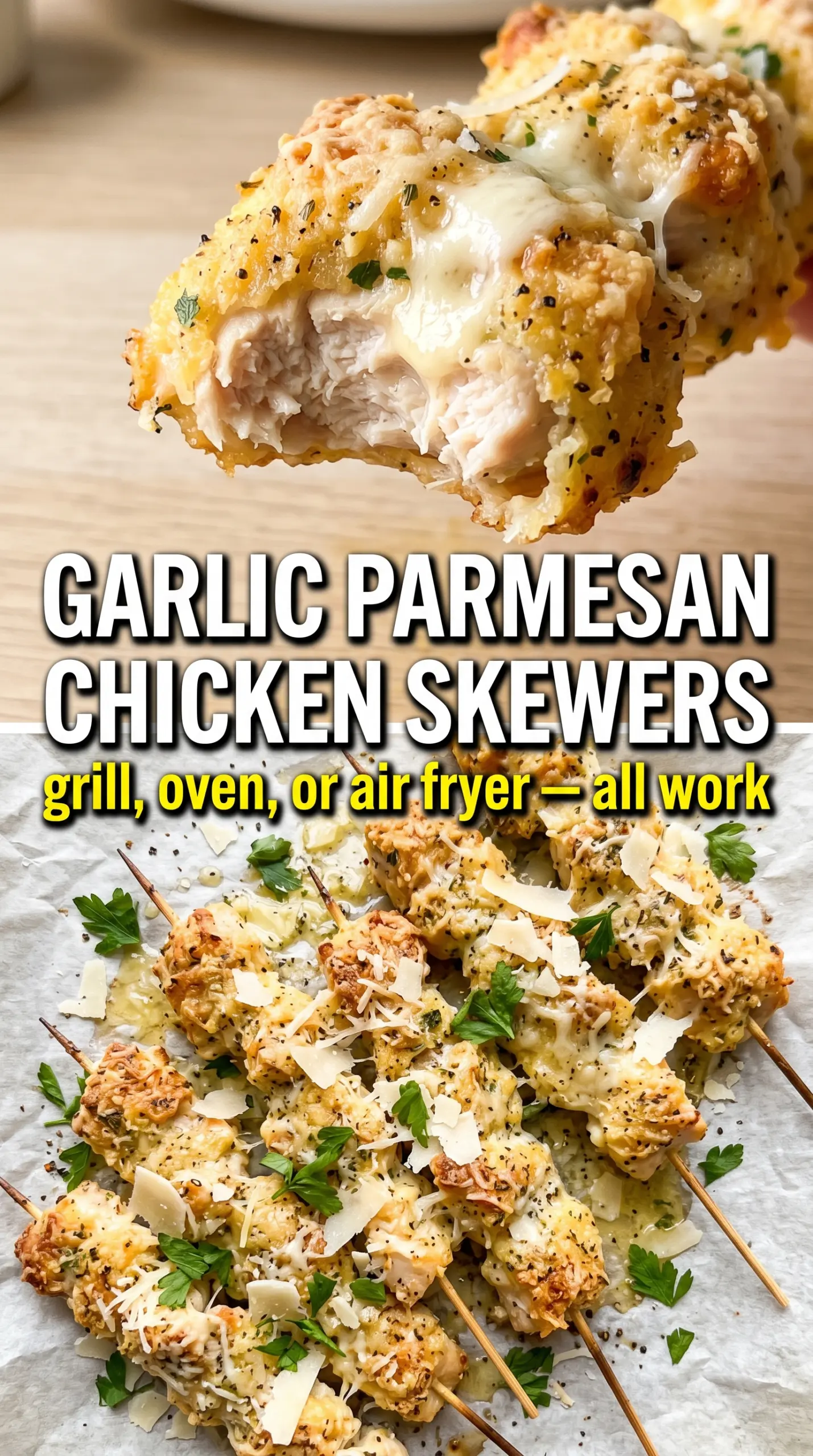
- Chicken breasts — Lean chicken breast stays tender here because the pieces are small, the marinade is short, and the grill time is fast. Thighs work too if you want a richer result, but they’ll need a minute or two longer and won’t set up with the same clean bite.
- Freshly grated Parmesan — This is one place where the pre-grated stuff falls short. Fresh Parmesan melts and clings better, while the shelf-stable version tends to stay dusty and won’t give you that little crust on the hot chicken.
- Garlic and olive oil — The oil carries the garlic across the chicken and keeps the surface from drying out on the grill. Mince the garlic finely so it disperses; big pieces are the bits that burn first.
- Lemon juice — Just enough to sharpen the herbs and cut through the butter at the end. If you skip it, the skewers taste flatter and heavier.
- Italian seasoning and basil — These build the herb side of the dish without making you chop a pile of fresh herbs for the marinade. If your Italian seasoning is old and dusty, replace it; dried herbs lose a lot of their punch after a year.
- Butter and parsley — The melted butter goes on after the chicken comes off the grill, which keeps it glossy instead of greasy. Parsley adds color and a fresh finish that keeps the whole dish from tasting one-note.
Grilling The Chicken So The Parmesan Turns Golden, Not Bitter
Marinate the Chicken Briefly
Whisk the olive oil, garlic, Parmesan, lemon juice, herbs, salt, and pepper until the mixture looks loose and fragrant, then toss in the chicken until every piece is coated. Thirty minutes is the sweet spot here. If you go much longer, the lemon starts to work like a cure and the outside can lose its tenderness. The mixture should cling lightly, not sit in a thick paste.
Thread With Space Between The Pieces
Soak wooden skewers so they don’t scorch, then thread the chicken with a little breathing room between each piece. That gap matters because crowded skewers steam in the middle before the edges have a chance to char. If the chicken is packed tight, the outside turns dark before the center reaches 165°F.
Get The Grill Hot Before The Chicken Goes On
Preheat the grill to medium-high and oil the grates so the Parmesan and garlic don’t weld themselves to the metal. Lay the skewers down and leave them alone long enough to form a crust; if you move them too early, they tear. You’re looking for deep grill marks, golden edges, and a little caramelized cheese around the hottest spots.
Finish With Butter While The Chicken Is Still Sizzling
Pull the skewers as soon as the chicken hits 165°F, then drizzle with melted butter and scatter over the remaining Parmesan. That hot surface softens the cheese just enough to stick without clumping. Finish with parsley and lemon wedges, because the fresh acid wakes up the butter and makes the grilled flavor taste sharper and cleaner.
How To Change These Skewers For The Grill You Have
Bake them instead of grilling
Set the skewers on a wire rack over a sheet pan and bake at 425°F until the chicken reaches 165°F, usually about 15 to 18 minutes. You won’t get the same smoky char, but the Parmesan still browns nicely and the chicken stays juicy because the rack keeps the pieces out of their own juices.
Use chicken thighs for a richer skewer
Boneless skinless thighs bring more fat and a little extra forgiveness on the grill, which is helpful if you tend to run things a minute past done. They’ll taste a touch richer and stay succulent, but the pieces need to be trimmed evenly so they cook at the same pace.
Make them dairy-free
Leave out the Parmesan and finish with garlic-infused olive oil, lemon, and parsley instead. You’ll lose the salty crust and a little of the savory depth, but the skewers still come out bright and garlicky with a clean grilled finish.
Add a little heat
A pinch of red pepper flakes in the marinade gives the garlic and lemon a sharper edge without taking over. It works best when the butter goes on at the end, because the heat blooms in the fat and spreads across the whole skewer.
Storage and Reheating
- Refrigerator: Store leftovers in an airtight container for up to 3 days. The Parmesan coating softens a bit, but the chicken still reheats well.
- Freezer: Freeze cooked chicken off the skewers for up to 2 months. Wrap tightly and thaw in the refrigerator before reheating so the meat doesn’t dry out.
- Reheating: Warm in a 325°F oven, covered loosely with foil, until just hot. High heat will dry the chicken before the center warms through, and the garlic can turn bitter if it scorches again.
Questions I Get Asked About This Recipe

Garlic Parmesan Chicken Skewers
Ingredients
Equipment
Method
- Whisk together olive oil, minced garlic, 1/4 cup Parmesan, lemon juice, Italian seasoning, dried basil, salt, and cracked black pepper until evenly combined.
- Add the chicken cubes and toss until fully coated in the garlic-Parmesan mixture.
- Cover and marinate for 30 minutes.
- Soak the wooden skewers in water for 30 minutes to prevent burning.
- Thread the marinated chicken onto the soaked skewers.
- Preheat the grill to medium-high heat and oil the grates.
- Grill the skewers for 4-6 minutes per side, until deeply golden with visible char marks and an internal temperature of 165°F.
- Remove the skewers from the grill and drizzle with melted butter while hot.
- Scatter the remaining Parmesan over the hot skewers so it melts into a lightly charred crust.
- Garnish with fresh parsley and serve with lemon wedges.