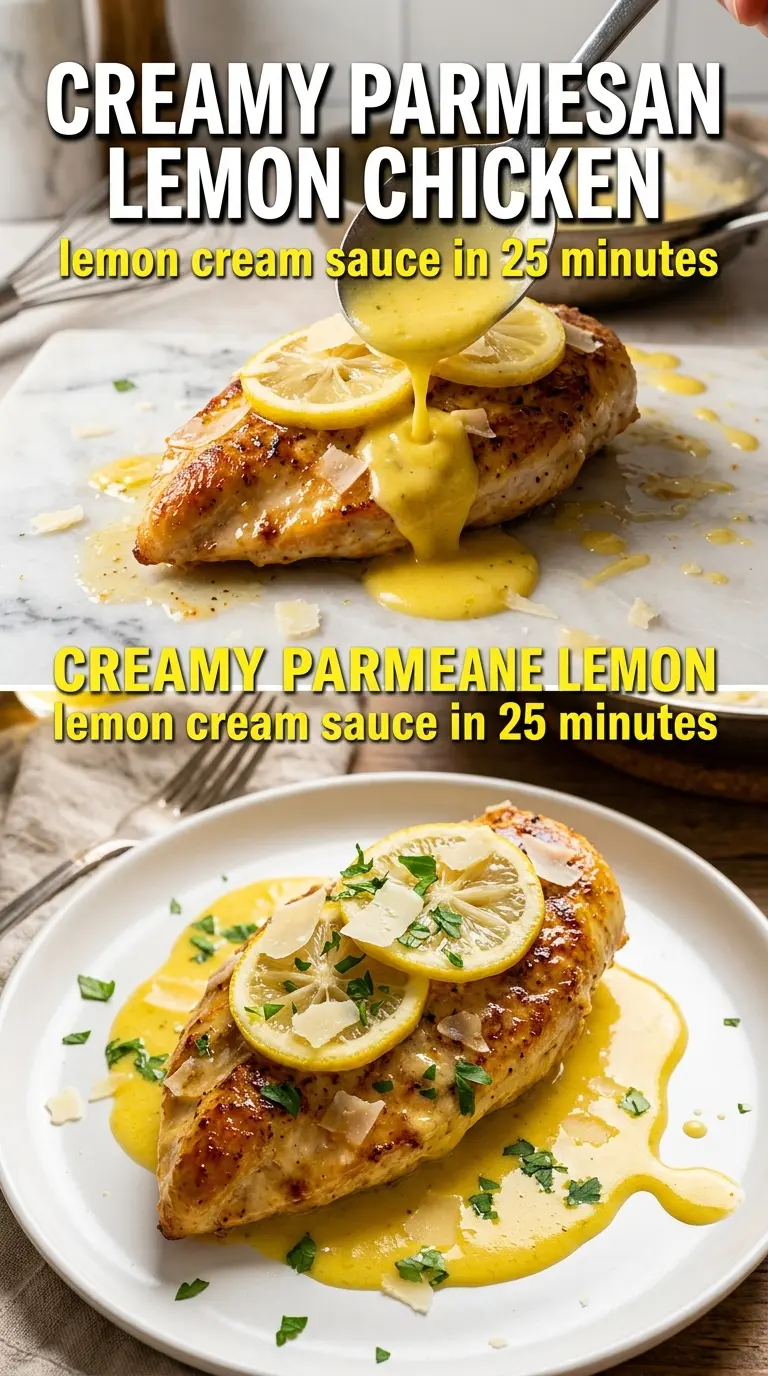
Golden seared chicken breasts in a silky lemon Parmesan cream sauce earn a permanent spot in the weeknight rotation because the sauce tastes bright without going thin and the chicken stays juicy under a layer of glossy richness. The first spoonful gives you the sharp hit of lemon, then the Parmesan settles everything down into something round and savory. It eats like a restaurant skillet dinner, but it comes together fast enough for a Tuesday.
The trick is balance. Lemon juice and Parmesan both want to push a cream sauce in different directions, so the heat has to stay moderate and the cheese goes in after the liquid has had a minute to settle. Freshly grated Parmesan melts smoothly; the pre-shredded stuff usually brings starch that can make the sauce grainy. A quick sear on the chicken builds flavor in the pan before the sauce ever starts.
Below you’ll find the timing that keeps the chicken from drying out, the exact moment to add the lemon so the sauce stays silky, and a few smart swaps for when you need to work with what you have.
The sauce thickened up beautifully and stayed smooth even after I added the lemon. I was nervous about the Parmesan clumping, but using freshly grated cheese made all the difference.
Creamy Parmesan lemon chicken with a silky skillet sauce for nights when you want bright, rich comfort without a long ingredient list.
The Reason the Sauce Stays Silky Instead of Turning Grainy
The biggest mistake in cream-based chicken skillets is rushing the heat. Parmesan can go from smooth to clumpy if it gets slammed into a bubbling pan, and lemon makes that problem show up faster because the acid tightens everything up. The fix is simple: build the sauce at a gentle simmer, not a boil, and pull the heat down before the cheese goes in.
Another detail that matters is the pan itself. Those browned bits left after searing the chicken are the backbone of the sauce, so deglaze the skillet and scrape them up while the wine or broth is still moving. That keeps the sauce tasting full and savory instead of flat and milky. Once the cream is in, give it a few minutes to thicken before adding the Parmesan and lemon so the sauce has enough body to hold both.
What Each Ingredient Is Actually Doing in This Skillet
- Chicken breasts — Boneless, skinless breasts give you a quick cook time and a clean base for the sauce. If they’re thick on one end, pound them to an even thickness so the thinner side doesn’t dry out before the center is done.
- Freshly grated Parmesan — This is the ingredient worth buying better. It melts into the cream instead of turning the sauce sandy, which is exactly what you want in a dish this simple.
- Dry white wine or chicken broth — Wine adds a little depth and brightness, but broth works fine if that’s what’s open in the pantry. Use a broth you’d actually taste on its own, since it becomes part of the finished sauce.
- Heavy cream — This gives the sauce its body and keeps the lemon from tasting sharp or thin. Half-and-half won’t hold up as well here and can leave you with a looser sauce.
- Lemon juice and zest — The juice brings the brightness; the zest brings the perfume. Don’t skip the zest if you want the lemon flavor to read clearly without adding too much acid.
- Butter — Swirled in at the end, it gives the sauce a glossy finish and rounds out the edges. Add it off the heat if your pan is very hot so it melts in smoothly.
Building the Chicken and Sauce in the Right Order
Seasoning the Chicken for a Proper Sear
Season both sides of the chicken generously before it hits the pan. The surface should look evenly coated, not dusty. If the chicken goes into the skillet underseasoned, the sauce has to carry all the flavor, and it can’t fix bland meat. Let the chicken sit for a few minutes after seasoning so the salt starts working on the surface.
Getting the Golden Crust Without Overcooking the Center
Heat the olive oil over medium-high and lay the chicken in once the oil shimmers. You want a steady sizzle right away. If the pan is too cool, the chicken steams and turns pale; if it’s too hot, the outside scorches before the middle reaches 165°F. Cook until the first side releases easily and the crust is deep golden, then flip once and finish the second side.
Deglazing and Building the Sauce Base
Take the chicken out and add the garlic for just 30 seconds, enough to smell it without browning it. Pour in the wine or broth and scrape the bottom of the skillet with a wooden spoon. Those browned bits dissolve into the liquid and give the sauce its backbone. Let that simmer briefly so the sharp edge cooks off before the cream goes in.
Finishing with Cream, Parmesan, and Lemon
Stir in the cream, then the Parmesan, lemon juice, and zest, and keep the heat low enough that the sauce barely bubbles. It should thicken enough to coat a spoon after a few minutes. If it starts to look grainy, take the pan off the burner and whisk in a splash of cream before adding anything else. Finish with butter for shine, return the chicken, and spoon the sauce over the top so every bite gets coated.
How to Adapt Creamy Parmesan Lemon Chicken Without Losing the Point
Dairy-Free Version With a Different Kind of Richness
Use unsweetened full-fat coconut cream instead of heavy cream and skip the Parmesan. The sauce will be silkier and a little less tangy, with a faint coconut note that works best if you lean harder on the garlic and lemon zest. It won’t taste like the original, but it still gives you a creamy skillet dinner that holds together.
Gluten-Free by Default
This recipe is naturally gluten-free as written if your broth is gluten-free. The only place people get caught is with packaged Parmesan or broth that includes starches or additives, so check the label if you’re serving someone with celiac disease.
Chicken Thighs for a More Forgiving Finish
Boneless chicken thighs work well if you want a little extra insurance against dryness. They need a few more minutes in the pan, and the finished dish will taste richer and meatier. The sauce stays the same, but the overall plate feels a little less lean and a little more plush.
No Wine, No Problem
Chicken broth gives you the same deglazing step without the wine note. If the broth tastes mild, add an extra squeeze of lemon at the end to keep the sauce bright. The important part is scraping up the pan fond, since that’s what keeps the sauce tasting cooked, not canned.
Storage and Reheating
- Refrigerator: Store leftovers in an airtight container for up to 3 days. The sauce will thicken as it chills.
- Freezer: Not my first choice for this one. Cream sauces can separate after freezing, and the lemon flavor gets flatter.
- Reheating: Warm gently in a covered skillet over low heat with a splash of cream or broth. High heat is what breaks the sauce and dries out the chicken, so keep it slow and stir often.
Questions I Get Asked About This Recipe
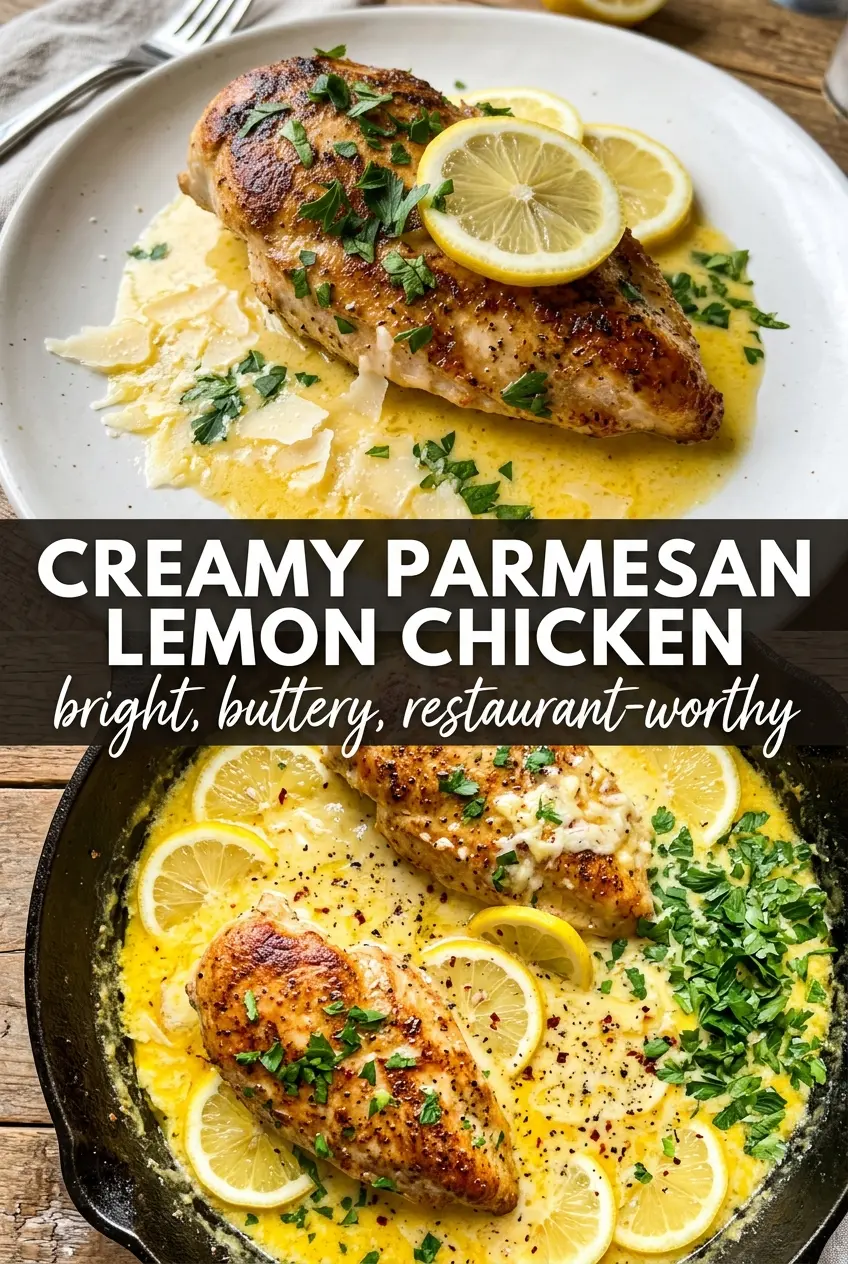
Creamy Parmesan Lemon Chicken
Ingredients
Equipment
Method
- Season the chicken breasts on both sides generously with salt, pepper, garlic powder, and Italian seasoning. Aim for even coverage so the surface browns well.
- Heat olive oil in a large skillet over medium-high heat, then sear chicken for 5-6 minutes per side until golden. Cook until the internal temperature reaches 165°F, then remove the chicken.
- Add minced garlic to the skillet and cook for 30 seconds. Stir continuously until fragrant.
- Deglaze the pan with dry white wine, scraping up browned bits, then simmer for 2 minutes. The liquid should reduce slightly.
- Stir in heavy cream, Parmesan cheese, lemon juice, and lemon zest, then simmer for 4-5 minutes until the sauce thickens. The sauce should coat the back of a spoon.
- Swirl in butter until fully melted and glossy. This adds sheen and smoothness to the sauce.
- Return the chicken to the skillet and spoon the sauce over each breast. Ensure each piece gets a good coating.
- Garnish with fresh parsley and lemon slices. Serve immediately while the sauce is warm and shimmering.