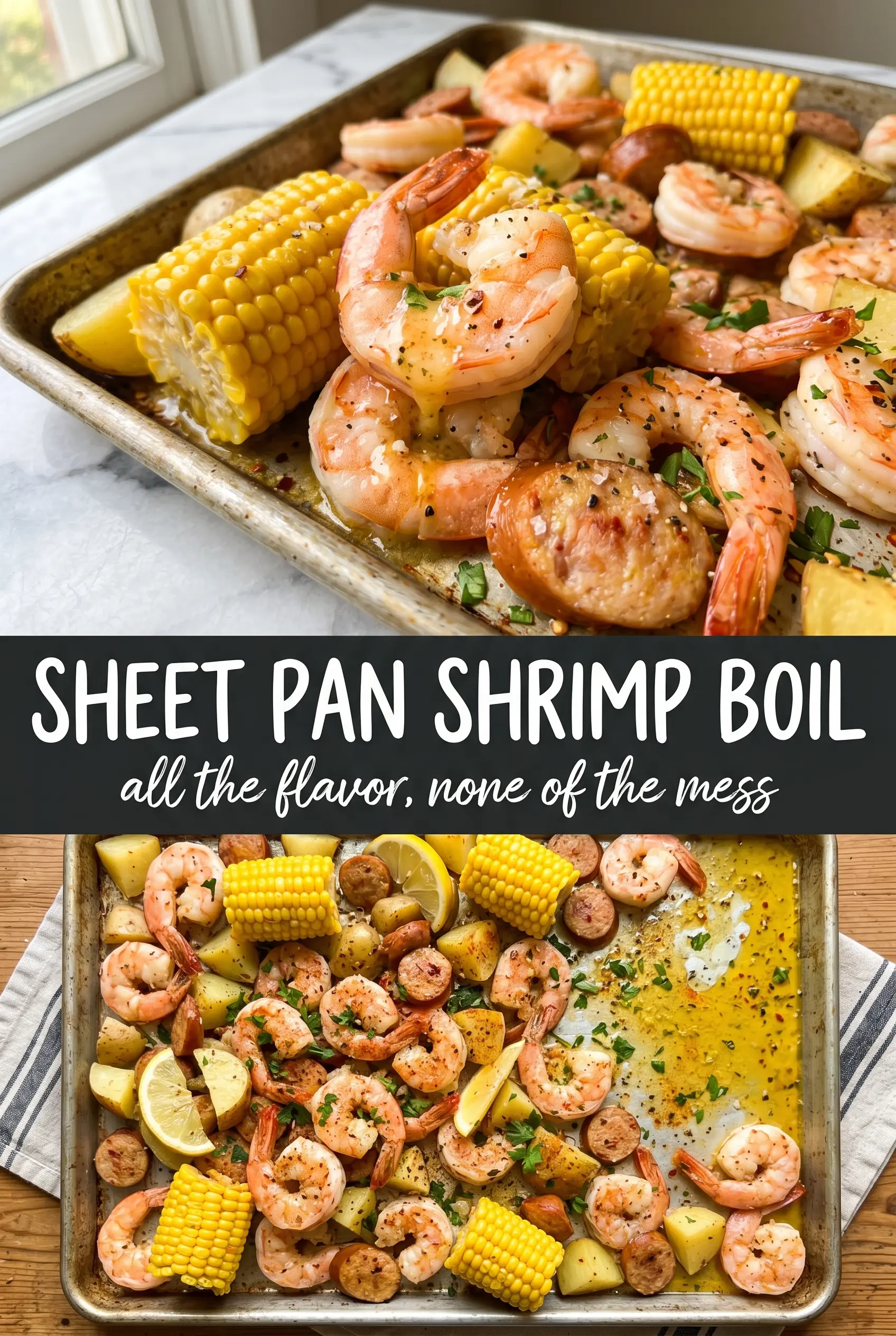
Sheet pan shrimp boil brings all the best parts of a boil dinner into one pan with less mess and a little more caramelization. The potatoes turn tender at the edges, the sausage picks up a roasted snap, the corn gets sweet and browned in spots, and the shrimp finish juicy instead of waterlogged. It’s the kind of dinner that lands on the table looking abundant without asking much from you.
The trick is giving the potatoes a head start. Shrimp cook fast, but potatoes need enough time in the oven to go from firm to properly tender, so the pan is staged in layers instead of everything going in at once. Butter, Old Bay, garlic, and smoked paprika coat the shrimp at the end, which keeps the seasoning bold and the seafood from drying out before the rest of the pan catches up.
Below, I’ll walk through the one timing detail that matters most, what each ingredient is doing here, and the small changes that help this work for different kitchens and different diets.
The potatoes came out tender with browned edges, and the shrimp stayed plump instead of rubbery. I loved that the sausage and corn picked up all the Old Bay butter right on the pan.
Love the roasted shrimp, corn, and sausage combo? Save this sheet pan shrimp boil for the nights when you want a full boil dinner without hauling out a stockpot.
The Reason the Shrimp Go on Last
The biggest mistake with a sheet pan shrimp boil is treating every ingredient like it needs the same amount of time. Shrimp overcook fast, and once they curl into tight little crescents they only need a few more minutes before they start turning tough. Potatoes, on the other hand, need enough oven time to soften all the way through, which is why they get a solo roast first.
This layered approach does two things at once: it keeps the shrimp tender and it gives the sausage, corn, and potatoes a chance to brown instead of steam. A crowded pan will trap moisture, so use the largest rimmed baking sheet you’ve got. If the vegetables are piled too high, they’ll soften before they caramelize, and the whole dish loses that roasted edge that makes it worth making in the first place.
What Each Ingredient Is Actually Doing in This Pan
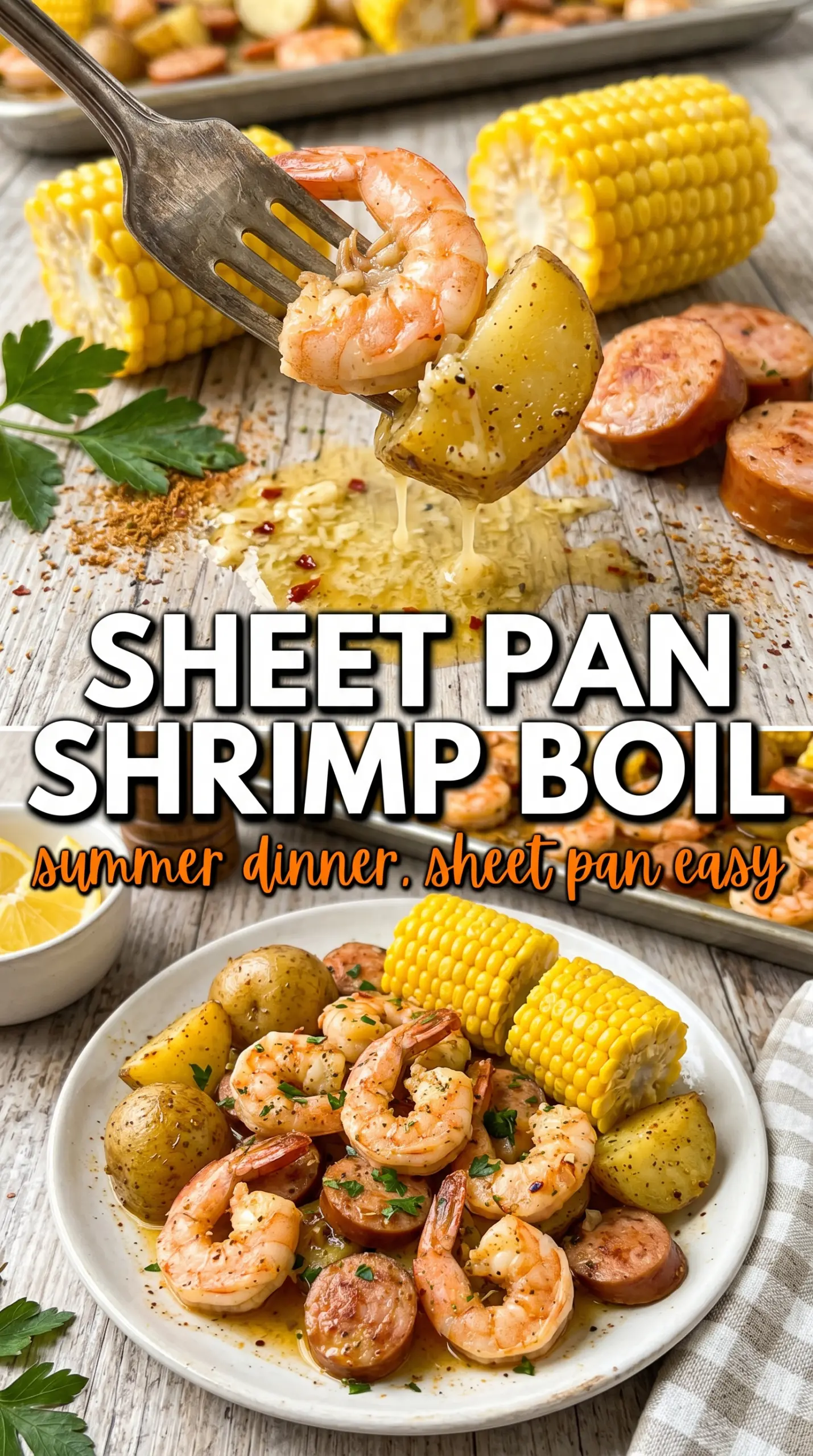
- Large shrimp — Use peeled and deveined shrimp so they cook evenly and pick up the butter seasoning fast. Smaller shrimp will work, but they’ll be done even sooner, so watch the pan closely during the last roast.
- Andouille sausage — This brings salt, smoke, and fat, and it helps season the whole pan as it roasts. If you swap in kielbasa, the dish will still work, but you’ll lose some of the peppery Cajun edge that makes the sausage stand out.
- Baby potatoes — These carry the meal and give the pan some heft. Halving them matters; the cut sides brown, and the smaller size helps them finish in the same window as everything else.
- Corn on the cob — Fresh corn gets sweet and a little chewy in the oven. Frozen corn kernels won’t give you the same experience here, because this recipe depends on the corn roasting against the sheet pan.
- Old Bay seasoning — This is the backbone of the dish. It seasons the shrimp, but it also needs to hit the potatoes and sausage early so the whole pan tastes like one finished meal instead of separate ingredients.
- Butter and olive oil — Oil helps with roasting and browning, while butter carries the seasoning on the shrimp at the end. Don’t swap in all butter for the full pan; it can scorch before the potatoes are done.
- Garlic, garlic powder, and smoked paprika — Fresh garlic gives the shrimp a sharp finish, while the powder and paprika spread evenly in the butter. If you skip the smoked paprika, the dish loses some depth, especially if your sausage is on the milder side.
Building the Pan So Everything Finishes Together
Giving the Potatoes a Head Start
Toss the halved potatoes with oil, Old Bay, salt, and pepper, then spread them out in a single layer. They need direct contact with the pan to start browning, so if they’re crowded, they’ll steam and stay chalky in the middle. After 15 minutes, the cut sides should be starting to color and the edges should look dry instead of glossy.
Adding the Sausage and Corn at the Right Moment
Push the potatoes to the sides and add the sausage and corn so they can roast against the hot metal too. The sausage should start to deepen in color and the corn should pick up a few browned spots; that’s your cue that the pan has enough heat to handle the shrimp. If the sausage goes in too early, it dries out before the shrimp even start cooking.
Finishing with Buttered Shrimp
Toss the shrimp with melted butter, minced garlic, garlic powder, smoked paprika, and the remaining Old Bay, then add them to the pan. Spread them into a loose layer so each piece gets heat quickly. They’re done when they’re pink, curled, and opaque through the center; if they curl into tight little rings, they’ve gone a minute too far.
Serving Straight from the Sheet Pan
Hit the finished pan with lemon wedges and parsley right before serving. The lemon cuts through the butter and sausage fat, and the parsley keeps the whole dish from tasting heavy. Serve it hot from the pan while the edges are still sizzling, because the texture is best in that first window.
How to Adapt This Sheet Pan Shrimp Boil Without Losing the Good Parts
Make It Dairy-Free
Use all olive oil instead of butter for the shrimp finish. You’ll lose a little richness, but the Old Bay, garlic, and lemon still carry the dish well, especially if you add the lemon while everything is hot so the juices spread across the pan.
Swap the Sausage for Chicken Sausage
Chicken sausage works if you want something lighter, but choose one with enough seasoning to stand up to the potatoes and corn. Since it’s usually leaner than andouille, it won’t contribute quite as much fat or browning, so don’t skip the oil on the pan.
Make It Spicier
Add cayenne or a pinch of crushed red pepper to the shrimp butter. That gives you heat without changing the roast timing, and it blends better than trying to rely on hot sauce after the pan comes out of the oven.
Storage and Reheating
- Refrigerator: Store leftovers in an airtight container for up to 3 days. The shrimp will firm up a little, and the potatoes will soften more as they sit.
- Freezer: The shrimp and sausage freeze better than the potatoes, which can turn mealy after thawing. If you need to freeze it, do it in a pinch and expect the texture to be less crisp when it comes back.
- Reheating: Warm leftovers in a 350°F oven until heated through, about 10 to 12 minutes. The oven helps the sausage and potatoes regain some texture; the microwave will heat the shrimp, but it tends to make them rubbery fast.
Questions I Get Asked About This Recipe
Sheet Pan Shrimp Boil
Ingredients
Equipment
Method
- Preheat oven to 400°F and line a large rimmed baking sheet with foil (you should see the foil cover the pan surface).
- Toss baby potatoes with 2 tablespoons olive oil and 1 tablespoon Old Bay seasoning, plus salt and pepper, then spread in an even layer (they should be lightly coated).
- Roast potatoes at 400°F for 15 minutes until the edges start to turn golden (look for browning on the cut sides).
- Push potatoes to the edges of the sheet pan to make a clear center (potatoes should be mostly on the perimeter).
- Add corn and andouille sausage to the center, drizzle with the remaining olive oil and Old Bay seasoning, and toss to coat (corn and sausage should look vividly seasoned).
- Roast another 8 minutes at 400°F until corn chars slightly and sausage rounds start to brown (watch for caramelized spots).
- Toss shrimp with melted butter, minced garlic, garlic powder, smoked paprika, and the remaining Old Bay seasoning (shrimp should look glossy and evenly dusted).
- Add shrimp to the pan in a single layer and roast at 400°F for 8-10 minutes until pink and curled and everything is caramelized (shrimps should curl into a C-shape).
- Garnish with lemon wedges and fresh parsley, then serve directly from the sheet pan (you should see bright lemon and green flecks over the top).