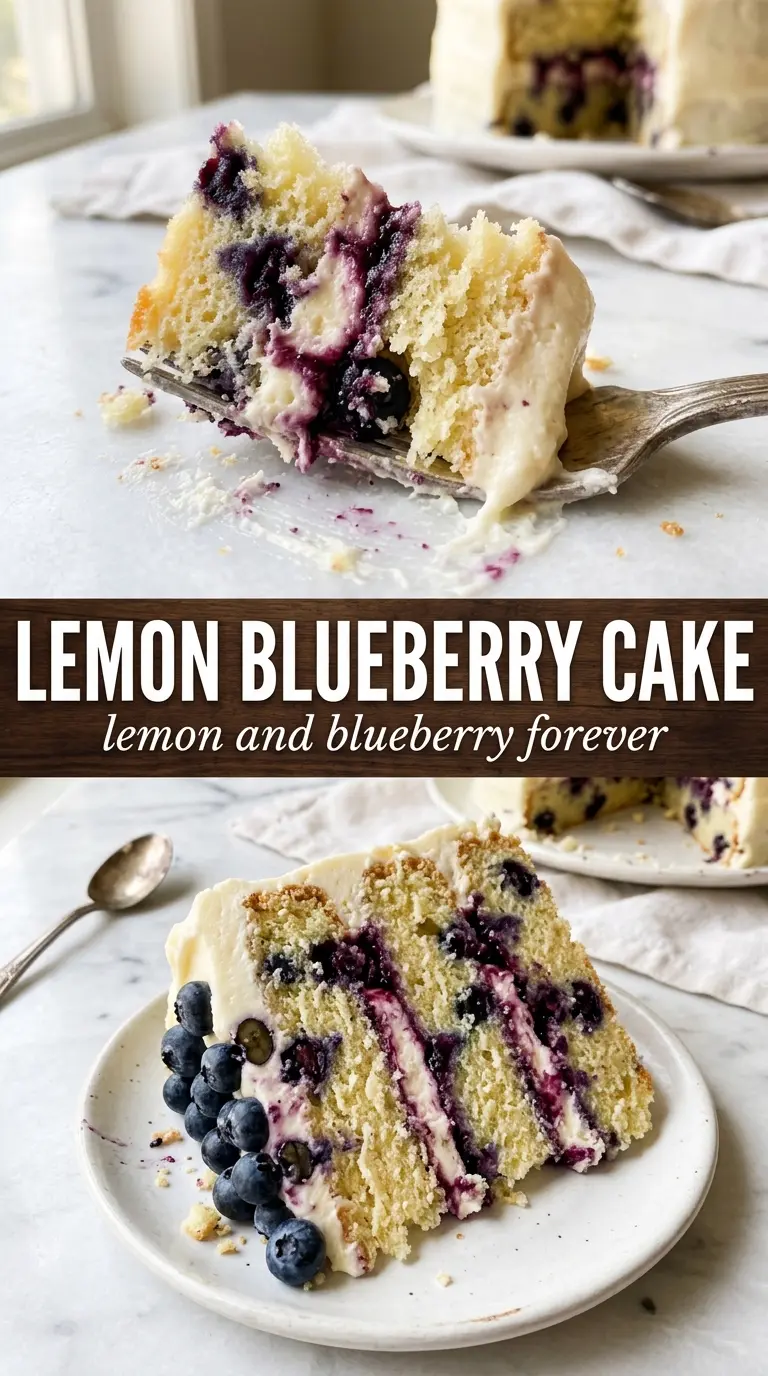
Lemon blueberry cake earns its place on the table with a soft, plush crumb, bright citrus in every bite, and blueberries that stay tucked into the batter instead of sinking to the bottom. The frosting brings a cool tang that balances the sweetness, so the whole cake tastes light enough for a second slice without feeling plain.
What makes this version work is the order of the mixing and the way the blueberries are handled. Creaming the butter and sugar properly gives the cake lift before the flour ever goes in, and the lemon zest gets rubbed into the batter early so the flavor isn’t sitting on the surface. Tossing the berries in a little flour helps them stay suspended, which is what keeps each layer dotted with fruit instead of leaking purple streaks through the crumb.
Below, you’ll find the small details that matter most: how to keep the frosting smooth, what to watch for so the layers bake evenly, and the few swaps that still give you a cake worth serving with pride.
The cake stayed unbelievably tender, and the blueberries didn’t all sink like they usually do for me. The lemon cream cheese frosting was thick enough to hold the layers without sliding, and the glaze on top gave it that bakery look.
Lemon blueberry cake with thick cream cheese frosting and juicy berries is the kind of layer cake worth saving for a celebration.
The Trick to Keeping the Blueberries in the Layers
The biggest problem with berry cakes is that the fruit drops while the batter is still loose, which leaves the top half bare and the bottom gummy. Tossing the blueberries with flour gives them a little grip, and it works because the flour helps suspend the berries long enough for the cake structure to set in the oven.
The other piece that matters is the batter texture. If it looks too thin after the milk goes in, don’t keep stirring. Overmixing after the flour is added tightens the crumb and makes the cake less tender, which is exactly what you don’t want in a lemon cake that should slice cleanly and stay moist for days.
What Each Ingredient Is Doing in This Cake
- All-purpose flour — This gives the cake enough structure to hold the berries and tall layers without turning dense. Cake flour will make it a little softer, but all-purpose gives a sturdier slice that stands up to frosting.
- Butter — Softened butter creates the foundation for a fluffy crumb when it’s beaten with the sugar. Don’t use melted butter here; you lose the air that helps the cake rise.
- Lemon zest and lemon juice — The zest carries the strongest lemon flavor, while the juice adds brightness. If you only use juice, the cake tastes flatter and more sour than citrusy.
- Whole milk or buttermilk — Whole milk gives a rich, soft crumb, while buttermilk brings a little tang and a slightly tighter texture. Either works, but buttermilk gives the cake a more pronounced bakery-style finish.
- Fresh blueberries — Fresh berries hold their shape better than frozen ones and bleed less into the batter. If you only have frozen blueberries, use them straight from the freezer and don’t thaw them first.
- Cream cheese and butter for the frosting — This pairing makes the frosting thick, smooth, and spreadable. Both need to be softened, or you’ll end up with lumps that never fully beat out.
Building the Batter Without Losing the Lift
Creaming the Base
Beat the butter and sugar until the mixture looks pale and fluffy, not just combined. That step traps air, and it’s what gives the cake its lift before the oven takes over. If the butter is too cold, the mixture stays grainy and won’t whip up properly, so let it soften until a finger presses in easily but doesn’t sink through.
Adding the Eggs and Citrus
Add the eggs one at a time so the batter stays smooth and emulsified. Then mix in the lemon zest, lemon juice, and vanilla. The batter might look slightly curdled once the lemon juice goes in, and that’s normal as long as it smooths out when the flour and milk are added.
Finishing the Batter
Add the flour mixture and milk in alternating additions, starting and ending with flour. That keeps the batter from breaking and helps it stay tender. Stop mixing as soon as the flour disappears; if you keep going, the crumb gets tight and the cake loses that soft, springy bite.
Folding in the Blueberries
Use a spatula and fold the floured blueberries through gently so they stay whole. Heavy stirring bursts the fruit and turns the batter streaky. The batter should look evenly dotted with berries, not marbled purple.
Baking and Cooling
Divide the batter evenly between the pans and bake until the tops spring back and a toothpick comes out with a few moist crumbs. If the centers still wobble, give them a few more minutes; underbaked layers collapse when you try to frost them. Cool the cakes completely before assembling, or the frosting will slide right off.
Three Ways to Adapt the Cake Without Losing What Makes It Good
Make it gluten-free with a cup-for-cup flour blend
Swap the all-purpose flour for a good 1:1 gluten-free baking blend. The cake will be a little more delicate when warm, so let the layers cool all the way before moving them. The flavor stays bright and lemony, but the crumb may be slightly softer.
Use buttermilk for a sharper lemon finish
Buttermilk adds tang and gives the cake a slightly finer crumb. If the batter looks thicker than expected, that’s normal; it bakes into a moist, tender layer. This is the version I reach for when I want the lemon to taste more pronounced against the sweet frosting.
Turn it into cupcakes
Scoop the batter into lined muffin tins and bake until the tops spring back, usually 18 to 22 minutes. You’ll get a shorter bake and a higher frosting-to-cake ratio, which makes the lemon cream cheese frosting even more noticeable. Keep the blueberries evenly divided so every cupcake gets a few.
Storage and Reheating
- Refrigerator: Store covered for up to 5 days. The frosting stays firm, and the crumb holds up well after chilling.
- Freezer: Freeze unfrosted layers wrapped tightly for up to 2 months. Thaw overnight in the fridge before frosting; frozen frosted slices can be frozen, but the texture of the cream cheese frosting softens after thawing.
- Reheating: This cake is best served at room temperature, not warmed. Pull slices from the fridge about 30 to 45 minutes before serving so the frosting loosens and the lemon flavor opens up.
Answers to the Questions Worth Asking

Lemon Blueberry Cake
Ingredients
Equipment
Method
- Preheat the oven to 350°F and grease two 9-inch round pans.
- Beat the softened butter and granulated sugar until fluffy.
- Add the eggs, lemon zest, lemon juice, and vanilla, mixing until smooth.
- Alternately add the flour mixture and the whole milk or buttermilk, mixing just until incorporated.
- Fold in the fresh blueberries that were tossed in flour.
- Divide batter between the two pans and bake for 32-35 minutes, until a toothpick in the center comes out clean.
- Cool the cakes completely before frosting, about 1 hour.
- Beat the softened cream cheese and butter until smooth.
- Add powdered sugar, lemon juice, and lemon zest, then beat until fluffy.
- Fill and frost the cooled cake with the lemon cream cheese frosting.
- Pile fresh blueberries on top and drizzle with a simple lemon glaze made from powdered sugar and lemon juice.
- Scatter extra lemon zest over the top and serve.