Pesto pasta salad lands in that sweet spot between fresh and filling. The pasta stays coated in a vivid basil sauce, the tomatoes burst with juice, and the mozzarella pearls soften just enough to turn every bite creamy without making the dish heavy. It’s the kind of side that disappears fast at a cookout, but it’s sturdy enough to sit in the fridge and get better as the flavors settle in.
What makes this version work is the order. Tossing the pasta with pesto while it’s still warm helps the sauce cling to every curve of the fusilli or penne instead of sliding off in a greasy layer. The lemon juice wakes up the basil and keeps the salad from tasting flat after chilling, while the toasted pine nuts add the kind of crunch that keeps the texture interesting from the first forkful to the last.
Below, I’ve added the small details that matter here: how to keep the pesto bright, when to add the cheese, and what to do if you need to swap ingredients without losing the balance of the salad.
The pesto coated the pasta beautifully and the lemon kept it from tasting heavy after chilling. I made it in the morning, and by dinner the flavors had blended perfectly without the tomatoes getting mushy.
Save this pesto pasta salad for the days when you want a cold side with bright basil, juicy tomatoes, and a creamy mozzarella bite.
The Reason the Pesto Stays Green Instead of Turning Heavy
Pesto pasta salad goes wrong when the pasta is rinsed too early or the pesto goes onto fully cold noodles. Warm pasta absorbs the sauce just enough to hold onto the herbs and oil, which gives you a salad that tastes seasoned all the way through instead of coated on the outside only. The cold rinse still matters here, but it should happen after the pasta is cooked and drained so the noodles stop cooking without becoming sticky.
The other thing worth watching is the balance between oil and acid. Pesto brings richness, but once the salad chills, that richness can start to feel muted. Lemon juice pulls the whole bowl back into focus, and the tomatoes add enough moisture that the salad doesn’t clump into a thick green mass.
What Each Ingredient Is Actually Doing in the Bowl
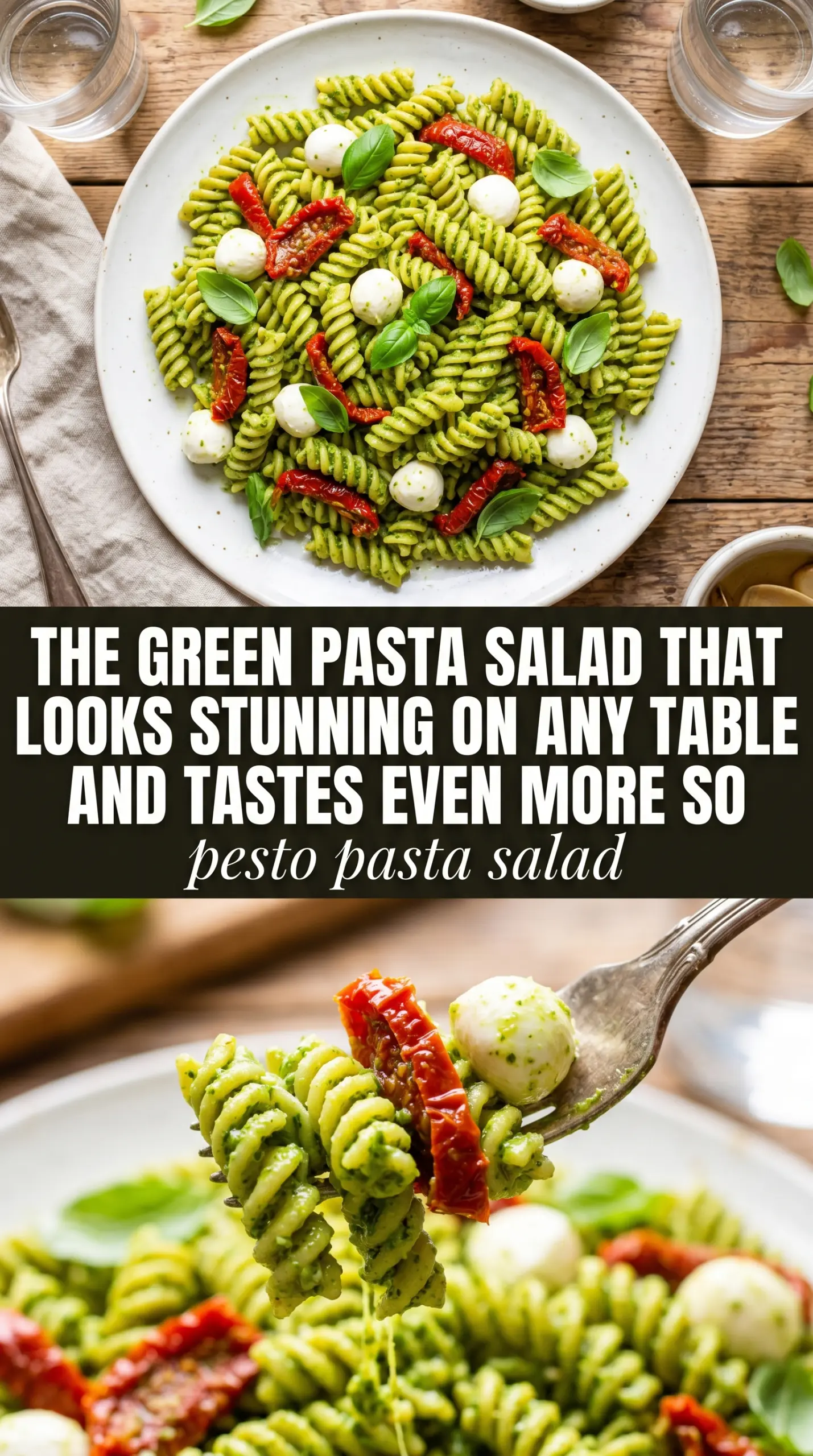
- Fusilli or penne — Both shapes hold pesto well, but fusilli gives you more little ridges for the sauce to cling to. If you use a smooth pasta, the salad will still work, but the coating won’t feel as complete.
- Basil pesto — This is the backbone of the dish, so use the best pesto you can get. Store-bought is fine, especially if you brighten it with lemon, but if your pesto tastes flat, the whole salad will too.
- Cherry tomatoes — These bring juiciness and a little sweetness that keeps the salad from tasting one-note. Halving them lets their juices season the pasta without flooding the bowl.
- Fresh mozzarella pearls — They soften into the salad and give you creamy bites without melting or turning greasy. If you only have a larger ball of mozzarella, tear it into bite-size pieces instead of dicing it.
- Toasted pine nuts — Toasting matters here because raw pine nuts taste soft and bland. A few minutes in a dry pan is enough to wake them up and add a nutty crunch.
- Lemon juice — This is the ingredient that keeps the pesto from feeling heavy after chilling. Fresh juice is worth using because bottled lemon can taste dull and slightly metallic in a cold pasta salad.
- Parmesan — It sharpens the basil and helps the dressing cling to the pasta. Finely grated Parmesan blends in better than chunky shreds.
How to Assemble It So Every Bite Tastes Balanced
Cooking the Pasta to Hold the Sauce
Cook the pasta until it is just tender with a little bite in the center. Overcooked pasta gets soft after chilling and turns the salad mushy by the time it reaches the table. Drain it well, then rinse it under cold water until it stops steaming and feels cool to the touch. Shake off as much water as you can, because extra water dilutes the pesto and makes the coating slide off.
Coating the Warm Pasta First
Toss the pasta with the pesto while it’s still slightly warm. That heat helps the sauce loosen and seep into the ridges and curves instead of sitting in streaks at the bottom of the bowl. If the pesto looks too thick, loosen it with a spoonful of the pasta rinse water or a little extra lemon juice before adding the rest of the ingredients. The goal is glossy and evenly coated, not oily.
Folding in the Fresh Ingredients
Add the tomatoes, mozzarella, pine nuts, Parmesan, and lemon juice after the pasta is coated. Stir gently so the tomatoes stay intact and the cheese doesn’t smear into the sauce. This is the point where overmixing hurts you most, because hard stirring can break the mozzarella pearls and turn the salad messy. A few slow folds are enough.
Chilling for the Flavor to Settle
Refrigerate the salad for at least an hour before serving. That rest gives the basil, lemon, and cheese time to settle into the pasta, and it makes the whole bowl taste more complete. If it looks a little dry after chilling, loosen it with a drizzle of pesto or a small squeeze of lemon and toss again right before serving. Finish with fresh basil leaves so the salad smells as good as it tastes.
How to Adapt It Without Losing the Bright Basil Finish
Make it dairy-free
Use a dairy-free pesto and skip the Parmesan and mozzarella, or replace the cheese with a dairy-free mozzarella-style alternative. The salad will taste a little sharper and less creamy, so lean harder on the lemon and salt to keep the flavor lively.
Make it gluten-free
Swap in your favorite gluten-free pasta and cook it just to tender, because some gluten-free shapes soften fast once they chill. Rinse it well and toss it with pesto right away so it doesn’t clump as it cools.
Make it more filling
Add grilled chicken, shrimp, or white beans. The pasta salad stays balanced because the pesto and lemon already carry the flavor, but a protein add-in turns it into a full lunch instead of a side dish.
Swap the pine nuts
Use toasted slivered almonds, walnuts, or sunflower seeds if pine nuts are expensive or hard to find. You’ll lose a little of the classic pesto richness, but the crunch still works and the salad keeps its texture.
Storage and Reheating
- Refrigerator: Store covered for up to 3 days. The pasta will absorb some dressing, so expect the salad to look a little less glossy on day two.
- Freezer: Don’t freeze this one. The tomatoes turn watery and the mozzarella loses its texture after thawing.
- Reheating: This salad is meant to be served cold or at cool room temperature. If it tightens up in the fridge, let it sit out for 15 to 20 minutes and toss with a small spoonful of pesto before serving.
Answers to the Questions Worth Asking
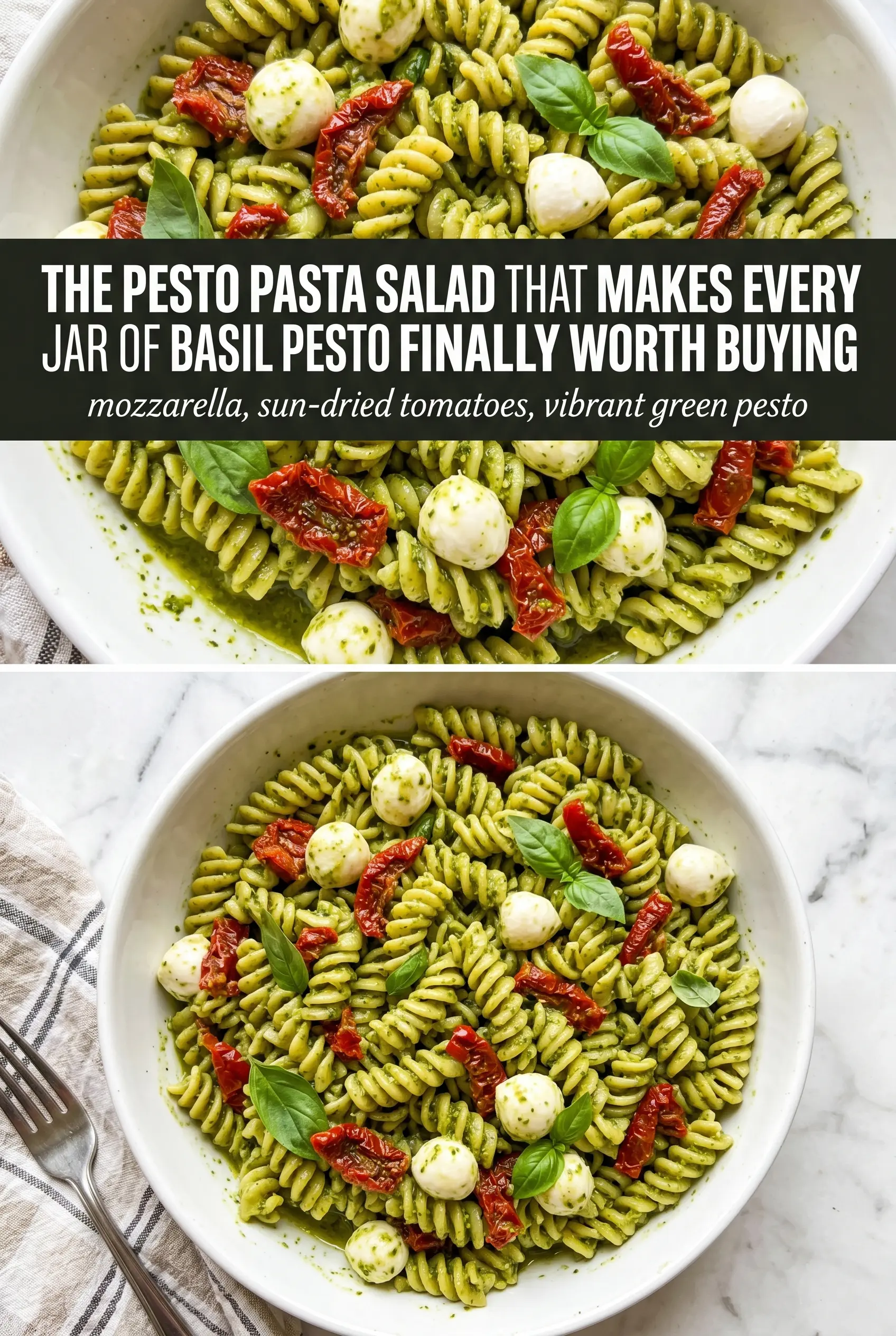
Pesto Pasta Salad
Ingredients
Equipment
Method
- Cook the fusilli or penne pasta according to package directions until just tender. Drain and rinse with cold water to stop the cooking and keep it from sticking.
- Toast the pine nuts on a sheet pan at 350°F for 3-5 minutes, stirring once, until fragrant and lightly golden. Let them cool while you assemble the salad.
- Toss the warm pasta with the basil pesto in a large bowl until evenly coated and glossy.
- Add the cherry tomatoes, mozzarella pearls, toasted pine nuts, Parmesan cheese, and lemon juice. Season with salt and pepper to taste, then toss gently to avoid breaking the cheese.
- Refrigerate the pesto pasta salad for at least 1 hour so the flavors develop and the pesto firms up slightly.
- Garnish with fresh basil leaves right before serving for bright color and fresh herb aroma.