Olive potato salad lands on the table with the kind of briny, creamy, bright balance that makes people keep spooning out “just a little more.” The potatoes stay tender but structured, the olives bring that salty punch, and the feta softens the edges without turning the bowl heavy. It eats like a proper side dish, not a filler.
What makes this version work is the dressing going on while the potatoes are still warm enough to drink it in, but not so hot that the feta melts into nothing. The lemon juice and red wine vinegar keep the olive oil from tasting flat, and the oregano gives the whole bowl that unmistakable Mediterranean note without taking over. Use good olives here. Their brininess is part of the recipe, not a garnish.
Below, I’ve included the little timing details that keep the potatoes from breaking apart, plus a few swaps that still make sense if you need to adjust the cheese or olives. The two-hour chill is worth it, too. That’s when the dressing settles in and the salad turns from good to the kind you remember.
The potatoes held their shape after chilling, and the lemony dressing soaked in just enough to make every bite taste seasoned all the way through. My husband went back for seconds before I even set out the rest of dinner.
Love the briny feta-and-olive balance in this Olive Potato Salad? Save it to Pinterest for a make-ahead side that gets better after chilling.
The Reason This Potato Salad Tastes Brighter Than the Usual Version
The mistake most potato salads make is leaning on too much mayo or adding all the acid too late. Once the potatoes are fully cold, they stop absorbing the dressing in any useful way. This version skips that heavy route and uses olive oil, lemon juice, and red wine vinegar instead, which gives the salad a clean finish and keeps the olives from tasting one-note.
Red potatoes matter here because they hold together after boiling and tossing. If you use a waxy potato, you get nice cubes that stay intact in the bowl instead of turning mushy after the chill. The feta works best when it’s added gently at the end so it stays in small creamy pockets rather than dissolving into the dressing.
- Red potatoes — Their waxy texture keeps the salad from turning soft. Cut them into even cubes so they finish cooking at the same time and chill evenly.
- Mixed olives — Kalamata brings depth, green olives bring sharper salt. That combination gives the salad more dimension than using one type alone.
- Feta — Use a block if you can and crumble it yourself. Pre-crumbled feta is drier and won’t melt into the potatoes as nicely.
- Red onion — Slice it thin so it adds bite without taking over. If raw onion is too strong for you, soak the slices in cold water for 10 minutes and drain well.
- Olive oil and lemon juice — This is the dressing’s backbone. If your olive oil tastes flat, the whole salad will taste flat, so use one you’d actually want on bread.
What Each Ingredient Is Actually Doing in Olive Potato Salad

- Fresh vegetables (vibrant, crisp, quality) — Start with fresh, brightly colored vegetables. Wilted vegetables make everything taste tired.
- Acid (vinegar, lemon juice, or lime) — The acid prevents oxidation and prevents flat taste. It’s essential for brightness.
- Oil (quality matters for flavor) — Good olive oil adds freshness. Cheap oil makes the salad taste flat.
- Salt (enhances all other flavors) — Proper seasoning makes vegetables taste more like themselves. Don’t undersalt.
- Fresh herbs (tender ones added last) — Fresh herbs add complexity and brightness. Add them right before serving.
- Protein or hearty elements (if using) — These should complement without overwhelming the vegetables. Keep the salad light.
- Dressing applied just before serving — Don’t dress early or the vegetables release liquid and wilt. Timing is everything.
- Taste and adjust (check for balance) — The salad should taste bright and assertive. Add more acid or salt if needed.
How to Keep the Potatoes Intact While They Soak Up the Dressing
Boil Until Just Tender
Start the potatoes in salted water and cook them until a knife slips in with little resistance, but they’re not falling apart at the edges. If they overcook, they’ll break when you toss the salad and turn the bowl cloudy. Drain them well, then let the steam escape for a few minutes so the dressing doesn’t slide off a wet surface.
Dress Them While They’re Warm
Whisk the olive oil, lemon juice, vinegar, oregano, salt, and pepper together, then pour it over the warm potatoes and toss gently. Warm potatoes absorb flavor better than cold ones, which is why this salad tastes seasoned all the way through instead of only on the outside. Use a soft spatula or your hands and fold, don’t stir aggressively.
Fold in the Good Stuff at the End
Add the olives, feta, red onion, and parsley after the potatoes are dressed. That keeps the olives from staining everything and helps the feta stay in visible crumbles instead of disappearing. Once everything is combined, chill the salad for two hours so the flavors settle and the potatoes firm up again.
How to Adapt the Briny Feta Version for Different Tables
Dairy-Free Olive Potato Salad
Leave out the feta and add an extra handful of olives plus a little more parsley. You lose the creamy, salty pockets feta gives the salad, so compensate with a little more olive oil and a pinch more salt right before serving.
A Herbier Mediterranean Version
Add chopped dill or mint along with the parsley for a fresher finish. Dill leans more classic with potatoes, while mint makes the salad taste lighter and a little more unexpected.
Make It Heartier
Stir in chickpeas or chopped cucumber just before serving. Chickpeas make it more filling and hold up well in the dressing, while cucumber adds crunch but should be added late so it doesn’t water the bowl down.
Swap the Olives Based on What You Have
If you only have one kind of olive, use it and keep the lemon dressing a little sharper. Kalamata gives a deeper, winey flavor; green olives bring more bite. The salad still works either way as long as the olives are pitted and well drained.
Storage and Reheating
- Refrigerator: Store covered for up to 3 days. The potatoes will absorb more dressing as they sit, so the flavor gets a little bolder.
- Freezer: Don’t freeze this salad. The potatoes turn grainy and the feta changes texture after thawing.
- Reheating: This salad is meant to be served cold or cool from the fridge. If it tastes muted after chilling, let it sit at room temperature for 15 minutes and add a small splash of lemon juice or olive oil before serving.
Answers to the Questions Worth Asking
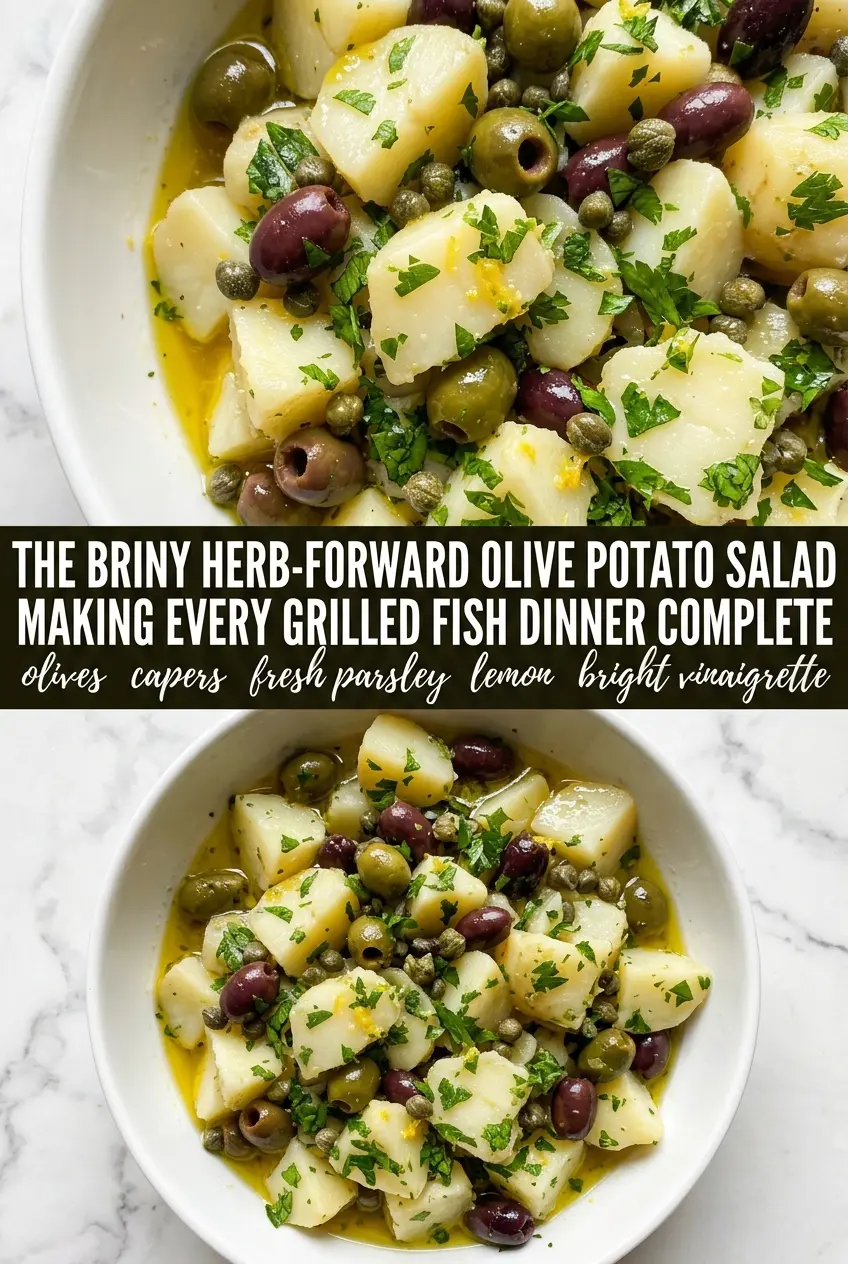
Olive Potato Salad
Ingredients
Equipment
Method
- Bring a pot of water to a boil and cook cubed red potatoes until tender, 15-20 minutes. Drain the potatoes and cool completely so the dressing won’t slide off.
- In a large bowl, combine the cooled potatoes with mixed olives, feta, and thinly sliced red onion. Fold gently to keep the feta crumbly and the potato cubes intact.
- Whisk olive oil, lemon juice, red wine vinegar, dried oregano, salt, and pepper until the dressing looks evenly combined. Taste and adjust salt and pepper to your liking.
- Pour the dressing over the potato mixture and toss gently until everything is coated. Add chopped parsley and toss once more for bright green flecks.
- Refrigerate the salad for 2 hours before serving to let the potatoes absorb the lemon-olive flavor. Keep it covered to prevent the herbs from drying out.