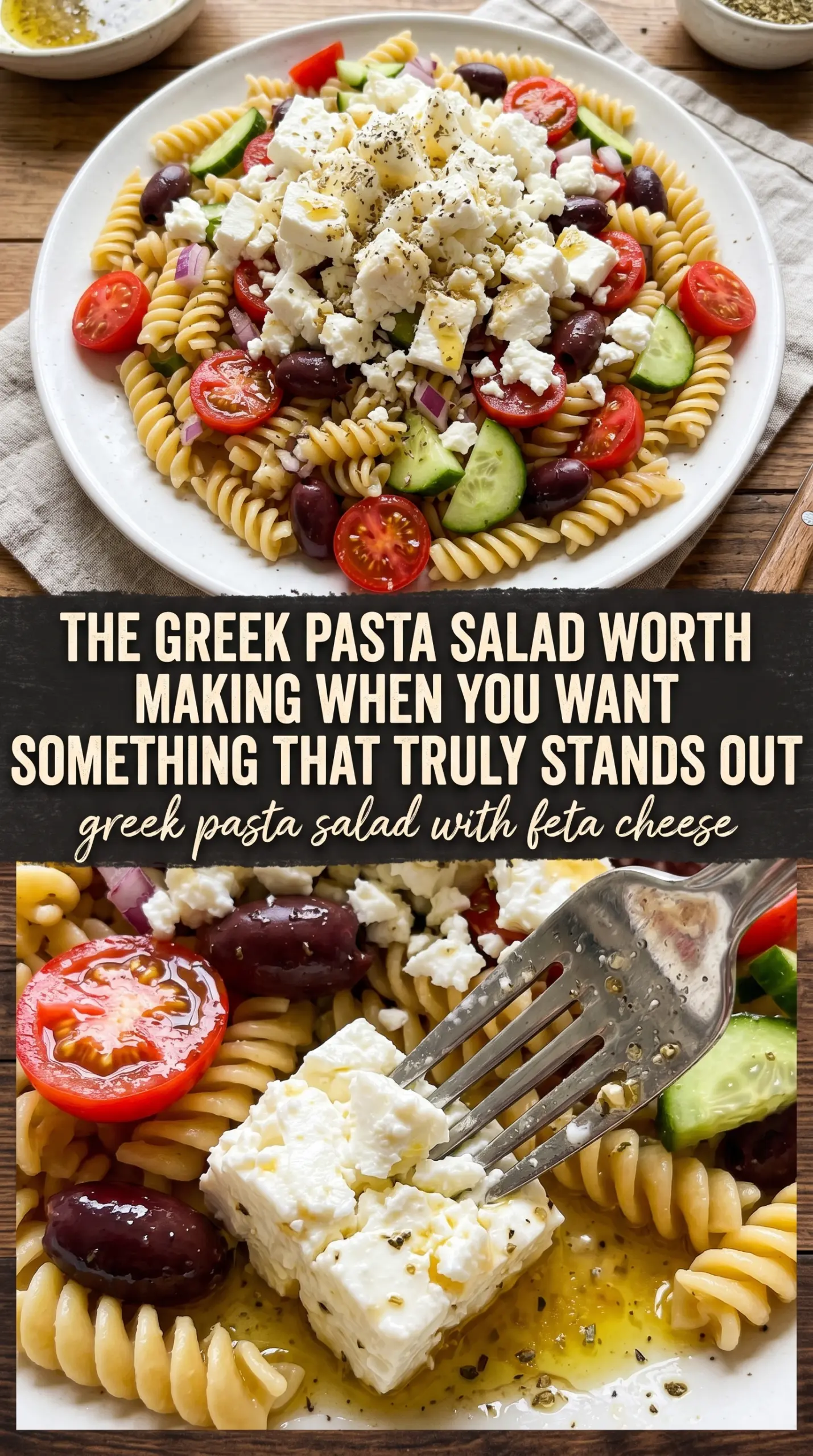
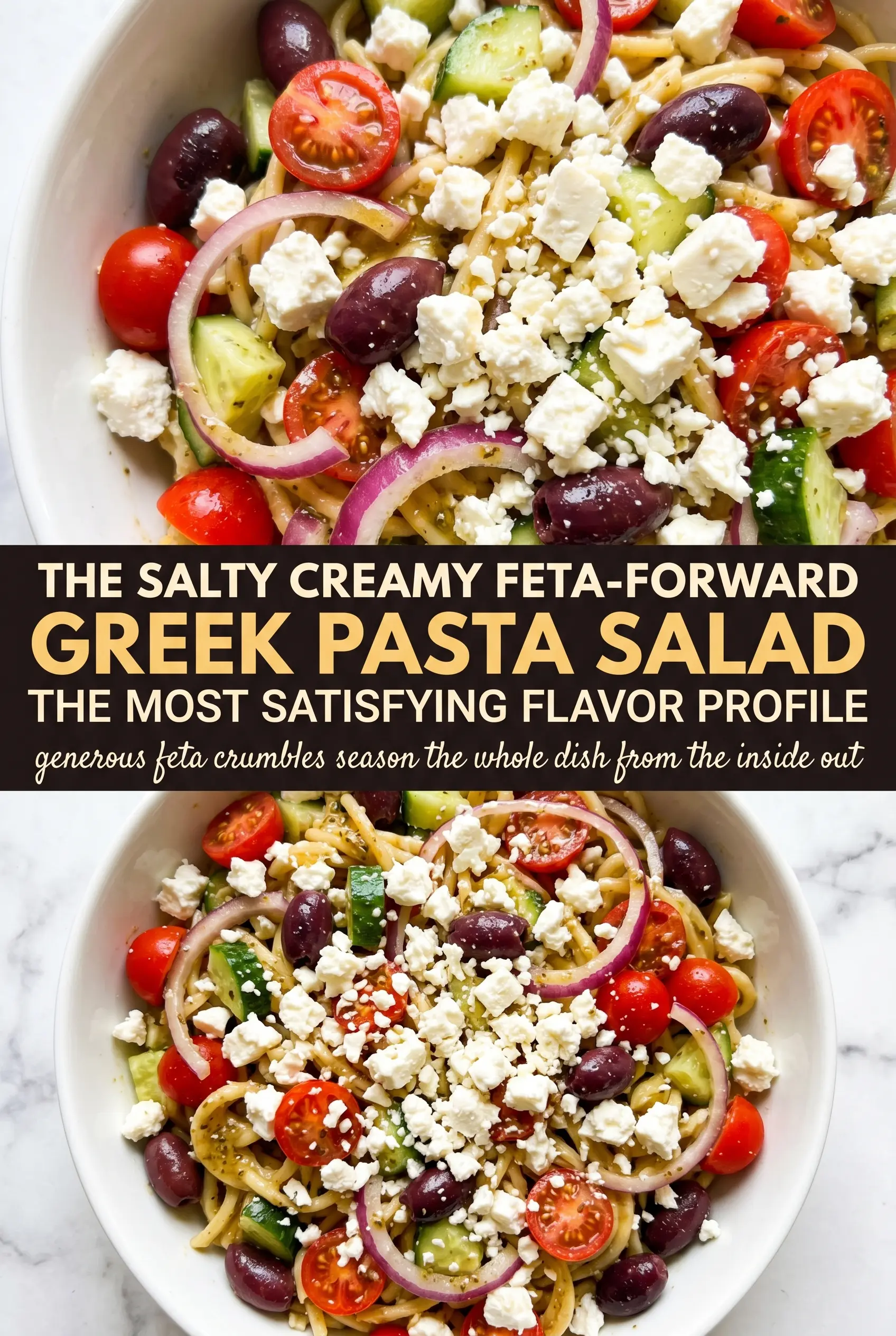
Pasta salad hits its stride when the noodles stay separate, the vegetables stay crisp, and the dressing reaches every ridge without turning the bowl soggy. This Greek version does that well: bright cherry tomatoes, briny Kalamata olives, cool cucumber, sharp red onion, and crumbly feta all land in one bowl with enough dressing to coat, not drown.
The difference is in the balance. Rinsing the pasta stops the cooking fast and cools the surface so the vinaigrette clings instead of sliding off. A short chill gives the garlic, oregano, and lemon time to settle into the pasta, which is why this tastes better after it rests than it does the minute you toss it together.
Below you’ll find the small details that keep the salad lively instead of heavy, plus a few smart swaps for making it ahead, lightening it up, or working with what you already have in the fridge.
The dressing soaked into the pasta just enough after an hour in the fridge, and the feta stayed in little salty pockets instead of disappearing. I brought it to a cookout and the bowl was scraped clean.
Love the Greek pasta salad crunch and feta-studded dressing? Save this one for potlucks, meal prep, and easy summer dinners.
The Dressing Needs to Hit the Pasta When It's Cool, Not Hot
Warm pasta drinks dressing fast and can make the olive oil taste flat instead of bright. Rinse the noodles under cold water until they feel cool to the touch, then let them drain well before mixing. If they go into the bowl steaming, the tomatoes soften too much and the feta starts to smear instead of staying in distinct, salty crumbles.
This salad also depends on a dressing that tastes a little sharp on its own. Red wine vinegar and lemon need that extra edge because the pasta, cucumbers, and feta all pull the flavor back once everything sits together. If the bowl tastes slightly too punchy before chilling, it usually lands right after an hour in the fridge.
- Pasta shape — Penne and rotini both hold onto the dressing well. Short shapes with grooves or curves give you more coating in every bite, which matters more here than using a fancy pasta.
- Feta — Buy a block and crumble it yourself if you can. Pre-crumbled feta is drier and often less creamy, while a block gives you softer pieces that melt into the salad just enough.
- Kalamata olives — Their briny depth is part of what makes this taste Greek. Black olives can work in a pinch, but they’re milder and less complex, so the salad loses some of its edge.
- Cucumber and tomato — Seedless or English cucumber keeps the salad crisper because it releases less water. Cherry tomatoes hold up better than chopped larger tomatoes, which can shed juice and thin the dressing.
What Each Ingredient Is Actually Doing in Greek Pasta Salad with Feta Cheese
- Fresh vegetables (vibrant, crisp, quality) — Start with fresh, brightly colored vegetables. Wilted vegetables make everything taste tired.
- Acid (vinegar, lemon juice, or lime) — The acid prevents oxidation and prevents flat taste. It’s essential for brightness.
- Oil (quality matters for flavor) — Good olive oil adds freshness. Cheap oil makes the salad taste flat.
- Salt (enhances all other flavors) — Proper seasoning makes vegetables taste more like themselves. Don’t undersalt.
- Fresh herbs (tender ones added last) — Fresh herbs add complexity and brightness. Add them right before serving.
- Protein or hearty elements (if using) — These should complement without overwhelming the vegetables. Keep the salad light.
- Dressing applied just before serving — Don’t dress early or the vegetables release liquid and wilt. Timing is everything.
- Taste and adjust (check for balance) — The salad should taste bright and assertive. Add more acid or salt if needed.
Building the Salad So It Stays Crisp After Chilling
Cook the Pasta to the Edge of Tender
Boil the pasta until it's just al dente, then drain it and rinse immediately with cold water. You want the noodles cooked through but still firm enough to hold shape after they sit in dressing. If they're overcooked, they swell and turn soft in the fridge, and no amount of feta can fix that.
Whisk the Dressing Until It Looks Unified
Combine the olive oil, vinegar, lemon juice, garlic, oregano, salt, and pepper in a bowl and whisk until the mixture looks cohesive, not oily with separate streaks of acid. The garlic should be distributed all the way through so you get a clean bite instead of one harsh clump. If the dressing tastes sharp, that's normal at this point.
Toss Gently, Then Let Time Do the Work
Add the pasta, vegetables, olives, red onion, and most of the feta to a large bowl, then pour the dressing over the top and toss just until coated. Use a light hand so the tomatoes keep their shape and the feta doesn't dissolve into the dressing. Chill for at least an hour; that resting time softens the onion bite and gives the pasta time to absorb the seasoning.
Finish with the Feta at the End
Hold back a little feta for the top right before serving. That last handful keeps the salad looking fresh and gives you those bright, salty pops instead of a fully blended bowl. If the salad seems a little dry after chilling, add a small drizzle of olive oil and a squeeze of lemon, then toss once more.
Three Ways to Make This Greek Pasta Salad Fit What You Have
Make it gluten-free
Use a sturdy gluten-free short pasta and stop cooking it a minute earlier than the package suggests if it tends to soften fast. Gluten-free pasta can break down in the fridge more quickly, so chill it just until the flavors come together and serve it the same day for the best texture.
Make it dairy-free
Leave out the feta and add diced avocado right before serving or a handful of toasted chickpeas for richness. You'll lose the salty, creamy punch that feta brings, so taste the dressing and add an extra pinch of salt and a little more lemon to keep the salad lively.
Turn it into a heartier main
Add chickpeas, grilled chicken, or shrimp after the pasta has cooled. Chickpeas keep it vegetarian and add a firm bite, while chicken or shrimp turn it into a full meal without changing the bright, briny flavor profile.
Swap in what you have for the vegetables
Bell peppers, diced zucchini, or marinated artichokes all fit the same direction. Keep one crisp vegetable and one juicy element so the salad stays balanced; if you replace both cucumber and tomato, the bowl can turn heavy and one-note.
Storage and Reheating
- Refrigerator: Keeps for 3 to 4 days in a covered container. The pasta softens a little and the vegetables release some moisture, so toss before serving.
- Freezer: Not a good freezer recipe. The cucumber, tomato, and feta lose their texture after thawing, and the dressing separates.
- Reheating: Serve it cold or at cool room temperature. If it's been in the fridge overnight, let it sit out for 15 to 20 minutes and stir in a small splash of olive oil or lemon juice if the pasta has absorbed most of the dressing.
Questions I Get Asked About This Recipe
Greek Pasta Salad with Feta Cheese
Ingredients
Method
- Cook penne or rotini pasta according to package directions until al dente. Drain and rinse with cold water to stop the cooking and cool the pasta.
- Whisk olive oil, red wine vinegar, lemon juice, minced garlic, dried oregano, salt, and pepper in a bowl until well combined. Stop when the mixture looks uniformly blended.
- Combine pasta, halved cherry tomatoes, diced cucumber, pitted halved Kalamata olives, thinly sliced red onion, and most of the crumbled feta in a large bowl. Toss gently just to distribute the vegetables.
- Pour the dressing over the salad and toss gently to coat everything evenly. Mix until no dry pasta bits remain and the salad looks glossy.
- Refrigerate the salad for at least 1 hour to let the flavors meld. Cover it so the pasta doesn’t dry out.
- Top with the remaining feta before serving. Add it right at the end for a fresher, more distinct feta flavor.