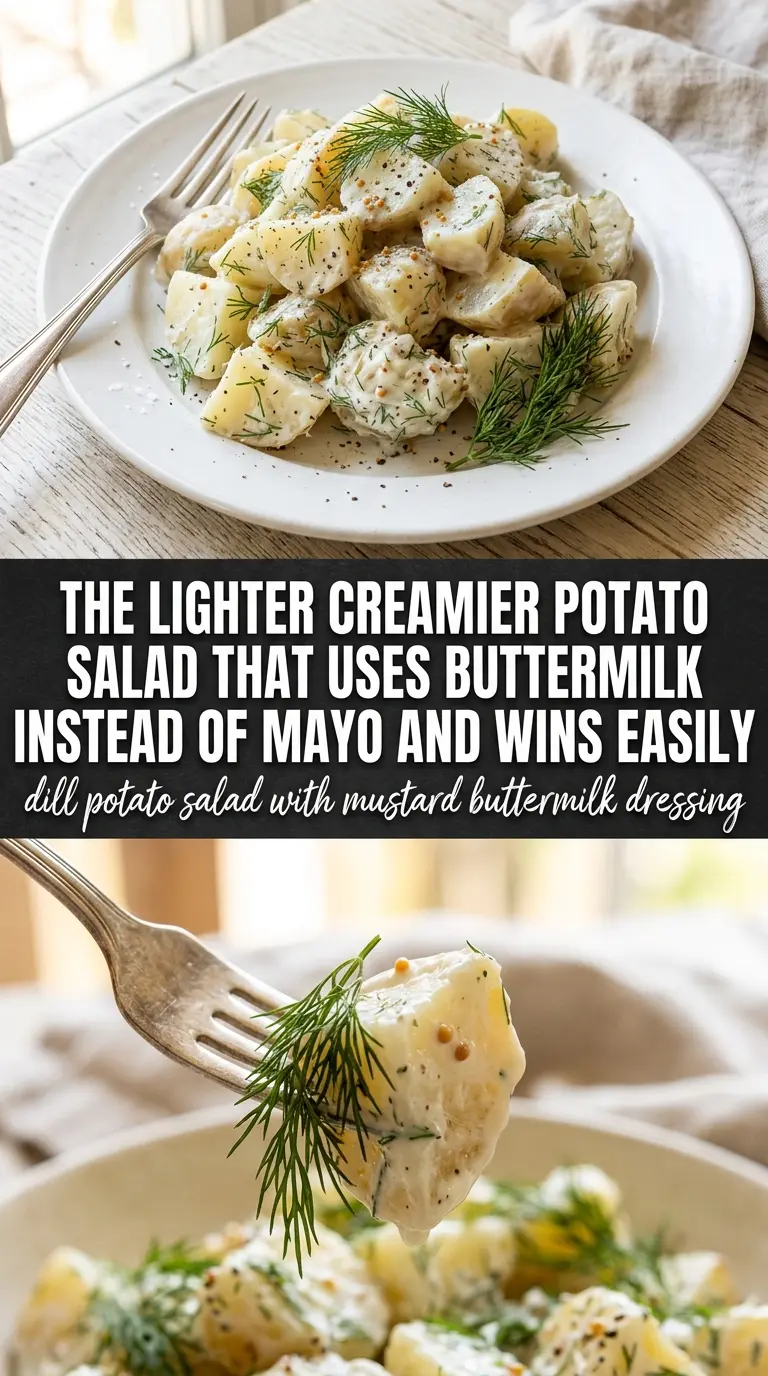
Cold potato salad works best when the dressing tastes bright enough to wake up the potatoes instead of burying them. This version lands right in that sweet spot: creamy, tangy, and packed with fresh dill, with just enough mustard to keep every bite sharp and clean. The potatoes stay tender but hold their shape, and the dressing clings instead of sliding off the bowl.
The trick is in the balance. Buttermilk brings acidity and looseness, while mayonnaise and sour cream give the dressing enough body to coat the potatoes without turning heavy. Red potatoes are the right call here because they stay intact after boiling, especially if you let them cool before tossing. Warm potatoes soak up dressing fast and can make the salad taste flat or pasty if you rush it.
Below, I’ll show you how to keep the potatoes from turning mushy, why the dill and chives matter more than just as garnish, and what to do if you want to make this ahead for a cookout or picnic.
The dressing stayed creamy after chilling and the dill came through in every bite. I loved that the potatoes held their shape instead of getting watery like my usual potato salad.
Save this dill potato salad with mustard buttermilk dressing for cookouts, potlucks, and any meal that needs a chilled side with real tang.
The Potatoes Need to Be Tender, Not Falling Apart
Potato salad goes wrong when the potatoes are either undercooked in the center or so soft they collapse into the dressing. Red potatoes are forgiving, but they still need to be checked at the right moment: a knife should slide in with no resistance, yet the cubes should still hold their edges when stirred. Drain them well and let the steam escape before dressing them, or the extra moisture will thin everything out.
Cooling matters more than most people think. Warm potatoes absorb flavor fast, which sounds helpful until the dressing gets absorbed unevenly and the salad turns dense in spots and loose in others. Give the potatoes time to cool to room temperature before combining. That pause keeps the dressing creamy and helps the dill and mustard stay fresh tasting instead of muted.
What Each Ingredient Is Actually Doing in Dill Potato Salad with Mustard Buttermilk Dressing
- Fresh vegetables (vibrant, crisp, quality) — Start with fresh, brightly colored vegetables. Wilted vegetables make everything taste tired.
- Acid (vinegar, lemon juice, or lime) — The acid prevents oxidation and prevents flat taste. It’s essential for brightness.
- Oil (quality matters for flavor) — Good olive oil adds freshness. Cheap oil makes the salad taste flat.
- Salt (enhances all other flavors) — Proper seasoning makes vegetables taste more like themselves. Don’t undersalt.
- Fresh herbs (tender ones added last) — Fresh herbs add complexity and brightness. Add them right before serving.
- Protein or hearty elements (if using) — These should complement without overwhelming the vegetables. Keep the salad light.
- Dressing applied just before serving — Don’t dress early or the vegetables release liquid and wilt. Timing is everything.
- Taste and adjust (check for balance) — The salad should taste bright and assertive. Add more acid or salt if needed.
What the Dressing Ingredients Are Doing Here
- Buttermilk — This is what gives the dressing its clean tang and lighter texture. Regular milk won’t do the same job, and plain yogurt makes the dressing thicker and a little sharper. If you don’t have buttermilk, mix milk with a splash of lemon juice or vinegar and let it sit for 5 minutes, but expect a slightly less rounded flavor.
- Mayonnaise — Mayo gives the dressing body so it coats the potatoes instead of pooling at the bottom of the bowl. A full-fat mayo holds up best after chilling. Light mayo works in a pinch, but the dressing can taste thinner.
- Sour cream — This adds creamy body and a gentle tang that keeps the salad from tasting one-note. It also helps the dressing cling after the potatoes rest in the fridge. Greek yogurt can stand in if that’s what you have, though it will taste a little firmer and more tart.
- Dijon mustard — Dijon sharpens the dressing and ties the creamy ingredients together. Yellow mustard is too blunt here. If you want the salad a little punchier, add another teaspoon after the first toss and taste again once it chills.
- Fresh dill and chives — These aren’t garnish; they’re the reason the salad tastes alive after chilling. Fresh dill brings that grassy, almost lemony note, while chives add a mild onion edge. Dried dill won’t give the same lift, and you lose a lot if you skip the chives.
- Red onion — A small amount gives crunch and bite without taking over. Dice it finely so it distributes through the salad instead of landing in sharp pockets. If you want a softer onion flavor, rinse the diced onion under cold water and drain it well before adding.
How to Keep the Dressing Creamy After Chilling
Boiling the Potatoes Just Until Tender
Start the potatoes in cold water and bring them up together so the cubes cook evenly from edge to center. Once the water is boiling, lower it to a steady simmer and check early; overboiling is what causes the outsides to split before the centers are ready. You want tender pieces that still look clean-cut, not ragged or starchy at the edges. Drain them in a colander and let them sit a few minutes so surface moisture can evaporate.
Mixing the Dressing Before It Hits the Bowl
Whisk the buttermilk, mayonnaise, sour cream, mustard, salt, and pepper until smooth before you add anything else. If the dressing looks loose, that’s fine; it thickens a little once it chills with the potatoes. The mistake here is tossing everything together and hoping it blends on its own, which usually leaves you with streaks of sour cream and uneven seasoning. Taste the dressing now because once it coats the potatoes, it gets harder to correct.
Letting the Salad Rest the Right Way
Add the potatoes, dill, chives, and onion first, then pour the dressing over and toss gently so the cubes stay intact. Don’t stir like you’re mixing a casserole; a folding motion keeps the potatoes from breaking apart. Chill the salad for at least 2 hours so the flavors settle and the dressing thickens on the potatoes. If it seems a touch dry after chilling, stir in a spoonful of buttermilk right before serving.
Three Ways to Adjust This Salad Without Losing the Point
Make it dairy-free
Use a dairy-free mayo and unsweetened plain plant-based yogurt in place of the sour cream and buttermilk. Add a little lemon juice to sharpen the dressing, since plant-based versions can taste flatter after chilling. The texture stays creamy, but the tang will be a little cleaner and less rich.
Add eggs for a more filling side
Fold in chopped hard-boiled eggs after the potatoes have cooled. They make the salad more substantial and soften the sharpness of the mustard a bit. Keep the dressing amount the same, since eggs also add richness and the salad can tip heavy if you overdo it.
Swap in Yukon Gold potatoes
Yukon Golds give a creamier, more buttery bite, but they break down a little more easily than red potatoes. Cut them slightly larger and handle them gently once they’re drained. The salad turns softer and richer, which works well if you want a more velvety texture.
Storage and Reheating
- Refrigerator: Store covered for up to 3 days. The dressing may thicken a little, but the flavor stays bright.
- Freezer: I don’t recommend freezing this salad. The potatoes turn grainy and the creamy dressing separates after thawing.
- Reheating: Serve it cold or let it sit at room temperature for 15 to 20 minutes. Don’t microwave it; that breaks the dressing and turns the potatoes mealy.
Answers to the Questions Worth Asking

Dill Potato Salad with Mustard Buttermilk Dressing
Ingredients
Equipment
Method
- Bring a large pot of water to a boil over high heat, then add the cubed red potatoes and cook at a steady boil for 12 to 18 minutes, until tender when pierced with a fork.
- Drain the potatoes and spread them on a sheet pan to cool for about 10 minutes, until no longer steaming.
- In a bowl, whisk together buttermilk, mayonnaise, sour cream, Dijon mustard, and salt and pepper until smooth and evenly combined.
- In a large bowl, combine the cooled potatoes with fresh dill, fresh chives, and red onion, then spread them into an even layer.
- Pour the dressing over the potato mixture and toss gently until the potatoes look lightly coated.
- Cover and refrigerate for 2 hours to let flavors meld, keeping the salad cold until serving.