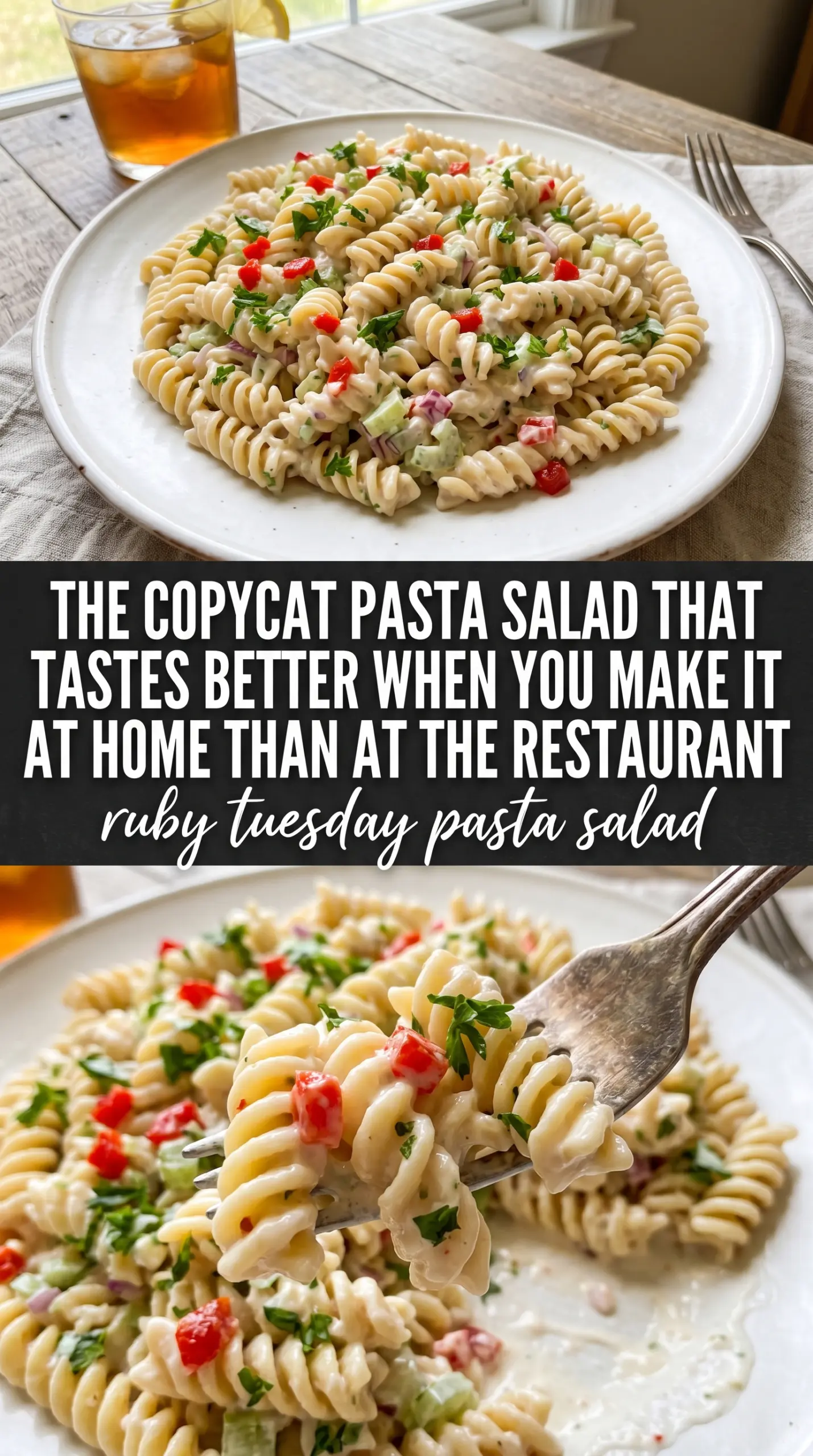
Ruby Tuesday pasta salad hits the table with exactly the kind of contrast people come back for: cool, creamy dressing; tender pasta; crisp-tender broccoli and cauliflower; and salty bacon in every few bites. It’s the kind of side dish that disappears fast at potlucks because it doesn’t just sit there looking pretty — it tastes balanced, substantial, and familiar in the best way.
What makes this copycat work is the way the vegetables are handled. A quick blanch keeps the broccoli and cauliflower bright and lightly tender instead of raw and stubborn, and the ice bath stops the cooking before they go limp. The dressing leans sweet-tangy, which is what gives the whole bowl that Ruby Tuesday feel, but the Parmesan and bacon keep it from tasting flat.
Below, I’ve included the one chilling step that matters, the ingredient swaps that still keep the salad on track, and a few fixes for the common mistakes that can turn a creamy pasta salad watery or dull.
The dressing coated everything without turning soupy, and the broccoli stayed crisp-tender after chilling. My husband went back for a second bowl before dinner even started.
Save this Ruby Tuesday pasta salad for potlucks, cookouts, and make-ahead dinners when you want a creamy copycat side with bacon and tender-crisp vegetables.
The Chill Time Is What Makes the Dressing Taste Right
Warm pasta drinks up dressing fast, and that’s where a lot of creamy pasta salads go wrong. If you toss everything together and serve it immediately, the salad tastes thin and a little sharp because the sugar and vinegar haven’t had time to settle into the mayonnaise.
Letting it rest for at least two hours does two important things: the pasta absorbs some of the dressing, and the flavor rounds out. The salad should still look glossy when it comes out of the fridge, not dry or stiff. If it seems tight after chilling, a spoonful of mayo or a splash of vinegar loosens it back up without watering it down.
- Tri-color rotini — The twists hold onto the dressing better than straight pasta, which matters in a salad that relies on every bite being coated. Any short pasta with ridges will work, but rotini gives you the closest texture to the restaurant version.
- Broccoli and cauliflower — These need only a brief blanch. That short cook keeps them bright and crisp-tender instead of raw in the center or mushy after chilling.
- Bacon — Cook it until it’s crisp enough to stay snappy in the salad. Soft bacon turns chewy once it sits in the dressing.
- Mayonnaise, sugar, and red wine vinegar — This trio builds the classic sweet-tangy base. Miracle Whip will make the salad sweeter and sharper; plain mayo gives you the more balanced dressing most people expect here.
- Parmesan — It adds a salty backbone that keeps the dressing from tasting one-note. Use finely grated Parmesan so it disappears into the dressing instead of clumping.
What Each Ingredient Is Actually Doing in Ruby Tuesday Pasta Salad
- Fresh vegetables (vibrant, crisp, quality) — Start with fresh, brightly colored vegetables. Wilted vegetables make everything taste tired.
- Acid (vinegar, lemon juice, or lime) — The acid prevents oxidation and prevents flat taste. It’s essential for brightness.
- Oil (quality matters for flavor) — Good olive oil adds freshness. Cheap oil makes the salad taste flat.
- Salt (enhances all other flavors) — Proper seasoning makes vegetables taste more like themselves. Don’t undersalt.
- Fresh herbs (tender ones added last) — Fresh herbs add complexity and brightness. Add them right before serving.
- Protein or hearty elements (if using) — These should complement without overwhelming the vegetables. Keep the salad light.
- Dressing applied just before serving — Don’t dress early or the vegetables release liquid and wilt. Timing is everything.
- Taste and adjust (check for balance) — The salad should taste bright and assertive. Add more acid or salt if needed.
Building the Salad So the Vegetables Stay Crisp and the Dressing Stays Creamy
Blanching the Broccoli and Cauliflower
Drop the florets into boiling water for just two minutes, then move them straight into ice water. They should turn bright green and pale white, not soft. If you skip the ice bath, the residual heat keeps cooking them and you’ll end up with vegetables that slump after the salad chills.
Mixing the Dressing Until It Smooths Out
Whisk the mayonnaise, sugar, vinegar, Parmesan, salt, and pepper until the dressing looks smooth and slightly loose. The sugar should dissolve as much as it can before it hits the pasta. If it tastes too sharp at this stage, don’t panic — it mellows after chilling, which is why the rest time matters.
Tossing Without Crushing the Add-Ins
Add the pasta, vegetables, bacon, and onion to a large bowl before pouring on the dressing. Toss gently with a spoon or silicone spatula so the broccoli stays intact and the bacon doesn’t break into dust. The goal is an even coating, not a paste, and overmixing is how you end up with a dense bowl instead of a lively salad.
Chilling for the Final Texture
Refrigerate the salad for at least two hours before serving. That’s when the pasta firms back up and the dressing settles into the noodles. If you serve it too soon, the flavor feels disjointed; after the chill, it tastes like one finished dish instead of separate parts.
Three Ways to Adjust It Without Losing the Ruby Tuesday Feel
Make it gluten-free with a sturdy pasta
Use a gluten-free rotini that holds its shape after chilling. Rice-based pastas tend to work best here because they stay pleasantly firm, but don’t overcook them or they’ll go soft once the dressing sits on them.
Swap the bacon for a vegetarian version
Use smoked tempeh bacon or a crisp plant-based bacon substitute if you need to skip the pork. You’ll lose a little of the savory depth, so add an extra pinch of salt and a touch more Parmesan to keep the dressing from tasting flat.
Tone down the sweetness
Reduce the sugar slightly if you want a sharper dressing, especially if you’re serving it with heavily seasoned mains. The salad still needs enough sweetness to match the restaurant-style profile, but pulling it back a little makes the vinegar and Parmesan stand out more.
Storage and Reheating
- Refrigerator: Keep it covered for up to 4 days. The pasta will absorb more dressing over time, so it may look a little tighter on day two.
- Freezer: Don’t freeze this salad. The mayonnaise separates, and the vegetables lose their crisp texture once thawed.
- Reheating: This salad is served cold, so don’t reheat it. If it has been sitting in the fridge overnight and seems dry, stir in a spoonful of mayo or a small splash of vinegar before serving.
Questions I Get Asked About This Recipe
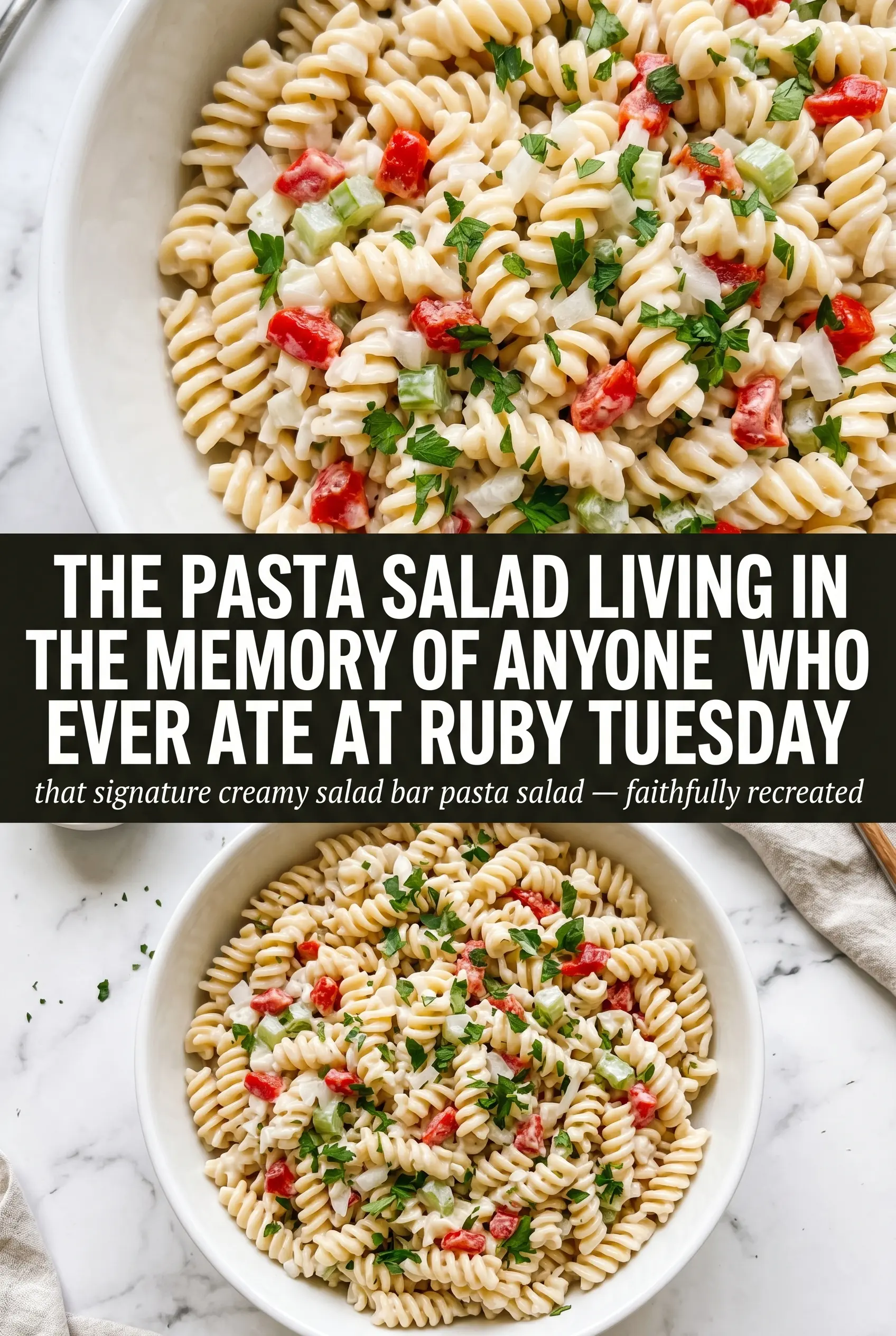
Ruby Tuesday Pasta Salad (Copycat Creamy Classic)
Ingredients
Equipment
Method
- Bring a large pot of salted water to a boil and cook tri-color rotini pasta according to package directions. Drain and rinse thoroughly with cold water to stop cooking.
- Blanch broccoli florets and cauliflower florets in boiling water for 2 minutes. Immediately plunge into ice water, then drain well so the florets stay crisp.
- Whisk mayonnaise, sugar, red wine vinegar, Parmesan cheese, salt, and black pepper until smooth and evenly combined. Taste and adjust salt and pepper if needed.
- Combine pasta, broccoli florets, cauliflower florets, bacon slices, and red onion in a large bowl. Pour dressing over the salad and toss until every piece looks coated.
- Refrigerate the pasta salad for at least 2 hours before serving. Keep it covered so the vegetables stay crisp and the dressing thickens slightly as it chills.