Pasta salad only earns a permanent spot on the table when the noodles stay lively, the dressing soaks in without turning everything soggy, and every bite brings a little salt, crunch, and creaminess at once. This Italian pasta salad does that well. It tastes like a proper antipasto spread turned into a big, cold bowl that disappears fast at cookouts, potlucks, and weeknight dinners when the main dish needs a side that can stand up for itself.
The trick is in the balance. Rinsing the pasta stops the cooking and cools the surface so the dressing can cling instead of sliding off, and the chill time gives the rotini a chance to absorb the Italian dressing without going mushy. The salami, mozzarella, olives, peppers, and tomatoes each bring their own texture, which keeps the salad from tasting flat after it sits in the fridge.
Below, I’ve included the details that matter most: how to keep the pasta from drinking up all the dressing, which substitutions still keep the salad sturdy, and the small make-ahead move that makes this taste even better the next day.
The dressing soaked in perfectly after chilling, and the salami and mozzarella stayed firm instead of getting lost in the pasta. I added a little extra dressing before serving and it tasted just like the kind of salad you hope shows up at every picnic.
Italian pasta salad with salami, mozzarella, and peppers is the kind of make-ahead side that gets even better after a good chill.
The Reason This Pasta Salad Keeps Its Bite After Chilling
The biggest mistake with pasta salad is treating it like a regular hot pasta dish. Warm noodles keep absorbing dressing and collapsing into a soft, heavy bowl by the time it hits the table. This version fixes that by rinsing the pasta after cooking, then giving it enough chilling time to drink in flavor without losing its shape.
Rotini is doing real work here. The spirals catch dressing in the grooves and hold onto the little bits of onion, pepper, and Parmesan, which means you get a balanced bite instead of dressing pooling at the bottom of the bowl. If you use a smooth pasta shape, the salad still works, but it won’t hold the Italian dressing as well.
- Rinsed rotini — This stops the cooking fast and cools the pasta enough for the dressing to cling. Skip the rinse and the salad turns soft and sticky.
- Italian dressing — Bottled dressing gives the salad the sharp, herby backbone it needs. A good zippy one works better than a thick creamy version here.
- Salami and mozzarella — These make the salad feel like antipasto instead of plain pasta. Cut them into small cubes so every forkful gets some.
- Bell peppers and red onion — They add crunch and keep the salad from tasting one-note after chilling. Dice them small enough that they mix through the pasta instead of sitting in chunks.
What Each Ingredient Is Actually Doing in the Bowl
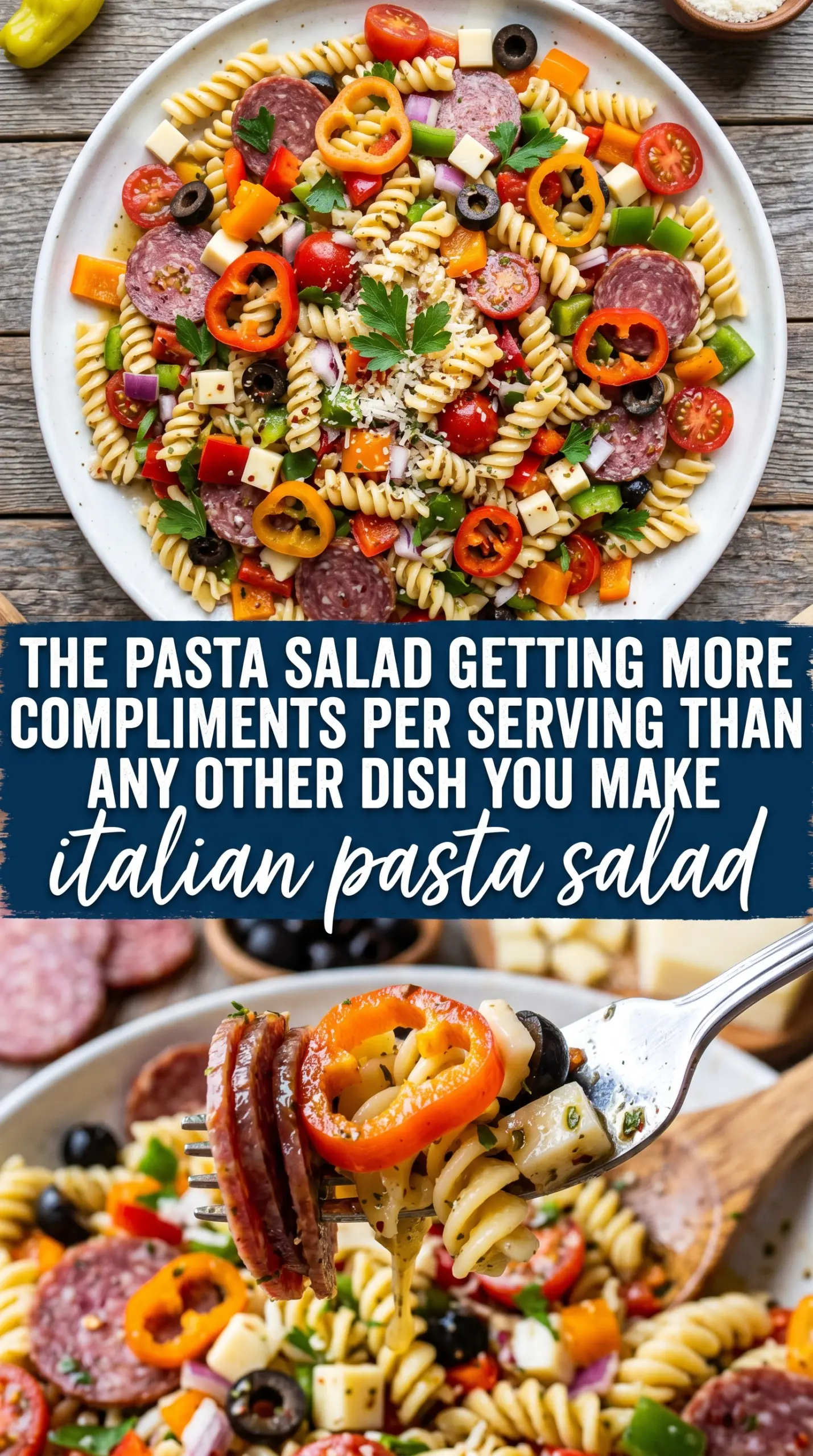
- Rotini pasta — Its shape holds dressing better than straight noodles. Bowties or fusilli work too if that’s what you have.
- Italian dressing — This seasons the pasta from the inside and provides the acid that keeps the salad bright. If you make your own, lean into red wine vinegar and oregano.
- Salami — Adds salt, chew, and that classic antipasto note. Pepperoni works in a pinch, but it tastes a little sharper and fattier.
- Mozzarella — Use a block of mozzarella and cube it yourself for the cleanest texture. Fresh mozzarella is softer and can shed moisture, so it’s not the best choice if the salad needs to hold for hours.
- Cherry tomatoes — They bring sweetness and juiciness, but halve them so they don’t flood the bowl. If your tomatoes are extra watery, seed them first.
- Black olives — These deepen the savory flavor and make the salad taste more complete. Green olives work if you want a sharper, brinier bite.
- Red and green bell peppers — They add color and crunch, and they stay crisp after chilling. That crunch is part of what keeps the salad interesting.
- Red onion — Use a fine dice so the onion flavor spreads through the salad instead of showing up in harsh chunks. If raw onion is too strong for you, soak it in cold water for 10 minutes first.
- Parmesan — This adds a dry, salty finish that ties the dressing and cheese together. Grate it fine so it disappears into the salad instead of clumping.
- Italian seasoning — A little extra herb lift makes the bottled dressing taste more layered. Crush it between your fingers before adding it so the dried herbs bloom a bit in the oil.
Building the Salad So the Dressing Stays in the Pasta, Not in the Bowl
Cooking and Cooling the Pasta
Cook the rotini until it is just tender, not soft. You want a little bite left because the pasta will absorb dressing as it chills. Drain it well, then rinse with cold water until the noodles are cool to the touch. If you skip the rinse, the hot pasta keeps cooking and the salad turns heavy fast.
Coating the Noodles First
Toss the cooled pasta with the Italian dressing before you add the mix-ins. This gives every twist of pasta a slick coating, which helps the seasoning distribute evenly. If you dump everything into the bowl at once, the dressing never reaches the pasta as evenly and the bottom stays bland.
Adding the Chop-Ins
Add the salami, mozzarella, tomatoes, olives, peppers, onion, Parmesan, and Italian seasoning once the pasta is coated. Toss gently so the cheese stays in cubes and the tomatoes don’t burst. The salad should look glossy and crowded, but not wet. If it seems dry right away, that’s normal; the pasta will keep pulling in dressing as it rests.
The Chill That Makes It Taste Finished
Refrigerate for at least 2 hours and toss it once or twice while it chills. That rest is where the flavors settle and the pasta finishes seasoning itself. Right before serving, taste it again and add more dressing if the noodles have absorbed most of it. Pasta salad often needs that last little splash to wake it back up.
How to Adapt This for Different Crowds and Diets
Make It Vegetarian Without Losing the Antipasto Feel
Skip the salami and add chopped marinated artichokes, extra olives, or roasted red peppers. You lose the meaty chew, but the salad still tastes layered and savory, especially if you bump up the Parmesan a little.
Gluten-Free Pasta Salad That Still Holds Its Shape
Use a sturdy gluten-free rotini and cook it just to tender, then rinse it well and toss it with dressing while cool. Gluten-free pasta can break down faster than wheat pasta, so don’t overcook it and don’t leave it soaking in dressing for days.
Lighter, Less Salty Version
Use less salami and choose a lower-sodium Italian dressing. The salad will still taste bright and bold, but the flavor leans cleaner and less rich. Add a little extra tomato or pepper to keep the bowl lively.
Storage and Reheating
- Refrigerator: Store for up to 4 days. The pasta will keep absorbing dressing, so expect the salad to get a little drier each day.
- Freezer: Don’t freeze it. The vegetables turn watery and the mozzarella texture changes in a way that isn’t worth fixing.
- Reheating: This salad is meant to be served cold. Stir in a splash of dressing before serving leftovers instead of warming it, since heat will soften the vegetables and make the cheese greasy.
Answers to the Questions Worth Asking
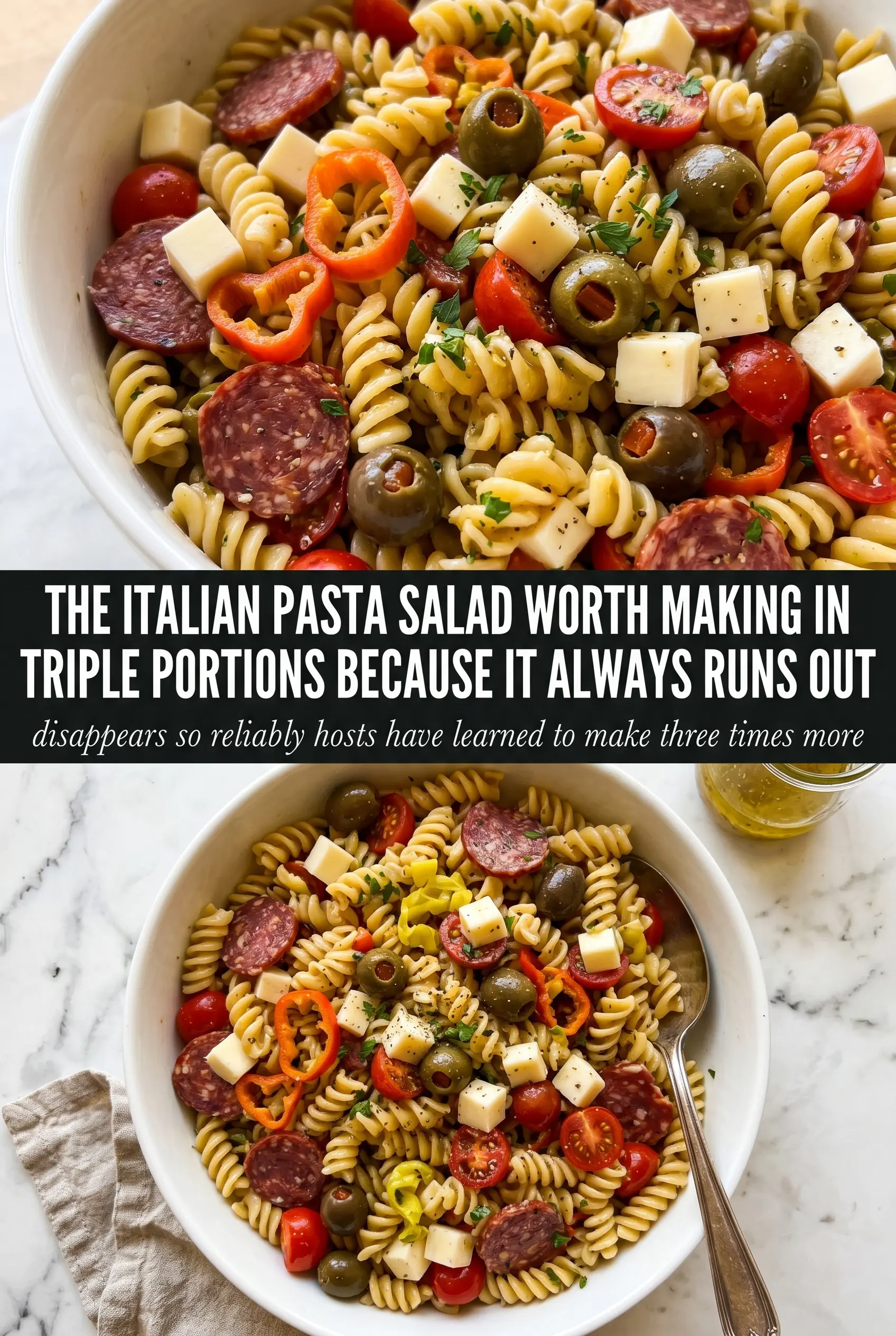
Italian Pasta Salad
Ingredients
Method
- Cook rotini pasta according to package directions, then drain and rinse with cold water until cool.
- In a large bowl, combine rotini pasta with Italian dressing and toss to coat until evenly glossy.
- Add salami, mozzarella cheese, cherry tomatoes, black olives, green bell pepper, red bell pepper, and red onion, then toss to distribute the mix.
- Sprinkle Parmesan cheese and Italian seasoning over the top, then toss again until well combined.
- Refrigerate the pasta salad for at least 2 hours, tossing occasionally so the dressing clings to the pasta.
- Before serving, check texture and add more dressing if needed, then toss briefly to refresh the coating.