Pasta salad only works when the dressing gets into every ridge and the mix has enough punch to stay interesting after chilling. This Mediterranean version does both. The olives, feta, artichokes, and sun-dried tomatoes bring salt, tang, and chew, while the lemon-herb dressing keeps the pasta bright instead of heavy.
The small details matter here. Rinsing the pasta stops the cooking fast and cools the starch so the dressing can cling without turning oily. A short chill gives the garlic, oregano, and lemon time to settle into the pasta instead of tasting separate and sharp. The result is a salad that eats like a full dish, not a side that got forgotten in the fridge.
Below you’ll find the one trick that keeps this salad from drying out, plus a few smart swaps if you want to make it dairy-free, gluten-free, or a little more filling.
The dressing soaked in after chilling and the feta stayed in little salty pockets instead of disappearing. I made it the night before a picnic and it held up beautifully.
Save this Mediterranean Pasta Salad for potlucks, meal prep, and the kind of lunch that gets better after a long chill.
The Chill Time Is What Lets the Flavor Come Together
Pasta salad can taste flat when it’s tossed and served right away. The dressing needs time to move into the pasta, and the vegetables need a minute to lose their raw edge without going soft. That 2-hour chill isn’t wasted time; it’s when the salad turns from separate ingredients into one cohesive bowl.
The other common failure is overcooked pasta. If the noodles are too soft before they chill, they turn mushy after absorbing dressing. Cook the penne until just tender, then rinse it under cold water so it stops right there. You want the pasta to hold its shape when it sits under the olives, feta, and tomatoes.
- Penne — The shape matters. The ridges catch the lemon-herb dressing, and the tube holds little pockets of olive oil and feta. Any sturdy short pasta works, but don’t use delicate shapes that collapse after chilling.
- Kalamata olives — These bring the salty, briny backbone of the salad. Green olives can work in a pinch, but they’re sharper and less rich, so the final bowl tastes leaner.
- Feta — Use a block if you can and crumble it yourself. Pre-crumbled feta tends to be drier and less creamy, which changes the way it melts into the dressing.
- Sun-dried tomatoes — They add concentrated sweetness and chew. If yours are packed dry, chop them small; if they’re oil-packed, blot them first so the salad doesn’t turn greasy.
- Olive oil and lemon juice — This is the dressing’s foundation. Use a good olive oil here because there’s nowhere for a harsh, bitter finish to hide.
What Each Ingredient Is Actually Doing in Mediterranean Pasta Salad
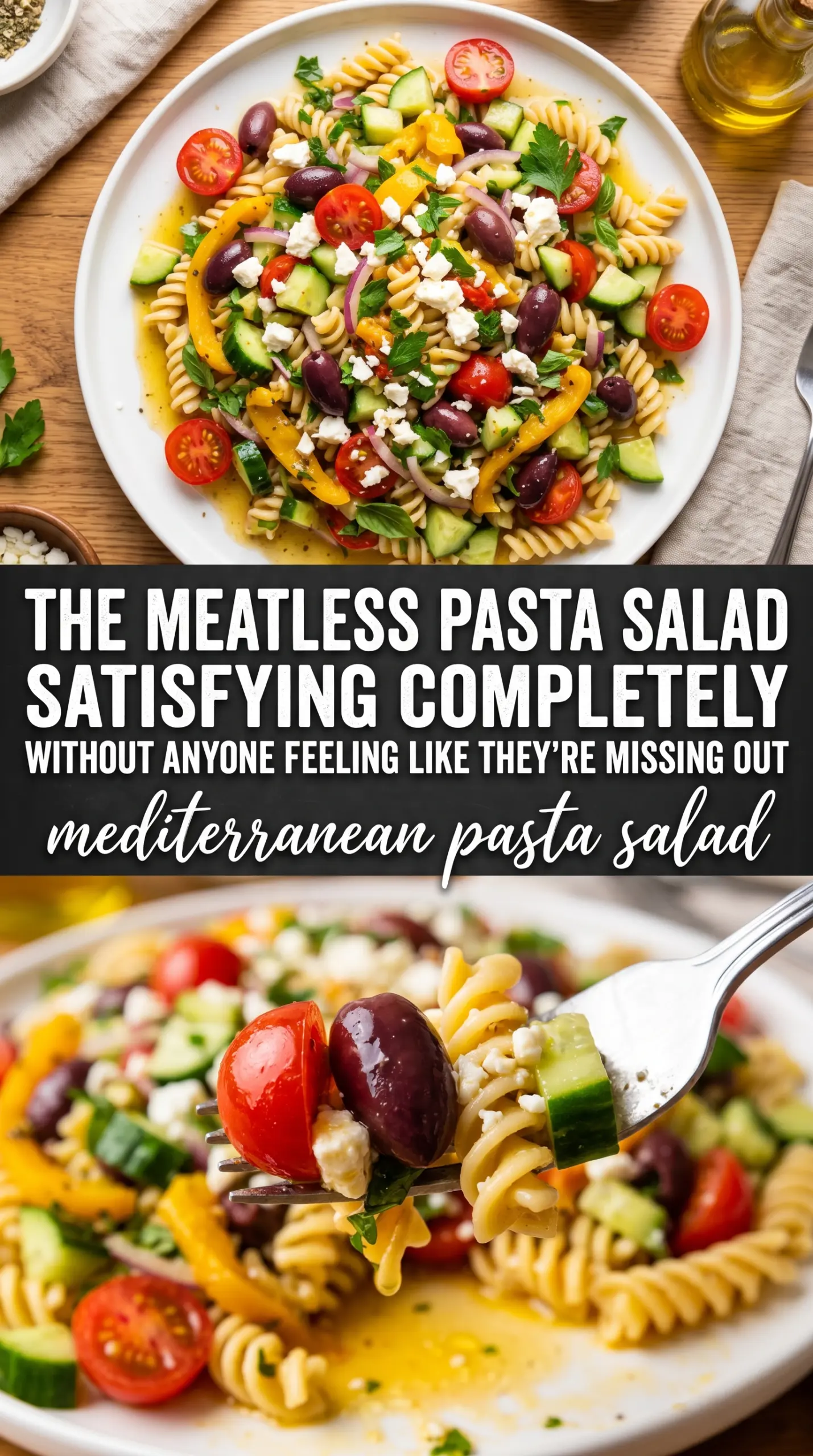
- Fresh vegetables (vibrant, crisp, quality) — Start with fresh, brightly colored vegetables. Wilted vegetables make everything taste tired.
- Acid (vinegar, lemon juice, or lime) — The acid prevents oxidation and prevents flat taste. It’s essential for brightness.
- Oil (quality matters for flavor) — Good olive oil adds freshness. Cheap oil makes the salad taste flat.
- Salt (enhances all other flavors) — Proper seasoning makes vegetables taste more like themselves. Don’t undersalt.
- Fresh herbs (tender ones added last) — Fresh herbs add complexity and brightness. Add them right before serving.
- Protein or hearty elements (if using) — These should complement without overwhelming the vegetables. Keep the salad light.
- Dressing applied just before serving — Don’t dress early or the vegetables release liquid and wilt. Timing is everything.
- Taste and adjust (check for balance) — The salad should taste bright and assertive. Add more acid or salt if needed.
How to Keep the Dressing Bright Instead of Greasy
Cooking the Pasta to the Right Bite
Boil the penne until it’s just past firm and still has a little resistance in the center. Drain it, then rinse with cold water until it’s no longer warm. That step stops the cooking and washes off the extra starch that would otherwise make the salad gluey. If the pasta sits hot, it absorbs the oil too fast and the dressing can pool instead of coating.
Whisking the Dressing Until It Tastes Finished
Whisk the olive oil, lemon juice, garlic, oregano, salt, and pepper until the mixture looks slightly emulsified and smells sharp, not raw. The garlic should be fine and evenly distributed; big pieces hit too hard in a chilled salad. If the dressing tastes flat now, it will taste flat after chilling too, so season it a touch more boldly than you think you need.
Tossing Without Crushing the Good Stuff
Add the pasta, olives, tomatoes, artichokes, sun-dried tomatoes, red onion, and feta to a large bowl, then pour the dressing over the top. Toss gently with a big spoon or silicone spatula so the feta stays in visible crumbles and the tomatoes don’t burst. The salad should look evenly coated, not wet. If it seems dry after the first toss, wait 10 minutes and toss again; the pasta will pull in more dressing as it sits.
Finishing After the Chill
Refrigerate the salad for at least 2 hours, then taste it again before serving. Cold food dulls salt and acid, so this is the moment to adjust with a pinch more salt, a squeeze of lemon, or a drizzle of oil if needed. Scatter the parsley over the top right before serving so it stays fresh and doesn’t sink into the bowl.
How to Adapt This for Different Diets and Crowds
Make it gluten-free
Swap in a sturdy gluten-free penne and cook it just until tender. Gluten-free pasta softens faster after it chills, so rinse it well and don’t overcook it in the pot. The flavor stays the same, but the texture is best the day it’s made.
Make it dairy-free
Leave out the feta and add a handful of chopped roasted red peppers or extra artichokes for more body. You’ll lose the creamy, salty finish that feta brings, so add a little more lemon and a pinch more salt to keep the salad lively.
Turn it into a fuller meal
Stir in chickpeas, grilled chicken, or chunks of tuna. Chickpeas keep it vegetarian and add a meaty bite, while chicken makes the salad work as lunch instead of just a side. Add any protein after the pasta cools so it doesn’t dry out.
Storage and Reheating
- Refrigerator: Store in an airtight container for up to 4 days. The pasta will absorb more dressing as it sits, so the salad gets a little drier by day two.
- Freezer: Don’t freeze this one. The tomatoes, feta, and pasta all change texture in the freezer and the salad turns watery when thawed.
- Reheating: This salad is meant to be eaten cold or at room temperature. If it’s been in the fridge, let it sit out for 15 to 20 minutes and add a small drizzle of olive oil or lemon juice before serving.
Questions I Get Asked About This Recipe
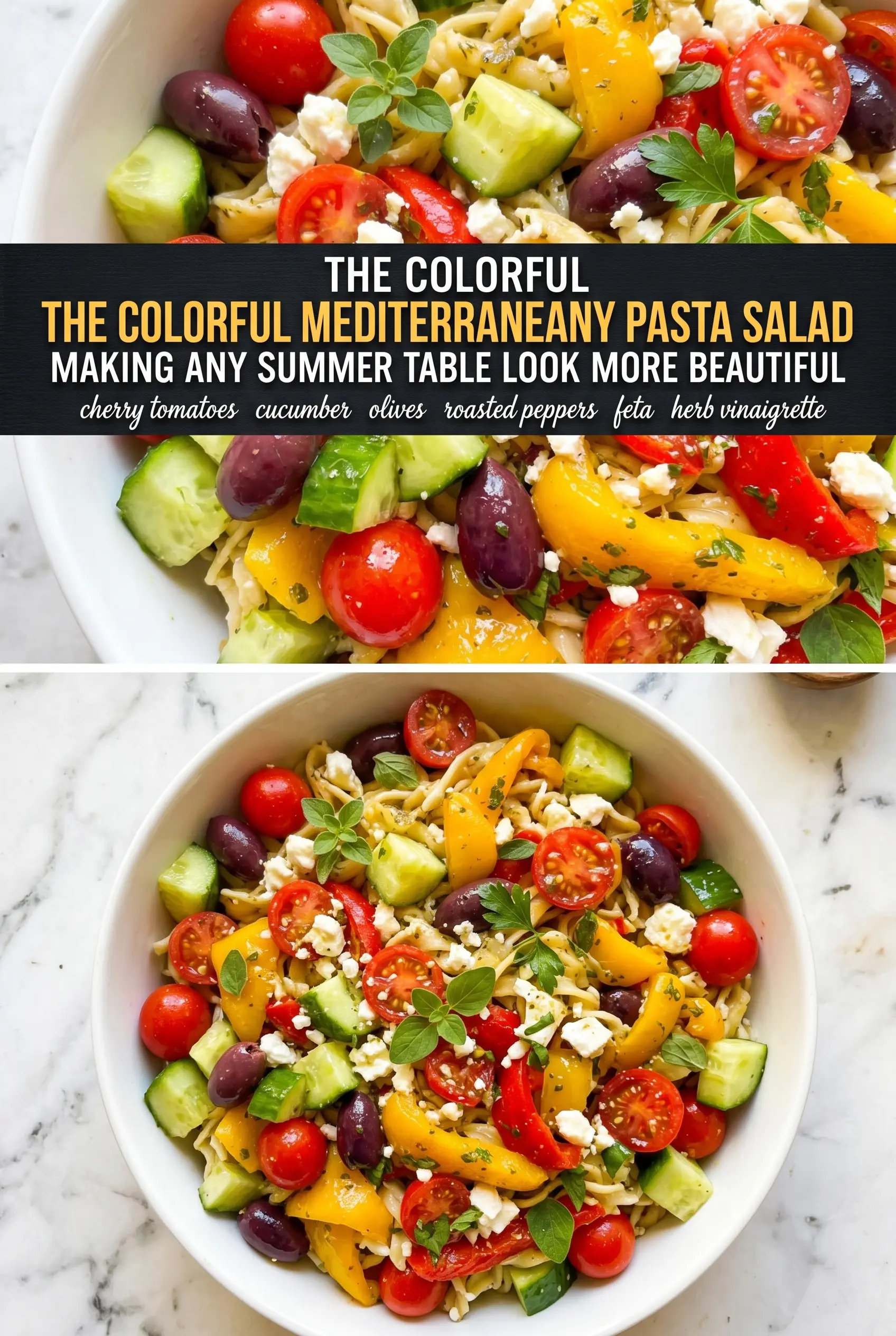
Mediterranean Pasta Salad
Ingredients
Equipment
Method
- Cook penne pasta according to package directions, then drain and rinse with cold water to stop cooking and keep the texture firm.
- Whisk olive oil, lemon juice, garlic, dried oregano, salt, and pepper until evenly combined for a bright, herby dressing.
- Combine pasta, Kalamata olives, cherry tomatoes, artichoke hearts, sun-dried tomatoes, red onion, and feta in a large bowl so everything is distributed.
- Pour the dressing over the salad and toss gently until the pasta and mix-ins look evenly coated.
- Refrigerate the salad for at least 2 hours so the flavors meld and the dressing clings to the pasta.
- Garnish with fresh parsley before serving for a fresh top note and a pop of green color.