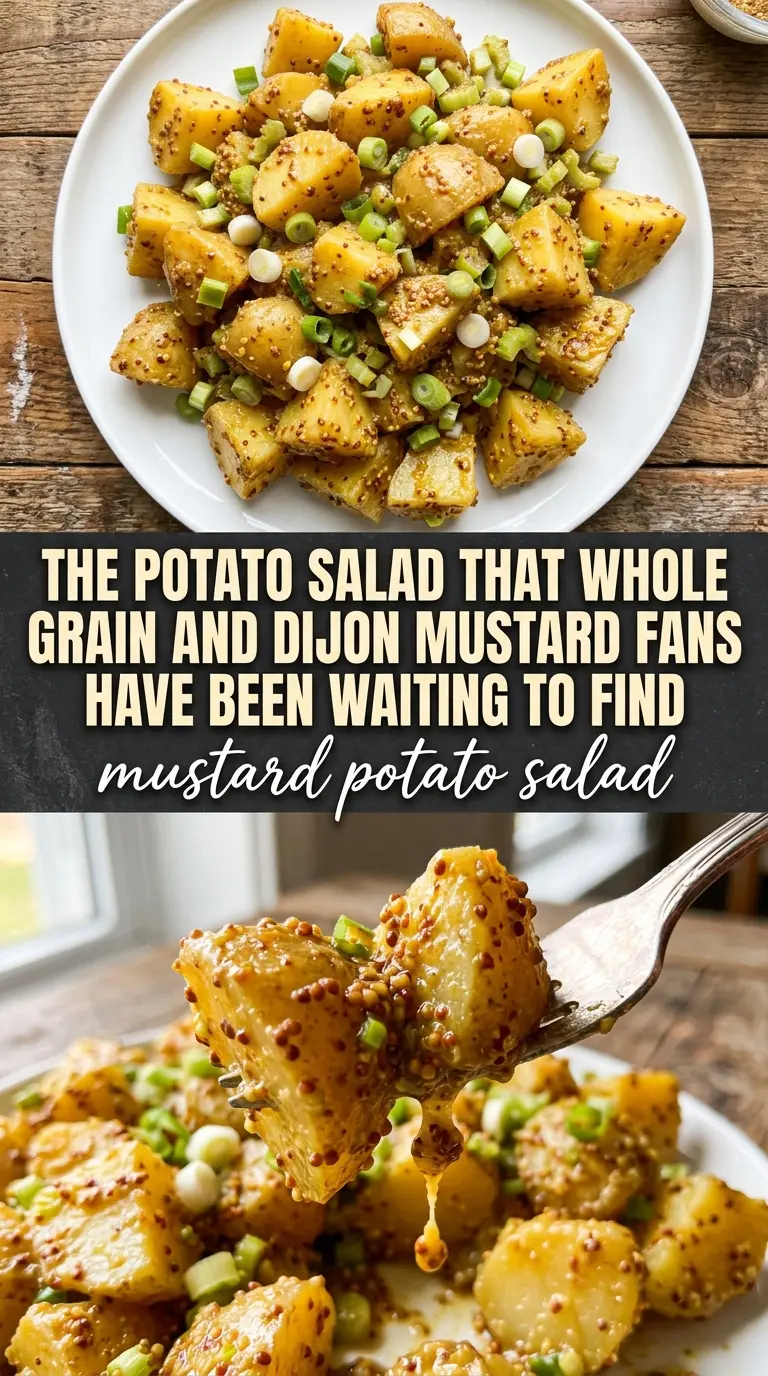
Mustard potato salad lands with the kind of sharp, creamy bite that keeps people going back for a second scoop. The potatoes stay tender but not mushy, the dressing clings instead of sliding off, and the mustard gives the whole bowl a clean tang that cuts through the richness of the mayonnaise. It tastes familiar in the best way, but never flat.
What makes this version work is the balance. Yellow mustard brings the classic picnic flavor, while a little Dijon adds depth without turning the dressing fancy or aggressive. The vinegar and sugar round out the edges, and the potatoes are dressed while still slightly warm so they absorb flavor instead of sitting there bland under a coating of sauce.
Below, I’ll show you how to keep the potatoes from breaking apart, why chilling time matters more than most people think, and a few simple swaps that still keep the salad tasting like the real thing.
The dressing had the perfect tang and coated every potato without getting watery after chilling. I used it for a cookout and people kept asking what gave it that bright mustard flavor.
Save this mustard potato salad for the next cookout when you want a tangy, creamy side that chills up even better than it starts.
The Trick to a Potato Salad That Stays Creamy Instead of Gluey
The big mistake with potato salad is treating it like a cold pasta salad. Potatoes need a little room to breathe after cooking, and if they’re beaten up while they’re hot, they break down and turn pasty fast. Yukon golds hold their shape well and have enough natural creaminess that the salad feels rich even before the dressing goes on.
The other key move is to salt and season the dressing before it hits the bowl. That keeps the flavor even from the first bite to the last. If the potatoes taste dull after chilling, it’s usually because the dressing was under-seasoned going in. Cold food mutes flavor, so this salad should taste a touch bold before it goes into the fridge.
- Yukon gold potatoes — These are the best fit here because they hold together without turning dry. Russets tend to fall apart, and waxy potatoes can feel a little too firm once chilled.
- Yellow mustard and Dijon — Yellow mustard gives the classic color and tang. Dijon deepens the dressing and keeps it from tasting one-note. If you only have yellow mustard, use it all, but the flavor will be more straightforward.
- Mayonnaise — This carries the dressing and helps it cling to every potato chunk. A good standard mayo works fine; this isn’t the place for anything strongly flavored.
- Vinegar — White vinegar sharpens the dressing and wakes up the potatoes. Lemon juice can work in a pinch, but it changes the flavor and can read a little brighter than classic potato salad.
- Celery and onion — These add crunch and a little bite. Dice them finely so they disappear into the salad instead of taking over each forkful.
- Eggs — They make the salad feel more substantial and add a soft, savory note. Chop them gently so they fold in instead of getting mashed.
What Each Ingredient Is Actually Doing in Mustard Potato Salad
- Fresh vegetables (vibrant, crisp, quality) — Start with fresh, brightly colored vegetables. Wilted vegetables make everything taste tired.
- Acid (vinegar, lemon juice, or lime) — The acid prevents oxidation and prevents flat taste. It’s essential for brightness.
- Oil (quality matters for flavor) — Good olive oil adds freshness. Cheap oil makes the salad taste flat.
- Salt (enhances all other flavors) — Proper seasoning makes vegetables taste more like themselves. Don’t undersalt.
- Fresh herbs (tender ones added last) — Fresh herbs add complexity and brightness. Add them right before serving.
- Protein or hearty elements (if using) — These should complement without overwhelming the vegetables. Keep the salad light.
- Dressing applied just before serving — Don’t dress early or the vegetables release liquid and wilt. Timing is everything.
- Taste and adjust (check for balance) — The salad should taste bright and assertive. Add more acid or salt if needed.
Building the Dressing Before It Meets the Potatoes
Cooking the Potatoes Just to Tender
Boil the cubed potatoes until a knife slips in with almost no resistance, then stop there. If they’re left bubbling until they start splitting, they’ll absorb too much water and fall apart when tossed. Drain them well and let steam escape for a few minutes so the dressing doesn’t get watered down.
Mixing the Tangy Base
Stir the mayonnaise, both mustards, vinegar, sugar, salt, and pepper together before anything else goes into the bowl. That gives you a smooth, even dressing instead of streaks of mustard that coat one part of the salad and leave the rest bland. Taste it now; it should be a little sharper and saltier than you want the finished salad to taste.
Combining Without Crushing
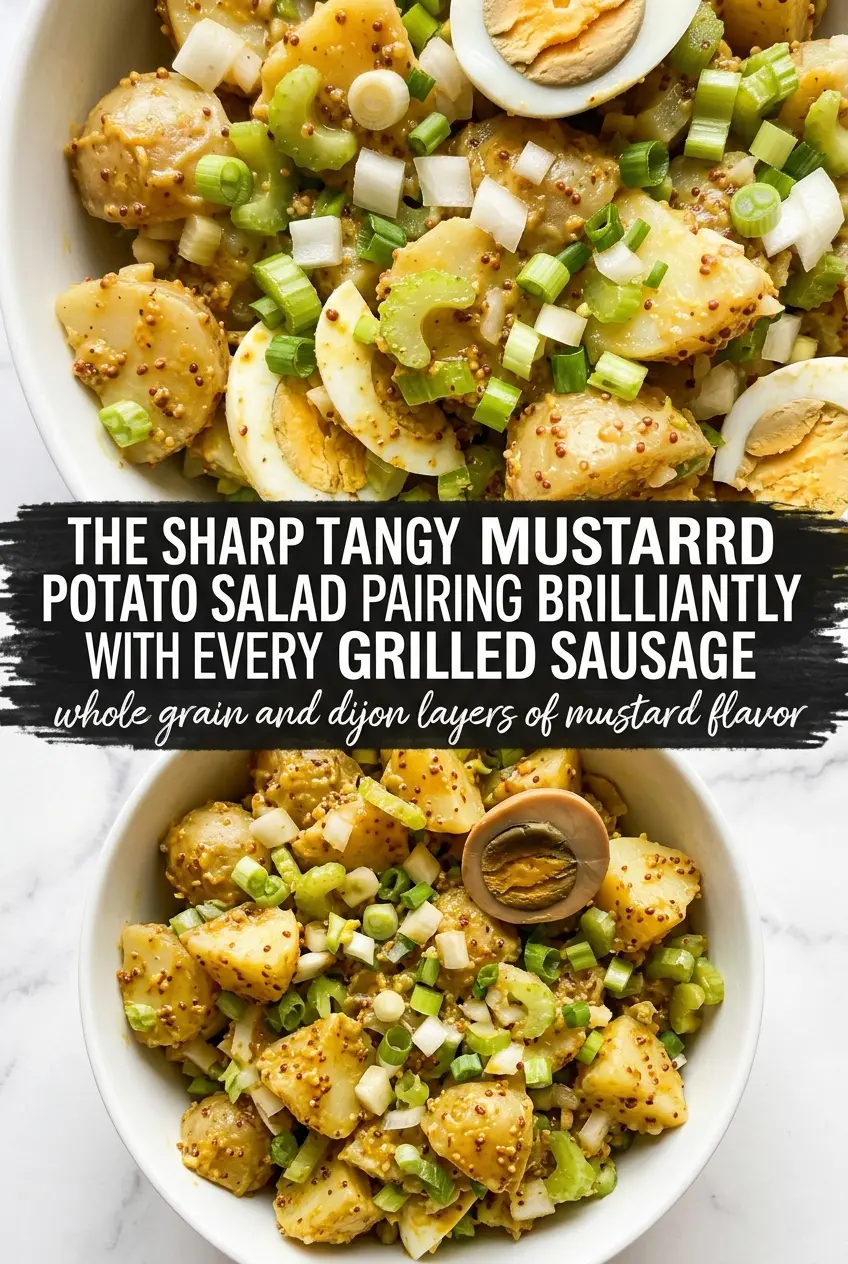
Add the potatoes, celery, onion, and eggs, then fold everything together with a broad spoon or spatula. If you stir aggressively, the potatoes break and the salad turns dense. You want the dressing to coat the pieces while they still look distinct and hold their edges.
Letting the Chill Time Do Its Job
Cover the bowl and refrigerate for at least 2 hours before serving. That resting time lets the potatoes absorb the dressing and the mustard flavor settle in. If you serve it right away, it tastes a little disconnected and the dressing can seem too sharp instead of balanced.
How to Adjust the Bowl Without Losing the Classic Taste
Dairy-Free Version That Still Tastes Rich
This recipe is already dairy-free as written, so you don’t need special ingredients to serve it that way. The mayonnaise does the creamy work, and the mustard keeps the flavor bright instead of heavy. Just check your mayo label if you’re cooking for someone avoiding eggs in the condiment itself.
Making It a Little Lighter
You can replace part of the mayonnaise with plain Greek yogurt for a sharper, lighter dressing. The salad will taste fresher, but it also becomes a little less mellow and slightly tangier after chilling. Keep at least half the mayo in place so the texture stays creamy instead of thin.
Extra Crunch for a Picnic Table
If you like more texture, add a little extra celery or a handful of finely chopped dill pickles. Pickles push the mustard flavor in a sharper direction, which works well if you want a more briny salad. Keep the pieces small so the salad still eats like potato salad, not relish.
Storage and Reheating
- Refrigerator: Keeps well for 3 to 4 days. The flavor gets a little deeper on day two, though the potatoes will soften slightly.
- Freezer: I don’t recommend freezing it. The potatoes and mayonnaise change texture after thawing and the salad turns watery.
- Reheating: Serve this cold straight from the fridge. If it’s been sitting out and feels too stiff, let it rest at room temperature for 15 to 20 minutes and stir once before serving.
Questions I Get Asked About This Recipe
Mustard Potato Salad
Ingredients
Equipment
Method
- Bring the potatoes to a boil in a Dutch oven over high heat, then cook until tender, about 10–15 minutes. Visual cue: a fork should slide in and out easily with no resistance.
- Drain the potatoes and spread them on a sheet pan to cool, about 10 minutes. Visual cue: steam should subside and the cubes should look dry on the surface.
- In a bowl, mix mayonnaise, yellow mustard, Dijon mustard, white vinegar, sugar, salt, and pepper until smooth and glossy. Visual cue: the dressing should be evenly yellow with no mustard streaks.
- Combine the cooled potatoes, celery, onion, and chopped eggs in a large bowl. Visual cue: the mix should be evenly distributed with visible celery and egg throughout.
- Pour the dressing over the potato mixture and toss well until every cube is coated. Visual cue: potatoes should look lightly creamy and yellow-tinted, not dry.
- Refrigerate for 2 hours before serving. Visual cue: the salad should look thicker and the flavors should appear more integrated after chilling.