Cold pasta salad gets a lot more interesting when the dressing actually tastes like something you’d want to eat on its own. This version brings together chewy noodles, crisp cabbage, sweet carrots, and edamame in a sesame-ginger dressing that clings to every strand instead of pooling at the bottom of the bowl. The result is bright, crunchy, and satisfying enough to stand in for lunch, but it still works exactly the way a good side dish should at dinner.
The trick is balance. Rice vinegar keeps the dressing sharp, honey rounds it out, and sesame oil gives the whole bowl that deep, toasty finish you can’t fake with a neutral oil. Rinsing the pasta under cold water stops the cooking fast and keeps the salad from turning gummy once it chills. The vegetables stay crisp, the noodles stay springy, and the flavors tighten up after an hour in the fridge.
Below, I’m walking through the small details that make this salad taste fresh instead of flat, plus a few swaps if you want to work around what’s in your pantry.
The dressing soaked into the noodles after an hour in the fridge and the cabbage still had a nice crunch. I brought it to a potluck and there wasn’t a spoonful left.
Save this sesame-ginger Asian Pasta Salad for a crunchy make-ahead side with noodles, edamame, and crisp vegetables.
The Dressing Needs Enough Punch to Survive the Chill
Cold pasta dulls flavor. That’s the part people miss when they toss together a noodle salad and taste it right away. The dressing has to lead with enough salt, acid, and sesame aroma to stay noticeable after an hour in the fridge. If it tastes barely seasoned before chilling, it’ll taste flat on the plate.
The other mistake is overdressing warm pasta. Heat makes noodles drink up the dressing unevenly and can leave the vegetables watery. Rinsing the pasta cold and letting it drain well keeps the texture springy, while the dressing coats the surface instead of disappearing into the bowl. That’s what gives you a salad that still tastes balanced after it sits.
What Each Ingredient Is Actually Doing in the Bowl
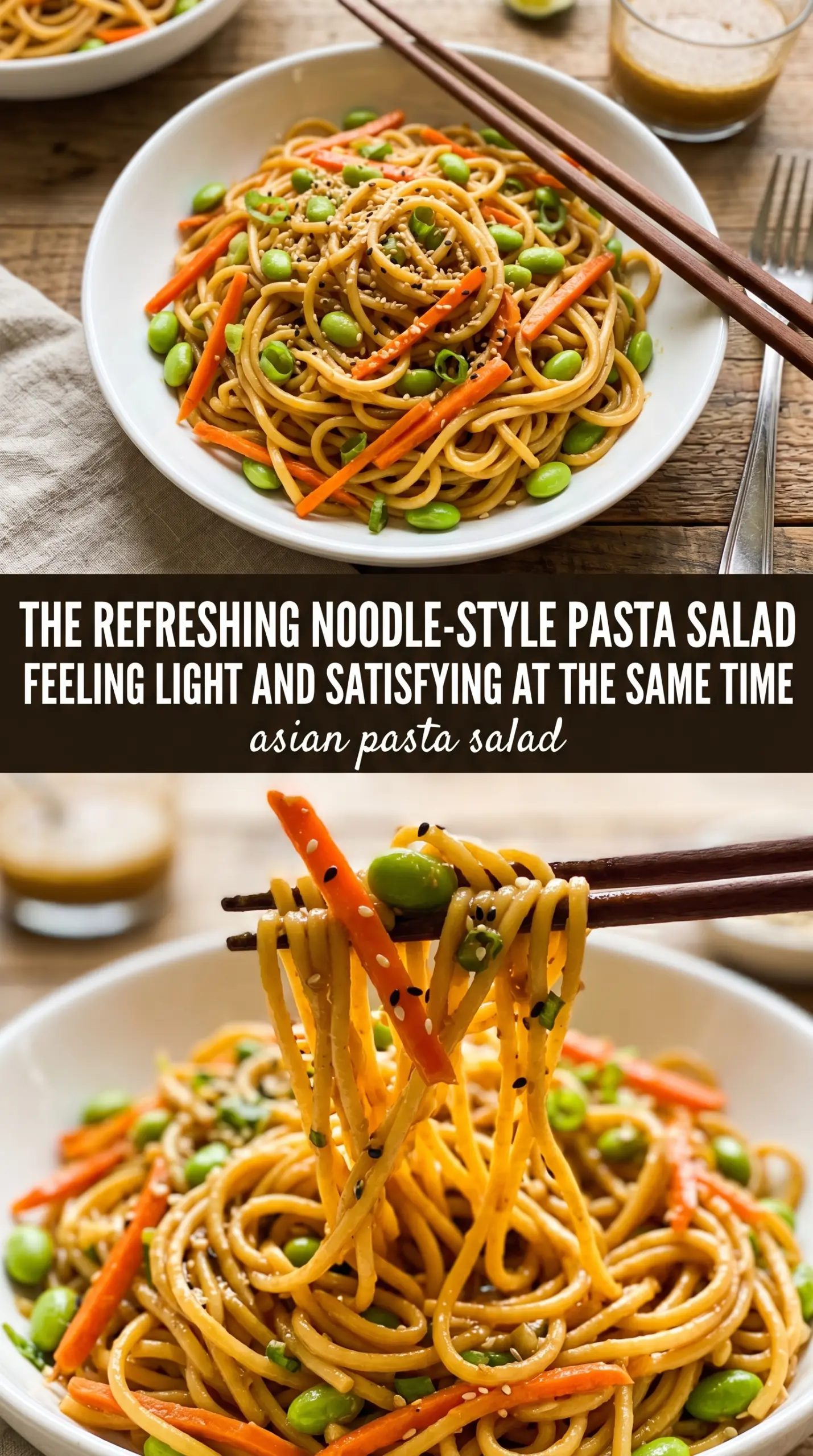
- Spaghetti or linguine — The long shape catches the dressing better than small pasta, and breaking it into thirds makes the salad easier to eat. If you want the closest swap, use soba or spaghetti. Short pasta works, but you lose that slurpable texture that makes this salad feel substantial.
- Sesame oil — This is the ingredient that makes the dressing taste like itself. Use toasted sesame oil, not a neutral version, because the nutty aroma is carrying most of the Asian-inspired character here. A little goes a long way, so don’t add extra unless you want the salad to taste heavy.
- Rice vinegar — It brings clean acidity without the harsh edge you’d get from white vinegar. If you have to substitute, use apple cider vinegar in a pinch, but start with a little less because it lands sharper. The salad needs that brightness to balance the honey and soy sauce.
- Edamame, cabbage, carrots, and bell pepper — These give the salad crunch, color, and enough body to make it feel complete. Fresh-shredded cabbage holds up best after chilling, and it stays crisp longer than lettuce ever would. If you need to swap the vegetables, stick with sturdy ones that can take dressing without collapsing.
- Honey — It softens the soy sauce and vinegar so the dressing doesn’t taste one-note. Maple syrup works if that’s what you have, but it changes the flavor slightly and reads a little more earthy. The goal is gentle sweetness, not a sugary glaze.
Building the Salad So the Vegetables Stay Crisp
Cooking the Pasta the Right Way
Boil the pasta until just tender, then drain it and rinse under cold water until it loses all steam. That rinse stops the cooking and keeps the noodles from sticking together in one heavy clump. Shake off as much water as you can before moving on, because extra water will dilute the dressing and wash the flavor off the pasta.
Whisking the Dressing Until It Tastes Bright
Stir the soy sauce, rice vinegar, sesame oil, honey, ginger, garlic, salt, and pepper together until the honey fully dissolves. The dressing should taste bold and a little aggressive on its own; the chilled pasta will calm it down. If the garlic seems sharp, let the dressing sit for a few minutes before tossing so the edges soften.
Tossing and Chilling Without Losing the Crunch
Add the pasta, edamame, cabbage, carrots, and bell pepper to a large bowl, then pour the dressing over everything and toss until the noodles are evenly coated. Chilling for at least an hour matters here because the pasta absorbs flavor and the vegetables stay crisp against the seasoned dressing. If the salad looks dry after chilling, add a small splash of rice vinegar and a drizzle of sesame oil right before serving.
Finishing with the Right Garnish
Top the salad with green onions and sesame seeds just before serving so they keep their bite and aroma. If you add them too early, the onions soften and the sesame seeds lose their pop. That final layer gives the salad a fresher finish and makes the bowl look as good as it tastes.
How to Adapt This for Different Diets and Pantry Days
Gluten-Free Version with Rice Noodles
Use rice noodles instead of wheat pasta and keep the dressing exactly the same. Rice noodles soften faster, so rinse them well and chill them promptly to prevent a slippery texture. The salad turns lighter and a little more delicate, but the sesame-ginger dressing still carries it.
Dairy-Free and Vegetarian as Written
This salad already fits both of those diets without any changes. The edamame adds enough protein to make it feel more like a meal than a side, and the dressing gets all of its richness from sesame oil instead of dairy. That makes it an easy bowl to bring to mixed-diet gatherings.
Turn It into a Heartier Main Dish
Add shredded chicken, cooked shrimp, or cubed tofu if you want a more filling lunch. Tofu should be pressed and pan-seared first so it doesn’t turn soft in the dressing. Chicken or shrimp work best if they’re cooled before mixing so they don’t warm the salad and soften the vegetables.
Storage and Reheating
- Refrigerator: Keeps for 3 to 4 days. The cabbage will soften a bit, but the flavor holds well.
- Freezer: I don’t recommend freezing this salad. The vegetables lose their crunch and the noodles turn mushy after thawing.
- Reheating: Serve it cold straight from the fridge. If it has tightened up too much, toss with a small splash of rice vinegar and a few drops of sesame oil before serving instead of heating it.
Questions I Get Asked About This Recipe
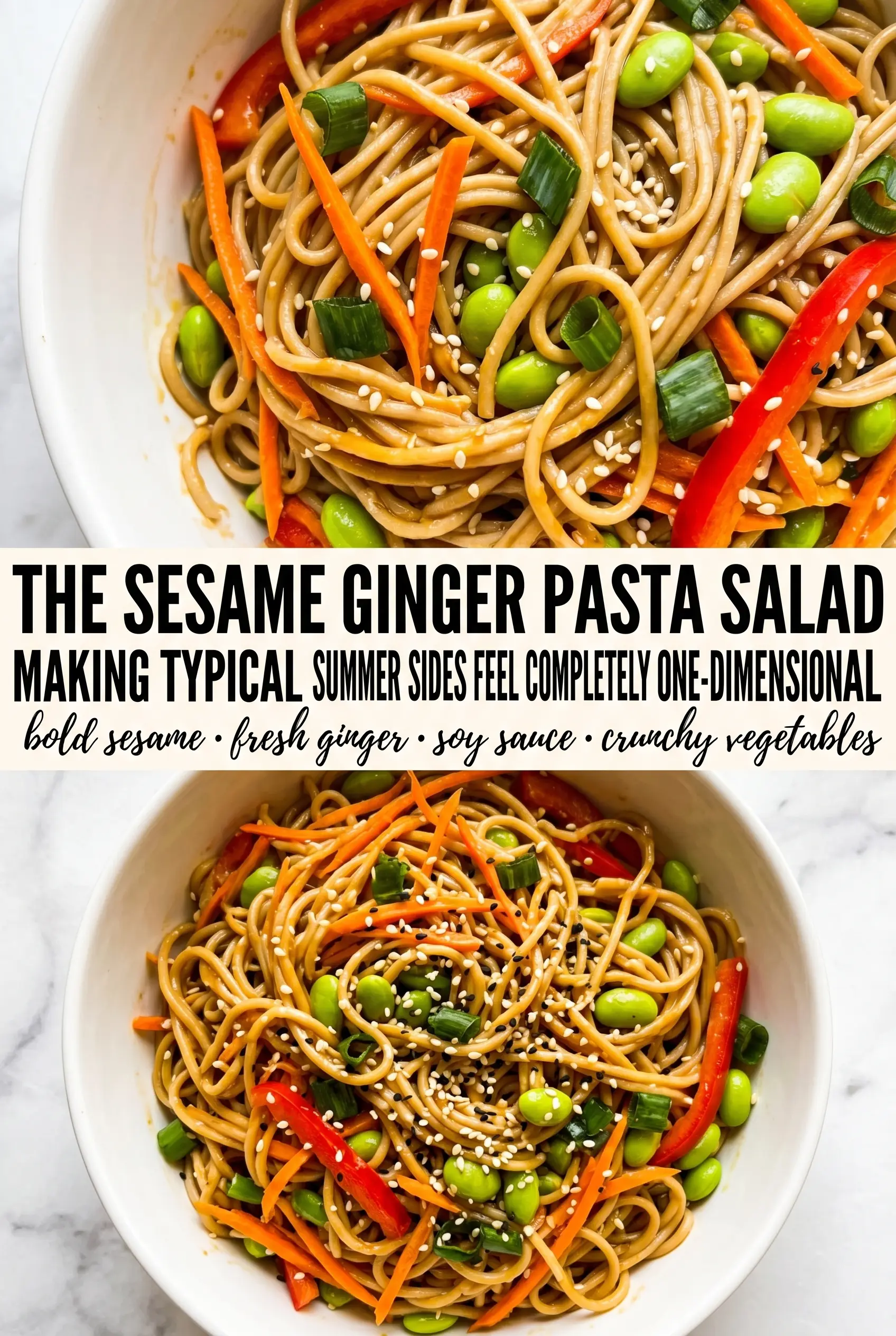
Asian Pasta Salad
Ingredients
Method
- Bring a large pot of salted water to a boil and cook the spaghetti or linguine according to package directions. Drain and rinse under cold water until cool to the touch, then set aside.
- Place the shelled edamame in the same boiling water for about 2–3 minutes, or until bright green and tender-crisp. Drain and cool briefly so it doesn’t steam the vegetables later.
- In a large bowl, combine the cooked pasta, edamame, red cabbage, carrots, and red bell pepper. Toss to distribute the vegetables evenly.
- Whisk together soy sauce, rice vinegar, sesame oil, honey, grated ginger, minced garlic, salt, and pepper until smooth. The mixture should look glossy and evenly combined.
- Pour the dressing over the salad and toss until every noodle and vegetable is lightly coated. Toss thoroughly so the cabbage and carrots get coated at the edges.
- Cover and refrigerate for at least 1 hour. Chill until flavors meld and the salad feels cold throughout.
- Just before serving, top the salad with sliced green onions and sesame seeds. Serve cold for the best crunchy texture.