Creamy Australian-style potato salad with bacon earns its place on the table because it lands in that sweet spot between rich, tangy, and satisfying without turning heavy. The potatoes hold their shape, the bacon brings salt and crunch, and the dressing clings to every piece instead of sliding off into a puddle at the bottom of the bowl.
The difference here is in the dressing and the chill time. A little sour cream softens the mayonnaise, vinegar sharpens the finish, and sugar rounds out the tang just enough to give this salad the classic Aussie-style balance people expect. The potatoes need to be cooled before they meet the dressing, or the mayo base loosens too much and the texture goes from creamy to greasy.
Below you’ll find the part that matters most: how to keep the potatoes from going mushy, why the dressing tastes better after it sits, and a few practical swaps if you need to adjust the salad for what’s in your kitchen.
The potatoes held their shape after chilling, and the dressing got even better by the next day. I loved the little hit of vinegar with the bacon — it kept the salad from tasting too rich.
Save this creamy Australian potato salad with bacon for your next BBQ side that needs tang, crunch, and a make-ahead chill.
The Trick to Keeping the Potatoes Creamy, Not Waterlogged
The biggest mistake with potato salad is dressing the potatoes while they’re still steaming hot. That steam turns into extra moisture, and the salad ends up diluted instead of creamy. Let the potatoes cool until they’re just warm or fully cool before you add the dressing. They should hold their shape when tossed, not collapse at the edges.
Another thing that matters here is the cut. Cube the potatoes evenly so they finish cooking at the same time. If some pieces are much smaller than others, the tiny ones break down and muddy the bowl while the larger chunks stay undercooked. A steady simmer is enough; a hard boil will knock the edges off before the centers are tender.
- Potatoes — Waxy or all-purpose potatoes hold their shape best. Starchy potatoes can work, but they soften more, so keep a closer eye on the boil.
- Bacon — Cook it until crisp enough to crumble. Soft bacon gets lost in the dressing, while properly crisp bacon gives the salad the salty bite it needs.
- Mayonnaise and sour cream — This is the base of the dressing. Mayo gives body, and sour cream keeps it from tasting flat or overly heavy.
- White vinegar and sugar — These are what give the salad that classic sweet-tangy edge. Don’t skip the sugar; it doesn’t make the salad sweet, it just rounds the acidity.
What Each Ingredient Is Actually Doing in This Salad
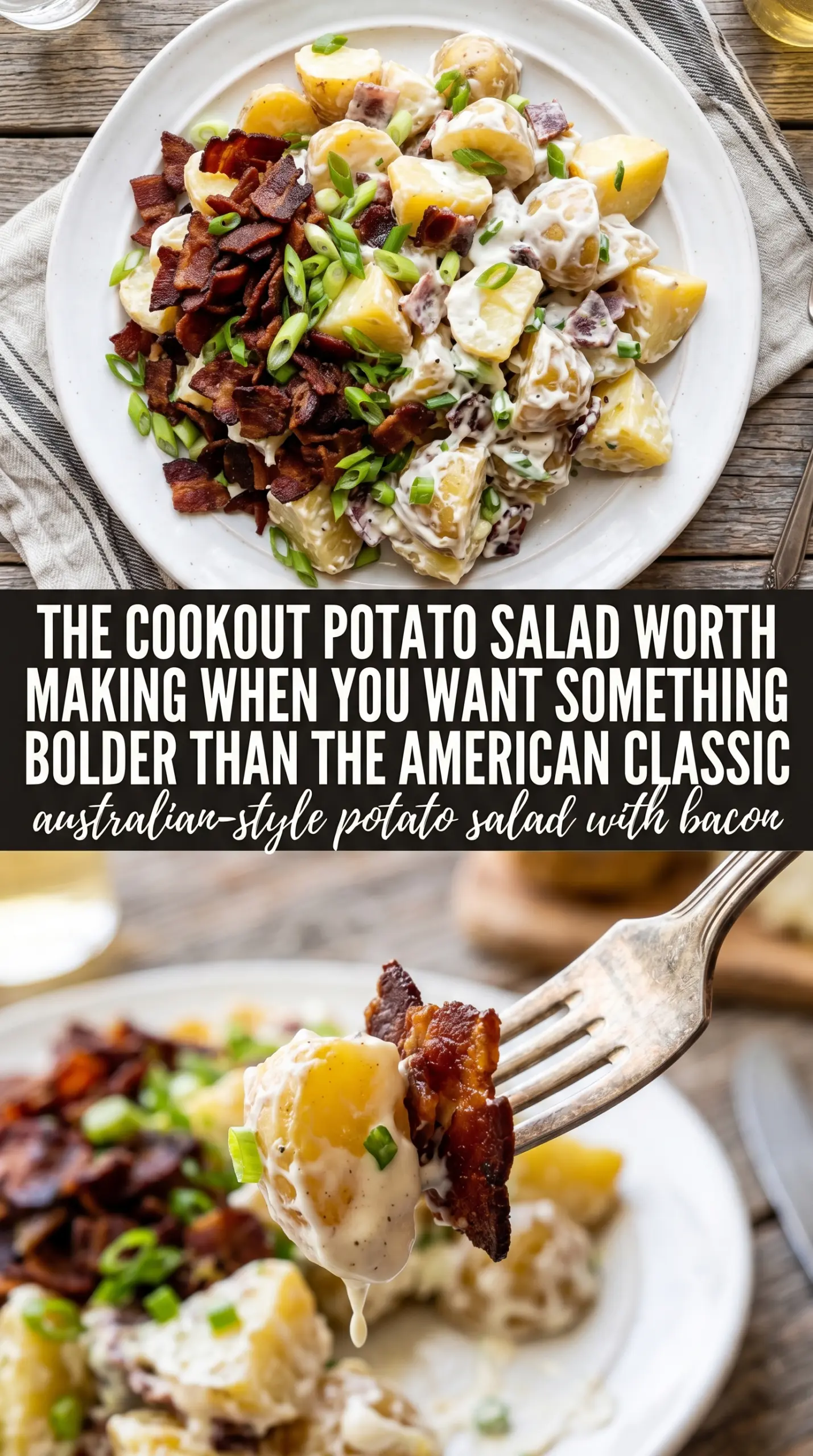
- Potatoes — They’re the backbone of the dish, so use a type that stays intact after boiling. If you only have russets, shorten the cook time and handle them gently, because they break down faster.
- Bacon — This adds salt, smoke, and texture. Fry it until the fat is rendered and the pieces are crisp; limp bacon turns chewy once it hits the cold salad.
- Mayonnaise — This gives the salad its body and coats the potatoes evenly. Use a full-fat mayo for the best texture; lighter versions can taste thin after chilling.
- Sour cream — It lightens the dressing and keeps the mayo from tasting one-note. Plain Greek yogurt can stand in, but the tang is sharper and the finish is less rich.
- White vinegar — This wakes up the dressing and stops the salad from feeling heavy. Apple cider vinegar works if that’s what you have, though it brings a softer, fruitier note.
- Sugar — A small amount balances the vinegar and makes the whole salad taste more rounded. If you leave it out, the dressing can come across harsh after it chills.
- Celery and green onions — These add freshness and a bit of crunch so the salad doesn’t go soft all the way through. Slice them finely enough that they distribute evenly in every scoop.
Building the Dressing Before It Hits the Potatoes
Whisk the Sweet-Tangy Base First
Start by mixing the mayonnaise, sour cream, vinegar, sugar, salt, and pepper until the dressing looks smooth and cohesive. The sugar needs a moment to dissolve, so don’t rush this part or you’ll get little gritty pockets in the finished salad. Taste the dressing before it goes into the bowl; it should be a touch more assertive than you want in the final salad because the potatoes will mellow it out.
Cool the Potatoes the Right Way
Drain the potatoes well after boiling, then spread them out briefly so the surface steam escapes. If they go straight from the pot to the dressing while hot, they’ll absorb too much of the mayo base and the texture turns loose. You want the potatoes tender all the way through but still firm enough to toss without breaking apart.
Fold in the Bacon and Crunchy Bits
Add the potatoes, bacon, celery, and green onions to a large bowl before pouring over the dressing. Toss gently with a spatula so the potatoes get coated without turning into mash. If the salad looks dry at first, let it sit for a minute; the dressing settles into the warm crevices and the whole bowl comes together fast.
Chill Until the Flavors Settle
Refrigerate the salad for at least 2 hours before serving. That rest time is what lets the vinegar soften, the bacon flavor spread, and the dressing cling properly. If you serve it straight away, it still tastes good, but the flavor is less integrated and the dressing seems thinner than it should.
How to Adjust This Salad Without Losing the Balance
Make it dairy-free
Swap the sour cream for a dairy-free plain yogurt or more mayonnaise. The salad will still be creamy, but the tang will land a little differently, so taste the dressing and add the vinegar in small splashes rather than all at once.
Skip the bacon for a vegetarian version
Leave out the bacon and add a pinch of smoked paprika or a little diced pickle for depth. You’ll lose the salty crunch, so the salad tastes cleaner and lighter, but it still works well as a BBQ side.
Use Greek yogurt instead of sour cream
Greek yogurt brings a sharper tang and a little more protein, but it’s less mellow than sour cream. Use plain full-fat yogurt if possible, and expect the finished salad to taste brighter and slightly firmer after chilling.
Storage and Reheating
- Refrigerator: Keep covered for up to 3 days. The potatoes absorb more dressing as they sit, so the salad gets a little thicker by day two.
- Freezer: Don’t freeze it. The mayo dressing separates and the potatoes turn grainy after thawing.
- Reheating: This salad is meant to be served cold. If you want to take the chill off, let it sit at room temperature for 15 to 20 minutes before serving, but don’t microwave it or the dressing can split.
Questions I Get Asked About This Recipe

Australian-Style Potato Salad with Bacon
Ingredients
Equipment
Method
- Bring a Dutch oven of salted water to a boil, then add cubed potatoes and boil until tender, about 10-15 minutes, keeping the water at a steady simmer. The potatoes should offer little resistance when pierced with a fork.
- Drain the potatoes and spread them on a sheet pan to cool until no longer steaming, about 10-15 minutes. You’re looking for room-temperature potatoes so the dressing doesn’t turn runny.
- In a bowl, mix mayonnaise, sour cream, white vinegar, sugar, salt, and pepper until smooth, about 1-2 minutes. The dressing should look glossy and evenly tinted.
- Add cooled potatoes, crumbled bacon, diced celery, and sliced green onions to a large bowl and toss to distribute evenly. You should see bacon and vegetables throughout the potato cubes.
- Pour the dressing over the potato mixture and toss well until everything is coated, 1-2 minutes. The salad should look creamy and cling to the potatoes.
- Cover and refrigerate for 2 hours. Chill until cold and set, and serve with the dressing holding its thickness.