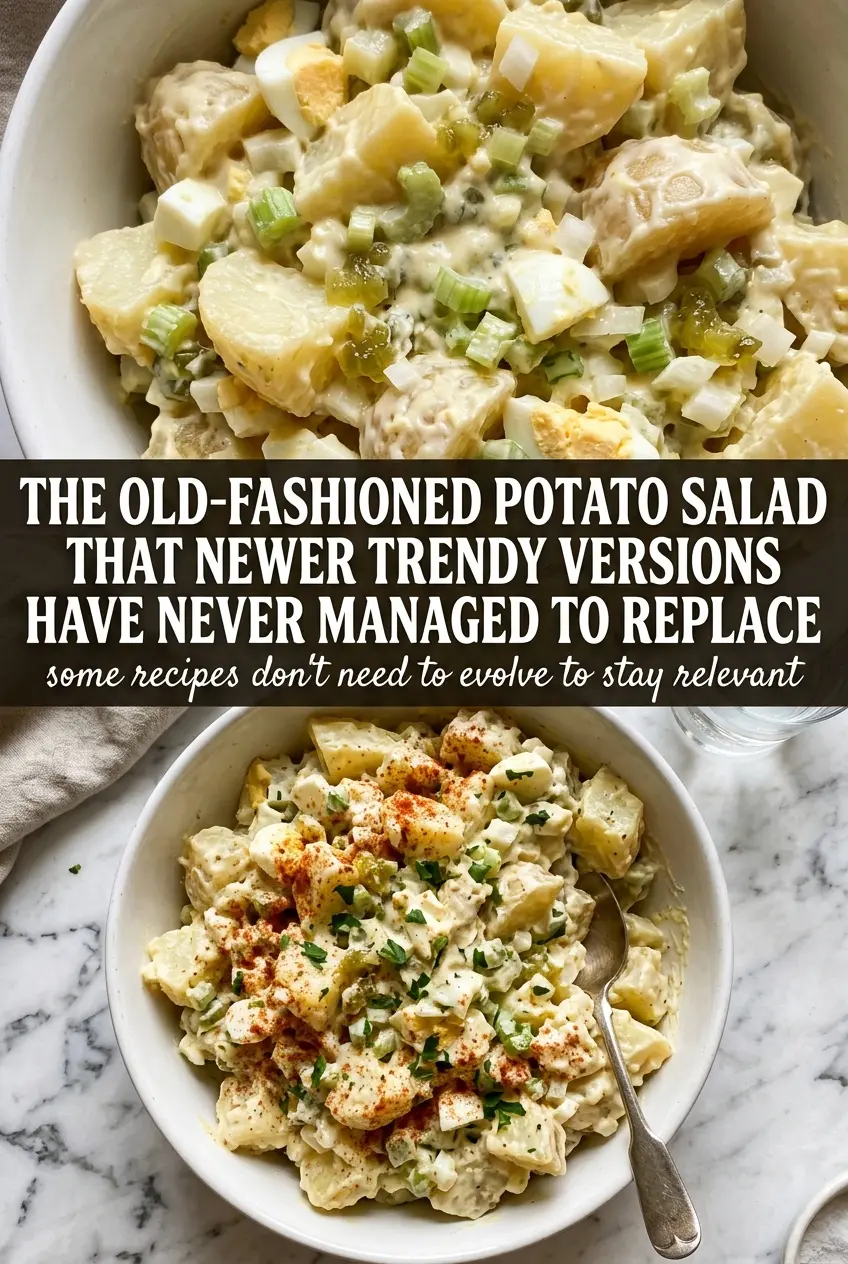
Old-fashioned potato salad earns its place at the table when the potatoes stay tender but hold their shape, the dressing turns creamy without getting gluey, and every bite lands with a little crunch from celery and onion. The best versions don’t taste heavy. They taste balanced, with just enough mustard and relish to keep the mayonnaise from flattening everything out.
This version works because the potatoes are cooled before the dressing goes on, which keeps the mayo from melting and thinning. Russets give you that classic soft, creamy bite, but they need a gentle hand once they’re cooked or you’ll end up with mashed potato salad instead of a proper side dish. The chopped eggs add richness, and the vinegar in the dressing keeps the whole bowl from tasting one-note.
Below you’ll find the small details that matter most: how to keep the potatoes from going past tender, why the salad tastes better after a chill, and a few simple swaps if you’re making it ahead or adjusting for what you have on hand.
The dressing coated everything without turning runny, and after two hours in the fridge the flavors settled in beautifully. The celery still had a little crunch and the potatoes held their shape.
Save this classic potato salad for picnics, cookouts, and any time you want a creamy side with eggs, celery, and sweet relish.
The Reason This Potato Salad Stays Creamy Instead of Turning Pasty
The biggest mistake in potato salad happens before the dressing even goes on: the potatoes get overcooked, then stirred too hard while they’re still hot. Russets are the right choice for that classic fluffy texture, but they break down fast once tender, so drain them promptly and let the steam escape before mixing. If the cubes are still wet or too hot, the mayonnaise loosens up and the salad can end up heavy and slick instead of creamy.
The other thing that matters is balance. Mayonnaise gives you body, but the mustard, vinegar, and sweet relish keep the bowl from tasting flat. That little hit of acidity wakes up the potatoes, and the sugar rounds off the sharp edges without making it taste sweet. This is the difference between a side dish people spoon once and one they keep going back to.
What Each Ingredient Is Doing in the Bowl
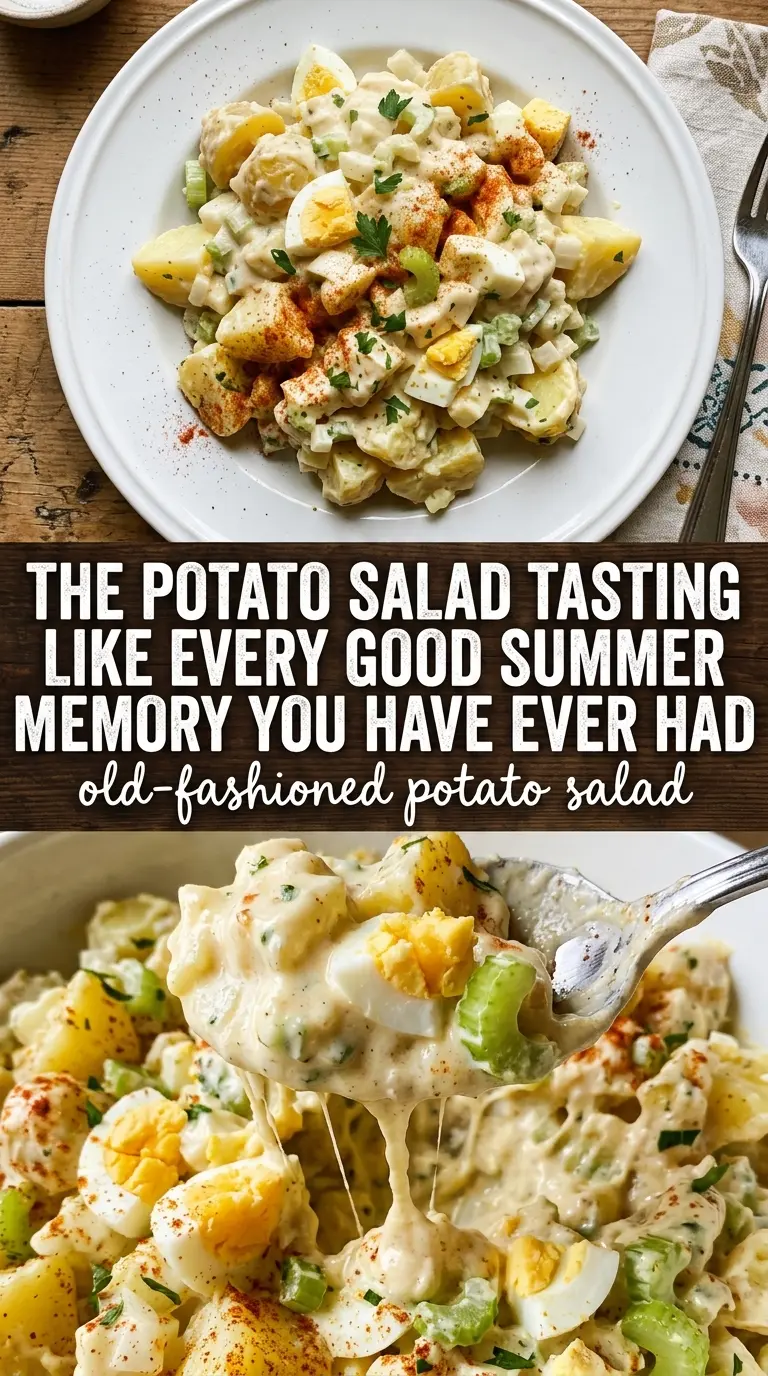
- Russet potatoes — These give you the soft, familiar texture most people expect from old-fashioned potato salad. They break down more than waxy potatoes, which is exactly why they taste so creamy, but they need gentle handling after cooking so they don’t turn mushy.
- Mayonnaise — This is the backbone of the dressing. Use a good store-bought mayo if that’s what you keep in the fridge; homemade isn’t necessary here because the mustard and relish bring plenty of character.
- Yellow mustard — It adds brightness and that classic picnic-salad flavor. Dijon works in a pinch, but it changes the profile and makes the salad taste sharper and less traditional.
- Sweet pickle relish — This gives the salad sweetness, tang, and tiny bits of crunch all at once. If you don’t have relish, finely chopped dill pickles work, but the salad will be less sweet and a little more briny.
- Hard-boiled eggs — They add richness and make the salad feel complete. Chop them by hand so you get both small creamy bits and a few larger pieces for texture.
- Celery and onion — These keep the salad from going soft and one-dimensional. Dice them fine enough to blend in, but not so fine that they disappear.
How to Build the Salad Without Crushing the Potatoes
Cooking the Potatoes Until They’re Just Tender
Start the potatoes in salted water and cook them until a knife slips in with only a little resistance, about 15 minutes depending on the size of the cubes. They should be tender through the center, but not falling apart at the edges. If you wait until they are fully collapsing in the pot, they’ll break down the second you stir them and you’ll lose that chunky, spoonable texture. Drain them well and let them cool until they are no longer steaming before you add the dressing.
Mixing the Dressing First
Stir the mayonnaise, mustard, vinegar, sugar, salt, and pepper together in a separate bowl before it touches the potatoes. That way the seasoning is evenly distributed instead of streaking through the salad in pockets. The dressing should taste a little bolder than you want the final salad to taste, because the potatoes will soften everything once they go in.
Folding Everything Together
Add the potatoes, eggs, celery, onion, and relish to a large bowl, then pour the dressing over the top and fold gently with a spatula. Don’t stir like you’re mixing batter. Turn the ingredients over from the bottom and stop as soon as everything is coated. A few broken potato pieces are fine; a bowl of paste is not.
Chilling for the Flavor to Settle
Cover the bowl and refrigerate it for at least 2 hours before serving. That rest time matters because the potatoes absorb some of the dressing and the flavors round out. If the salad tastes a little underseasoned right after mixing, it usually needs that chill more than it needs extra salt. Finish with a light dusting of paprika right before it hits the table.
Ways to Adjust This Old-Fashioned Potato Salad
Make it dairy-free without changing the texture
This recipe is already dairy-free as written, which makes it an easy side for mixed crowds. The mayo gives the creaminess, so you don’t need sour cream or yogurt to make it feel rich.
Swap in dill pickles for a sharper salad
If you don’t keep sweet relish on hand, finely chopped dill pickles will give you a tangier, less sweet version. Add a pinch more sugar if the salad tastes too sharp, since dill pickles cut through the mayo more aggressively than relish does.
Use Yukon Golds for a slightly firmer bite
Yukon Gold potatoes hold their shape better than russets and give you a creamier, buttery texture with less breaking. The salad will look a little less fluffy and more composed, which is a good trade if you want neat cubes that survive a long picnic table.
Storage and Reheating
- Refrigerator: Keep covered for up to 4 days. The salad gets a little tighter as it chills, then loosens up again after sitting at room temperature for a few minutes.
- Freezer: Don’t freeze it. Mayonnaise and potatoes both change texture in the freezer, and the dressing tends to separate after thawing.
- Reheating: This salad is meant to be served cold, so don’t heat it. If it has been in the fridge for a while, let it sit out 15 to 20 minutes before serving so the dressing softens and the flavor comes back.