Warm German potato salad lands on the table with a tangy, savory dressing that sinks into every slice and turns simple potatoes into the dish people keep spooning back onto their plates. The bacon adds smoky depth, the onion softens into the dressing, and the whole bowl tastes best when it’s still steamy and glossy.
The trick with this version is the dressing. It’s thickened just enough with a little flour so it coats instead of pooling at the bottom, and the vinegar-to-sugar balance keeps it sharp without being harsh. Russet potatoes work here because they break down slightly at the edges and soak up the dressing better than waxy potatoes would.
Below you’ll find the part that matters most: how to keep the potatoes tender without turning them mushy, how to build the bacon-onion base without scorching it, and what to do if you want to make this ahead for a cookout or holiday meal.
The dressing thickened up perfectly and soaked into the potatoes instead of sitting in a puddle. I served it warm with bratwurst and my husband went back for seconds before I’d even sat down.
Save this warm German potato salad for the nights when you want bacon, vinegar dressing, and tender potatoes in one bowl.
The Dressing Needs a Little Structure, Not Just Heat
German potato salad goes wrong when the dressing is treated like a quick vinaigrette. It isn’t just vinegar and bacon fat poured over potatoes. The flour gives the hot dressing enough body to cling to the slices, and that’s what keeps each bite seasoned instead of leaving the flavor at the bottom of the bowl. If the mixture looks thin in the pan, it usually needs another minute or two of simmering; once it coats the back of a spoon lightly, it’s ready.
The other thing people miss is temperature. Hot potatoes absorb the dressing better than cold ones, but they should be drained well so they don’t water everything down. That balance gives you a salad that tastes integrated, not greasy or loose.
What the Bacon, Broth, and Vinegar Are Actually Doing Here
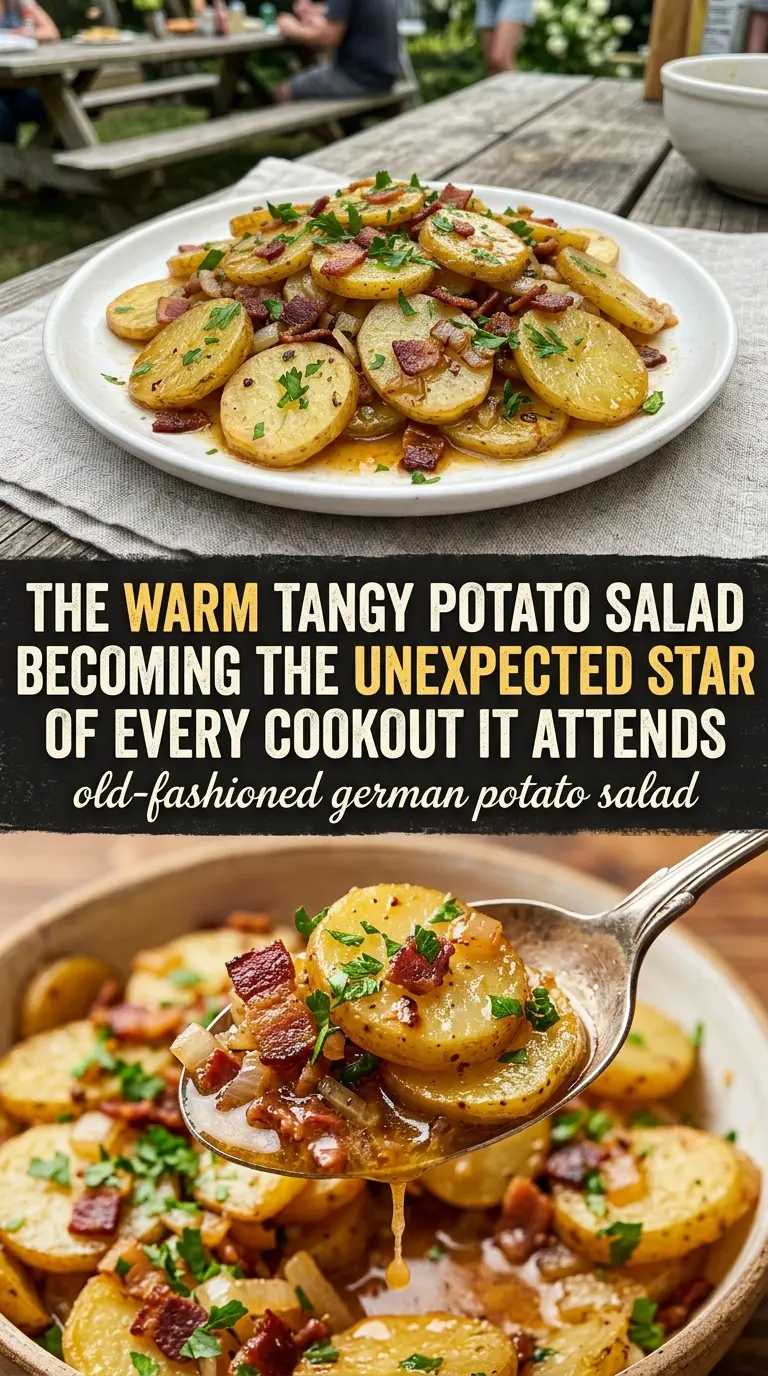
- Russet potatoes — These are the right choice because they soften at the edges and catch the dressing instead of staying too firm. Waxy potatoes hold their shape more cleanly, but they don’t soak up the broth-and-vinegar dressing the same way. Slice them evenly so they cook at the same rate and don’t turn half-mashed while you wait on the thicker pieces.
- Bacon — The bacon isn’t just garnish here. It gives you the fat for the onions, the smoky salt in the dressing, and the crisp pieces that break up the soft potatoes. Cook it until fully crisp so it stays textured after it’s folded into the warm salad.
- Beef broth — This adds the savory base that makes the dressing taste round instead of sharp. Chicken broth works in a pinch, but it reads a little lighter. If you use a low-sodium broth, season the finished dressing more deliberately before it goes over the potatoes.
- White vinegar — This is the clean, bright acid that gives the dish its classic edge. Apple cider vinegar can work if that’s what you have, but it will taste softer and a little sweeter. Keep the vinegar measured; too much and the potatoes taste aggressively sour instead of balanced.
- Flour — Just a tablespoon is enough to thicken the pan juices into a coating sauce. Whisk or stir it in well so you don’t end up with raw flour pockets. If you need a gluten-free version, use a small cornstarch slurry instead, but add it at the end of simmering because it thickens faster than flour.
How to Build the Warm Potato Salad Without Breaking the Dressing
Boiling the Potatoes Until They’re Tender, Not Fragile
Cook the sliced potatoes just until a knife slips in with little resistance. If they fall apart in the pot, they’ll shred when you toss them with the dressing. Drain them well and let them steam off for a minute or two so excess water doesn’t dilute the sauce. Hot potatoes are ideal, but they should be drained thoroughly or the dressing won’t cling.
Rendering the Bacon and Softening the Onion
Cook the bacon until the fat is rendered and the strips are crisp, then remove them before the onions go in. The onions should sizzle gently in the drippings and turn translucent with a little gold at the edges. If the pan looks dry, the bacon wasn’t fatty enough; add a small splash of oil only if you need it, but don’t let the onions brown too quickly or the dressing will pick up a bitter note.
Thickening the Tangy Dressing
Sprinkle the flour over the onions and stir until it disappears into the fat. Then add the broth, vinegar, sugar, salt, and pepper and simmer until the mixture looks glossy and lightly thickened. If you pour it onto the potatoes while it’s still thin and watery, it will slide off instead of coating. The finished dressing should look like a loose gravy, not a broth.
Finishing in One Warm Bowl
Crumble the bacon and fold it through the potatoes before you pour on the dressing, then toss gently so the slices keep their shape. Parsley goes in at the end for freshness and color. Serve it warm, not piping hot from a furious boil, because the flavor reads cleaner once the dressing settles for a minute. This is one of those dishes that tastes more integrated after a short rest, but it should still be warm when it hits the table.
How to Adapt This for a Bigger Crowd, a Lighter Plate, or No Gluten
Gluten-Free Thickening
Swap the flour for 1 to 1 1/2 teaspoons cornstarch mixed with a tablespoon of cold water, then stir it into the simmering dressing near the end. Cornstarch thickens faster and gives a slightly shinier finish, so don’t let it boil hard for long or it can loosen again. The texture stays smooth, but the sauce will feel a little lighter than the flour-thickened version.
Less Bacon, Same Smoky Backbone
Use 4 slices of bacon and add a teaspoon of butter if the pan looks sparse after rendering. You’ll lose a little of the smoky richness, but the salad still tastes full if you keep the bacon drippings and season the dressing well. This version works well when you want the dish to feel a touch lighter without losing the classic profile.
Using Yellow Potatoes Instead of Russets
Yukon Golds hold their shape better, which gives you a firmer salad with cleaner slices. They won’t absorb the dressing quite as aggressively as russets, so the flavor stays a little more on the surface. That’s a good swap if you want the salad to look neater on the plate.
Storage and Reheating
- Refrigerator: Store leftovers in an airtight container for up to 4 days. The potatoes will absorb more dressing as they sit, so the salad becomes a little denser the next day.
- Freezer: I don’t recommend freezing this one. Potatoes turn mealy after thawing, and the vinegar dressing can separate in a way that won’t smooth back out.
- Reheating: Warm it gently in a skillet over low heat with a splash of broth, stirring just until heated through. The mistake to avoid is blasting it in the microwave until the potatoes dry out and the bacon loses its texture.
Questions I Get Asked About This Recipe
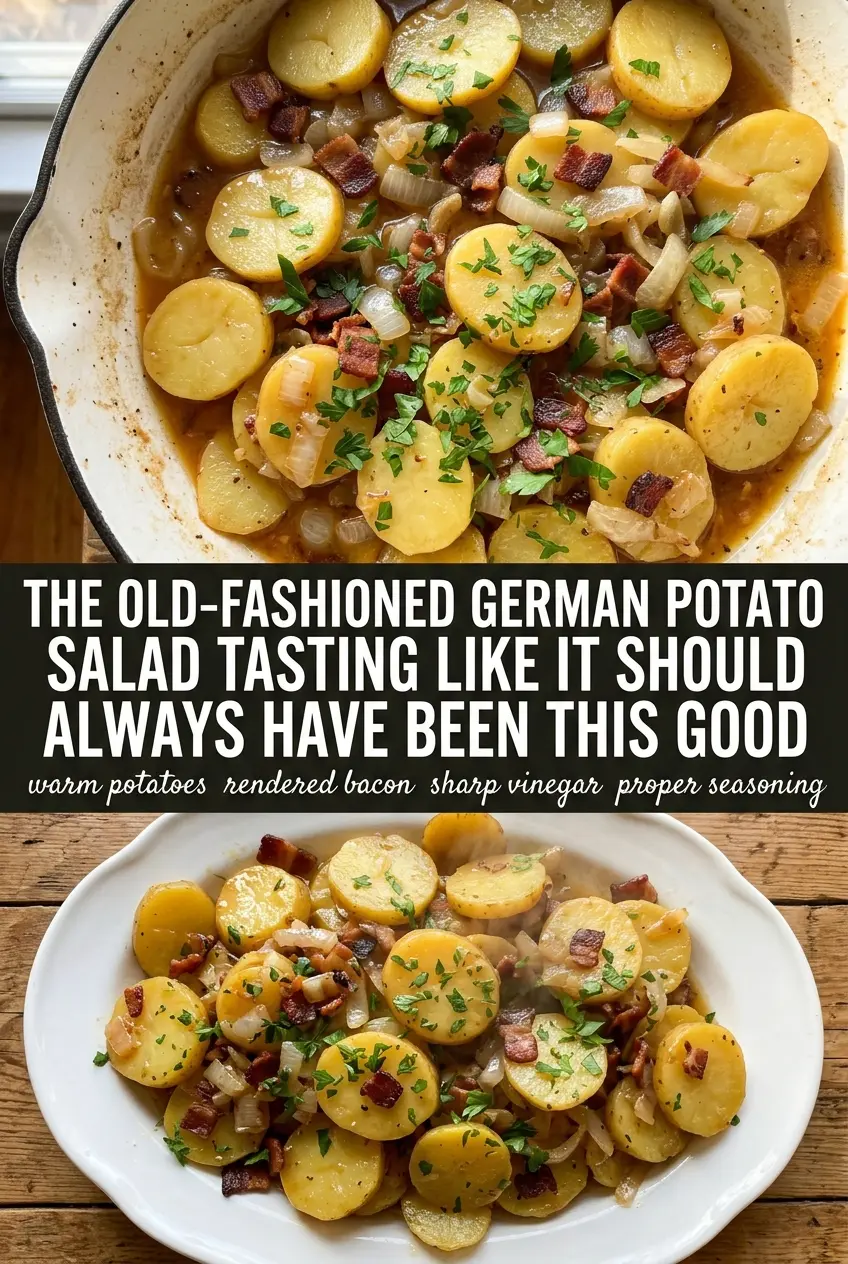
Old-Fashioned German Potato Salad
Ingredients
Equipment
Method
- Bring a pot of water to a boil, add the peeled russet potato slices, and cook until tender, 10-15 minutes, checking with a fork. When they’re tender, drain the potatoes well.
- Cook the bacon in a skillet over medium heat until crispy, 8-10 minutes, then transfer to a paper-lined plate and reserve the drippings. Add the diced onion to the bacon drippings and sauté until softened, 4-6 minutes, stirring often.
- Sprinkle the flour over the onions and stir to coat, 1 minute, until lightly thickened. Pour in the beef broth, then add the white vinegar, sugar, salt, and pepper and simmer until thickened, 6-8 minutes.
- Crumble the crispy bacon and add it to the drained potatoes. Pour the hot dressing over the potatoes and bacon, tossing to coat, and transfer to a serving bowl. Garnish with fresh parsley and serve warm with visible steam.