Greek potato salad lands in that sweet spot where the potatoes stay tender but still hold their shape, the feta turns creamy at the edges, and the lemon-oregano dressing gets into every nook without drowning the bowl. The best versions taste bright, briny, and full of contrast, not heavy or starchy, and that’s exactly what this one delivers.
The trick is to let the potatoes cool just enough before tossing them with the dressing, so they absorb flavor instead of turning to mush. Red potatoes are the right choice here because they stay intact after boiling, and the mix of feta, Kalamata olives, and red wine vinegar gives the salad enough punch that it tastes finished after a short chill.
Below, you’ll find the small timing detail that keeps the texture right, plus a few swaps that make this work for different diets and whatever you’ve got in the fridge.
The potatoes held their shape beautifully, and after the two-hour chill the dressing tasted like it had soaked in instead of sitting on top. The feta and olives made every bite taste balanced, not salty.
Like this Greek potato salad with feta and olives? Save it for the next time you want a bright, make-ahead side with lemon and oregano.
The Chilling Time Is What Keeps This Salad Fresh, Not Bland
Warm potato salad can taste flat because the dressing slides off the surface and the herbs never get a chance to settle in. The two-hour chill in this version isn’t an afterthought; it’s what turns a bowl of separate ingredients into a salad that tastes seasoned all the way through. The potatoes keep their shape, the onion softens just enough, and the lemon dressing sharpens instead of fading.
If your potatoes turn mushy, they were boiled past tenderness or tossed while still steaming hot. Drain them as soon as a knife slips in easily, then let the cubes cool until they’re warm, not hot. That small pause gives the feta a chance to stay crumbly and the tomatoes a chance to hold their edges instead of collapsing.
What Each Ingredient Is Actually Doing in the Bowl
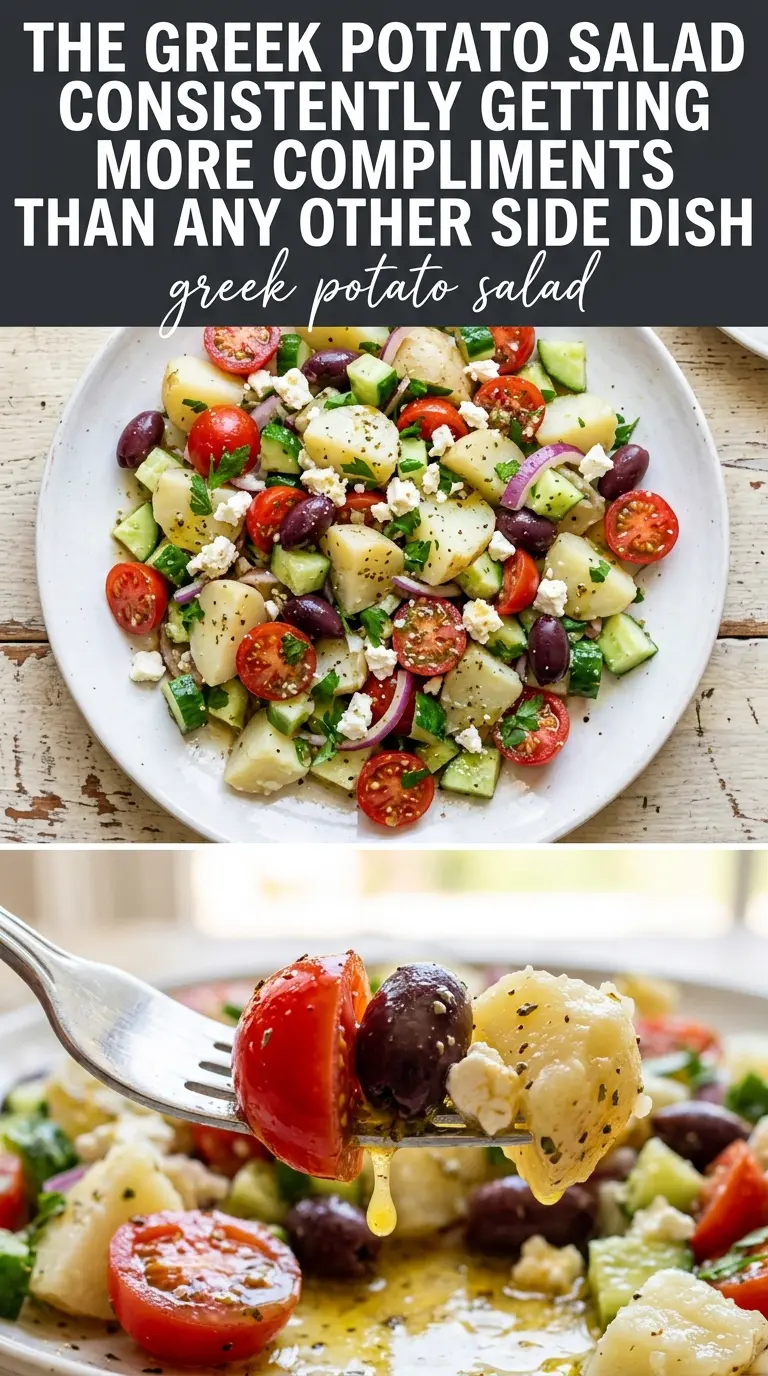
- Red potatoes — These are the backbone of the salad. Their waxy texture holds up after boiling and chilling, while starchier potatoes can break apart and turn the dressing muddy. Cut them into even cubes so they cook at the same rate.
- Feta cheese — Feta gives the salad its creamy, salty finish. Buy a block if you can and crumble it yourself; pre-crumbled feta is drier and doesn’t melt into the dressing the same way. If you need a substitute, use a firm goat cheese, but expect a softer, tangier result.
- Kalamata olives — They bring the briny depth that makes this taste Greek instead of just dressed potatoes. Regular black olives will work in a pinch, but they’re milder and flatter. Slice them in half so you get their flavor in every bite.
- Lemon juice and red wine vinegar — This combination keeps the dressing lively. Lemon gives brightness, while vinegar adds the sharper edge that cuts through the potatoes. Fresh lemon matters here; bottled juice tastes dull next to feta and olives.
- Cherry tomatoes and red onion — The tomatoes add sweetness and juiciness, and the onion gives bite. Slice the onion thin so it softens in the dressing; thick pieces stay harsh and steal attention from the rest of the bowl. If raw onion is strong for you, soak the slices in cold water for 10 minutes first.
- Parsley and oregano — Parsley brings freshness at the end, and oregano ties the whole salad to the Greek flavor profile. Dried oregano works better than fresh here because it blooms in the dressing and tastes more concentrated. Add the parsley after tossing so it stays bright.
How to Build the Dressing So It Clings to the Potatoes
Boil Until Just Tender
Start the potatoes in cold water and bring them up together so the pieces cook evenly. Pull them as soon as a fork slides in with almost no resistance, because carrying heat will finish the job. If they go too far, they’ll split when you toss the salad and the dressing will turn cloudy instead of coating cleanly.
Dress the Potatoes While They’re Warm
Mix the olive oil, lemon juice, vinegar, oregano, salt, and pepper in a bowl first, then pour it over the potatoes while they’re still slightly warm. That warmth helps the cubes absorb seasoning instead of letting the dressing sit on the outside. Toss gently with a big spoon so the potatoes stay intact; aggressive stirring is how you end up with mashed edges.
Finish with the Briny Ingredients
Fold in the feta, olives, tomatoes, onion, and parsley after the potatoes have had a chance to take on the dressing. The feta stays crumbly, the tomatoes keep their shape, and the olives don’t stain the whole bowl. Chill it after mixing so the flavors settle, then taste again before serving and add a final pinch of salt only if it needs it.
Make It Dairy-Free
Skip the feta and add a little extra salt, plus a handful of chopped cucumber or artichoke hearts for more body. You’ll lose the creamy, salty finish, but the salad still tastes bright and fully seasoned if the dressing is strong enough.
Turn It into a Main Dish Salad
Add canned chickpeas, grilled chicken, or flaked tuna if you want something heartier. Chickpeas keep it vegetarian and blend in well with the lemon-oregano dressing, while chicken makes it feel like a full lunch without changing the flavor balance much.
Use What You Have Instead of Kalamata Olives
Any briny olive will work, but the flavor changes with the swap. Green olives taste sharper and more assertive, while standard black olives are milder and less complex. If your olives are packed in a very salty brine, rinse and drain them first so the whole salad doesn’t tip too salty.
Storage and Reheating
- Refrigerator: Keeps for 3 days in a covered container. The potatoes absorb more dressing as it sits, so the salad tastes even better on day two, though the tomatoes soften a bit.
- Freezer: I don’t recommend freezing this. Potatoes go grainy and watery after thawing, and the feta loses its texture.
- Reheating: Serve it cold or let it sit at room temperature for 20 to 30 minutes before serving. Heating this salad isn’t a good move, since warm feta turns soft and the tomatoes lose their shape.
Answers to the Questions Worth Asking

Greek Potato Salad
Ingredients
Equipment
Method
- Bring a Dutch oven of water to a boil, then add the cubed red potatoes and cook until tender, 12 to 18 minutes. Visual cue: potatoes should yield easily when pierced with a fork.
- Drain the potatoes and let them cool to room temperature, about 10 minutes. Visual cue: steam should stop and potatoes should no longer feel hot.
- In a large bowl, combine the cooled potatoes with feta cheese, Kalamata olives, cherry tomatoes, and thinly sliced red onion. Visual cue: feta should be visible throughout the potato mixture.
- Whisk together olive oil, lemon juice, red wine vinegar, dried oregano, and salt and pepper until the dressing looks evenly blended. Visual cue: oregano specks should be suspended with no oil streaks.
- Pour the dressing over the potato mixture and toss gently until everything is coated. Visual cue: potatoes should look glossy and evenly speckled.
- Add chopped fresh parsley and toss again gently. Visual cue: parsley should be evenly distributed with green flecks on the surface.
- Refrigerate the salad for 2 hours before serving. Visual cue: it should look slightly set and more cohesive after chilling.