Golden potatoes hold up beautifully in this salad, staying tender without turning mushy, while feta adds salty little bursts that wake up every bite. The lemon-herb dressing cuts through the richness instead of coating everything in heaviness, so the whole bowl tastes bright, savory, and balanced after a chill in the fridge.
What makes this version work is the timing. The potatoes get dressed after they’ve cooled enough to keep their shape, but while they’re still able to absorb the lemon and olive oil. That short rest in the fridge gives the flavors time to settle together, and the oregano, parsley, and olives keep each bite tasting distinctly Mediterranean instead of bland and starchy.
Below you’ll find the small details that matter: how to keep the potatoes intact, when to add the feta, and what to do if you want to make this ahead for a cookout or lunch spread.
I loved how the potatoes kept their shape after chilling and the dressing soaked in without making the salad soggy. The feta and olives were salty enough that I barely had to adjust anything at the end.
Love a salty, bright potato salad with feta and olives? Save this Greek-style version for the next time you need a side that tastes even better after it chills.
The Trick to Keeping the Potatoes Intact After They’re Dressed
The biggest mistake in potato salad is tossing hot potatoes straight into the dressing and then stirring hard. That’s how you end up with broken edges and a bowl that turns heavy and pasty instead of clean and textured. For this salad, the potatoes should be tender enough to pierce easily, but not falling apart when you lift them out of the pot.
Let them cool until the steam dies down before adding the feta and dressing. Warm potatoes still absorb the lemon and olive oil beautifully, but if they’re scorching hot, the feta starts to melt and smear instead of staying in distinct crumbles. The gentle toss matters here too. You want the potatoes coated, not mashed.
What Each Ingredient Is Actually Doing in This Salad
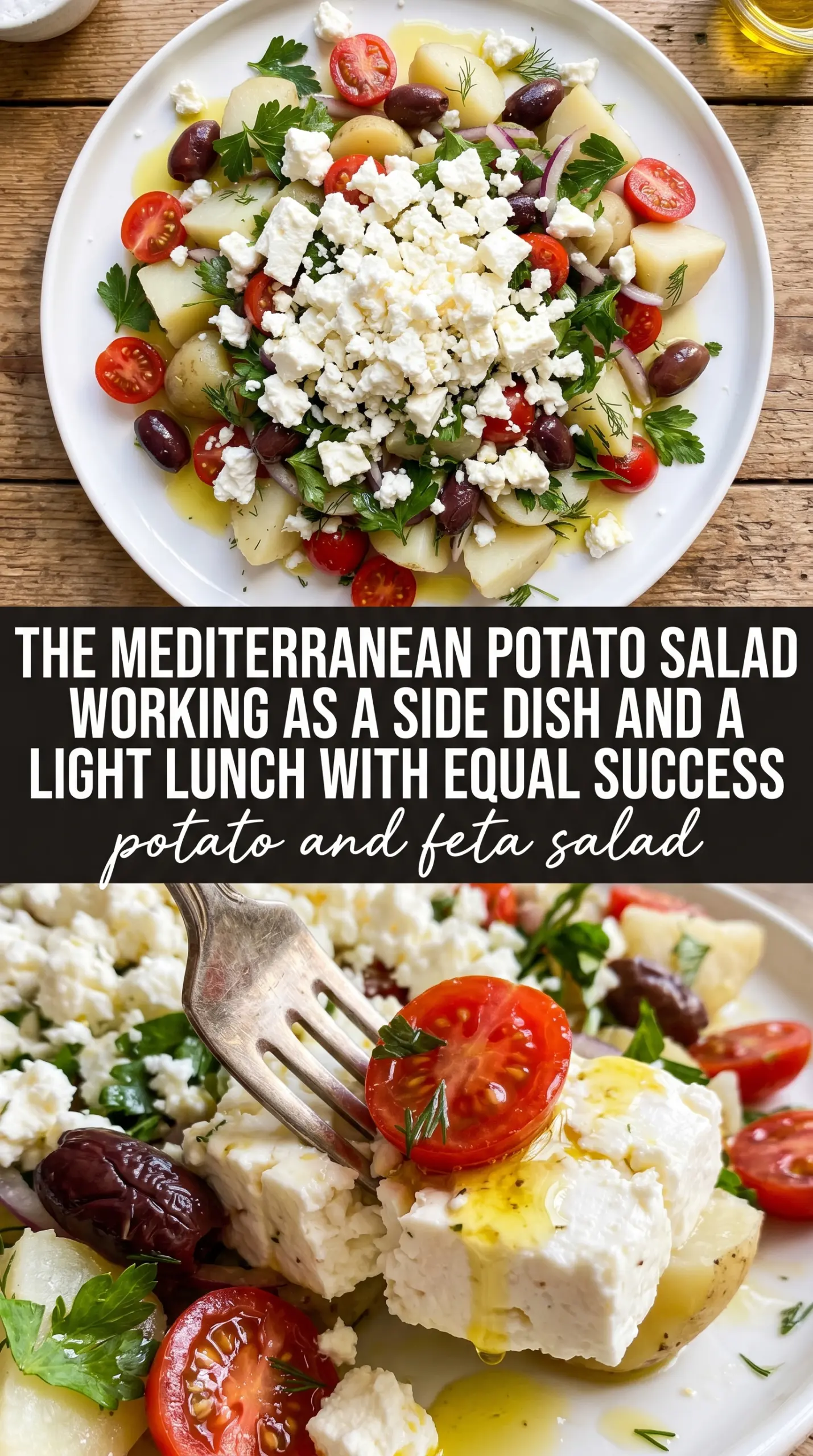
- Red potatoes — These are the backbone of the salad because they stay waxy and hold their shape after boiling. Russets will break down much faster and give you a softer, more crumbly texture that doesn’t fit this style.
- Feta cheese — Use a block if you can and crumble it yourself. Pre-crumbled feta works in a pinch, but it’s drier and less creamy, which makes the salad taste flatter.
- Kalamata olives — They bring the deep briny note that keeps the salad from tasting one-dimensional. If you need to swap them, use another good black olive, not the mild canned kind.
- Lemon juice and olive oil — This dressing is simple, so the olive oil needs to taste clean and fresh. A decent extra-virgin olive oil matters here because there’s nothing to hide behind.
- Fresh oregano and parsley — Dried oregano can work in a smaller amount, but fresh herbs keep the salad from feeling heavy. Chop them just before mixing so the flavor stays bright.
Building the Salad So It Stays Bright, Not Watery
Boiling the Potatoes Just to Tender
Start the potatoes in salted water and cook them until a knife slides in without resistance, but the cubes still hold their edges. Drain them well and let them sit long enough for the surface moisture to evaporate, because extra water is what dilutes the dressing and dulls the feta. If the potatoes are overcooked, the salad turns soft fast once you toss everything together.
Mixing the Dressing First
Whisk the olive oil, lemon juice, oregano, parsley, salt, and pepper in a separate bowl before it hits the potatoes. That keeps the herbs distributed evenly and prevents a pocket of oil or lemon from landing in one corner. Taste it before you pour it over; the potatoes need a dressing that tastes a little bold on its own, since they’ll mellow it out.
Tossing Without Crushing
Add the potatoes, feta, olives, tomatoes, and onion to a large bowl, then pour the dressing over the top and fold it gently. Use a spatula or large spoon and work from the bottom up instead of stirring in circles. If the salad starts to look smeared, stop before it turns to mash; the goal is coated pieces with clean edges and visible crumbles of feta.
The Chill That Pulls It Together
Refrigerate the salad for at least an hour before serving. That resting time lets the potatoes soak up the lemon and herb dressing while the onion softens just enough to blend in. If you serve it right away, the flavor will taste sharper and less integrated, and the olives won’t have time to season the bowl the way they should.
How to Adapt This for Different Tables and Schedules
Make It Dairy-Free
Leave out the feta and add a few extra olives plus a pinch more salt. You’ll lose the creamy-salty pockets, but the lemon, herbs, and potatoes still carry the salad well. A handful of diced cucumber also helps replace some of that fresh contrast.
Swap the Herbs for What You Have
If you only have dried oregano, use one third of the amount and let it sit in the dressing for a few minutes before tossing. Dried herbs need time to hydrate, or they can taste dusty instead of fragrant. Keep the parsley fresh if possible, since it adds the finish that dried oregano can’t.
Turn It Into a Heartier Main
Add chickpeas or grilled chicken if you want this to eat more like a lunch salad. Chickpeas keep it vegetarian and fit the Mediterranean feel, while chicken makes it more filling without changing the dressing. In either case, add the extra protein after the potatoes are dressed so you don’t overmix the bowl.
Make It Ahead for a Crowd
You can cook the potatoes and mix the dressing a day ahead, then combine everything a few hours before serving. Hold back a small spoonful of feta and parsley for the top so the salad looks fresh after chilling. If it seems a little dry after resting, drizzle in another teaspoon or two of olive oil and toss gently.
Storage and Reheating
- Refrigerator: Store covered for up to 3 days. The potatoes will firm up a bit and the onions will mellow as it sits.
- Freezer: Don’t freeze this salad. The potatoes turn grainy and the feta changes texture after thawing.
- Reheating: Serve it cold or let it sit at room temperature for 15 to 20 minutes. If you warm it, do it very gently and only on a small portion, because heat softens the potatoes too much and makes the feta greasy.
Questions I Get Asked About This Recipe
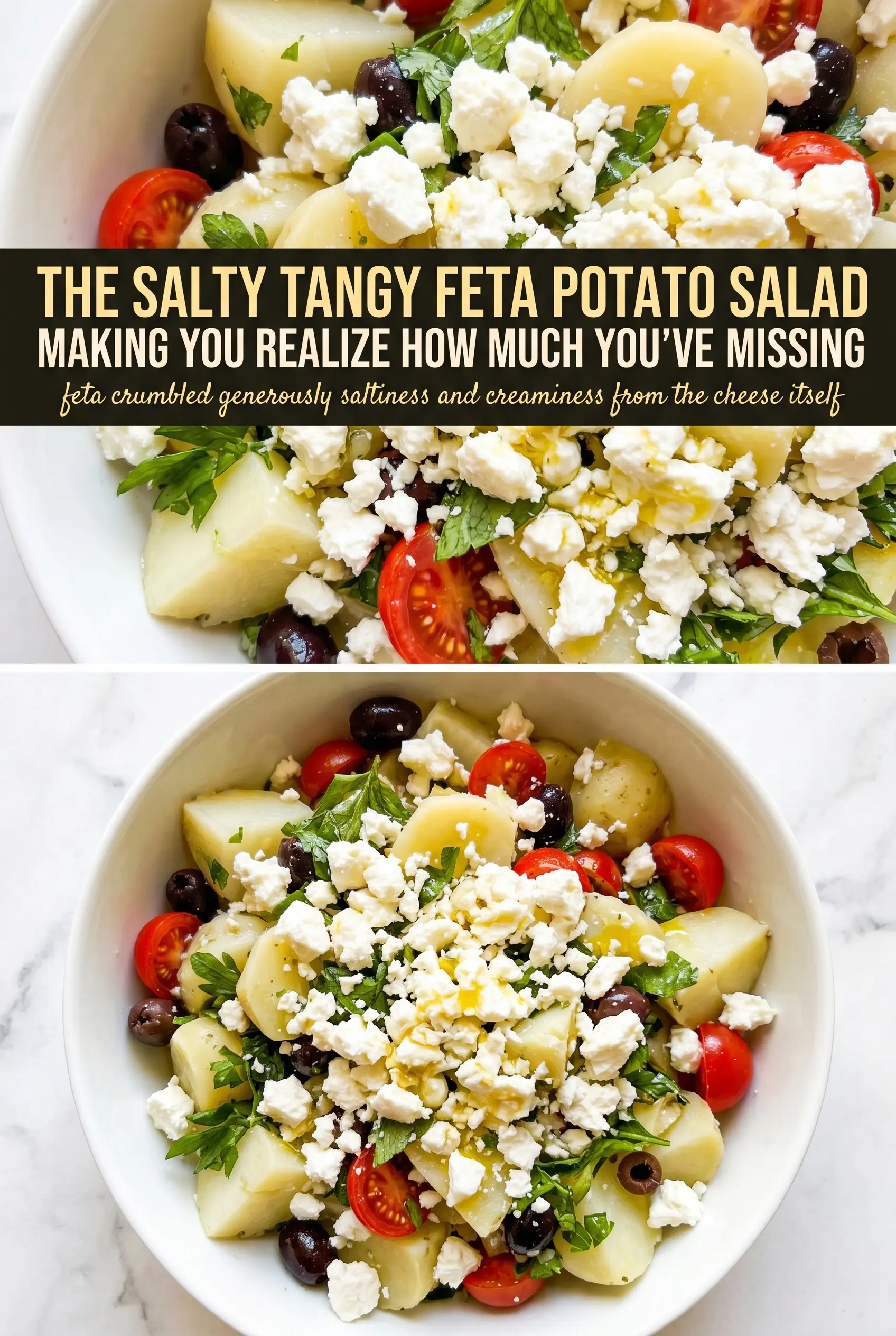
Potato and Feta Salad
Ingredients
Equipment
Method
- Bring a large pot of water to a boil, add the red potatoes, and boil for 15–20 minutes until tender. Visual cue: a knife should slide into a cube with little resistance.
- Drain the potatoes and spread them on a sheet pan to cool for 5–10 minutes. Visual cue: the surface looks drier and no longer steams heavily.
- Add the cooled potatoes to a bowl and combine with feta cheese, Kalamata olives, cherry tomatoes, and red onion. Visual cue: the mix shows white feta crumbles and dark olive pieces throughout.
- Whisk olive oil, lemon juice, fresh oregano, fresh parsley, salt, and black pepper until the dressing looks evenly blended. Visual cue: herbs are suspended and speckled throughout the liquid.
- Pour the dressing over the potato mixture and toss gently until the potatoes are lightly coated. Visual cue: the potatoes take on a glossy sheen and feta is evenly distributed.
- Refrigerate the salad for 1 hour to let flavors meld. Visual cue: the salad becomes cooler and slightly more cohesive when served cold.