Delicate capellini turns into a bright, chilled pasta salad that feels light on the fork but still tastes complete enough to stand beside grilled chicken, fish, or a simple tomato plate. The thin strands catch the lemon dressing in a way sturdier pasta never quite does, so every bite gets a little citrus, a little cheese, and a clean hit of herbs. It stays fresh instead of heavy, which is exactly why it earns a spot in the rotation.
The trick is to treat the pasta gently from the start. Angel hair cooks fast and clumps fast, so it needs plenty of water, a quick rinse to stop the cooking, and a dressing that’s ready before the noodles are done. The lemon juice and zest bring the sharpness, but the olive oil and Parmesan round it out so the salad tastes bright instead of thin. Letting it chill for 30 minutes matters too; that resting time gives the pasta a chance to absorb the dressing and settle into a better texture.
Below you’ll find the little details that keep capellini from breaking, plus a few smart swaps if you need to work with what’s in the kitchen.
The capellini stayed tender without turning mushy, and the lemon dressing soaked in beautifully after chilling. I loved how the basil and Parmesan made it taste fresh instead of just tangy.
Love the lemony capellini, tender herbs, and chilled Parmesan finish? Save this salad for the next time you need a light side dish that still feels special.
Why Angel Hair Needs a Different Handling Than Regular Pasta Salad
Capellini is forgiving in flavor but not in structure. If you toss it like a chunky macaroni salad, the strands tangle, the dressing pools, and you lose the clean, silky texture that makes this dish worth making. The goal is to coat every strand without crushing it, which is why the dressing gets whisked first and the pasta gets added while it’s still easy to separate.
The other thing that matters here is temperature. Rinsing the pasta under cold water stops the cooking fast and keeps the strands from turning gummy, which is especially important with angel hair because there’s almost no margin between tender and mushy. Chilling after mixing does more than cool it down; it gives the lemon, garlic, and cheese time to settle into the pasta instead of sitting on top of it.
- Don’t overcook the capellini. Pull it when it still has a little firmness. It softens as it chills, and a minute too far on the stove is the difference between delicate and limp.
- Rinse it right away. This isn’t a hot pasta dinner, so you’re not washing off flavor. You’re stopping carryover cooking and keeping the strands from welding together.
- Toss gently, not aggressively. Use two utensils and lift instead of stirring hard. Capellini breaks faster than thicker pasta, especially once the dressing starts to cling.
What the Lemon, Herbs, and Parmesan Are Really Doing Here
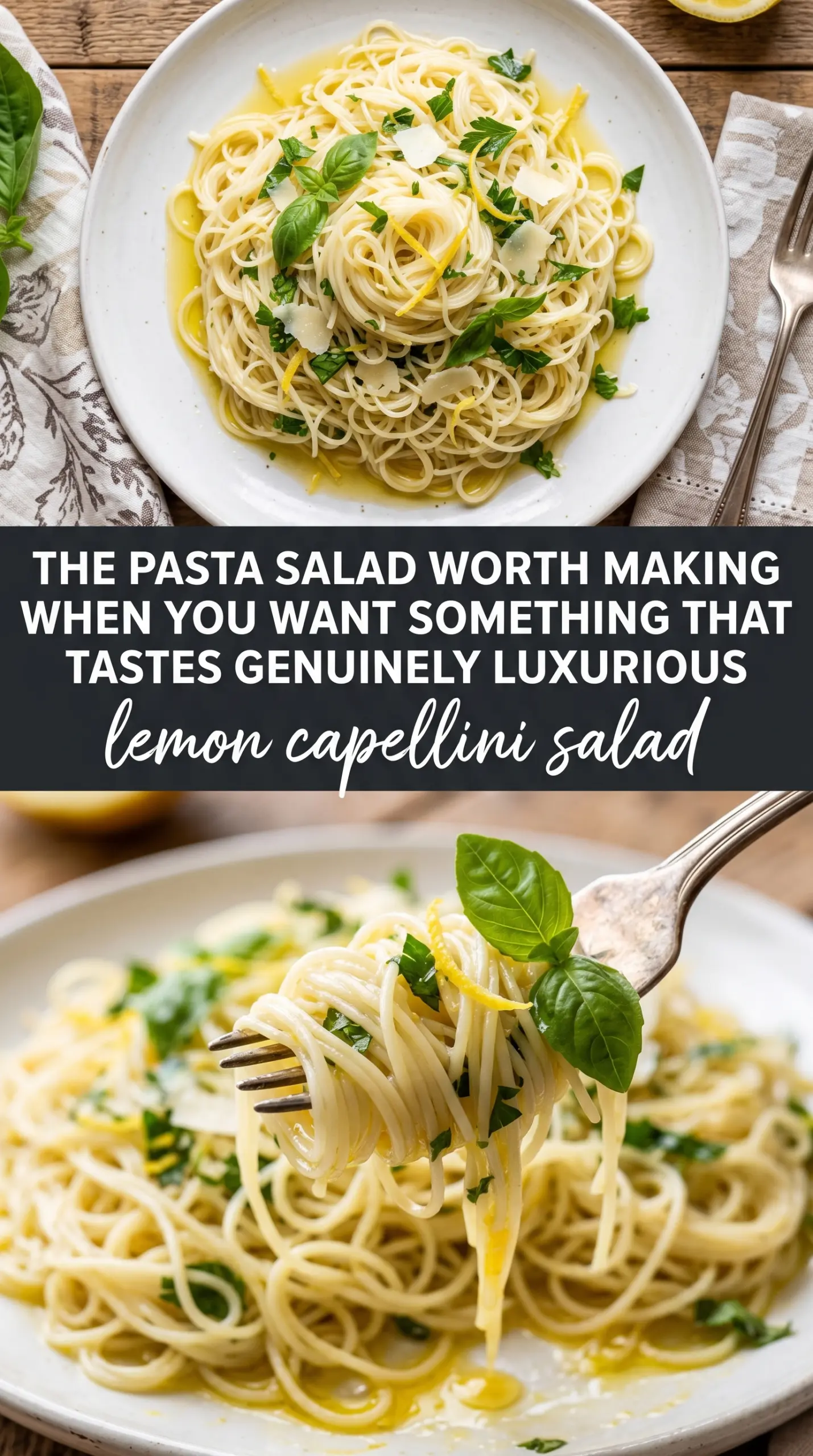
- Lemon juice and zest — The juice gives the sharp, clean acidity, while the zest carries the fragrant part of the lemon that keeps the salad from tasting flat. If you only use juice, the dressing can feel one-note.
- Olive oil — This is what smooths the citrus and helps the dressing coat the pasta instead of sliding off. A decent extra-virgin olive oil matters here because there isn’t much else to hide behind.
- Parmesan — It adds salt, richness, and a little body to the dressing. Pre-grated works in a pinch, but freshly grated melts into the pasta more evenly and gives you a better finish.
- Fresh parsley and basil — Dried herbs won’t give the same clean, green taste. If basil isn’t around, extra parsley keeps the salad bright without changing the texture.
- Cherry tomatoes — They add little bursts of sweetness and moisture that balance the lemon. If they’re watery, halve them just before serving so they don’t bleed into the salad while it chills.
Getting the Dressing Into the Pasta Without Breaking It
Whisk the Lemon Base First
Start with the olive oil, lemon juice, zest, garlic, salt, and pepper in a bowl big enough to hold the pasta later. Whisk until the dressing looks slightly emulsified and the garlic is evenly suspended instead of sinking to the bottom. If the garlic sits in clumps, you’ll get sharp bites in some places and nothing in others.
Move Fast When the Pasta Comes Off the Stove
Drain the capellini as soon as it’s cooked, then rinse it under cold water until it feels cool instead of warm. Shake off as much water as you can before it goes into the bowl; extra water dilutes the dressing and leaves the salad watery after chilling. If the pasta sits in a colander for too long, it starts sticking to itself and becomes harder to coat evenly.
Fold in the Herbs and Cheese at the End
Add the parsley, basil, Parmesan, and tomatoes after the pasta is already lightly dressed. That order keeps the cheese from clumping and the herbs from bruising under heavy mixing. The salad should look glossy and loosely coated, not wet or mashed. After chilling, give it one last gentle toss and taste for salt, because cold pasta dulls seasoning a little.
How to Adapt This Salad for Different Menus and Pantries
Make It Dairy-Free
Leave out the Parmesan and add a pinch of extra salt plus a little more lemon zest. You lose the savory richness, but the salad stays bright and clean, and the herbs carry more of the flavor.
Turn It Into a Gluten-Free Pasta Salad
Use a gluten-free capellini or another thin pasta shape that holds together well. Cook it just to the edge of tenderness and rinse carefully, because gluten-free pasta can go from firm to fragile fast once it’s drained.
Swap the Herbs Based on What’s Fresh
If you only have parsley, use it and increase the amount a little. If you have dill or chives, add a small amount alongside the parsley for a different edge, but don’t replace the basil one-for-one unless you want the salad to taste more grassy than sweet.
Storage and Reheating
- Refrigerator: Keep it covered for up to 3 days. The pasta will absorb more dressing as it sits, so the salad gets a little tighter by day two.
- Freezer: Don’t freeze it. The pasta turns soft and the herbs lose their fresh texture once thawed.
- Reheating: This salad is meant to be served chilled or at cool room temperature. If it seems dry after sitting, stir in a small splash of olive oil and a squeeze of lemon instead of heating it.
Answers to the Questions Worth Asking
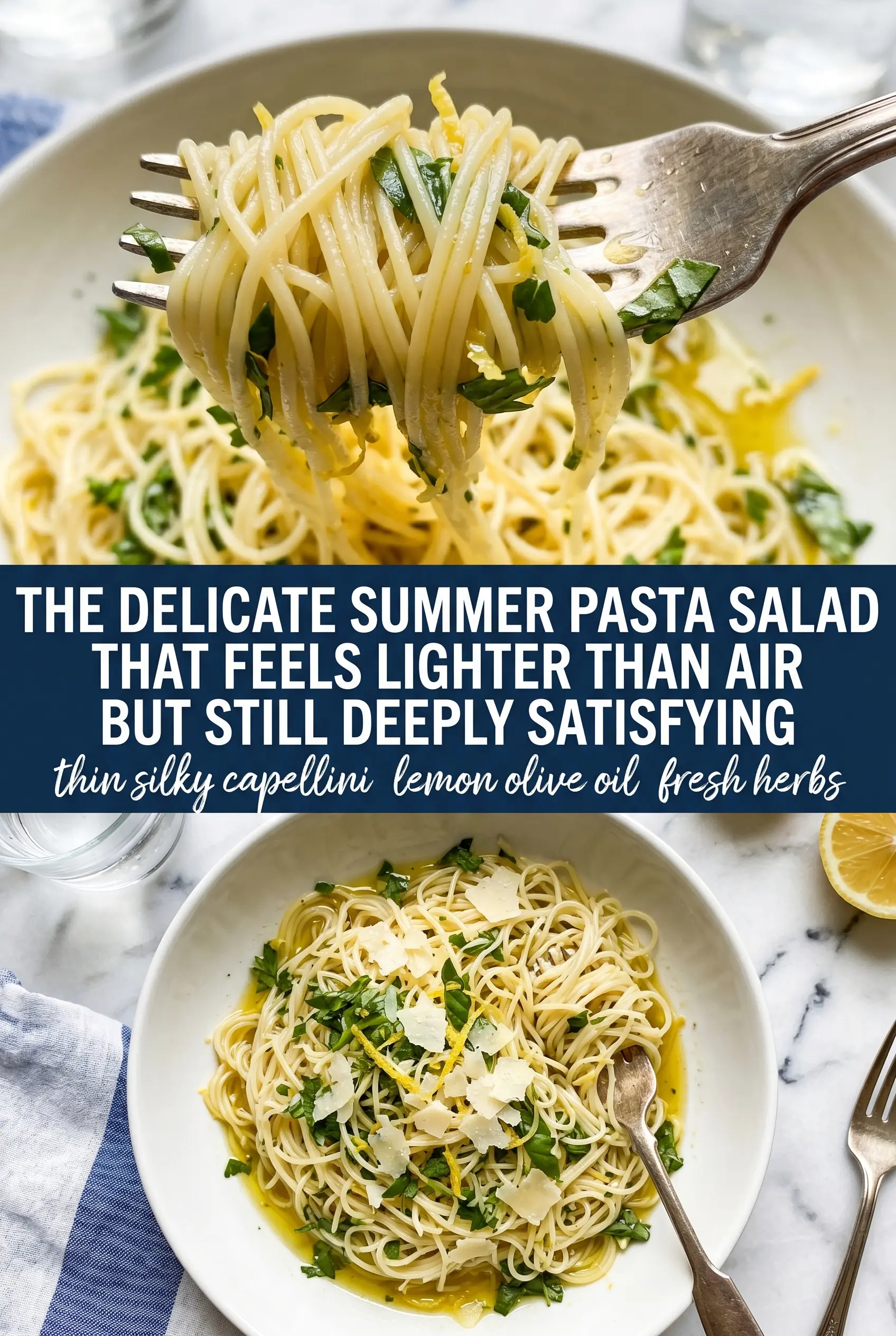
Lemon Capellini Salad
Ingredients
Equipment
Method
- Bring a large pot of salted water to a boil and cook the capellini according to package directions (usually 3-4 minutes), until just tender with a delicate bite.
- Drain the capellini and rinse with cold water to stop cooking, then spread strands in a single layer on a sheet pan to cool quickly.
- Refrigerate the cooled pasta for 30 minutes to get it ready to serve chilled as a light salad.
- Whisk olive oil, lemon juice, lemon zest, minced garlic, salt, and pepper until smooth and well combined.
- Add the capellini to the dressing and gently toss, lifting the strands instead of stirring hard to avoid breaking the delicate noodles.
- Fold in parsley, basil, grated Parmesan, and halved cherry tomatoes, tossing gently just until coated and evenly distributed.
- Serve immediately or plate from the chilled bowl for a crisp-cool, lemony finish.