Cold pasta salad lives or dies on the texture of the noodles, and gluten-free pasta needs a little extra care to stay firm instead of turning soft and sticky. When it’s cooked just until tender, rinsed well, and chilled before serving, it holds onto the dressing in a way that makes every bite taste bright, briny, and satisfying. The salami, mozzarella, and crisp vegetables give this salad the kind of mix that keeps people coming back for a second scoop.
The trick is choosing a gluten-free pasta shape with enough ridges or curves to catch the dressing, then cooling it fast so it doesn’t keep cooking in the pot. I also like to save a little dressing for after the chill time, because pasta always drinks some up while it rests. That last toss makes the salad taste freshly dressed instead of dry from the fridge.
Below, I’ll walk you through the details that matter most: how to keep gluten-free pasta from getting mushy, which ingredients carry the flavor, and what to change if you want to make it dairy-free or prep it ahead for a crowd.
The pasta held its shape after chilling, and the second toss with extra dressing made it taste like it had just been made. My husband kept sneaking forkfuls straight from the bowl.
Pin this gluten-free Italian pasta salad for a colorful side dish that stays firm, dressed, and full of crunch after chilling.
Why Gluten-Free Pasta Needs a Different Chill Strategy
Most pasta salads forgive a little overcooking. Gluten-free pasta usually doesn’t. Once it crosses from tender to soft, it keeps losing structure in the dressing, especially after a long chill, and that’s when the salad starts to turn pasty instead of lively.
The fix is simple: cook it just to the point where it still has a little bite in the center, rinse it cold right away, and let it dry off before mixing. That rinse matters more here than it does in hot pasta dishes because it stops the cooking and removes surface starch that would gum up the dressing.
- Rinsing after cooking — This is one of the rare times rinsing pasta helps. It cools the noodles fast and keeps the salad from clumping.
- Italian dressing — A good bottled gluten-free Italian dressing works well here because it brings acid, oil, and herbs in one step. If yours tastes flat, a pinch of extra Italian seasoning wakes it up.
- Salami and mozzarella — These are the salty, creamy anchors. They keep the salad feeling like a meal-sized side instead of just dressed pasta and vegetables.
- Cherry tomatoes and cucumber — They add freshness and crunch, but they also release moisture. Cutting them just before mixing helps the salad stay snappy longer.
What Each Ingredient Is Actually Doing in the Bowl
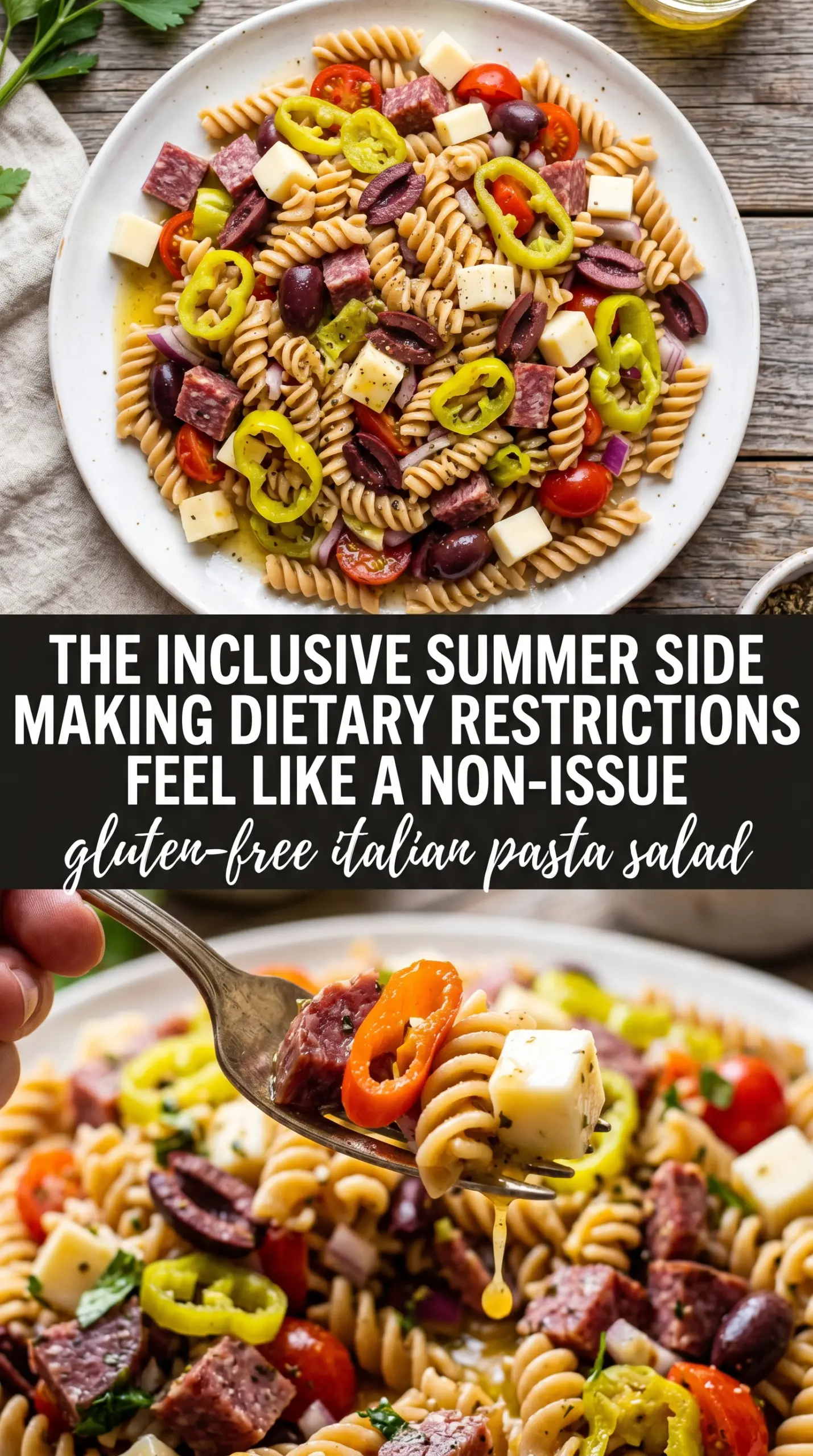
- Gluten-free rotini or penne — Use a shape with grooves or hollows so the dressing has something to cling to. Long, smooth pasta doesn’t hold up as well for this salad.
- Salami — It adds salt, chew, and that Italian deli flavor that makes the salad feel substantial. Cubing it small helps every forkful stay balanced.
- Mozzarella — The mild creaminess softens the sharper dressing and salami. Use a block or whole-milk mozzarella if you can; pre-shredded cheese won’t give the same clean bite.
- Gluten-free Italian dressing — This does the heavy lifting for seasoning and moisture. If you swap in a homemade version, include enough vinegar or lemon juice to keep the salad from tasting heavy after chilling.
- Parmesan — It adds a salty, nutty edge that deepens the dressing. Grate it fine so it melts into the coating instead of sitting in clumps.
How to Keep the Salad Bright Instead of Heavy
Cooking the Pasta Just Short of Done
Boil the gluten-free pasta according to the package, but start tasting a minute or two before the shortest recommended time. You want it cooked through with a little firmness left, because it will absorb dressing and soften as it chills. If it turns fully soft in the pot, it won’t recover later.
Cooling It Fast and Drying It Well
Drain the pasta, rinse it under cold water, and shake off as much water as you can. Excess water dilutes the dressing and leaves the salad watery at the bottom of the bowl. If the pasta looks slick and damp, let it sit in the colander for a few minutes before mixing.
Mixing in the Dressing in Two Rounds
Toss everything with most of the dressing first, then chill the salad for at least 2 hours. Right before serving, toss again and add the rest if the noodles have soaked up more than you expected. That second toss is the difference between a salad that tastes freshly dressed and one that tastes like it came from the back of the fridge.
Dairy-Free Version
Leave out the mozzarella and Parmesan, then add a handful of extra olives or chopped pepperoncini for more punch. The salad will be a little sharper and less creamy, but the dressing and salami still carry plenty of flavor.
Vegetarian Version
Skip the salami and add chickpeas or chopped roasted red peppers for body. Chickpeas make it more filling, while roasted peppers bring a sweet, smoky note that plays well with the Italian dressing.
Making It a Day Ahead
This salad works well made ahead, but hold back about a quarter of the dressing until serving time. Gluten-free pasta keeps soaking up liquid in the fridge, and that reserved dressing brings the texture back to life.
Storage and Reheating
- Refrigerator: Store covered for up to 4 days. The pasta will soften a bit, but the flavor stays strong.
- Freezer: Don’t freeze this salad. The vegetables and mozzarella turn watery and the pasta texture suffers badly after thawing.
- Reheating: This salad is meant to be served cold. If it seems dry after chilling, toss in a splash more dressing and let it sit for 10 minutes before serving.
Answers to the Questions Worth Asking
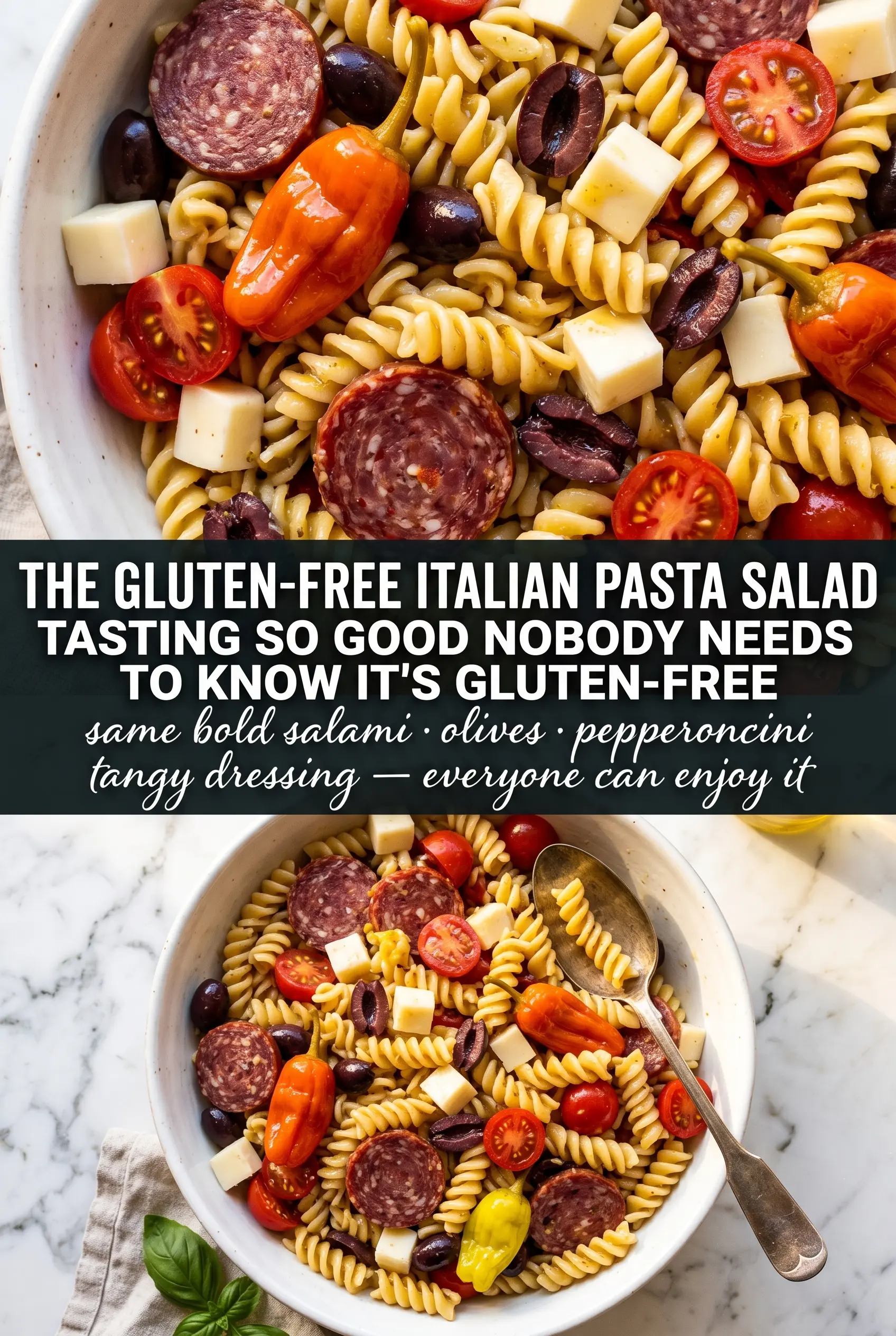
Gluten-free Italian Pasta Salad
Ingredients
Equipment
Method
- Boil the gluten-free pasta according to package directions, which may take longer than regular pasta, until tender. Drain in a colander and rinse thoroughly with cold water to stop the cooking and keep the pasta from sticking.
- Add the pasta, salami, mozzarella, tomatoes, cucumber, olives, and red onion to a large bowl. Toss gently to distribute everything evenly.
- Pour in the gluten-free Italian dressing and add the Parmesan and Italian seasoning. Toss until the pasta and vegetables are evenly coated with a glossy dressing.
- Season with salt and pepper to taste. Refrigerate for at least 2 hours so the dressing absorbs and the flavors blend.
- After chilling, toss the pasta salad again. If it seems dry, adjust with a little more gluten-free Italian dressing and toss to coat before serving.