Ultra-creamy potato salad has a way of disappearing fast, and this version earns that kind of attention because the dressing clings to every bite without turning gluey or flat. The potatoes stay tender, the eggs add richness, and the relish gives just enough tang and sweetness to keep the bowl from feeling heavy. It tastes like the classic deli-style version people go back for at picnics and holiday tables, only fresher and fuller.
The trick is in the balance. Russet potatoes break down just enough to help the dressing thicken naturally, which is what gives this salad that soft, creamy spoonful instead of a watery one. Mayo brings body, sour cream adds a little lift, and the vinegar keeps the whole thing from tasting one-note. Folding everything together while the potatoes are cool, not hot, keeps the dressing from sliding off and helps the salad chill into a better texture.
Below you’ll find the small details that matter most: how to keep the potatoes from getting mushy, why the dressing should taste a little bold before chilling, and a few swaps that still keep the salad classic.
The dressing thickened up beautifully after chilling, and the potatoes held their shape without getting mealy. I made it the night before a cookout, and the bowl came back empty.
Creamy Potato Salad with that classic deli-style dressing deserves a spot in your cookout rotation.
The Reason This Salad Gets Creamy Instead of Soupy
Potato salad goes wrong when the dressing is too thin or the potatoes are too warm. In that case, the mayo loosens up, the sour cream thins out, and everything settles into the bottom of the bowl instead of coating the potatoes. The fix is simple: cook the potatoes until just tender, drain them well, and let them cool before mixing. That gives the dressing something to cling to.
Russet potatoes work here because they have enough starch to help the dressing settle into a plush texture. Waxy potatoes keep their shape better, but they can make the salad feel slick instead of creamy. This version wants a little breakdown at the edges. That’s what gives it body without needing extra thickeners.
- Russet potatoes — These soften enough to make the dressing taste rich and full. If you swap in waxy potatoes, the salad will hold firmer but won’t feel as creamy.
- Mayonnaise and sour cream — Mayo gives the base its classic richness. Sour cream keeps it from tasting heavy and adds a clean tang that wakes up the potatoes.
- Yellow mustard and vinegar — These keep the dressing from tasting flat. The mustard gives the salad its familiar color and bite, while the vinegar sharpens the flavor after chilling.
What Each Ingredient Is Doing in the Bowl

The eggs add more than flavor. They help round out the dressing and make the salad feel substantial enough to stand beside grilled meats or sandwiches. Chop them small so they disappear into the mix instead of turning each bite into a separate egg salad moment.
Celery and onion are there for contrast. You want them diced fine enough to give crunch and bite without taking over the bowl. Sweet pickle relish brings sweetness and a little acidity at once, which is why it works better here than a straight dill pickle in a classic-style salad. If your relish is especially wet, drain off a little liquid so the dressing doesn’t loosen as it sits.
Sugar sounds minor, but it smooths the sharp edges from the mustard and vinegar. Without it, the salad can taste stiff after chilling. Salt and pepper should be added with intent, not as an afterthought, because cold potato salad always tastes milder than it did in the mixing bowl.
How to Build the Creaminess Without Breaking the Salad
Cooking the Potatoes Just to Tender
Start the potatoes in cold water and cook them until a fork slips in easily but the cubes still hold their edges. If you boil them too hard or too long, the outside will crumble before the center is ready and the salad will turn pasty. Drain them well, then let the steam escape for a few minutes so excess water doesn’t dilute the dressing. The goal is tender potatoes that still look like potato pieces.
Mixing the Dressing First
Stir the mayonnaise, sour cream, mustard, vinegar, sugar, salt, and pepper together before they touch the potatoes. That way the seasoning is evenly distributed and you don’t get pockets of bland salad. Taste the dressing before combining it with the potatoes; it should seem a touch bold because chilling dulls salt and acid. If it tastes flat at this stage, it’ll taste even flatter later.
Folding, Not Stirring
Add the dressing to the potato mixture and fold gently with a spatula or big spoon. Aggressive stirring breaks the potatoes and makes the salad dense instead of creamy. You want the dressing to coat every surface while keeping some definition in the cubes, eggs, and celery. Stop as soon as everything looks evenly covered; overmixing here is the fastest way to lose the texture.
Chilling for the Final Texture
Refrigerate the salad for at least 2 hours before serving. That rest time lets the potatoes absorb the dressing and helps the whole bowl thicken up. If it looks a little loose right after mixing, don’t panic — that’s normal. The salad tightens as it chills, and the flavor gets more balanced once the mustard, vinegar, and sweetness settle together.
Ways to Tweak the Bowl Without Losing the Classic Feel
Dairy-Free Version
Swap the sour cream for a dairy-free plain yogurt or a vegan sour cream with enough body to hold its shape. The salad will still taste creamy, but it may come across a little tangier, so taste before serving and adjust the mustard and sugar if needed.
More Tang, Less Sweet
Use dill relish instead of sweet relish and reduce the sugar to a pinch or leave it out. You’ll get a sharper, more savory salad with a cleaner finish, which works well if you’re serving it next to smoky barbecue.
Egg-Free Side Dish
Leave out the eggs and add a little extra celery for crunch if you want a simpler potato salad. The texture will be lighter and less rich, so compensate by seasoning the dressing well and letting it chill long enough to absorb fully.
Storage and Reheating
- Refrigerator: Store covered for up to 4 days. The potatoes will soften a little more each day, but the flavor stays good.
- Freezer: Don’t freeze this salad. Mayo-based dressing turns grainy and the potatoes become watery after thawing.
- Reheating: Serve this cold. If it’s been chilled overnight, let it sit at room temperature for 15 to 20 minutes so the dressing loosens slightly and the flavor comes back.
Answers to the Questions Worth Asking
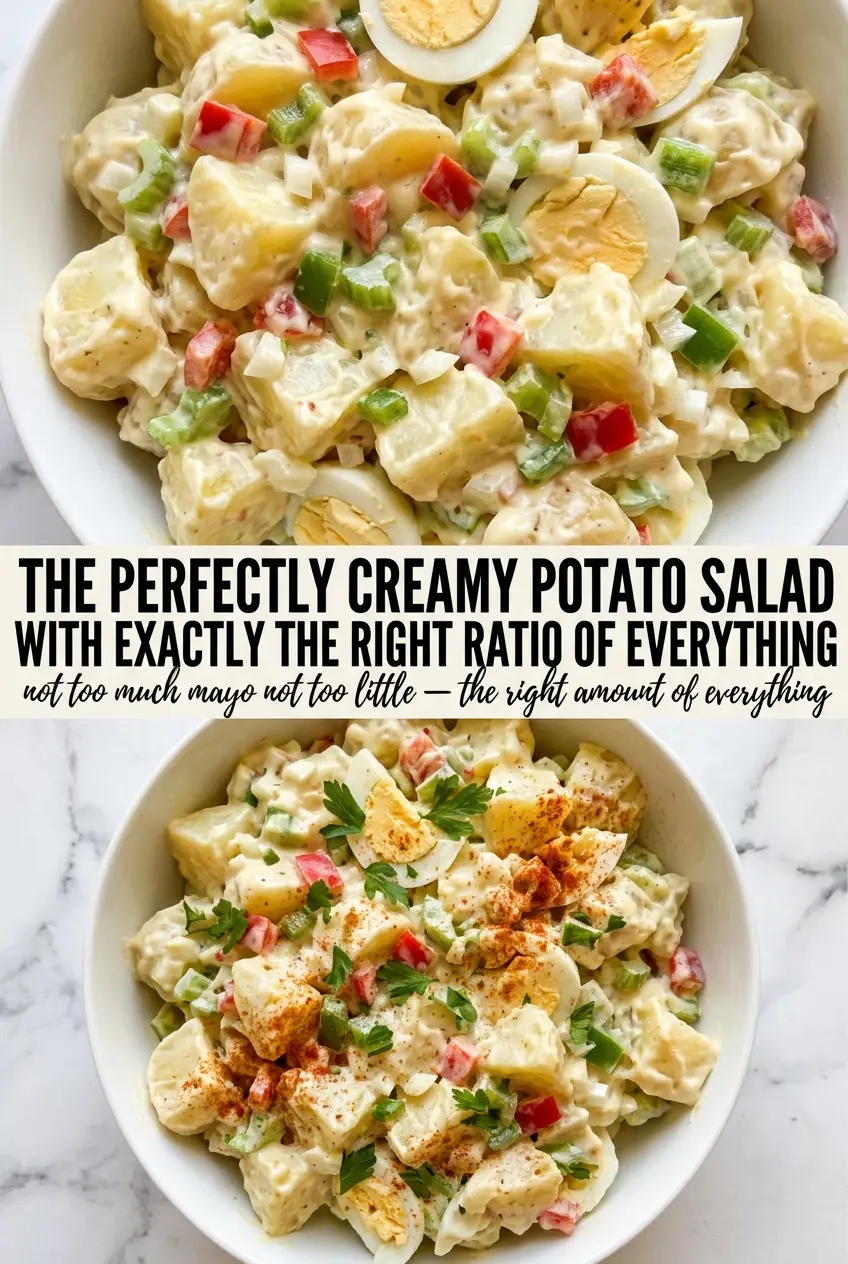
Creamy Potato Salad
Ingredients
Equipment
Method
- Bring a pot of water to a boil and add the peeled and cubed russet potatoes; boil until tender, about 12-15 minutes, with a steady simmer and visible fork-tender cubes.
- Drain the potatoes and cool them until no longer steaming, about 10 minutes, using a clear surface so you can see steam has stopped.
- Place cooled potatoes in a large mixing space and add the chopped hard-boiled eggs, finely diced celery, finely diced onion, and sweet pickle relish.
- Fold the potato-egg mixture gently until evenly distributed, moving slowly to keep cubes intact and the mixture looking cohesive and creamy-ready.
- In a separate container, mix mayonnaise, sour cream, yellow mustard, white vinegar, sugar, salt, and pepper until smooth and glossy, with no streaks left.
- Pour the dressing over the potato mixture and fold gently until very creamy, with a uniform pale color coating every cube.
- Cover and refrigerate for at least 2 hours, 120-150 minutes, so the dressing thickens and the salad tastes fully blended.