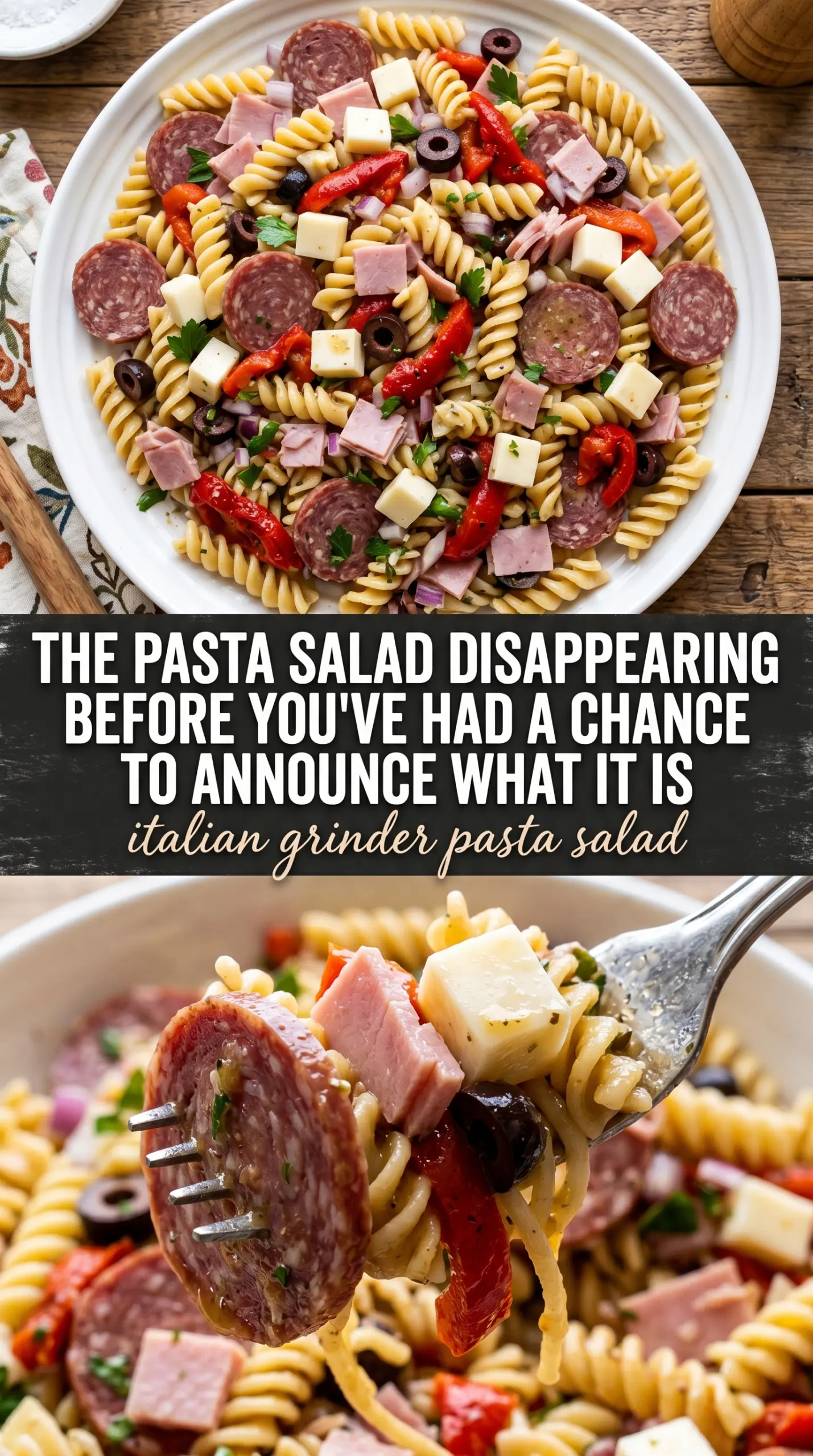
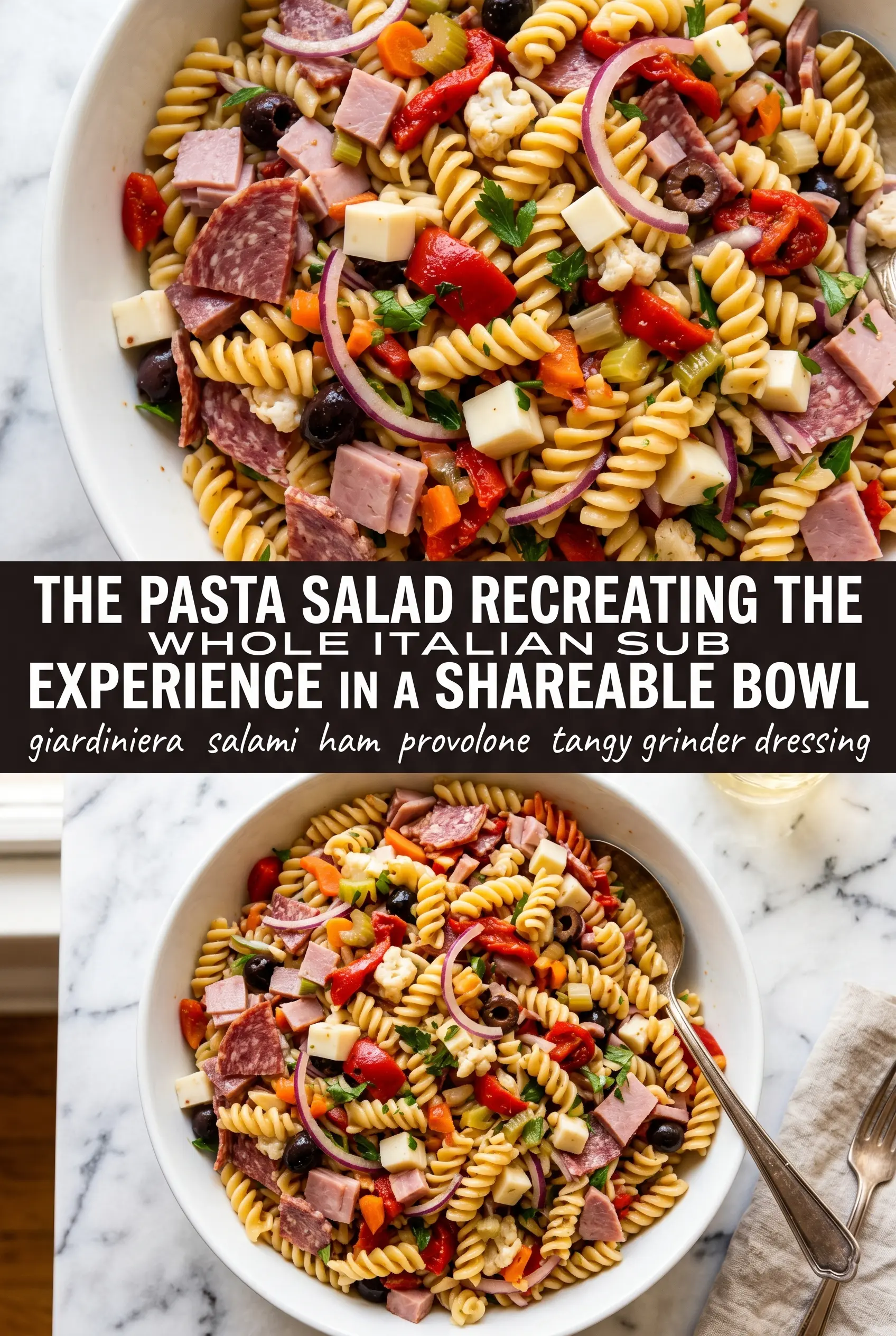
Italian Grinder Pasta Salad brings all the best parts of a loaded deli sandwich into one cold, hearty bowl. You get chewy pasta, salty cured meats, creamy provolone, sharp onion, and those little hits of banana pepper brine that keep every bite bright. It eats like a main dish, not a side that disappears before the rest of the table sits down.
The key is treating it like a grinder salad, not a plain pasta salad. The pasta gets rinsed cold so it stays firm, the dressing clings better when the cheese and meat are cut small, and the lettuce goes in at the very end so it still has crunch. I also like giving it a real chill time, because the flavor settles in instead of tasting like separate ingredients tossed together in a hurry.
Below you’ll find the small details that matter most, including the best way to keep the lettuce crisp and how to adjust the dressing after the salad has had time to rest. It’s the kind of dish that gets better once you know the rhythm of it.
The pasta stayed firm after chilling, and the banana peppers kept the whole bowl from tasting heavy. I added a little extra dressing before serving and it was gone fast.
Save this Italian Grinder Pasta Salad for the days when you want deli sandwich flavor in a chilled, make-ahead pasta bowl.
The Trick Is Treating It Like a Sandwich, Not a Plain Pasta Salad
The mistake people make with grinder-style pasta salads is under-seasoning the base and then hoping the dressing carries everything. It doesn’t. Salami, pepperoni, ham, provolone, banana peppers, and Italian dressing all bring salt, but they need the pasta to be cooled and seasoned enough to hold them together instead of washing them out.
The other thing that matters is size. When the meats, cheese, and vegetables are cut into bite-size pieces, every forkful gets a little of everything. That’s what makes it taste like a grinder instead of just pasta with deli items scattered through it.
- Cold-rinsed rotini — The ridges catch the dressing and the chilled shape keeps the salad from turning heavy. Rotini is the right pasta here because it grips all those chopped ingredients instead of letting them slide to the bottom.
- Banana peppers — These are what keep the salad from tasting flat. The briny heat cuts through the cheese and meats, and there isn’t a substitute that gives the same sharp pop, though sliced pepperoncini comes close.
- Provolone — Use a block and cube it yourself if you can. Pre-shredded cheese won’t give you the same creamy, chewy bite, and it tends to disappear into the dressing instead of standing out.
- Italian dressing — Bottled dressing is fine here, as long as it’s one you actually like eating. This recipe leans on the dressing for acidity and seasoning, so a bland one will leave the whole bowl dull.
What Each Ingredient Is Actually Doing in Italian Grinder Pasta Salad
- Fresh vegetables (vibrant, crisp, quality) — Start with fresh, brightly colored vegetables. Wilted vegetables make everything taste tired.
- Acid (vinegar, lemon juice, or lime) — The acid prevents oxidation and prevents flat taste. It’s essential for brightness.
- Oil (quality matters for flavor) — Good olive oil adds freshness. Cheap oil makes the salad taste flat.
- Salt (enhances all other flavors) — Proper seasoning makes vegetables taste more like themselves. Don’t undersalt.
- Fresh herbs (tender ones added last) — Fresh herbs add complexity and brightness. Add them right before serving.
- Protein or hearty elements (if using) — These should complement without overwhelming the vegetables. Keep the salad light.
- Dressing applied just before serving — Don’t dress early or the vegetables release liquid and wilt. Timing is everything.
- Taste and adjust (check for balance) — The salad should taste bright and assertive. Add more acid or salt if needed.
Building the Bowl So the Lettuce Stays Crisp
The salad comes together in layers. Mix the pasta, meats, cheese, tomatoes, banana peppers, onion, Parmesan, and Italian seasoning first, then let the dressing work into everything before the final chill. That rest time is where the flavor starts to taste cohesive instead of separate.
Hold the lettuce until the very end. If it goes in early, it wilts and turns slick against the dressing. Add it right before serving so it still has that shredded crunch that makes the whole salad feel like a grinder.
Cooking and Cooling the Pasta
Cook the rotini until it’s just tender, then drain and rinse it under cold water until it stops steaming. You want it cool enough that it won’t melt the cheese or thin the dressing. If the pasta stays warm, the whole bowl gets oily and soft instead of crisp and balanced.
Mixing the Deli Ingredients
Add the salami, pepperoni, ham, provolone, tomatoes, banana peppers, and red onion to a large bowl with the cooled pasta. Toss gently so the cheese cubes stay intact and the meats don’t clump together. If the onion taste feels sharp, it usually needs to be diced finer, not removed.
Letting the Dressing Settle In
Pour in the Italian dressing, Parmesan, and Italian seasoning, then toss until everything is evenly coated. Cover the bowl and refrigerate for at least 2 hours. This is when the pasta drinks in the dressing and the meats season the whole salad from the inside out.
Finishing with the Lettuce
Right before serving, add the shredded iceberg lettuce and toss once more. If the salad looks a little dry after chilling, add another splash of dressing now rather than before the rest time. That keeps the lettuce from going limp and gives the bowl a fresher, cleaner finish.
How to Adapt It for a Crowd, a Lighter Bowl, or a Gluten-Free Table
Make It Gluten-Free Without Losing the Deli Feel
Swap in a sturdy gluten-free rotini that can handle chilling without falling apart. The rest of the recipe already works naturally, but gluten-free pasta can tighten up after resting, so toss in an extra spoonful of dressing just before serving if it looks dry.
Use Turkey or Chicken for a Lighter Version
Replace some or all of the salami and pepperoni with diced turkey or chicken if you want a less salty salad. You’ll lose some of that classic grinder punch, so keep the banana peppers and Parmesan in place to bring the flavor back into focus.
Make It Ahead for a Potluck
Mix everything except the lettuce up to a day ahead and keep it chilled. Add the lettuce right before the salad hits the table. If you prep it too far ahead with the greens already in, they’ll wilt and drag the whole texture down.
Storage and Reheating
- Refrigerator: Store the dressed salad without the lettuce for up to 3 days. The pasta absorbs more dressing as it sits, so it may need a quick refresh before serving.
- Freezer: Don’t freeze this salad. The pasta turns mushy, the lettuce won’t recover, and the cheese loses its texture.
- Reheating: This salad is meant to be served cold, not reheated. If it’s been in the fridge for a while, let it sit out for 10 to 15 minutes and stir in a splash of dressing to wake it back up.
Questions I Get Asked About This Recipe
Italian Grinder Pasta Salad
Ingredients
Method
- Cook the rotini pasta according to package directions, then drain and rinse with cold water to stop the cooking. The pasta should look tender but not mushy.
- Combine the cooled pasta, salami, pepperoni, ham, provolone, cherry tomatoes, banana peppers, and red onion in a large bowl. Toss until the meats and cheese are evenly distributed through the pasta.
- Add Italian dressing, Parmesan cheese, and Italian seasoning, then toss thoroughly to coat every piece. The mixture should look glossy with dressing and speckled with seasoning.
- Refrigerate the pasta salad for at least 2 hours to allow flavors to meld. For best results, cover it so the surface doesn’t dry out.
- Just before serving, add the shredded iceberg lettuce and toss lightly to combine. The lettuce should stay crisp with visible strands.
- Adjust the dressing if needed, then serve. The salad should taste balanced and not dry.