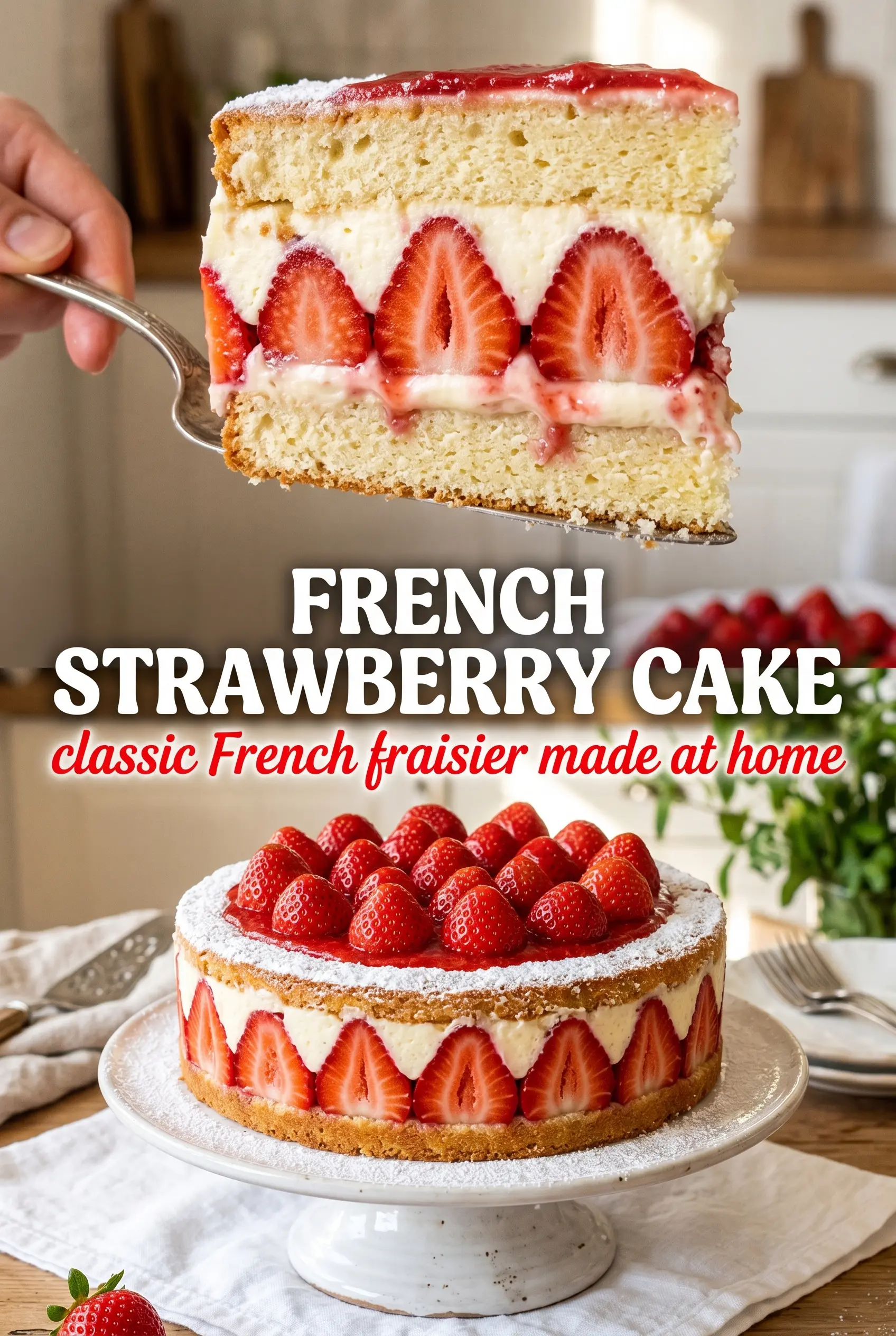
French strawberry cake has a way of looking delicate while eating like something much more satisfying than it first appears. The sponge stays light and tender, the pastry cream adds a cool, custardy layer, and the whole strawberries give each slice a clean burst of fresh fruit that keeps the cake from feeling heavy. It’s the kind of dessert that looks polished on the table without asking for complicated decorating skills.
The texture depends on a few small decisions. The yolks and sugar need enough whisking to turn pale and thick, because that base gives the cake its fine crumb. The egg whites should be folded in gently enough to keep the batter airy, and the cake needs to cool completely before it’s sliced or filled, or the cream will slide and the layers will smear.
Below, you’ll find the one step that matters most when building the layers, plus the ingredient choices that make the cake taste elegant instead of just sweet. I’ve also included a few variations for swapping the filling or adjusting the finish without losing the character of the dessert.
The sponge stayed so light and the pastry cream held its shape after chilling. I was worried the strawberries would make it soggy, but the layers sliced cleanly and looked gorgeous on the plate.
Save this French strawberry cake for the day you want a light sponge, pastry cream, and fresh berries in one elegant dessert.
The Part Most Strawberry Cakes Get Wrong
The mistake usually happens after the cake comes out of the oven. A sponge that’s even a little warm will compress under pastry cream, and the berries will slide around instead of nestling into clean layers. Let the cake cool all the way to room temperature before cutting it, and chill the finished cake for the full hour so the cream can set around the fruit.
There’s also a real difference between folding and stirring here. The beaten egg whites are what give the cake its lift, and heavy-handed mixing knocks that air out fast. Once the flour goes in, work just until the batter looks smooth and no dry streaks remain. Any extra mixing will tighten the crumb and take away the softness that makes this style of cake special.
What Each Ingredient Is Actually Doing Here
- Eggs, separated — The yolks build richness and color, while the whipped whites create the airy structure. You can’t swap in whole eggs and get the same feather-light crumb.
- Pastry cream — This is the filling that gives the cake its French bakery feel. A thick, chilled pastry cream holds its shape between the layers; thinner custard will seep into the sponge.
- Whole strawberries — Keep them whole if they’re small and ripe, or halve larger berries so the slices stay neat. Soft berries are fine, but watery berries will weep onto the cream, so pat them dry first.
- Vegetable oil — Oil keeps the sponge tender even after chilling, which matters because this cake is meant to be served cold. Melted butter won’t give the same soft bite once the cake has been refrigerated.
- All-purpose flour — Standard flour is the right choice here. Cake flour will make it slightly more delicate, but all-purpose gives enough body to slice cleanly through the filling.
Building the Sponge and Layers Without Losing the Air
Whisking the Yolk Base
Beat the egg yolks and sugar until the mixture turns pale, thick, and ribbons back onto itself. That step isn’t cosmetic; it dissolves the sugar and starts the structure that supports the cake. If the mixture still looks grainy or thin, keep going before you add the liquids.
Folding in the Whites
Whip the egg whites to stiff peaks that hold their shape when the beaters lift out. Fold them into the batter with a light hand, scraping from the bottom and turning the bowl as you go. If you stir hard or leave streaks of unmixed whites, the cake will bake unevenly and can collapse in the center.
Baking and Cooling Cleanly
Pour the batter into a prepared 9-inch pan and bake until the top springs back and a toothpick comes out clean. The cake should look set at the edges before you pull it out. Let it cool fully in the pan or on a rack; slicing too early is the fastest way to tear the sponge and ruin the layers.
Filling and Chilling the Finished Cake
Slice the cooled cake horizontally with a long serrated knife, then spread the pastry cream in an even layer so the filling reaches the edges without spilling over. Arrange the strawberries in a single layer where they’ll press into the cream and stay put. After the top layer goes on, chill the cake before dusting with powdered sugar so the finish stays neat when you slice it.
Three Ways to Adjust the Cake Without Losing Its Character
Lighter Fruit Finish
Use a mix of sliced strawberries and a few whole berries on top if you want a cleaner, more bakery-style look. Sliced berries spread the fruit flavor more evenly, while whole berries give the cake that polished, elegant finish.
Dairy-Free Filling Swap
Replace the pastry cream with a thick coconut pastry cream or a stabilized dairy-free custard. The cake itself is already dairy-free, so this swap keeps the same layered structure without changing the sponge.
Gluten-Free Version
Use a good 1:1 gluten-free baking flour and keep the folding gentle. The texture will be a touch more delicate, so chill the cake fully before slicing or the layers can crumble at the edges.
Storage and Reheating
- Refrigerator: Store covered for up to 3 days. The sponge will soften a little from the cream, but the flavor stays excellent.
- Freezer: This cake doesn’t freeze well once assembled because the strawberries and pastry cream turn watery after thawing. You can freeze the plain sponge layers tightly wrapped for up to 1 month.
- Reheating: Don’t reheat the assembled cake. Serve it chilled straight from the refrigerator, and let it sit at room temperature for 10 to 15 minutes if you want the cream a little softer.
Questions I Get Asked About This Recipe
French Strawberry Cake
Ingredients
Equipment
Method
- Preheat the oven to 350°F. Line and grease a 9-inch round cake pan so the cake bakes evenly and releases cleanly.
- Whisk together all-purpose flour, baking powder, and salt until evenly combined. This keeps the crumb light and prevents salty pockets.
- Beat egg yolks with granulated sugar until pale and thick, about 3 minutes. Look for ribboning texture that falls back onto itself.
- Add vegetable oil, water, and vanilla extract to the yolk mixture and beat just until smooth. The batter should look glossy and uniform.
- Fold the flour mixture into the yolk mixture until just combined. Stop as soon as you don’t see dry streaks to avoid a tough crumb.
- In a separate bowl, beat egg whites until stiff peaks form. The peaks should stand straight with no droop when you lift the beaters.
- Gently fold the stiff egg whites into the batter. Use a light hand so the batter stays airy.
- Pour the batter into the 9-inch round cake pan. Tap once to release large air bubbles, then smooth the top.
- Bake for 30 minutes at 350°F until a toothpick comes out clean. The center should spring back lightly when touched.
- Cool completely before slicing. Letting it cool fully prevents the sponge from tearing when layered.
- Slice the cake into two layers. Use a level cut so the pastry cream spreads evenly.
- Spread half the pastry cream on the bottom layer. Cover to the edges for a stable, even stack.
- Arrange half the whole strawberries on top of the pastry cream. Place them so they’re visible and evenly spaced for a jewel-like look.
- Add the top cake layer and press very gently to seat it. Keep pressure light to avoid shifting the fruit.
- Spread the remaining pastry cream over the top layer. Smooth it to form a pale pink layer across the surface.
- Arrange the remaining whole strawberries on top in a decorative pattern. Cover gaps for an elegant, finished presentation.
- Dust the cake with powdered sugar. Use a light hand so it looks refined rather than heavy.
- Refrigerate for at least 1 hour before serving. Chilling helps the pastry cream set for cleaner slices.