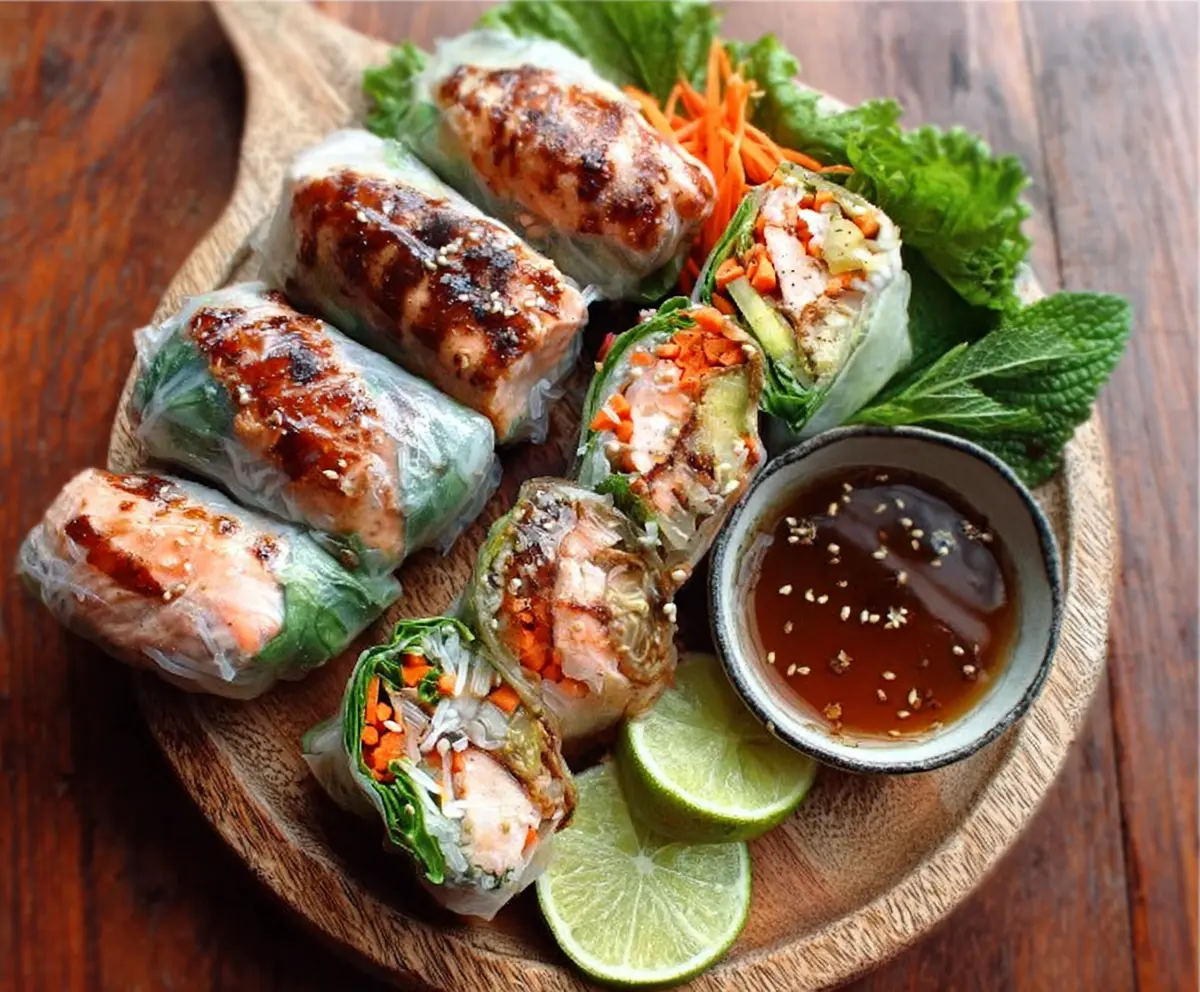
These Vietnamese Baked Salmon Spring Rolls are a yummy twist on the classic recipe. Packed with fresh veggies and juicy salmon, they are crispy and full of flavor!
Making them is a breeze! I love how I can bake instead of fry. Plus, they taste fantastic dipped in a sweet sauce. Who can resist a crunchy roll? 🥢
Key Ingredients & Substitutions
Salmon: For this recipe, fresh salmon fillet is best. If you’re looking for alternatives, baked chicken or tofu can work nicely. Just ensure they have a similar texture and moisture level to match the spring rolls.
Rice Paper Wrappers: The rice paper is key for that authentic spring roll feel. If you can’t find rice paper, try using thin tortillas or even nori sheets. They won’t have the same flavor, but they’ll hold the filling together.
Vermicelli Noodles: Rice vermicelli noodles are light and complement the other ingredients well. You could use other noodles like soba or even zucchini noodles for a gluten-free option.
Vegetables & Herbs: Freshness is crucial! If you can’t find mint or cilantro, you can use basil or parsley instead. Shredded veggies like bell peppers or radishes can add a nice crunch too.
How Do I Properly Soften Rice Paper Wrappers?
Softening rice paper can be tricky! The key is to dip them just enough, so they become pliable but not overly soft. Here’s how:
- Fill a wide bowl with warm water. Make sure it’s deep enough to submerge the rice paper.
- Take one rice paper wrapper and dip it in the water for about 5-10 seconds. Don’t leave it too long!
- Gently lift it out and lay it flat on a clean, damp surface like a cutting board.
Once it’s pliable, you’ll be able to roll it up without tearing. Practice makes perfect – don’t worry if the first few don’t turn out exactly right!
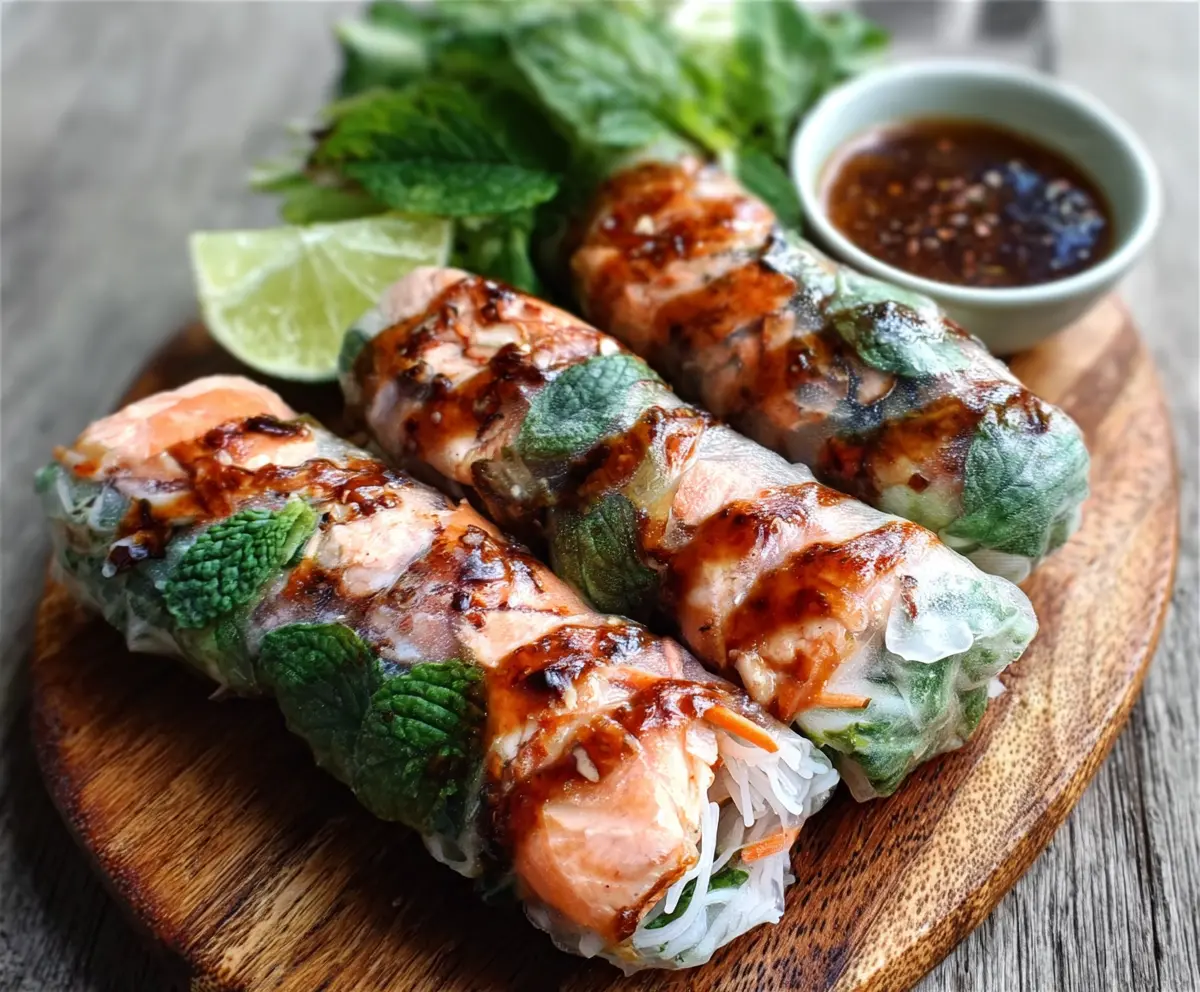
How to Make Vietnamese Baked Salmon Spring Rolls
Ingredients You’ll Need:
For the Spring Rolls:
- 8 rice paper wrappers (approx. 8-inch diameter)
- 300g (about 10 oz) salmon fillet, skin removed
- 1 tbsp soy sauce or tamari
- 1 tbsp honey or maple syrup
- 1 tsp sesame oil
- 1 clove garlic, minced
- 1/2 tsp black pepper
- 1 cup cooked vermicelli noodles (thin rice noodles)
- 1 cup shredded carrots
- 1 cup fresh lettuce leaves (butter or romaine)
- 1/2 cup fresh mint leaves
- 1/2 cup fresh cilantro leaves
- 1/2 cucumber, julienned
- 1 tbsp sesame seeds (for garnish)
For the Dipping Sauce:
- 3 tbsp hoisin sauce
- 1 tbsp peanut butter (optional, for creaminess)
- 1 tbsp water (to thin)
- 1 tsp lime juice
- 1 tsp soy sauce
- 1 tsp sesame seeds (for garnish)
How Much Time Will You Need?
This recipe takes about 20 minutes for prep and cooking, and then you can keep the spring rolls in the fridge for about 30 minutes to chill if you’d like. In total, you might spend around 50 minutes whipping these delicious spring rolls up! So grab your ingredients, and let’s get rolling!
Step-by-Step Instructions:
1. Prepare the Salmon:
Start by preheating your oven to 375°F (190°C). In a bowl, mix the soy sauce, honey (or maple syrup), sesame oil, minced garlic, and black pepper. Place the salmon fillet on a lined baking sheet. Brush the marinade over the salmon, then pop it in the oven for 12-15 minutes. You want it to be cooked through and slightly caramelized on top. Once it’s done, let it cool and gently flake it into chunks with a fork.
2. Prepare the Vermicelli Noodles:
Next, cook the vermicelli noodles according to the package instructions. Once they’re done, drain them and give them a rinse under cold water to stop the cooking. Set them aside for later.
3. Prepare Your Veggies and Herbs:
While the salmon is baking, wash and dry your lettuce leaves, mint, and cilantro. Then, julienne the cucumber and shred the carrots. This is where your spring rolls start to get colorful!
4. Soften the Rice Papers:
Fill a large shallow bowl with warm water. Take one rice paper and dip it into the water for about 5-10 seconds, just until it’s pliable but not too soft. After that, lay it flat on a clean surface—your assembly spot!
5. Assemble the Spring Rolls:
On the lower third of the softened rice paper, start layering a few lettuce leaves, a small handful of vermicelli noodles, some shredded carrots, julienned cucumber, and a sprinkle of mint and cilantro. Then, add a generous amount of the flaked baked salmon on top of it all.
6. Roll Up Your Spring Rolls:
Here comes the fun part! Fold the sides of the rice paper over the filling, then roll from the bottom to the top tightly, ensuring everything is snug inside. This can take a little practice but don’t worry if your first few aren’t perfect!
7. Repeat:
Keep going with the remaining rice papers and fillings until everything is used up. You’ll have a plate full of delicious rolls in no time!
8. Prepare the Dipping Sauce:
In a small bowl, whisk together the hoisin sauce, peanut butter (if you’re using it), water, lime juice, and soy sauce until everything is smooth. Don’t forget to sprinkle some sesame seeds on top for that extra touch.
9. Serve:
To serve, cut the spring rolls in half diagonally for a nice presentation. Place them on a plate, garnish with extra mint leaves and lime slices, and serve alongside your tasty dipping sauce.
Enjoy your fresh Vietnamese Baked Salmon Spring Rolls!
Can I Use Other Proteins Instead of Salmon?
Absolutely! You can substitute the salmon with chicken, shrimp, or tofu for a vegetarian option. Just make sure to adjust the cooking times accordingly to ensure everything is cooked properly.
What If I Can’t Find Rice Paper Wrappers?
If you can’t find rice paper, you can use thin tortillas or even nori sheets for a different flavor profile. Keep in mind, though, that the texture will be different—rice paper provides that classic spring roll feel!
Can I Make These Spring Rolls in Advance?
Yes, you can prep the filling and even roll the spring rolls a few hours ahead. Store them in an airtight container with a damp paper towel to keep the rice paper from drying out. It’s best to wait until just before serving to prepare the dipping sauce for the freshest flavor!
How Do I Store Leftover Spring Rolls?
Store any leftover spring rolls in an airtight container in the fridge for up to two days. If possible, keep the dipping sauce separate to maintain the crispiness of the rolls. Just reheat gently or enjoy them cold!