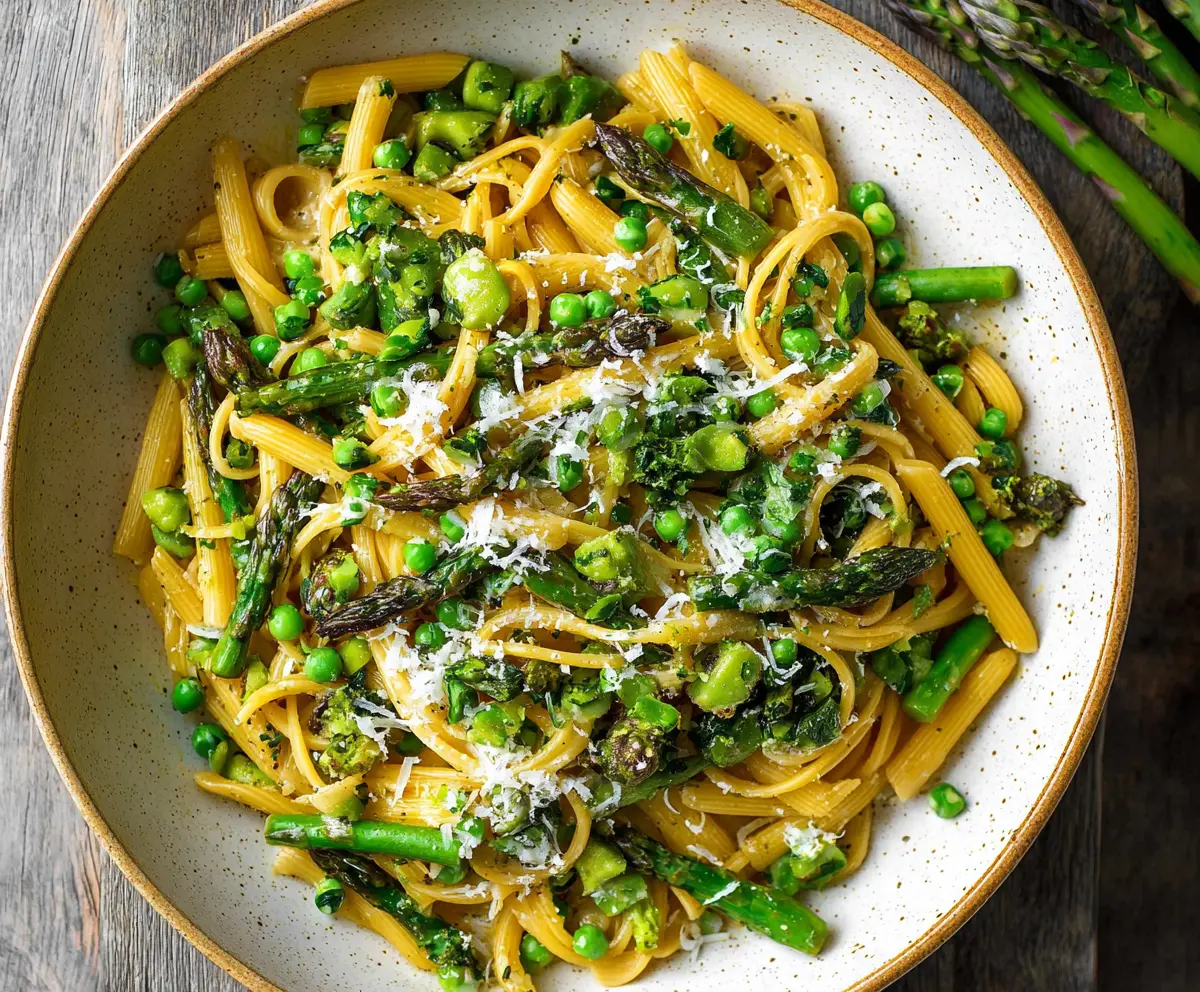
This Spring Vegetable Pasta is fresh and bright, filled with colorful veggies like asparagus, peas, and tomatoes. It’s perfect for a quick weeknight meal!
I love how light and tasty this dish is—just toss the veggies with pasta and a splash of olive oil. It’s like a spring party on your plate! 🌼
Key Ingredients & Substitutions
Pasta: Linguine or penne works great, but feel free to swap in any pasta shape you love! Gluten-free pasta is also an excellent alternative if you’re avoiding gluten.
Asparagus: Fresh asparagus brings a beautiful crunch and flavor. If it’s not in season, broccoli or green beans can be perfect substitutes, maintaining that vegetable freshness.
Peas: Fresh green peas are delightful, but frozen peas are just fine too! They still maintain their sweetness and are super convenient.
Fava Beans: If you can’t find these or they’re out of season, you can easily replace them with shelled edamame or even more peas for a similar texture.
Garlic: Fresh garlic adds a nice kick, but if you’re in a hurry, garlic powder can also work in a pinch – just use about 1/4 tsp instead.
How Do I Get Perfectly Blanched Vegetables?
Blanching vegetables like asparagus is key for this dish, as it keeps them vibrant and tender without becoming mushy. Here’s how to do it right:
- Start by boiling salted water in a large pot. The salt helps season the veggies.
- When your pasta is 3 minutes shy of being cooked, toss in the asparagus (and fava beans, if using).
- After about 2-3 minutes, you’ll notice the colors brightening and the veggies softening slightly. That’s when you know they’re ready!
- Then, drain everything together, saving some pasta water to help with the sauce later.
This technique not only prepares the veggies but makes it seamless to toss them with the pasta, keeping the dish light and colorful!
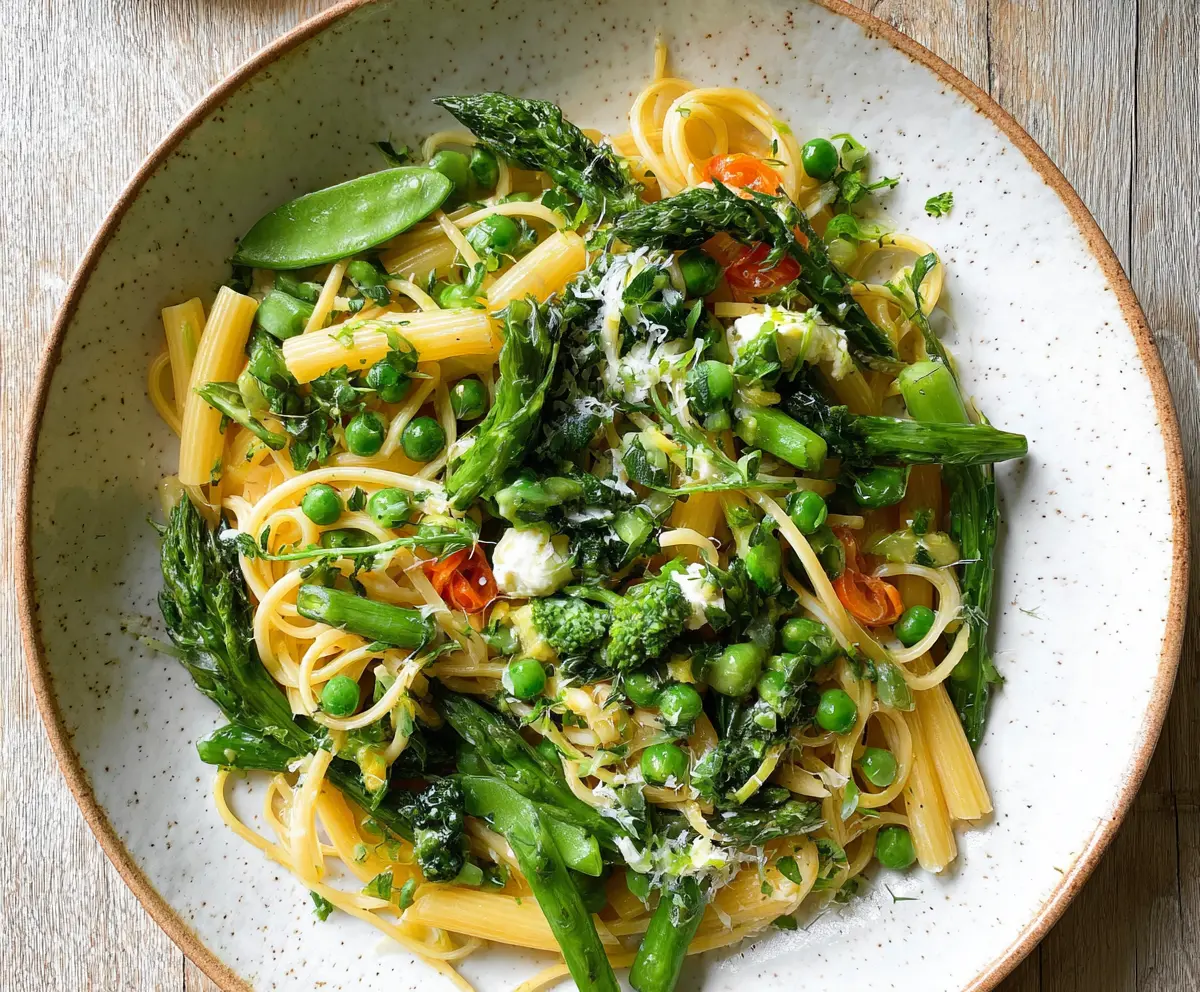
How to Make Spring Vegetable Pasta
Ingredients You’ll Need:
For the Pasta:
- 8 oz linguine or penne pasta
For the Vegetables:
- 1 cup fresh asparagus, trimmed and cut into 1-2 inch pieces
- 1 cup fresh green peas (or frozen peas, thawed)
- 1/2 cup fresh fava beans or broad beans, shelled (optional)
For the Sauce:
- 2 tbsp olive oil
- 2 cloves garlic, minced
- 1/4 cup fresh parsley, chopped
- 1/4 cup grated Parmesan cheese, plus extra for serving
- 1/2 lemon (zest and juice)
- Salt and black pepper, to taste
How Much Time Will You Need?
This Spring Vegetable Pasta recipe takes about 20-25 minutes in total. You’ll spend about 10-12 minutes preparing and cooking the ingredients, plus a little time for seasoning and serving. Perfect for a quick and delicious meal!
Step-by-Step Instructions:
1. Cook the Pasta:
Start by bringing a large pot of salted water to a boil. Once boiling, add the pasta and cook according to the package instructions until it is al dente—this usually takes around 8-10 minutes.
2. Blanch the Vegetables:
When your pasta has about 3 minutes left to cook, add the asparagus pieces to the boiling water. If you’re using fresh fava beans, add them in too. This will blanch them, keeping them tender but still bright and crunchy.
3. Drain and Reserve:
Once the pasta is cooked, drain the pasta and vegetables together in a colander. Be sure to save about 1/2 cup of the pasta cooking water in a separate bowl—this will help with the sauce later!
4. Sauté the Garlic:
In a large skillet, heat the olive oil over medium heat. Once hot, add the minced garlic and sauté for about 1 minute, or until it becomes fragrant. Be careful not to let it burn!
5. Add Peas:
Now, toss in the green peas and cook for 2-3 minutes, stirring occasionally until they are heated through.
6. Combine and Toss:
Add the drained pasta, asparagus, and fava beans to the skillet. Toss all the ingredients together until they are well mixed.
7. Season with Fresh Flavors:
Stir in the chopped parsley, lemon zest, and lemon juice. If the mixture seems a bit dry, gradually add some of the reserved pasta water until you reach your desired consistency.
8. Final Seasoning:
Season your pasta with salt and black pepper to taste. Give it a good stir to combine the flavors.
9. Add Cheese:
Remove the skillet from the heat and gently stir in the grated Parmesan cheese until it melts into the pasta.
10. Serve and Enjoy:
Dish out your delicious Spring Vegetable Pasta onto plates and top with extra Parmesan cheese if you like. Serve it warm and enjoy the burst of spring flavors!
This dish is a perfect balance of tender spring vegetables, fresh herbs, and a light lemony finish, all elevated by the richness of Parmesan cheese. Happy cooking!
Can I Use Frozen Vegetables Instead of Fresh?
Absolutely! Frozen peas are a great option since they’ve been blanched and retain their sweetness. You can also use frozen asparagus if fresh isn’t available, just be sure to adjust the cooking time slightly to avoid overcooking.
How Can I Make This Recipe Vegan?
To make it vegan, simply omit the Parmesan cheese or substitute it with a vegan cheese alternative. You can also try nutritional yeast for a cheesy flavor without dairy!
Can I Add Other Vegetables?
Yes! Feel free to mix in other seasonal vegetables you enjoy, such as bell peppers, zucchini, or spinach. Just adjust the cooking times accordingly to ensure everything is cooked perfectly.
How Do I Store Leftovers?
Store any leftovers in an airtight container in the fridge for up to 3 days. To reheat, simply warm it in a skillet over low heat, adding a splash of water or olive oil if it seems dry.