Golden, charred chicken thighs with crisp skin and a bright herb sauce are the kind of dinner that disappears fast. The chicken stays juicy because it starts with bone-in, skin-on thighs, and the chimichurri cuts through the richness with garlic, vinegar, and fresh herbs that wake up every bite. You get smoky, salty, tangy, and fresh all at once.
What makes this version work is the split chimichurri. Half of it goes onto the chicken for a short marinade, where the oil helps the seasoning cling and the vinegar lightly seasons the meat without turning it mushy. The other half stays reserved for serving, so you get that clean, punchy herb finish instead of a sauce that tastes tired from sitting on raw chicken.
The details below cover the part that matters most: how to get the skin crisp before the thighs finish cooking through, what the chimichurri should look like, and how to adapt the recipe if you’re cooking indoors instead of on the grill.
The chimichurri stayed bright and herby, and the chicken skin got shatter-crisp on the grill without drying out. I used the extra sauce on potatoes too and my husband asked if I could make it again next week.
Love the contrast of crispy chicken thighs and fresh chimichurri? Save this one for the next grill night.
The One Chimichurri Mistake That Flattens the Flavor
Chimichurri should taste sharp, green, and alive. The biggest mistake is blending it into a smooth puree and then letting it sit too long before serving. Once the herbs lose their texture, the sauce tastes heavier and less vibrant, and the garlic can take over in a harsh way.
For this recipe, blend just until the herbs are mostly broken down but still have some body. That little bit of texture matters because it clings to the chicken skin instead of sliding off, and it gives you those bright flecks of parsley and cilantro in every bite. Dividing the sauce before it touches the chicken also keeps the serving portion clean and fresh.
What Each Ingredient Is Actually Doing in These Chicken Thighs

- Bone-in, skin-on chicken thighs — These stay juicy on the grill and give you the crisp skin that makes the dish worth making. Boneless thighs work in a pinch, but you lose some of that rich, succulent texture and the skin won’t caramelize the same way.
- Flat-leaf parsley — This is the backbone of the sauce. Curly parsley is usable, but flat-leaf has a cleaner, deeper herb flavor and blends into a better texture.
- Cilantro — It adds a softer, greener note that rounds out the parsley. If you hate cilantro, replace it with more parsley and a little extra oregano; the sauce will be less complex but still works.
- Olive oil and red wine vinegar — These carry the herbs and create the classic chimichurri balance. Use a decent olive oil since it’s part of the finished sauce; the vinegar doesn’t need to be fancy, but it should taste bright and clean.
- Smoked paprika and garlic powder — These season the chicken directly and build a deeper base under the sauce. The smoked paprika helps echo the grill flavor even if you finish the thighs in a skillet or under the broiler.
Getting the Skin Crisp Before the Chimichurri Does Its Work
Blending the Sauce Without Turning It Muddy
Pulse the parsley, cilantro, garlic, olive oil, vinegar, oregano, and red pepper flakes until the sauce is mostly smooth but still looks speckled and green. If you run the processor too long, the herbs heat up and the sauce loses its fresh bite. Season it after blending, not before, because salt can make the herbs look wetter than they really are while you’re still adjusting the texture.
Marinating Just Long Enough
Brush half the chimichurri over the seasoned thighs and let them sit for 30 minutes. That short marination gives you surface flavor without softening the skin too much. If the chicken sits in the sauce for hours, the vinegar starts working against you and the skin won’t crisp as well.
Grilling to a Deep Golden Finish
Start skin-side down on a preheated, oiled grill. You’re listening for an active sizzle and watching for the skin to release on its own when it’s ready to flip. If it sticks, it’s not ready yet; forcing it will tear the skin and leave the best part behind on the grates. Once flipped, cook until the thickest part reaches 165°F and the juices run clear.
Resting and Saucing at the End
Let the thighs rest for 5 minutes before spooning on the reserved chimichurri. That pause keeps the juices in the meat instead of spilling onto the plate. The sauce goes on at the end so the herbs stay bright and the garlic stays punchy against the hot chicken.
Three Ways to Work This Recipe Around Your Kitchen
Oven-Finished Chimichurri Chicken Thighs
If you don’t want to grill, sear the thighs skin-side down in a hot oven-safe skillet until the skin starts to crisp, then finish them in a 425°F oven. You’ll lose a little of the smoky edge, but you still get crisp skin and juicy meat. Spoon the reserved chimichurri over the top after resting.
Dairy-Free and Naturally Gluten-Free
This recipe already fits both needs as written, which makes it handy for mixed-company dinners. Just check your spices and vinegar for any fillers if you’re using a packaged blend. The texture and flavor stay the same, so there’s no compromise built into the swap.
Using Boneless Chicken Thighs
Boneless thighs cook faster and are easier to slice for sandwiches or bowls, but they won’t give you the same dramatic crispy skin. Start checking them a few minutes early because they can go from juicy to dry faster than bone-in thighs. Keep the chimichurri reserved until the end so the sauce stays fresh.
Making It Milder for Heat-Sensitive Eaters
Cut the red pepper flakes in half or leave them out completely if you want the herb and garlic notes to lead. The sauce will still taste balanced because the vinegar keeps it lively. You can always pass extra flakes at the table for people who want more heat.
Storage and Reheating
- Refrigerator: Store cooked chicken in an airtight container for up to 4 days. The skin softens in the fridge, but the meat stays flavorful.
- Freezer: The chicken freezes well for up to 2 months, though the chimichurri is best made fresh. Freeze the chicken separately and make a new batch of sauce when you serve it.
- Reheating: Warm the chicken in a 325°F oven until heated through. Avoid the microwave if you want to keep what’s left of the skin intact, because it turns rubbery fast.
Answers to the Questions Worth Asking
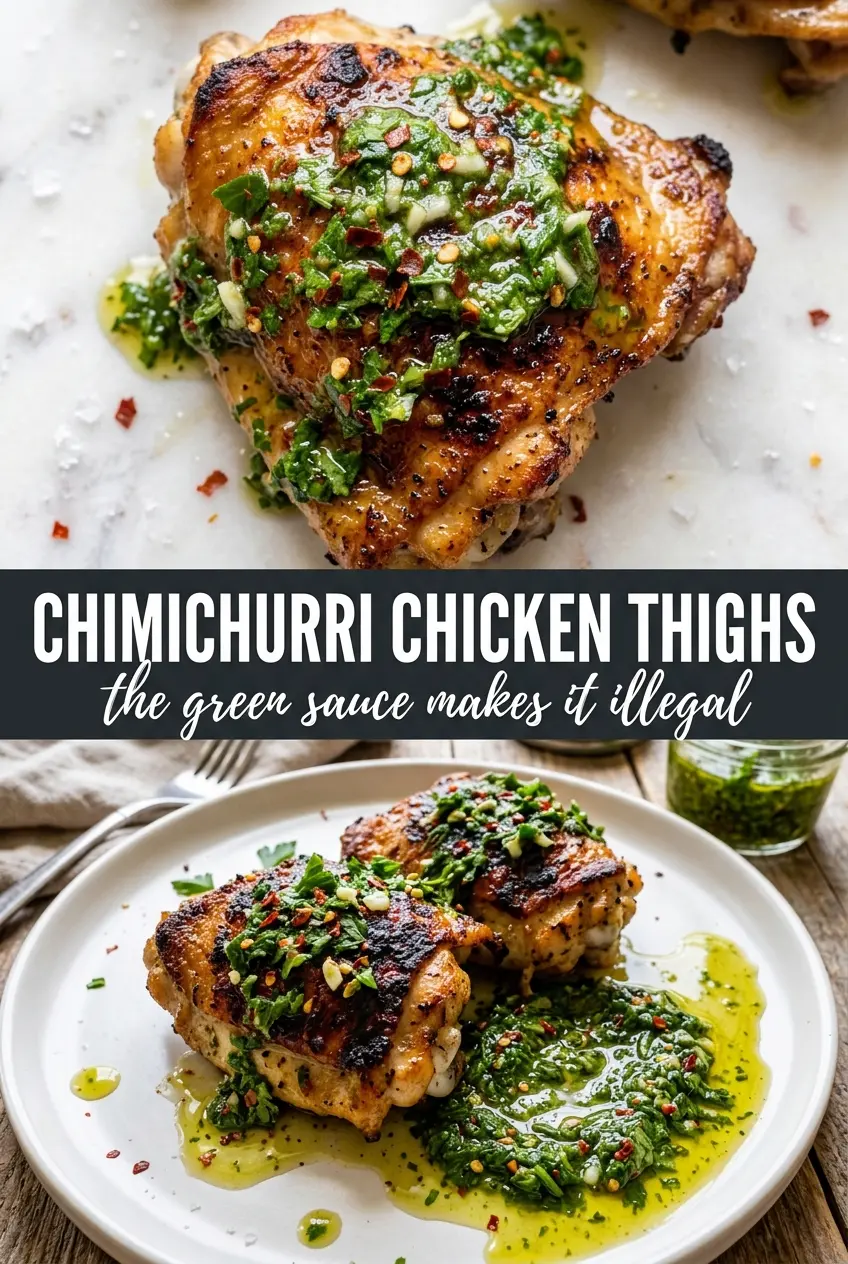
Chimichurri Chicken Thighs
Ingredients
Equipment
Method
- Blend parsley, cilantro, garlic, olive oil, red wine vinegar, oregano, and red pepper flakes in a food processor until mostly smooth but still textured. Scrape down as needed so the mixture looks vibrant green with visible herb specks.
- Season the chimichurri with salt and pepper to taste, then divide it in half. Set aside one half for marinating and reserve the other for drizzling.
- Season chicken thighs with salt, pepper, garlic powder, and smoked paprika. Coat evenly so the skin looks lightly speckled with spices.
- Brush the chicken with half the chimichurri and marinate for 30 minutes. The surface should turn greener where the sauce clings to the skin and seasonings.
- Preheat the grill to medium-high and oil the grates. A brief sizzle when you place chicken down is your cue the grates are ready.
- Grill chicken skin-side down for 7-8 minutes until the skin is crispy and golden. Look for a deep golden color and visible char along the edges.
- Flip and grill for another 12-15 minutes until the internal temperature reaches 165°F. The juices should run clear and the skin should remain crisp with caramelized char.
- Rest the chicken for 5 minutes before serving. The meat should relax and stay juicy while the charred skin sets.
- Plate the chicken and drizzle the reserved chimichurri generously over the top. Emerald sauce should pool around the base and seep into the char marks.
- Serve with extra chimichurri on the side. The finishing sauce should look fresh, herb-speckled, and glossy.