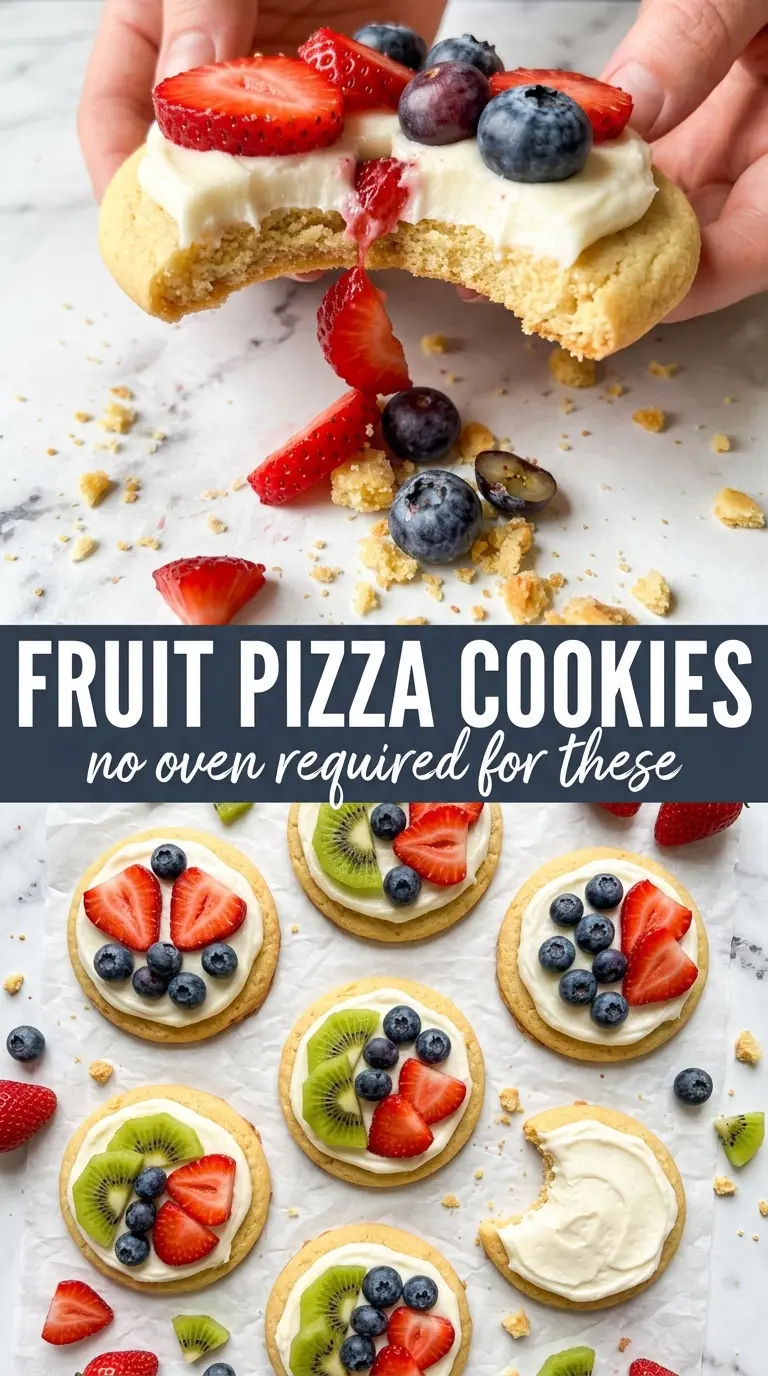
Soft sugar cookie rounds, tangy cream cheese frosting, and bright fresh fruit make these fruit pizza cookies the kind of dessert people hover around until the tray is empty. They’ve got the look of a bakery cookie and the ease of a homemade treat, but the best part is the contrast: crisp-edged cookies, cool creamy topping, and juicy fruit all in one bite.
The trick is keeping the cookies sturdy enough to hold the topping without turning dry. That means baking them just until the edges set and the centers still look pale, then letting them cool all the way before you add the frosting. The apricot glaze does more than make them shiny; it helps the fruit look fresh longer and keeps the top from drying out too fast.
Below, I’ll walk you through the little details that matter, from getting the cookies evenly shaped to arranging the fruit so the finished tray looks as good as it tastes.
I loved how the cookies stayed soft but still held the cream cheese frosting without getting soggy. The apricot glaze made the fruit look fresh for hours, and the blueberry-kiwi combo was a big hit at our potluck.
These fruit pizza cookies are the kind you want on a pretty platter when you need a colorful dessert that still tastes homemade.
The Part That Keeps Fruit Pizza Cookies from Going Soft
The biggest mistake with fruit pizza cookies is treating them like a frosted sugar cookie and not a miniature tart. If the cookies bake too long, they turn dry and crumbly under the topping. If they bake too little, the frosting softens the centers and the whole thing loses that clean bite.
Pull them when the edges are set and just barely golden, then leave them alone until they’re fully cool. That cooling time matters because even warm cookies will melt the frosting and blur the fruit. A sturdy base is what lets these hold up on a dessert tray instead of becoming a sticky mess.
- Butter — Softened butter gives the cookies their tender, bakery-style crumb. Cold butter won’t cream properly, and melted butter makes the dough spread too much.
- All-purpose flour — This is what keeps the rounds thick enough to support the frosting. Don’t swap in cake flour here; it’s too soft for the job.
- Cream cheese — Full-fat cream cheese gives the frosting its tang and structure. Reduced-fat versions can work, but the topping tends to be looser and less stable.
- Apricot jam — This is the glaze that makes the fruit shine and helps it stay fresh-looking. If you don’t have apricot, warm seedless peach preserves work the same way.
What Each Ingredient Is Actually Doing in This Recipe
- Primary ingredient (the star) — Quality matters most. Choose the best you can find.
- Cooking medium (oil, butter, or broth) — This carries flavors and prevents dryness.
- Seasonings (salt, pepper, spices, herbs) — Layer flavors so nothing overpowers. Build depth gradually.
- Aromatics (garlic, onion, herbs) — Cook with fat to bloom flavors. Become the foundation.
- Supporting ingredients — Complement the main ingredient without overpowering it.
- Sauce or liquid (if applicable) — Brings flavors together. Balance richness with acid.
- Acid (lemon, vinegar, wine, or other) — Brightens and prevents flat-tasting results.
- Final finish (garnish, glaze, or sauce) — Prevents one-dimensional taste and adds visual appeal.
Building the Cookie, Frosting, and Fruit Layers in the Right Order
Creaming the Butter and Sugar
Beat the butter and sugar until the mixture turns pale and fluffy. That air you whip in now gives the cookies their lift and keeps them from baking up dense. If the butter is too cold, the mixture will look grainy and stay heavy; if it’s too warm, the cookies spread before they set.
Shaping the Rounds
Scoop the dough into 24 even portions and flatten them into 3-inch rounds on parchment-lined sheets. Even sizing matters here because small rounds overbake fast while larger ones can stay doughy in the middle. Keep a little space between them, since they’ll spread just enough to need room.
Baking to a Tender Set
Bake until the edges are just set and only lightly golden. The centers should still look soft when they come out of the oven because they finish setting as they cool. If you wait for deep color, the cookies lose the soft texture that makes them work so well under frosting.
Frosting and Decorating
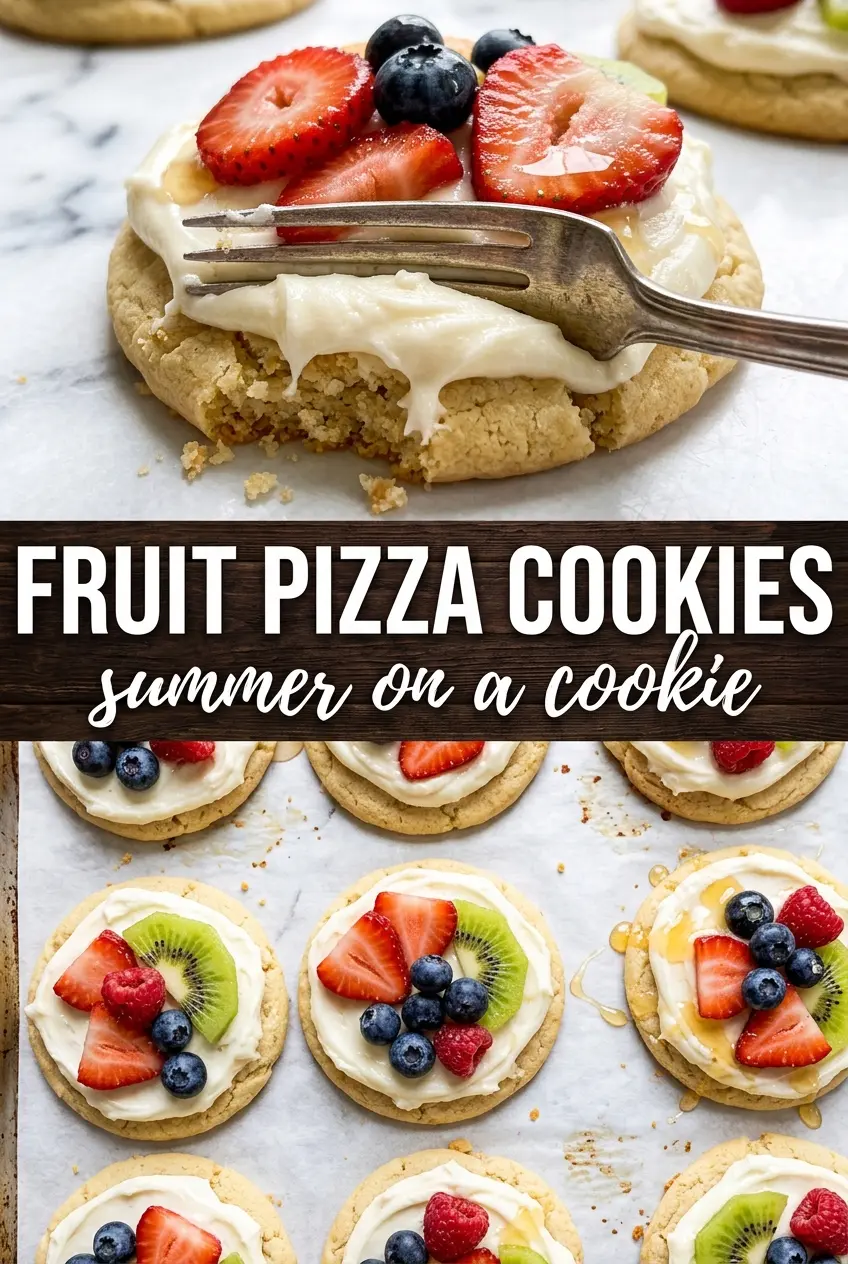
Beat the cream cheese, powdered sugar, and vanilla until smooth, then spread it over completely cooled cookies. Start with a thin layer so the frosting doesn’t squeeze over the edges when you add fruit. Arrange the fruit in tight patterns and press it lightly into the frosting so it stays put when you brush on the glaze.
The Final Shine
Warm the apricot jam just enough to loosen it, then brush a thin coat over the fruit. Too much glaze can pool and slide off; a light layer gives you shine without making the top wet. Serve them soon after assembling for the freshest texture, especially if you’ve used berries that release juice quickly.
How to Change These Fruit Pizza Cookies Without Ruining the Texture
Make Them Gluten-Free
Use a 1:1 gluten-free all-purpose blend that includes xanthan gum. The dough may feel a little softer, so chill it for 15 to 20 minutes before shaping if needed. You’ll get a slightly more delicate cookie, but it still holds the frosting well.
Swap the Fruit for What’s in Season
Strawberries, blueberries, kiwi, raspberries, and mandarin segments are easy to arrange and don’t bleed too badly. If you use softer fruit like peaches or mango, pat them dry first so the frosting doesn’t loosen. Avoid very juicy fruit unless you’re serving the cookies the same day.
Make Them Ahead for a Party
Bake the cookies and mix the frosting up to a day ahead, then store them separately. Assemble with fruit within a few hours of serving for the best look and texture. If you frost too early, the cookies soften before the fruit even goes on.
Storage and Reheating
- Refrigerator: Store assembled cookies for up to 2 days. The fruit stays best on day one, and the cookies will soften a little under the frosting.
- Freezer: Freeze the baked cookies without frosting or fruit for up to 2 months. Thaw at room temperature before topping; frosted cookies and fresh fruit don’t freeze well.
- Reheating: These aren’t meant to be reheated. If the cookies were chilled, let them sit out for 10 to 15 minutes so the frosting loses its cold edge before serving.
Answers to the Questions Worth Asking
Fruit Pizza Cookies
Ingredients
Equipment
Method
- Beat butter and granulated sugar until fluffy, scraping the bowl as needed for even creaming.
- Add eggs one at a time, then mix in vanilla extract until smooth and thick.
- Add all-purpose flour, baking powder, and salt, then mix just until a soft dough forms.
- Scoop dough into 24 balls and flatten each into 3-inch rounds on parchment-lined sheet pans.
- Bake at 375°F for 10-12 minutes, until edges are set and just barely golden.
- Cool the cookies completely on the pan for best frosting spread.
- Beat cream cheese, powdered sugar, and vanilla extract until smooth, then transfer to an even-spreading consistency if needed.
- Spread frosting over each fully cooled cookie so the sides show a little frosting edge.
- Arrange the fresh fruit decoratively on each cookie in a vibrant flower pattern, using different colors per cookie.
- Warm apricot jam and brush lightly over the fruit, then serve immediately or refrigerate for later enjoyment.