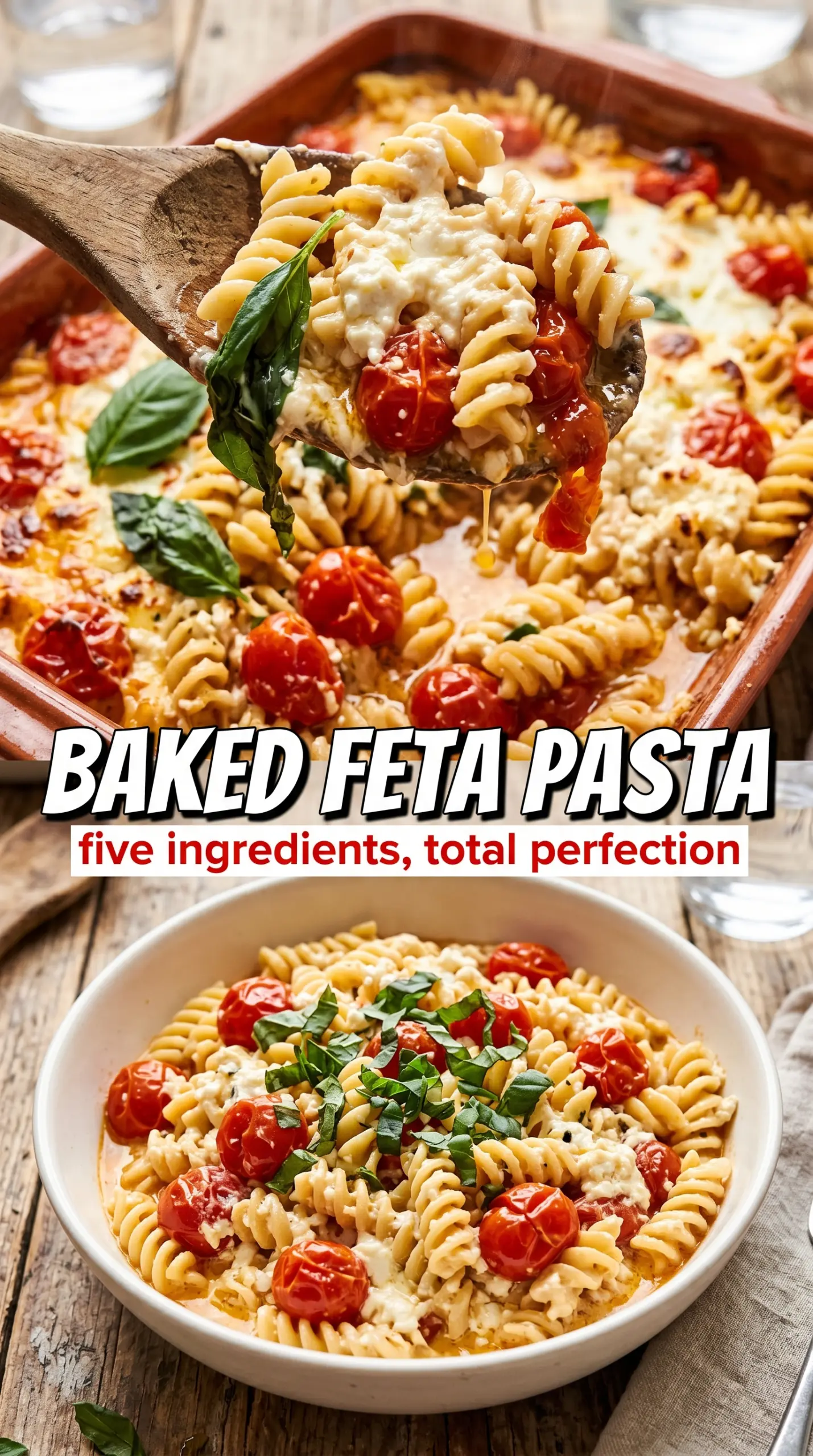
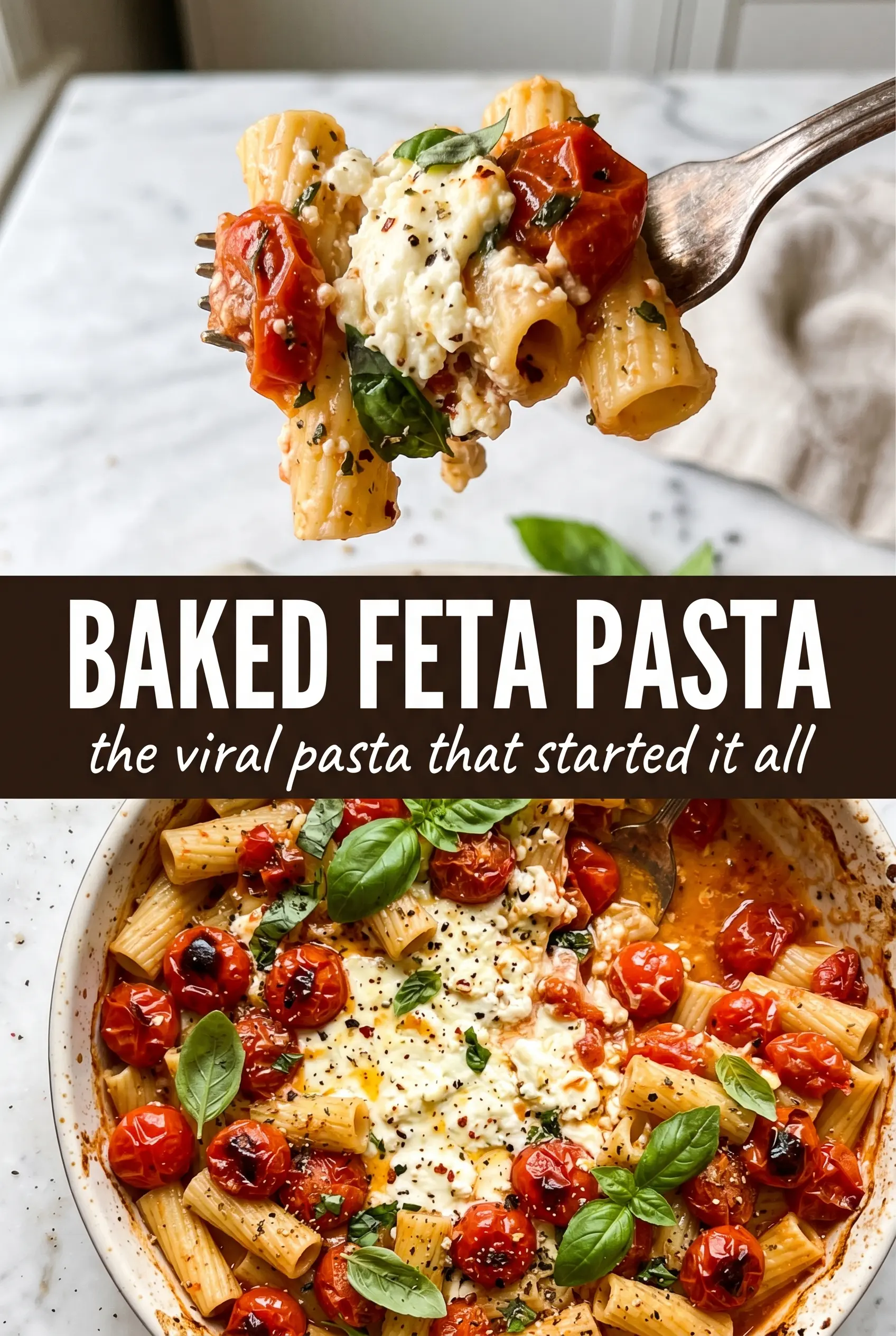
Baked feta pasta turns a block of cheese and a tray of tomatoes into a glossy, salty sauce that clings to every curve of the pasta. The feta softens just enough to smash into the roasted tomatoes, and the tomatoes do the heavy lifting by collapsing into sweet, garlicky juices that carry the whole dish. What you end up with is creamy without relying on cream, rich without feeling heavy, and bright enough that a handful of basil at the end actually matters.
The trick here is balance. The feta needs enough heat to brown at the edges and lose its chalky center, but not so much that it dries out. The tomatoes need room to burst instead of steaming in their own liquid, which is why a baking dish with some breathing room works better than cramming everything into a smaller pan. A little pasta water at the end finishes the sauce and helps it coat the noodles instead of sitting in a puddle underneath them.
Below, I’ve included the timing cue that keeps the feta creamy, the ingredient swaps that still taste good, and the small adjustments that help this pasta come out glossy instead of dry.
The feta got golden on the edges and the tomatoes burst into a sauce that coated the pasta perfectly. I added a splash of pasta water at the end and it turned silky instead of clumpy.
Baked feta pasta with burst tomatoes is worth pinning for nights when you want a creamy dinner from one baking dish.
The Difference Between Roasted Tomatoes and Watery Pasta Sauce
What goes wrong with baked feta pasta is usually the pan itself. If the tomatoes are packed too tightly, they steam instead of roast, and you end up with pale feta sitting in a shallow tomato bath that never gets concentrated enough to taste like much. A wider baking dish gives the tomatoes space to blister, burst, and reduce into a thicker sauce before the pasta ever hits the pan.
The other mistake is stopping the bake too soon. The feta should look soft in the center, but it needs those golden edges for flavor, and the tomatoes should have wrinkled skins and collapsed enough that their juices have mixed with the oil. That’s the point where the sauce tastes like more than tomato and cheese; it tastes rounded, roasted, and finished.
What Each Ingredient Is Actually Doing in This Dish
- Feta cheese — This is the backbone of the sauce. A block works better than crumbled feta because it softens into a creamier center instead of drying out. Use a full-fat block if you can; low-fat feta tends to go grainy and tight.
- Cherry tomatoes — They bring sweetness, juice, and acidity all at once. Smaller tomatoes burst more reliably, which is what gives the sauce its body. If you only have grape tomatoes, they’ll work, but they usually need an extra minute or two to collapse.
- Olive oil — Don’t skimp here. The oil helps the tomatoes roast instead of dry out and carries the flavor from the garlic and pepper flakes through the sauce. Use a good-tasting olive oil, since it doesn’t get cooked long enough to disappear.
- Garlic — Smashing the cloves keeps them from burning and lets them melt into the sauce as they roast. Thinly sliced garlic can scorch before the tomatoes are done, which gives the whole dish a bitter edge.
- Pasta water — This is what turns the roasted mixture into a sauce that coats pasta instead of clumping around it. The starch helps it emulsify, so keep at least a cup back before draining.
Building the Sauce in the Pan, Not in a Pot
Setting Up the Bake
Put the feta right in the center of the baking dish and surround it with the tomatoes and smashed garlic. The feta should be nestled in but not buried, and the tomatoes need room around it so they can blister rather than stew. Drizzle everything with olive oil until the tomatoes look glossy, then season before it goes into the oven. If the pan looks dry before baking, it’ll taste dry after baking too.
Watching for the Right Roast
After about 30 to 35 minutes, the tomatoes should have split and the feta should have a little color on the edges. If the tomatoes are still holding their shape and the feta looks chalky in the middle, it needs more time. If the pan smells sharply browned or the cheese is drying out, it went a little too far. Pull it when the tomatoes have given up their juices and the feta can be smashed with a fork.
Turning It into Sauce
Use a fork to break up the feta and stir it directly into the tomatoes and oil. The mixture should look loose and rustic at first, then turn creamy as you work it together. Add a splash of pasta water if it seems thick or oily, because the goal is a sauce that clings to the pasta, not one that sits in a slick on top. Stir in the hot pasta while everything is still warm so the sauce coats evenly.
Finishing for the Best Texture
Toss until every piece of pasta is coated and the sauce looks glossy. If the pasta seems tight or dry, add a little more pasta water instead of more oil; water and starch help the sauce settle into the noodles without turning greasy. Finish with basil and a drizzle of olive oil once it’s in the serving bowl so the herbs stay fresh and bright.
How to Adapt This for Different Kitchens and Diets
Make It Gluten-Free
Use your favorite gluten-free short pasta and cook it just to al dente. Gluten-free pasta can get soft fast, so toss it with the sauce immediately and don’t let it sit in the pot after draining. The sauce itself doesn’t need any changes.
Make It Dairy-Free
Swap in a block-style dairy-free feta that softens when baked. It won’t taste exactly the same, but the roasted tomatoes, garlic, and olive oil still carry the dish. If your substitute doesn’t brown well, keep roasting until the tomatoes have fully collapsed so the sauce still has enough depth.
Add Protein Without Losing the Sauce
Stir in shredded rotisserie chicken or white beans at the end once the sauce is finished. Add-ins work best after the feta and tomatoes are fully smashed, so the sauce stays smooth and doesn’t get crowded before it has a chance to emulsify.
Storage and Reheating
- Refrigerator: Store leftovers in an airtight container for up to 4 days. The sauce thickens as it chills, so expect the pasta to look a little tighter the next day.
- Freezer: It freezes, but the texture of the feta changes and the pasta softens after thawing. For the best result, freeze only if you don’t mind a less creamy finish.
- Reheating: Warm it gently on the stove or in the microwave with a splash of water to loosen the sauce. High heat can make the feta separate and turn the pasta dry before the center heats through.
Answers to the Questions Worth Asking
Baked Feta Pasta
Ingredients
Equipment
Method
- Preheat the oven to 400°F, then place the feta in the center of a 9x13 baking dish.
- Surround the feta with cherry tomatoes and smashed garlic, then drizzle with olive oil and season with red pepper flakes, salt, and cracked black pepper.
- Bake for 30-35 minutes until the feta is golden at the edges and the tomatoes have burst and released their juices (look for glossy tomato juices around the feta).
- Cook the penne or rotini in well-salted boiling water until al dente, then reserve 1 cup pasta water before draining.
- Use a fork to smash the baked feta, then stir it into the roasted tomatoes until creamy and glossy; add pasta water as needed.
- Add the cooked pasta and toss to coat, then drizzle with extra olive oil and scatter fresh basil over the top.