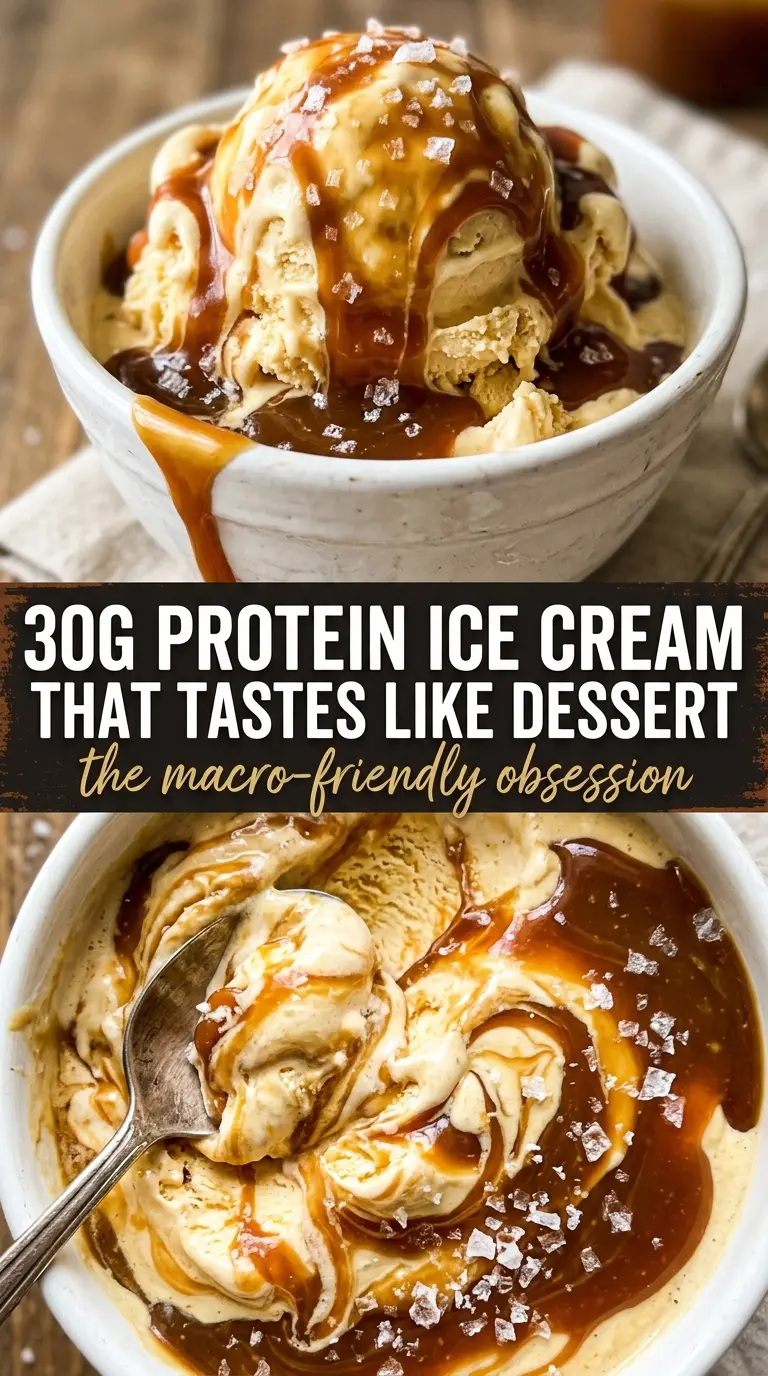
Salted caramel cottage cheese ice cream turns out rich, scoopable, and surprisingly close to the real thing when you blend it long enough. The flavor lands like caramel fudge with a clean salty edge, and the texture freezes into something closer to soft-serve than icy protein fluff if you handle the base the right way. It’s the kind of dessert that tastes indulgent enough for a late-night bowl, but still leaves you feeling like you made a smart move.
The key is starting with full-fat cottage cheese and blending until every last curd disappears. If the base isn’t fully smooth, the freezer will magnify every grainy spot. A little brown sugar deepens the caramel note instead of making it taste flat, and the sea salt keeps the sweetness from turning heavy. Cream cheese isn’t mandatory, but it adds a rounder, more custard-like finish that makes the whole thing feel less like a shortcut and more like a proper frozen dessert.
Below, I’ve included the small details that matter most: how long to blend, when to taste for salt, and how to keep the texture scoopable after freezing. Those are the differences between a disappointing icy tub and a dessert you’ll actually want to make again.
I was shocked by how smooth this turned out after freezing. The caramel flavor came through beautifully, and the flaky salt on top made it taste like a real ice cream shop dessert, not a cottage cheese recipe.
Like this salted caramel cottage cheese ice cream? Save it for the nights when you want a creamy, high-protein dessert with a real caramel finish.
The Freezer Mistake That Makes Cottage Cheese Ice Cream Turn Grainy
Most of the disappointment with cottage cheese ice cream comes from stopping the blender too soon. Tiny curds that seem harmless when the mixture is loose become sharp, icy bits after freezing, and the texture goes from creamy to chalky fast. This recipe only works when the base is blended until it looks glossy and completely uniform, with no visible curds at the edges of the blender jar.
The other problem is overfreezing the base without enough sweetness and fat to keep it pliable. Brown sugar and caramel sauce help lower the freezing point a bit, which keeps the finished ice cream softer. That’s why this version scoops better than a straight cottage cheese-and-protein-powder blend, which tends to freeze into a brick.
- Blend longer than you think you need to — two full minutes is the minimum. If your blender struggles, stop once to scrape down the sides, then keep going until the mixture looks like a thick caramel milkshake.
- Use full-fat cottage cheese — the extra fat matters here. Low-fat cottage cheese can work, but the finished texture is less creamy and more icy.
- Don’t skip the salt — this is a salted caramel dessert, not just caramel ice cream. The salt sharpens the caramel flavor and keeps the sweetness from tasting flat.
What Each Ingredient Is Actually Doing in the Blender
- Full-fat cottage cheese — this is the base, and quality matters. Use a brand you already like eating plain because its flavor comes through before freezing. If you only have small-curd cottage cheese, that’s fine; it blends more easily than large-curd versions.
- Caramel sauce — this gives the ice cream its signature flavor and helps with scoopability. A thicker sauce is better than a thin syrup because it adds body instead of watering down the base.
- Brown sugar — this deepens the caramel note and keeps the sweetness from tasting one-dimensional. If you want to reduce sugar, cut it back a little, but don’t remove it completely or the texture will freeze harder.
- Vanilla extract — vanilla rounds out the dairy flavor and makes the caramel taste fuller. Use real extract here; imitation vanilla can taste thin after freezing.
- Sea salt — this is what makes the caramel taste intentional instead of just sweet. Fine sea salt blends in best, while flaky salt is better reserved for the top.
- Cream cheese — optional, but worth using if you want a richer, smoother finish. It adds a little tang and helps the base taste more like traditional ice cream.
The Short Blend, Freeze, and Scoop Window That Matters Most
Building the Base Until It Looks Silky
Add the cottage cheese, caramel sauce, brown sugar, vanilla, sea salt, and cream cheese to the blender. Blend on high until the mixture is completely smooth and glossy, stopping to scrape down the sides if needed. Don’t rush this part; if the base still looks speckled or grainy, the freezer won’t hide it. Taste it before freezing and adjust the caramel or salt now, because cold mutes both.
Freezing Without Turning It Into a Brick
Pour the blended mixture into a freezer-safe container and smooth the top. Freeze for about 4 hours, or until it’s firm enough to scoop but not rock solid. If your container is shallow and wide, it freezes more evenly and scoops better than a deep, narrow tub. Longer freezing is fine, but expect a firmer texture and give it extra time on the counter before serving.
Serving It at the Right Softness
Let the ice cream sit at room temperature for about 5 minutes before scooping. That short rest makes a big difference, especially if you froze it in a colder part of the freezer. Top with flaky sea salt and a drizzle of caramel right before serving so the salt stays crisp and the sauce doesn’t sink in. If the surface looks icy, scrape and stir the top layer once before scooping to bring back some creaminess.
How to Adjust the Sweetness, Salt, or Dairy Without Losing the Creamy Texture
Extra-salty, bakery-style finish
Use the full 1/2 teaspoon of sea salt in the base and finish with a generous pinch of flaky salt. That stronger salt hit makes the caramel taste deeper and more grown-up, like the salted caramel desserts you get from a good bakery.
Lower-sugar version
Reduce the brown sugar to 1 tablespoon and use a strongly flavored caramel sauce so the dessert still tastes like caramel. The ice cream will freeze a little firmer, so let it sit closer to 7 minutes before scooping.
Dairy-free version
Swap in a thick dairy-free yogurt or plant-based cottage cheese alternative if you have one that blends smoothly. The texture won’t be quite as rich, and the flavor will be a little less tangy, but the caramel and salt still carry the dessert.
Make it more protein-forward
If you want a stronger protein boost, add a scoop of neutral or vanilla protein powder, then blend and taste again. You may need a little extra caramel sauce to keep the flavor balanced, and the finished texture may be slightly firmer.
Storage and Reheating
- Refrigerator: Not recommended. This is a frozen dessert, and the texture turns loose and milky once it thaws.
- Freezer: Keeps well for up to 2 weeks in a sealed container. After that, the edges start to pick up freezer flavor and the texture gets icier.
- Reheating: Don’t microwave it. Set the container on the counter for 5 to 10 minutes, then scoop. If it’s been frozen solid, run your scoop under warm water first for cleaner portions.
Answers to the Questions Worth Asking
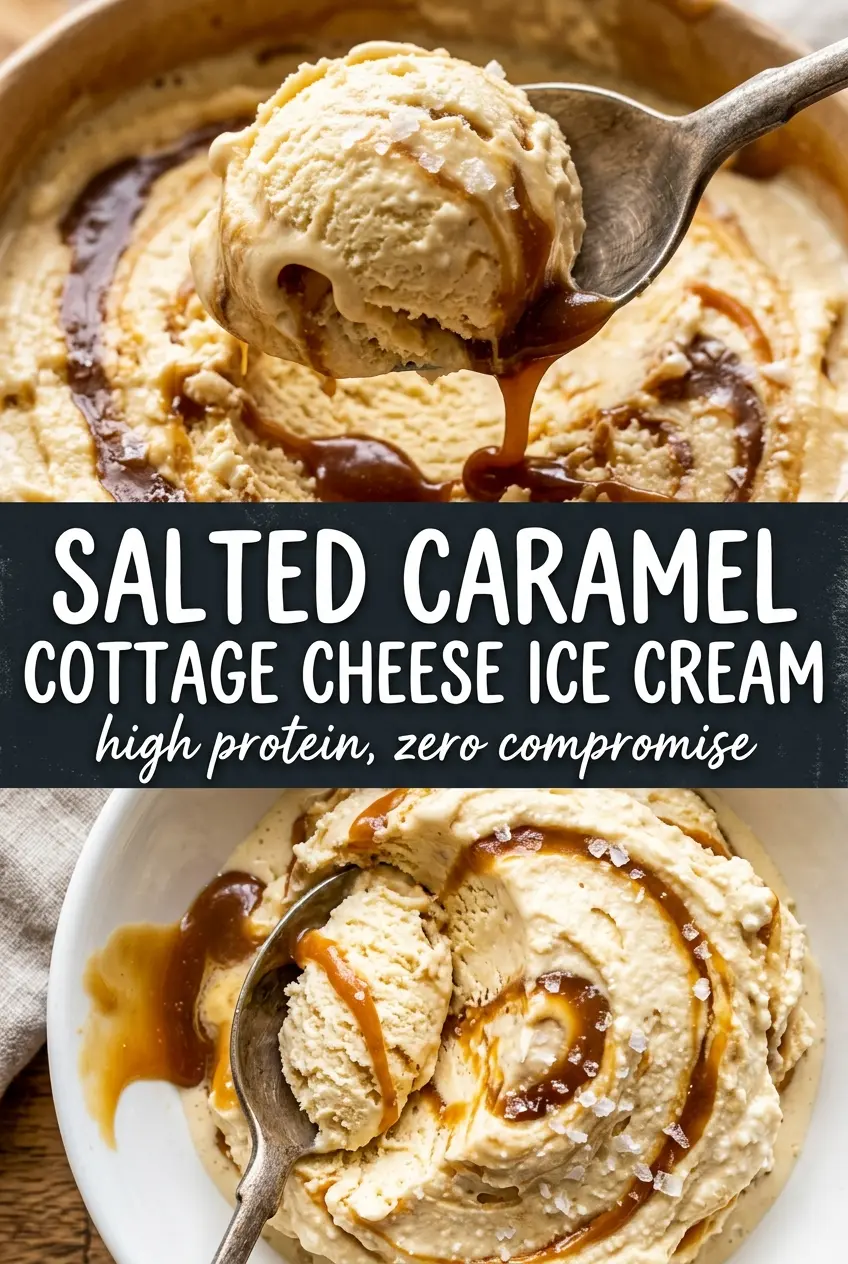
High-Protein Salted Caramel Cottage Cheese Ice Cream
Ingredients
Equipment
Method
- Blend full-fat cottage cheese, caramel sauce, brown sugar, vanilla extract, sea salt, and cream cheese until completely smooth, blending at least 2 minutes so no lumps remain (visual cue: the mixture looks uniformly caramel-colored and silky).
- Taste the base and adjust caramel sauce or sea salt to your preference (visual cue: it should taste sweet-salty enough to stand up after freezing).
- Pour the blended mixture into a freezer-safe container and freeze for 4 hours (visual cue: the surface firms and the container is fully cold).
- Remove from the freezer and let sit for 5 minutes before scooping (visual cue: the texture softens slightly at the edges so a spoon slides in).
- Drizzle with extra caramel sauce and add a pinch of flaky sea salt before serving (visual cue: a golden caramel swirl and tiny salt flakes sit on top).