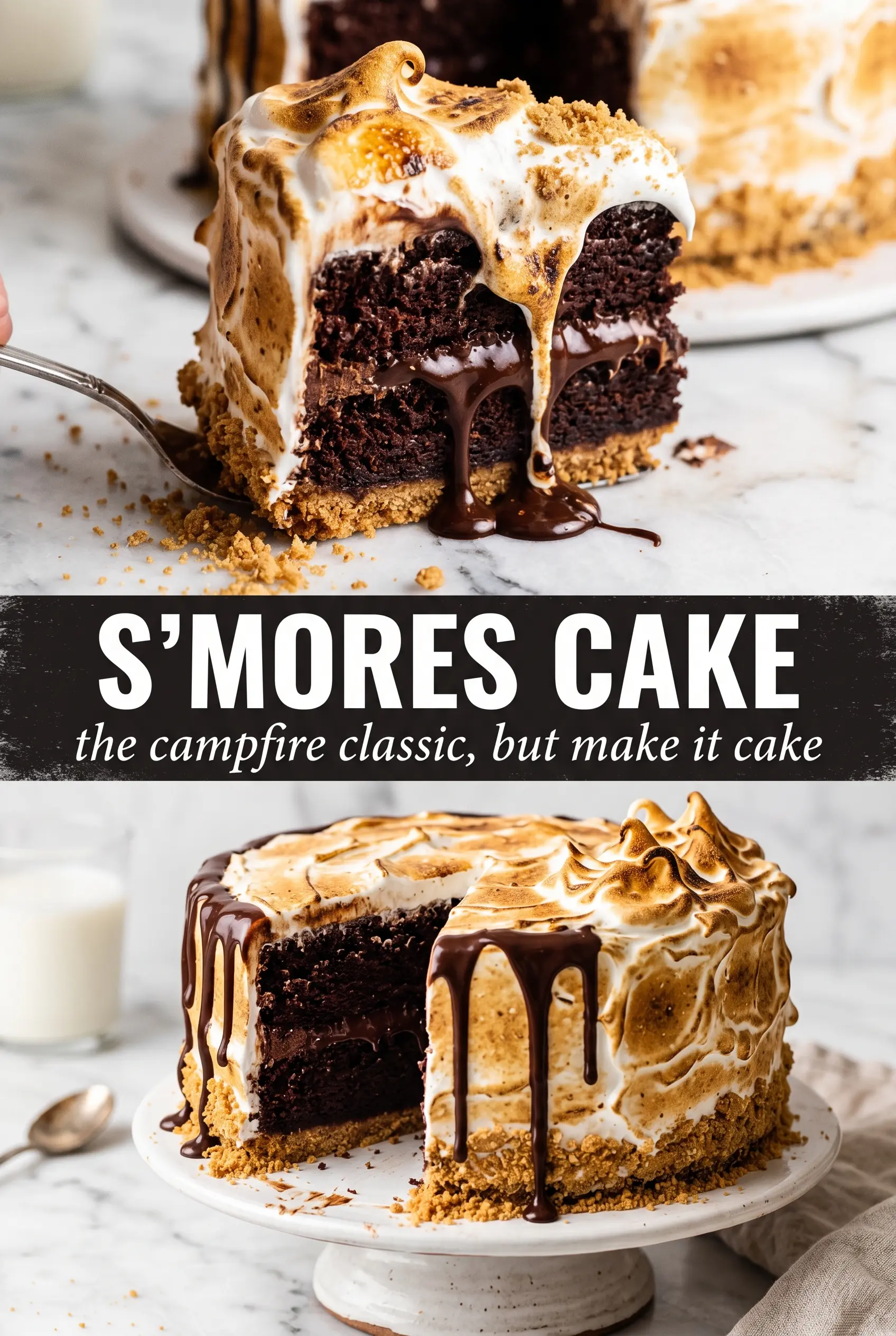
Chocolate cake, toasted marshmallow meringue, and a glossy drip of ganache turn this s’mores cake into a layer cake that tastes like the best part of a campfire dessert, only cleaner and a lot more dramatic. The cake stays soft and deep chocolatey, the graham crumbs add that familiar sandy crunch, and the torched peaks on top bring the whole thing home.
The trick is building enough contrast so every bite tastes like s’mores, not just chocolate cake with frosting. Strong coffee deepens the cocoa without making the cake taste like coffee, buttermilk keeps the crumb tender, and the meringue gets cooked gently before whipping so it turns smooth, stable, and glossy instead of grainy. That little bit of care is what keeps the finished cake from leaning too sweet or collapsing under its own weight.
Below you’ll find the small details that matter most here: how to keep the ganache pourable, how to get the meringue to hold tall swirls, and how to toast the top without scorching the sugar.
The cake layers baked up flat and tender, and the meringue held its shape even after I torched it. The graham cracker crumbs on the bottom made it taste like an actual s’more instead of just a chocolate cake with frosting.
Like this s’mores cake? Save it to Pinterest for the chocolate ganache drip, torched marshmallow top, and graham cracker crumb finish.
The Secret to Keeping the Layers Moist Without Making the Cake Heavy
The first place this recipe can go sideways is in the cake itself. Too many s’mores cakes lean dense because the batter gets overmixed or the liquid ratio is off, and then the ganache and meringue sit on top of a sturdy brick instead of a soft crumb. Here, the strong coffee thins the cocoa batter just enough to bake up moist, while the oil keeps the texture supple even after chilling and assembling.
Use the buttermilk as written. Its acidity works with the baking soda for lift, and it also softens the cocoa flavor so the cake tastes rich instead of dry or flat. If your layers dome a little, level them once they’re cool; flat layers stack cleaner, and that matters when you’re working with a filling and a tall frosting.
What Each Ingredient Is Actually Doing in This Cake
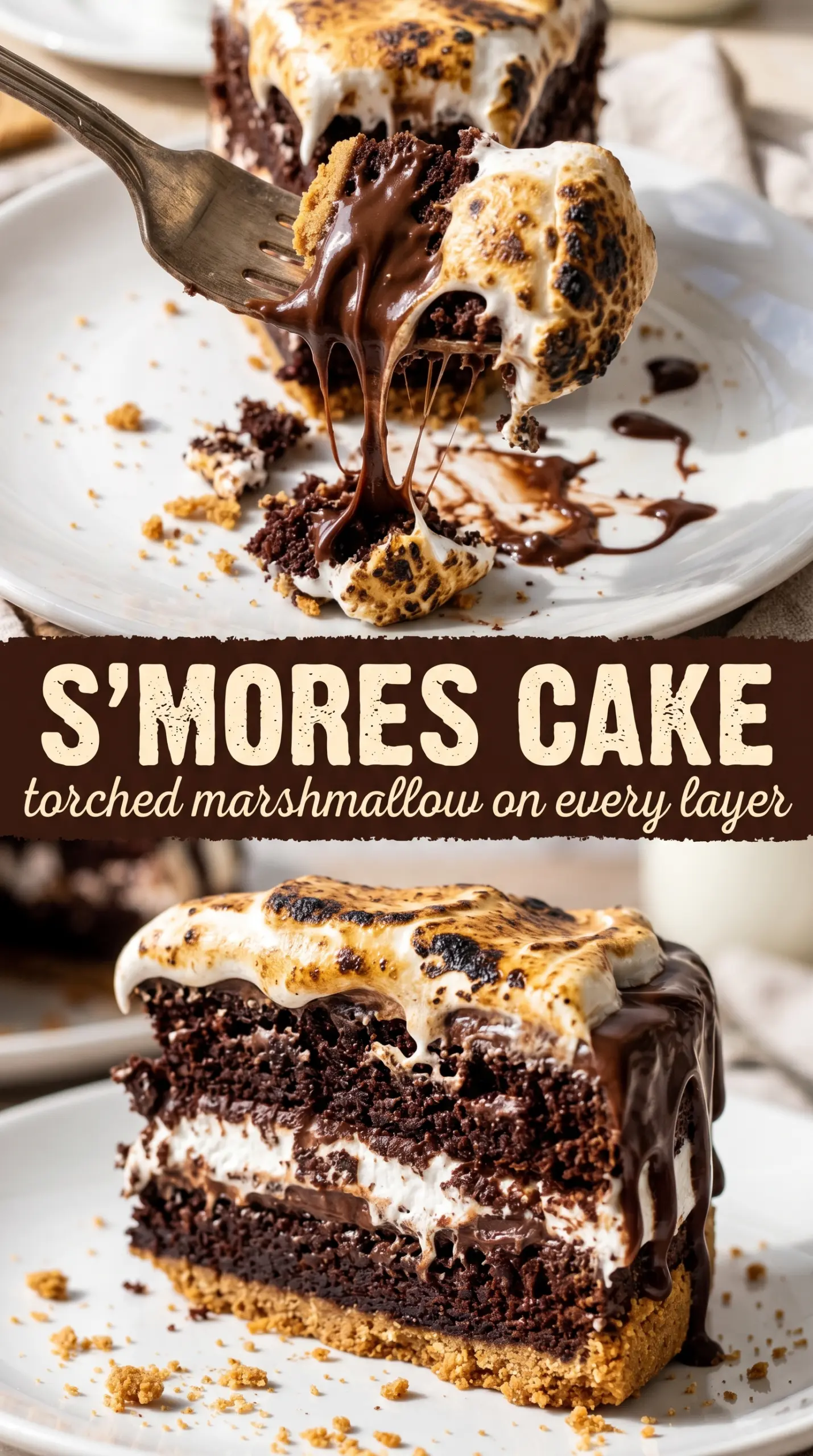
- Unsweetened cocoa powder — This gives the cake its deep chocolate backbone. Natural cocoa works well here because the baking soda and buttermilk are already doing the leavening work. Use a good-quality cocoa if you can; this is one place where cheap cocoa tastes thin in the final cake.
- Strong brewed coffee — It doesn’t make the cake taste like coffee. It sharpens the chocolate and keeps the crumb from tasting sugary. If you don’t want to use coffee, hot water will work, but the cake won’t have the same depth.
- Buttermilk — This is what keeps the layers tender and helps the cake rise cleanly. A plain milk swap won’t give the same texture. If you’re out of buttermilk, stir 1 tablespoon lemon juice or vinegar into a cup of milk and let it sit for 10 minutes.
- Egg whites — They’re the structure in the marshmallow meringue. The gentle double-boiler step dissolves the sugar before whipping, which is what gives you that smooth, stable finish instead of a gritty meringue.
- Graham cracker crumbs — These are more than garnish. They deliver the s’mores flavor right at the edge of the cake, where your fork hits first. Crush them fairly fine so they cling to the frosting instead of falling off in clumps.
Building the Cake So the Fillings Stay Put
Mixing the Chocolate Batter
Whisk the dry ingredients until the cocoa is evenly distributed and there are no pale streaks. Combine the wet ingredients in a separate bowl, then add them to the dry mixture and stir only until the batter looks smooth. Overmixing tightens the crumb and makes the cake bake up tougher than it should, especially once it’s chilled for layering.
Baking and Cooling the Layers
Divide the batter evenly between the pans so both layers bake at the same rate. The cakes are done when the centers spring back lightly and a tester comes out with a few moist crumbs, not wet batter. Let them cool completely before you move them; warm cake and meringue are a bad match, and the filling will slide if you rush this part.
Making the Ganache and Meringue
Heat the cream until it just starts to simmer, then pour it over the chopped chocolate and let it sit before stirring. That pause helps the chocolate melt smoothly instead of seizing into lumps. For the meringue, whisk the egg whites, sugar, and cream of tartar over simmering water until the sugar dissolves and the mixture feels hot between your fingers, then beat it to stiff, glossy peaks. If the sugar isn’t dissolved before whipping, the meringue will feel gritty and won’t hold the same silky shine.
Assembling and Toasting
Spread the ganache and meringue between the layers, then frost the outside with the marshmallow meringue in thick swirls. Press the graham cracker crumbs around the base while the frosting is still tacky so they stick instead of bouncing off the plate. Torch the top in quick passes, moving constantly until you get deep golden patches and toasted edges without black spots. The goal is campfire color, not burnt sugar.
Three Ways to Adjust the Cake Without Losing the S’mores Character
Gluten-Free Version
Use a 1:1 gluten-free baking flour in place of the all-purpose flour. The cake will still be tender, but it may bake a touch more fragile, so let the layers cool fully before lifting them from the pans. The rest of the recipe can stay the same.
A Less-Sweet Chocolate Finish
Use bittersweet chocolate for the ganache and keep the torching lighter so the top stays toasty instead of candy-sweet. This version tastes more grown-up and balances the meringue a little better if you like dessert with a darker edge.
Dairy-Free Adaptation
Swap the buttermilk for a dairy-free milk mixed with 1 tablespoon vinegar and use a dairy-free dark chocolate for the ganache. The meringue is naturally dairy-free, so the texture still lands in the same place; just know the cake crumb will be a little less rich than the original.
Storage and Reheating
- Refrigerator: Store covered for up to 3 days. The meringue will soften a bit in the fridge, but the cake stays moist.
- Freezer: Freeze the unfrosted cake layers for up to 2 months, wrapped tightly. I don’t recommend freezing the fully assembled cake because the meringue texture changes when thawed.
- Reheating: Bring slices to room temperature before serving. If you want the ganache a little softer, let the slice sit out for 20 to 30 minutes; microwave reheating will melt the meringue and ruin the finish.
Questions I Get Asked About This Recipe
S'mores Cake
Ingredients
Equipment
Method
- Preheat the oven to 350°F and grease two 9-inch round pans. This prevents sticking and helps the layers release cleanly.
- Whisk together all dry cake ingredients in one bowl. Make sure the cocoa powder, baking soda, baking powder, and salt are evenly dispersed.
- Whisk together all wet cake ingredients in a separate bowl until smooth. Keep the coffee cooled so the batter stays emulsified.
- Combine the wet and dry ingredients and mix until smooth. Scrape the sides and bottom to remove any dry pockets.
- Divide the batter between the two pans and bake for 30–35 minutes. Bake until the centers spring back when lightly pressed.
- Cool the cakes completely in the pans. Letting them cool fully makes ganache and meringue assembly easier.
- Heat the heavy cream until simmering, then pour it over the chopped dark chocolate. Ensure all chocolate is submerged for the smoothest melt.
- Let the mixture sit for 2 minutes, then stir until smooth. Aim for a glossy ganache with no visible chocolate lumps.
- Cool the ganache until pourable but still fluid. You want it thick enough to set between layers, but loose enough to spread.
- Combine the egg whites, granulated sugar, and cream of tartar in a double boiler. Stir gently so the sugar heats evenly.
- Whisk over simmering water until the sugar dissolves and the mixture is hot. The meringue should feel smooth between your fingers.
- Transfer to a mixer and beat until stiff glossy peaks form. This creates the sturdy structure needed for torched peaks.
- Fill the cake with ganache and meringue between layers. Spread the ganache first, then add meringue to the center for that s'mores-style bite.
- Frost the outside of the cake with the marshmallow meringue. Use an offset spatula to create an even coating.
- Press graham cracker crumbs around the base of the cake. This anchors the crumble where it’s visible in every slice.
- Use a kitchen torch to toast the meringue to golden in dramatic patches. Torch lightly and quickly so the peaks turn golden without collapsing.
- Drizzle the remaining ganache over the top. Let it fall in streaks for the classic chocolate drip look.