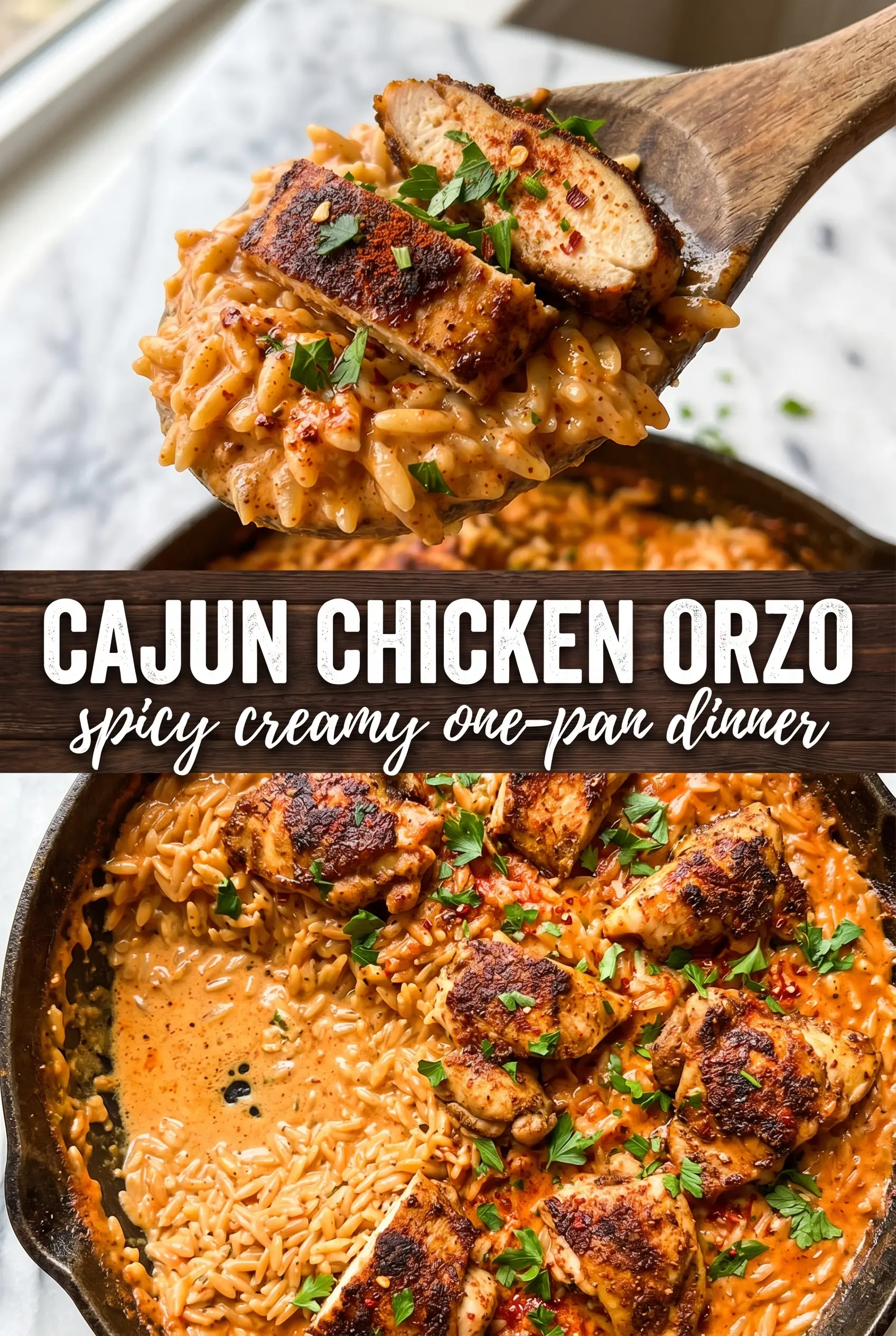
Blackened Cajun chicken thighs over creamy orzo hit the table with the kind of heat and comfort that keeps this dish in the regular rotation. The chicken gets a dark, savory crust while the orzo turns silky and glossy in the same pan, soaking up all the browned bits, spice, and broth left behind. Bell peppers and onion keep it from feeling heavy, and the final squeeze of lemon wakes everything up.
The trick here is building the whole dish in layers. First the chicken gets a hard sear so the seasoning has a chance to toast instead of fading into the sauce. Then the vegetables soften in the same skillet, picking up flavor from the pan before the orzo goes in. That one-pan method gives the finished dish a deeper, more integrated taste than if each part were cooked separately.
Below, I’ve included the small details that matter most: how to keep the orzo from clumping, when to add the cream so the sauce stays smooth, and a few smart swaps if you want to adjust the heat or make it work with what’s already in your kitchen.
The orzo turned out creamy without being gluey, and the chicken had that dark Cajun crust I always hope for. The lemon at the end kept it from feeling too rich, which made it even better the next day.
Save this Cajun Chicken Orzo for a creamy one-pan dinner with blackened chicken, peppers, and a bright lemon finish.
The Part That Keeps Cajun Orzo Creamy Instead of Sticky
The biggest mistake with orzo is treating it like rice and walking away. It releases starch fast, which is great for creating body, but it turns gummy if the pan runs dry or if the heat is too high. Here, the broth gets added while the orzo is toasted, then the mixture is stirred often enough to keep the pasta moving and to help the starch work in your favor instead of clumping into paste.
The other thing that matters is the order. If you add the cream too early, it can dull the seasoning and slow down the cooking of the orzo. Let the pasta get tender in broth first, then finish with cream and Parmesan so the sauce turns silky instead of heavy.
What Each Ingredient Is Actually Doing in This Pan

- Boneless skinless chicken thighs — Thighs stay juicier than breasts and hold up better against a hard sear. If you swap in chicken breast, cut the cooking time back and pull it the moment it reaches 165°F so it doesn’t dry out before the orzo is done.
- Cajun seasoning — This is the backbone of the dish, so use a blend you actually like on its own. Some brands run saltier or hotter than others, which is why dividing it between the chicken and the vegetables keeps the seasoning balanced instead of blunt.
- Orzo — Orzo gives you the texture of a creamy pasta skillet without feeling too heavy. Standard orzo works best here; if you use a larger pasta shape, you’ll need more liquid and a longer cook time, and the sauce won’t cling the same way.
- Heavy cream and Parmesan — These finish the sauce and pull everything together. The cream smooths out the spice, while the Parmesan adds body and salt, but both need a gentle simmer, not a boil, or the sauce can turn grainy.
- Bell peppers, onion, and garlic — These build sweetness and depth under the spice. Dice the vegetables evenly so they soften at the same pace; garlic goes in last because it burns fast and turns bitter if it sits in the pan too long.
How to Build the Skillet So the Chicken Stays Blackened and the Orzo Stays Silky
Getting the Chicken Crust Right
Pat the chicken dry before you season it. Moisture is what keeps the spice from sticking and what steams the surface instead of browning it. When the chicken hits the oil, it should sizzle immediately and stay put until a crust forms. If it sticks when you try to turn it, give it another minute; forcing it early will tear off the seasoning and leave the skillet with less flavor.
Cooking the Vegetables in the Leftover Flavor
Once the chicken comes out, the pan should still hold a thin layer of fat and a lot of browned bits. That is exactly what you want. Add the peppers and onion and cook until they soften and pick up color at the edges, then stir in the garlic and the rest of the seasoning for just a minute so it blooms without burning. If the pan looks dry, add a small drizzle of oil; dry heat after blackening can scorch the garlic fast.
Turning Broth and Orzo Into a Sauce
Add the dry orzo and let it toast briefly before the broth goes in. That quick toast gives the pasta a little nutty edge and helps it keep its shape in the final sauce. Stir often as it simmers uncovered so the orzo doesn’t settle and stick to the bottom. When it’s tender but still has a little bite, the pan should look loose, not soupy.
Finishing with Cream and Cheese
Lower the heat before adding the cream and Parmesan. High heat is what causes dairy to separate or turn grainy, especially after a spicy skillet like this one. Stir until the sauce turns glossy and coats the back of a spoon, then lay the sliced chicken over the top so it warms through without overcooking. Finish with green onions and a squeeze of lemon for contrast.
How to Make This Cajun Chicken Orzo Fit the Way You Cook
Dairy-Free Skillet Version
Swap the heavy cream for full-fat coconut milk and leave out the Parmesan, or use a dairy-free Parmesan-style alternative if you like. The sauce will still be creamy, but it will taste a little softer and less sharp, so a final squeeze of lemon matters even more.
Milder Heat Without Losing the Cajun Character
Use a mild Cajun seasoning or reduce the seasoning on the chicken by half, then add the rest slowly to the vegetables and broth. You’ll keep the smoky, savory backbone of the dish while dialing back the burn, and the lemon at the end will still keep the flavor lively.
Gluten-Free Swap
Orzo is wheat-based, so use a small gluten-free pasta shape with a similar cook time, like mini shells or ditalini. Watch the liquid closely because gluten-free pasta can go from tender to soft faster than wheat pasta, and it may need a splash more broth near the end.
Making It Ahead for Dinner Later
Cook the chicken and the orzo base, then stop before adding the final cream and Parmesan if you want the best texture later. Reheat with a splash of broth, then finish with the dairy at the end so the sauce returns to that smooth, glossy finish instead of tightening up.
Storage and Reheating
- Refrigerator: Store in an airtight container for up to 4 days. The orzo will thicken as it sits, which is normal.
- Freezer: It freezes, but the cream sauce can separate a bit after thawing. If you do freeze it, freeze the chicken and orzo base without the final dairy, then add cream and Parmesan when reheating.
- Reheating: Warm it gently on the stove or in the microwave with a splash of broth or water. Stir halfway through and stop as soon as it loosens up; overheating is what turns creamy orzo tight and dry.
Questions I Get Asked About This Recipe
Cajun Chicken Orzo
Ingredients
Equipment
Method
- Rub chicken thighs with 1 tablespoon Cajun seasoning. Heat olive oil in a large deep cast iron skillet over medium-high heat and sear the chicken for 4-5 minutes per side until blackened and cooked through to 165°F.
- Remove the chicken from the skillet and slice it. Keep juices in a quick stack while you finish the orzo.
- In the same skillet, cook bell peppers and onion over medium heat for 4 minutes until softened. Stir to pick up browned bits from the pan.
- Add garlic and the remaining Cajun seasoning, then cook for 1 minute. The mixture should smell fragrant and look slightly glossy.
- Add orzo and toast for 1 minute, stirring so it lightly colors. Pour in chicken broth and bring to a simmer.
- Cook uncovered for 10-12 minutes, stirring often, until orzo is tender. If the pan seems dry before orzo softens, keep stirring and maintain a gentle simmer.
- Stir in heavy cream and Parmesan, then simmer for 2 minutes until creamy. Scrape the bottom and sides so the sauce thickens evenly.
- Top the orzo with sliced Cajun chicken. Nestle pieces into the creamy surface so every bite gets chicken and sauce.
- Garnish with sliced green onions and serve with lemon wedges. Finish right away for the brightest color and flavor.