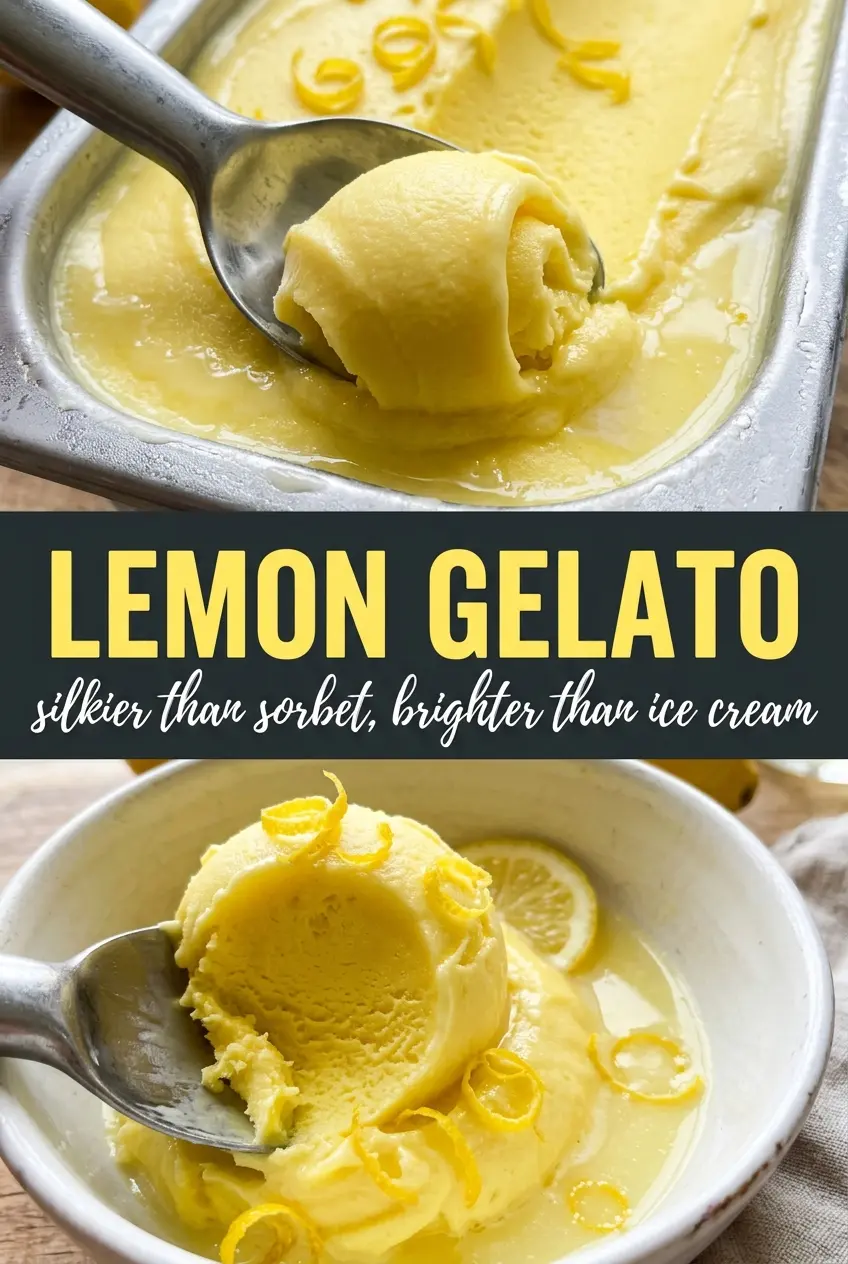
Lemon gelato lands with a clean, bright snap of citrus, but what keeps it from eating like frozen lemon pudding is the custard base. The texture is dense and smooth, with enough body to hold a quenelle and enough cream to stay silkier than sorbet. It’s the kind of dessert that tastes sharp at first, then finishes soft and milky, which is exactly why I keep coming back to it.
The trick here is building a custard thick enough to churn into that classic gelato texture without overcooking the eggs. Cornstarch helps stabilize the base, so you get a spoonable finish without leaning on extra yolks or excessive cream. The lemon juice goes in after the custard comes off the heat, which keeps the flavor fresh and stops the dairy from seizing or curdling.
Below, I’ll walk through the one step that matters most for a silky finish, plus the small ingredient choices that make the lemon taste vivid instead of flat. If you’ve only ever had grainy homemade frozen desserts, this version is worth the extra chill time.
The custard thickened up exactly like pudding, and after churning the gelato came out dense and smooth instead of icy. I loved that the lemon flavor stayed bright even after freezing.
Like this lemon gelato? Save it for the day you want a bright, creamy frozen dessert with a true Italian-style custard base.
The Custard Has to Set Before the Lemon Goes In
Most homemade gelato turns icy for one of two reasons: the base never thickens enough, or the lemon gets added too early and destabilizes the dairy before the custard has a chance to form. Here, the milk, cream, yolks, sugar, and cornstarch cook together into a pudding-thick base first. That gives you structure before the acid shows up.
When the mixture coats a spoon and you can drag a clean line across the back of it, it’s ready. If it still looks loose, churned gelato will freeze soft in the worst way: thin, loose, and a little watery at the edges. The lemon juice goes in off the heat so it stays bright without scrambling the custard.
- Egg yolks — They give the gelato its custard body and that dense, scoopable feel. Whole eggs won’t perform the same way here; the extra whites make the texture less smooth.
- Cornstarch — This is the quiet insurance policy. It helps the base thicken without needing to cook the yolks hard, which keeps the texture cleaner and reduces the risk of a grainy custard.
- Fresh lemon juice and zest — Bottled juice tastes flat and thin in a frozen dessert. Fresh zest carries the oils that make the lemon flavor taste vivid even after the cold dulls it a little.
- Whole milk and heavy cream — Don’t swap in low-fat milk if you want the same creamy finish. Gelato is lighter than ice cream, but it still needs enough fat to keep the freeze from turning sharp and brittle.
What Each Ingredient Is Actually Doing in This Ice Cream

- Base ingredient (cream, milk, or custard) — This provides the foundation and richness. Quality matters.
- Sweetener (sugar, honey, or condensed milk) — This sweetens and prevents ice crystals. The ratio is critical.
- Flavor element (vanilla, fruit, chocolate, or other) — This defines the ice cream personality. Use quality ingredients.
- Egg yolks (if making custard base) — These create richness and silky texture. Optional but elevates ice cream.
- Churning (if using ice cream maker) — This incorporates air and prevents ice crystals. Critical for smooth texture.
- Freezing temperature and time — Proper freezing prevents rock-hard texture. Store at 0°F or below.
- Mix-ins (chocolate, cookies, fruit, or swirls) — These add texture and prevent one-dimensional flavor. Add near end of churning.
- Serving temperature (slightly soft, not rock hard) — This provides creamy mouthfeel. Remove from freezer 5 minutes before serving.
Building a Bright Custard Without Scrambling It
Warming the Dairy
Heat the milk and cream until steaming, not boiling. You want heat in the pan, but you don’t want a rolling simmer that starts to reduce the dairy or scald the milk solids on the bottom. Steam and small bubbles around the edge are enough.
Tempering the Yolks
Whisk the yolks, sugar, and cornstarch until pale and thick, then stream in the hot dairy slowly while whisking constantly. If you dump it all in at once, the yolks can seize into little bits before they ever reach the saucepan. Slow tempering keeps the mixture smooth and gives the sugar time to dissolve.
Cooking to the Right Thickness
Return everything to the saucepan and cook over medium heat, stirring the entire time, until it looks like loose pudding. The spoon should leave a trail for a second before the base closes back in. If you stop too early, the gelato churns up icy; if you push it too far, the eggs turn coarse.
Adding the Lemon at the End
Take the pan off the heat before stirring in the lemon juice, zest, vanilla, and salt. The acid wakes up the flavor immediately, but it can also tighten the dairy if the base is still aggressively hot. Once the lemon is in, the custard should smell sharp and fresh, not cooked or eggy.
Make It Dairy-Free with Full-Fat Coconut Milk
Replace the milk and cream with full-fat coconut milk for a dairy-free version. The texture stays creamy, but the flavor picks up a soft coconut note that sits nicely with lemon. Use a well-shaken can so the fat is evenly distributed, and expect a slightly softer freeze.
For a Stronger Lemon Punch
Add an extra teaspoon of zest before chilling the base. That boosts the aroma more than adding more juice, which can make the custard taste sharper without making it seem more lemony. Zest carries the oils, and those oils hold up better once the gelato is frozen.
If You Don’t Have an Ice Cream Maker
Chill the base thoroughly, pour it into a shallow freezer-safe pan, and stir it every 30 minutes until firm. The texture won’t be as dense as churned gelato, but frequent stirring breaks up ice crystals and keeps the result spoonable. Don’t wait until it’s half frozen before starting to stir, or you’ll end up with icy edges and a hard center.
Storage and Reheating
- Refrigerator: Keep the chilled custard base covered for up to 2 days before churning. The flavor actually deepens a little as it rests.
- Freezer: Freeze churned gelato in an airtight container for up to 2 weeks. After that, it starts to pick up ice crystals and the lemon flavor softens.
- Reheating: Not applicable, but for the best scoop, let the container sit at room temperature for 5 to 10 minutes before serving. If it’s rock-hard, it was frozen too long or stored with too much air in the container.
Questions I Get Asked About This Recipe
Lemon Gelato
Ingredients
Equipment
Method
- Heat the whole milk and heavy cream in a saucepan until steaming, about 3–5 minutes, with small bubbles appearing at the edges. Keep it on low so it doesn’t boil over (visual cue: steamy surface, not rolling boil).
- In a bowl, whisk the egg yolks, granulated sugar, and cornstarch until pale and thick, 1–2 minutes. The mixture should look slightly lighter and creamy (visual cue: ribbon-like thickness).
- Slowly whisk the steaming milk mixture into the egg yolk mixture to temper it, a little at a time. Go gradually so the yolks stay smooth (visual cue: no scrambled bits forming).
- Return everything to the saucepan and cook over medium heat, stirring constantly for 6–8 minutes, until thickened to a pudding consistency. Visual cue: it coats the back of a spoon and holds a line when you run a finger through it.
- Remove the saucepan from the heat and stir in the fresh lemon juice, lemon zest, vanilla extract, and salt until fully combined. The mixture should turn bright and fragrant (visual cue: smooth, evenly colored pale yellow).
- Cool completely over an ice bath for 10–15 minutes, stirring occasionally so it chills evenly. Visual cue: the custard becomes cool to the touch and thickens slightly.
- Refrigerate the custard at least 4 hours, until very cold. Visual cue: firmed texture and chilled, scoopable consistency.
- Churn in an ice cream maker on the lowest setting until dense and smooth, about 20–25 minutes. Visual cue: a thick, spoonable gelato consistency with minimal airiness.
- Serve immediately for soft-set gelato, or freeze 1–2 hours for a firmer texture. Visual cue: gelato firms up and scoops cleanly from the container.