Golden-seared chicken breasts tucked into a glossy Boursin cream sauce are one of those dinners that look restaurant-level but come together without any fuss. The sauce clings to the chicken instead of running all over the plate, and the garlic-herb cheese gives it an instant richness that tastes like it simmered for much longer than it did.
What makes this version work is the order of operations. The chicken gets a hard sear first so you build flavor in the pan, then the garlic goes in briefly before the wine or broth loosens all those browned bits. Boursin melts into the warm liquid smoothly, and the cream finishes the sauce with that soft, velvety texture you want without needing a long reduction.
Below, I’ve included the small details that matter here: how to keep the sauce silky, what to do if you want to skip the wine, and a few smart ways to serve it so the sauce stays front and center.
The sauce turned out silky and never broke, even after I let it sit for a few minutes while I finished the mashed potatoes. The chicken stayed juicy, and the thyme made it taste much fancier than the effort it took.
Creamy Boursin chicken with a glossy herb sauce is perfect when you want a fast dinner that still feels special.
The Sear Is Doing More Than Browning the Chicken
The biggest mistake with a cream sauce chicken like this is rushing the first pan stage. If the chicken never gets a deep golden crust, the sauce ends up tasting flat no matter how good the cheese is. Those browned bits on the bottom of the skillet are what give the finished sauce its depth, and you only get them if the pan is hot enough and the chicken is left alone long enough to color.
That sear also protects the texture of the chicken. When you pull it off the heat at 165°F and let the sauce finish around it, the meat stays juicy instead of drying out while the sauce thickens. The sauce should look glossy and lightly nappable, not thick like gravy; if it gets too tight, a splash of broth loosens it right back up.
What Each Ingredient Is Actually Doing in the Sauce

- Boursin garlic and herb cheese — This is the backbone of the sauce. It melts into a soft, seasoned base that plain cream cheese won’t quite match because the garlic and herbs are already built in. If you can’t find it, use a soft garlic-and-herb spreadable cheese, but expect a slightly milder finish.
- Dry white wine or chicken broth — The liquid you use to deglaze sets the tone. Wine adds a sharper, more complex edge and helps cut the richness; broth keeps it all family-friendly and still gives you enough flavor to scrape up the pan drippings. Either way, let it bubble for a minute or two before adding the cheese so the raw edge cooks off.
- Heavy cream — This rounds out the sauce and keeps the Boursin from feeling too sharp. Half-and-half can work in a pinch, but the sauce will be thinner and a little less plush. If you use a lighter dairy, keep the simmer very gentle so it doesn’t separate.
- Fresh thyme — Fresh thyme makes this taste bright and fragrant instead of heavy. Dried thyme will work, but use less because it can take over fast. Add it near the end so the herb flavor stays clean and fresh.
- Chicken breasts — Even thickness matters here more than usual. If one side is much thicker, pound it lightly so the chicken cooks evenly and you don’t end up with dry edges before the center is done.
Building the Sauce Without Letting It Turn Grainy
Seasoning and Searing the Chicken
Pat the chicken dry, season it well, and lay it into hot oil without crowding the skillet. You want a deep golden crust on each side, which usually takes 5 to 6 minutes per side depending on thickness. If the chicken sticks when you first try to move it, leave it alone for another minute; once the crust sets, it releases on its own.
Waking Up the Pan Drippings
After the chicken comes out, the garlic goes into the same pan for just 30 seconds. That short window is enough to perfume the oil without burning it, because burnt garlic will carry straight through the sauce. Add the wine or broth next and scrape the pan well; this is where the flavor starts building, and the liquid should simmer until the sharp alcohol smell is gone if you’re using wine.
Melting the Boursin Into the Liquid
Once the broth is simmering, drop in the Boursin and stir until the sauce turns smooth and pale. Keep the heat at a steady simmer, not a hard boil, or the dairy can get a little grainy around the edges. The sauce should look fully emulsified before the cream goes in.
Finishing to the Right Consistency
Stir in the cream and thyme, then let the sauce simmer for 3 to 4 minutes until it coats the spoon. If it looks too thin, give it another minute or two; if it looks too thick, loosen it with a splash of broth. Return the chicken to the pan at the end and spoon the sauce over the top so the meat warms through without overcooking.
How to Adapt Boursin Chicken for Different Dinners
Make It Gluten-Free Without Losing the Creamy Texture
This recipe is naturally gluten-free as written, as long as your broth is certified gluten-free. Serve it over mashed potatoes, rice, or gluten-free pasta and the sauce will still cling beautifully.
Skip the Wine and Keep the Depth
Use chicken broth instead of wine if that’s what you have. You lose a little brightness, so let the broth simmer for an extra minute before adding the cheese; that gives the sauce time to concentrate and keeps it from tasting watery.
Use Chicken Thighs for a Richer Finish
Boneless skinless thighs work well here and stay juicy even if they cook a little longer. They bring a richer flavor and are more forgiving than breasts, though the sauce will taste a bit fuller and the cook time may stretch a few minutes.
Add Mushrooms for a Heartier Skillet Dinner
Sauté sliced mushrooms after the chicken comes out, before the garlic goes in. They’ll soak up the browned bits in the pan and add a deeper savory note, which makes the dish feel more substantial over pasta or polenta.
Storage and Reheating
- Refrigerator: Store leftovers in an airtight container for up to 3 days. The sauce thickens as it chills, so it may look a little tighter the next day.
- Freezer: It can be frozen, but the cream sauce may separate a bit after thawing. If you do freeze it, cool it completely first and reheat gently with a splash of broth to help it come back together.
- Reheating: Warm it slowly in a skillet over low heat, covered, with a spoonful of broth or cream. High heat is what breaks the sauce and dries out the chicken, so patience matters here.
Questions I Get Asked About This Recipe
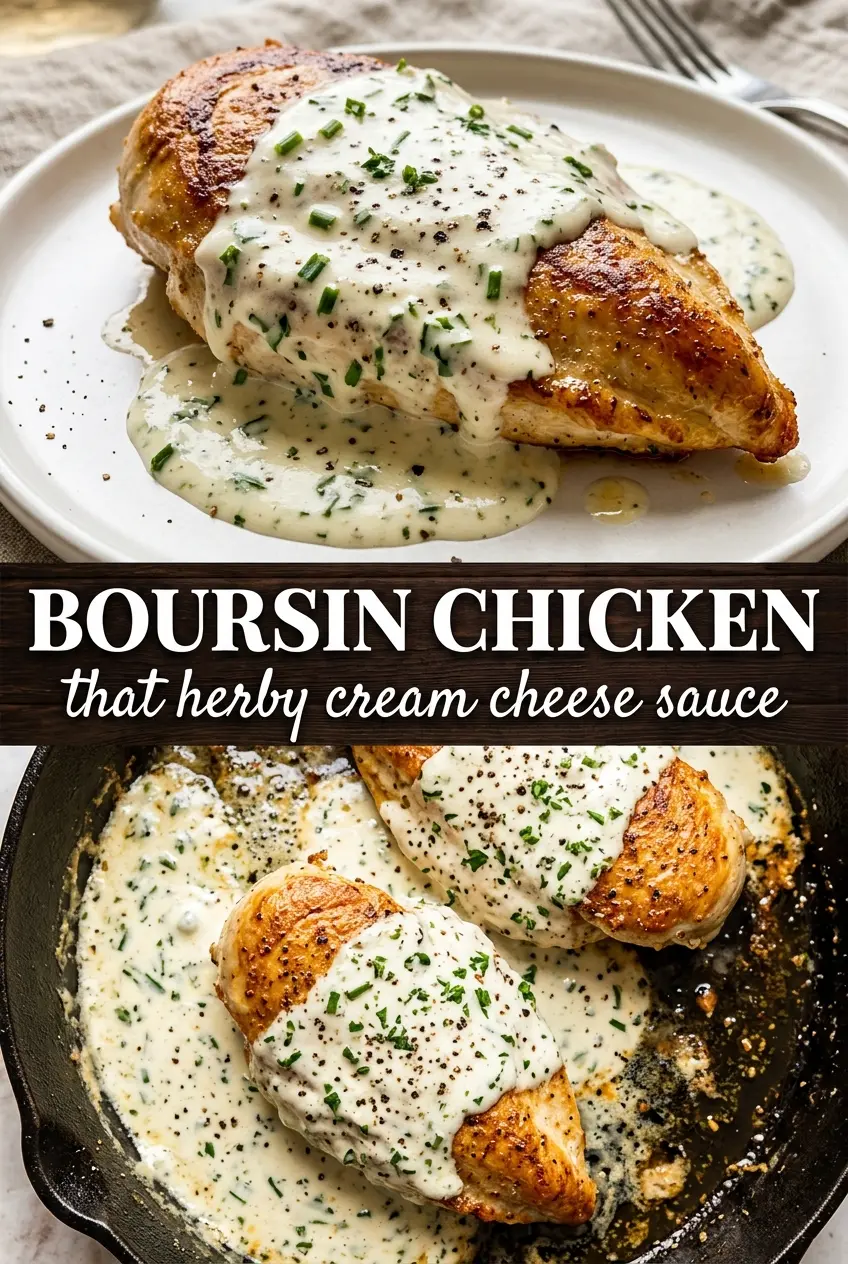
Boursin Chicken
Ingredients
Equipment
Method
- Season boneless skinless chicken breasts with salt, pepper, and garlic powder to taste. Heat olive oil in a large skillet over medium-high heat until shimmering, then sear chicken for 5-6 minutes per side until golden and internal temperature reaches 165°F; remove.
- Cook garlic in the same pan for 30 seconds over medium heat, stirring until fragrant. Deglaze with dry white wine or chicken broth and cook 2 minutes.
- Pour in chicken broth and bring to a simmer. Add Boursin garlic and herb cheese, stirring until completely melted and smooth.
- Stir in heavy cream and fresh thyme leaves. Simmer for 3-4 minutes until the sauce thickens slightly.
- Return the chicken to the pan and spoon Boursin sauce over each breast. Garnish with fresh thyme for garnish and serve over mashed potatoes or pasta.